

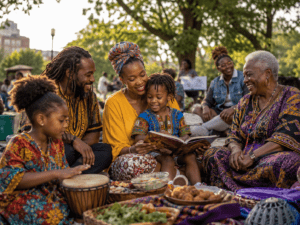

Why DMV Families Should Celebrate African Diaspora Culture Year-Round.
Culture should not only be celebrated during special months, holidays, festivals, or major events. For African Diaspora families across the DMV — Washington, D.C., Maryland, and Virginia — culture lives in everyday moments. It lives in the food prepared at home, the music played during a Saturday cleaning session, the language spoken between relatives, the stories elders share, the businesses families support, and the values passed from one generation to the next. The DMV is one of the most culturally rich regions in the United States. It is home to African American families with deep roots in the country, African immigrant communities, Caribbean families, Afro-Latino families, and many people who carry more than one cultural identity. That diversity is powerful. But culture does not preserve itself automatically. Children need to experience it, hear it, taste it, ask questions about it, and see adults value it. When families celebrate African Diaspora culture year-round, they help young people feel rooted, confident, and proud of who they are. 1. Culture Helps Children Understand Who They Are. Children are constantly learning about identity. They learn from school, friends, social media, television, music, family conversations, and the communities around them. If families do not intentionally teach culture, children may only receive incomplete or shallow messages about who they are. Cultural connection gives children a stronger foundation. It tells them: You come from people with history.You come from people with creativity.You come from people with strength.You come from people with beauty.You come from people with wisdom. When children understand their roots, they are better prepared to walk through the world with confidence. They do not have to shrink themselves to belong. They can carry pride with them. 2. The DMV Offers Many Ways To Stay Connected. One blessing of living in the DMV is that families do not have to look far to find culture. The region offers museums, cultural festivals, African markets, Caribbean restaurants, Black-owned bookstores, churches, mosques, community centers, music events, art exhibits, historical landmarks, youth programs, and local businesses that reflect the African Diaspora. Families can make cultural connection part of regular life by visiting these places throughout the year. A Saturday outing can become a learning experience.A restaurant visit can become a conversation about food history.A community festival can help children hear music from different regions.A museum visit can help young people understand the strength of past generations. Culture becomes more meaningful when children experience it in real life. 3. Food Keeps Family History Alive. Food is one of the strongest ways families preserve culture. A meal can carry generations of memory. A recipe may come from a grandmother, an auntie, a father, a church gathering, a homeland, a southern kitchen, a Caribbean island, or a family reunion. In African Diaspora families, food often tells stories of migration, survival, creativity, celebration, and love. Families can keep food traditions alive by: Cooking with children. Writing down family recipes. Asking elders who taught them certain dishes. Visiting cultural grocery stores. Trying foods from different parts of the African Diaspora. Hosting family dinners with storytelling. Teaching children the names and meanings behind certain meals. The kitchen can become a classroom. Children may forget a formal lesson, but they often remember the smell of a favorite meal and the person who made it. 4. Music And Dance Connect Generations. Music is another powerful part of cultural connection. Across the African Diaspora, music carries history, emotion, rhythm, resistance, faith, celebration, and joy. Gospel, jazz, blues, soul, reggae, Afrobeat, hip-hop, R&B, go-go, soca, dancehall, and traditional African music all tell parts of a larger story. In the DMV, music has a special place in community life. From local sounds to global rhythms, families can use music to connect generations. Parents can play songs they grew up with. Grandparents can share music from their youth. Teens can introduce newer artists. Children can dance, ask questions, and learn how sounds travel across cultures. A family playlist can become a living archive. Music teaches without always needing words. 5. Language And Sayings Matter. Some African Diaspora families speak more than one language. Others may use family sayings, cultural expressions, spiritual phrases, regional accents, or words passed down from older generations. Language carries identity. Even simple phrases can connect children to heritage. A greeting, proverb, prayer, family nickname, or cultural expression can help a child feel connected to something larger than the present moment. Families do not need to be fluent in another language to preserve meaning. They can start with small pieces: Teach children greetings. Explain family sayings. Share proverbs. Practice pronunciation. Talk about what certain words mean. Encourage children to ask elders about phrases they use. Words carry memory. When families protect language, they protect part of their story. 6. Black-Owned And Diaspora-Owned Businesses Deserve Support. Culture is also preserved through business. Across the DMV, Black-owned and Diaspora-owned businesses help keep communities alive. Restaurants, boutiques, salons, bookstores, grocery stores, creative studios, wellness services, consultants, childcare providers, artists, and event organizers all contribute to cultural and economic strength. Supporting these businesses is more than shopping. It is investing in community. Parents can teach children why support matters: “When we spend money here, we help a family business grow.” “When we support this restaurant, we help preserve food traditions.” “When we buy from this artist, we help culture continue.” Children should see entrepreneurship as part of cultural pride. They should know that businesses can carry stories, values, and legacy. 7. Elders Are Living Libraries. Every community has elders who carry history that may never be written down. They remember how neighborhoods changed. They remember family migrations. They remember traditions, challenges, celebrations, and lessons from the past. Families should make time to listen. Children can ask elders: What was your childhood like? What foods did your family cook? What music did you love? What did your parents teach you? What traditions should we keep? What challenges did our family overcome? What are you most proud of? These conversations can become priceless. A