

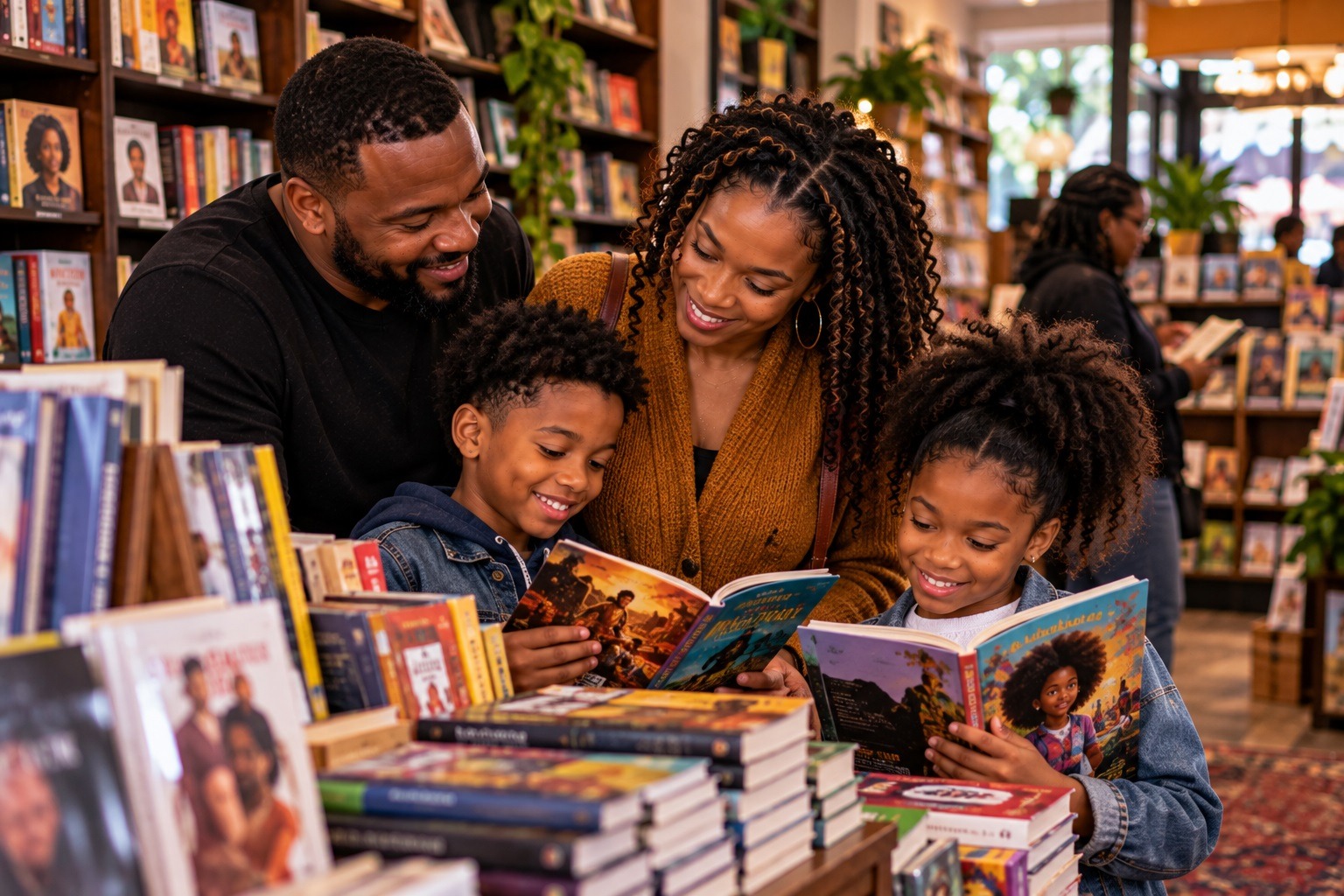
How Black-Owned Bookstores Strengthen Families Across The Black Community
A bookstore can be much more than a place to buy a book. It can become a gathering place, a classroom, a cultural center, a business hub, and a doorway into stories that help children and adults understand themselves more deeply. Black-owned bookstores often play this wider role by bringing together literature, history, entrepreneurship, community events, and cultural pride. Across the Black community, access to books that reflect real Black experiences matters. Children need stories where they can see families, skin tones, hair textures, neighborhoods, traditions, humor, challenges, and dreams that feel familiar. Teens need books that help them understand identity, history, careers, relationships, and the wider world. Adults and elders also benefit from spaces where Black authors, thinkers, storytellers, and historians are easy to discover. For families in the DMV and across the United States, Black-owned bookstores can also provide something important that online shopping cannot fully replace: human connection. A knowledgeable bookseller can recommend a book for a reluctant reader, introduce a parent to a new Black children’s author, host a community discussion, organize a youth event, or create a space where people feel welcomed. Supporting these bookstores can therefore do two things at once. Families gain access to meaningful books, and local entrepreneurs gain support that can help keep cultural spaces alive. 1. Black-Owned Bookstores Help Children See Themselves In Stories. Representation can shape how children feel about reading. A child who rarely sees people who look like them in books may quietly assume that stories are mostly about someone else. But when children encounter characters with familiar skin tones, hairstyles, family structures, cultural traditions, and experiences, reading can feel more personal. A child may connect with a story about a Black girl learning to love her natural hair, a boy exploring science, a family preparing for a reunion, or a young person learning about an important historical figure. These books show children that their lives belong in literature. That can encourage reading confidence and help children understand that their experiences are worthy of being told. 2. Bookstores Can Introduce Families To Black Authors. Many families know a few famous Black writers but may not realize how many authors are creating children’s books, novels, biographies, poetry, history, cookbooks, business books, and educational resources today. Black-owned bookstores can help families discover those voices. A bookseller may recommend a children’s author for a young reader, a memoir for an adult, or a historical book that gives deeper context to something the family is discussing. This kind of personal recommendation can be especially useful for parents who want culturally relevant books but do not know where to begin. Exploring Black authors also helps families see the diversity of thought within the Black community. There is no single Black experience or single Black story. Books reveal the richness of those differences. 3. Bookstores Can Help Reluctant Readers Find The Right Book. Not every child naturally loves reading. Some children may struggle with reading skills. Others may simply not have found a subject that excites them. A child who says, “I hate reading,” may actually mean, “I have never found a book I care about.” A good bookstore can help change that. One child may love graphic novels. Another may enjoy sports biographies, mysteries, fantasy, science, fashion, cars, history, or funny stories. Teens may prefer poetry, manga, entrepreneurship, romance, or books about real-world issues. Giving children more choice can make reading feel less like an assignment. A bookseller who listens to what a young person enjoys can often help match the child with something that finally feels interesting. One good book can change the way a child thinks about reading. 4. Black-Owned Bookstores Preserve Cultural Knowledge. Books help preserve history. Many Black-owned bookstores intentionally carry books about African American history, the African Diaspora, civil rights, local history, African cultures, Caribbean history, faith traditions, Black entrepreneurship, art, politics, family life, and community leadership. These books give families access to knowledge that may not always receive much attention in school. Parents can use bookstores to help children explore questions about where they come from and what previous generations experienced. Elders may also recognize books that connect to memories they want to share. When families read history together, knowledge is not left only inside classrooms. It becomes part of family conversation. 5. Bookstore Events Can Build Community Connection. Many independent bookstores host events that bring people together. These may include author talks, book clubs, children’s story hours, poetry readings, youth workshops, writing groups, cultural discussions, or community conversations. Events like these help transform a bookstore into a meeting place. A child may hear an author speak and realize that writing could be a future career. A teenager may attend a poetry night and find a creative outlet. Parents may meet other families interested in education and culture. These connections can strengthen community life. Books become the starting point for conversation rather than the end of it. 6. Supporting Black-Owned Bookstores Supports Entrepreneurship. Buying from a Black-owned bookstore is also a way to support local entrepreneurship. Independent businesses face real challenges. Rent, inventory, staffing, marketing, and competition with large online retailers can make it difficult to stay open. Every purchase helps. Parents can explain this to children as part of financial education. When a family chooses to purchase locally, some of that money stays closer to the community and supports a business owner, employees, events, and other local activity. This gives children a practical lesson in economics. They begin to understand that where money is spent can influence which businesses remain available. 7. Bookstores Can Become Part Of Family Traditions. A bookstore visit can become a family tradition. A family might visit once a month, after report cards, before summer vacation, around birthdays, or at the beginning of the school year. Children may be allowed to choose one book each time. Parents may choose something too. These outings create positive memories around reading. Instead of seeing books only as school materials, children begin to associate
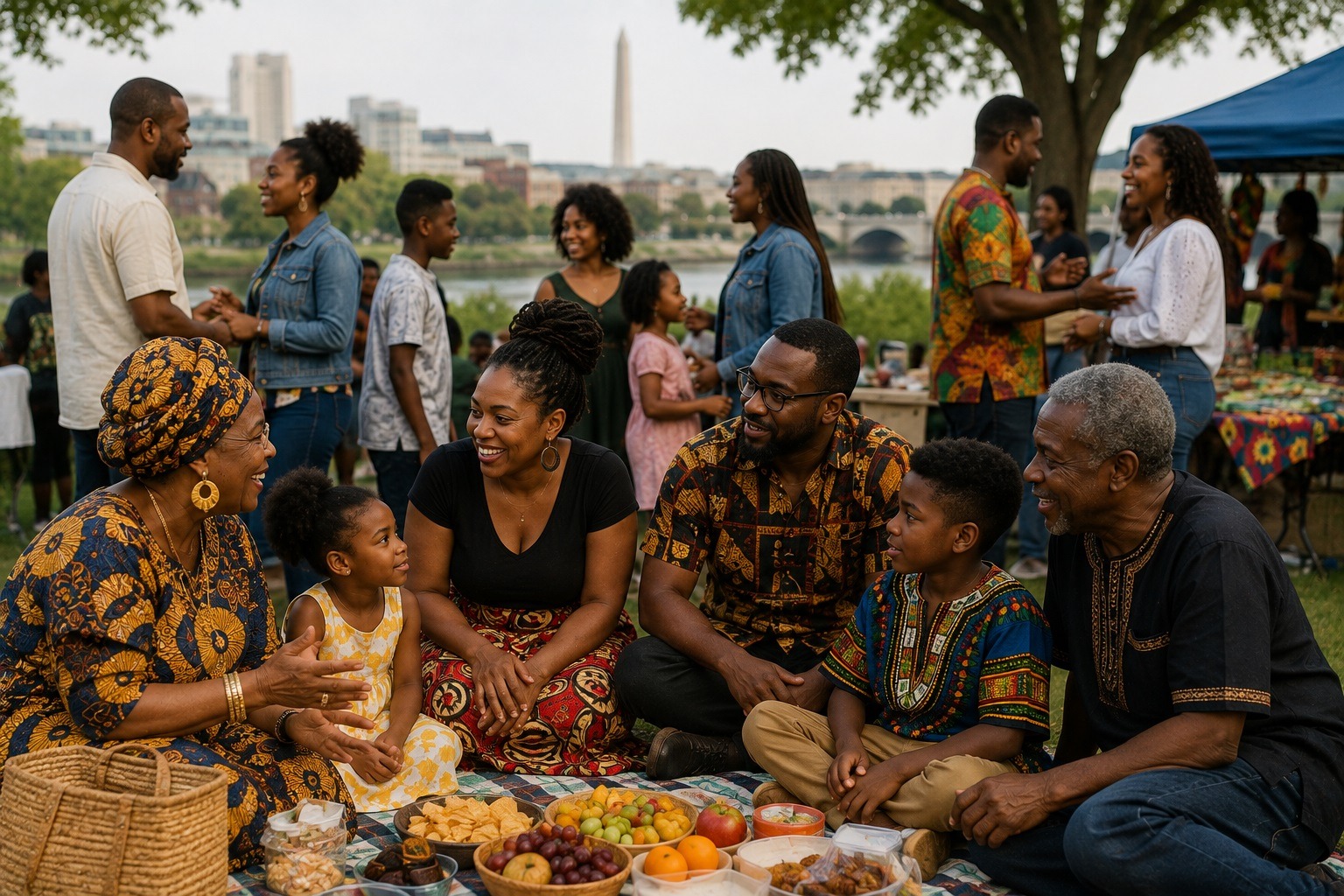
How African Diaspora Families In The DMV Build Stronger Community Connections.
The DMV is home to many African Diaspora families with roots across Africa, the Caribbean, African America, Afro-Latin communities, and many other cultural backgrounds. Washington, D.C., Maryland, and Virginia hold a rich mix of languages, foods, faith traditions, music, businesses, schools, community organizations, and family stories. For many families, the DMV is not only a place to live. It is a place where culture, opportunity, identity, and community life meet. African Diaspora families often carry strong values around family, education, faith, hard work, respect for elders, cultural pride, and community support. At the same time, modern life can make connection difficult. Parents may work long hours. Children may be busy with school and activities. Teens may feel pulled between cultures. Elders may feel isolated. New families may not know where to find trusted support. Even in a region full of people, families can still feel disconnected. Building stronger community connections matters because no family should have to carry everything alone. A connected community helps parents find support, children find mentors, elders feel valued, and young people understand their identity more deeply. When families know one another, share resources, support local businesses, attend cultural events, and create safe spaces for youth, the whole village becomes stronger. Community connection does not always require large events or formal programs. It can begin with a conversation after church, a family attending a cultural festival, parents connecting through school, a small business owner supporting a youth event, an elder sharing a story, or neighbors helping one another. Small acts of connection can grow into stronger networks over time. 1. Cultural Events Help Families Feel Rooted. Cultural events are one of the strongest ways African Diaspora families in the DMV can feel connected. Festivals, food events, music celebrations, heritage programs, art shows, church gatherings, community markets, and national independence celebrations all give families a chance to experience culture publicly and joyfully. Children and teens benefit from seeing their culture celebrated. They may hear familiar music, taste traditional foods, see clothing from different countries, learn dances, hear languages, and meet people who share parts of their family story. These experiences help young people understand that culture is not something hidden at home. It is something worthy of honor. For families with roots in Africa, the Caribbean, or Afro-Latin communities, cultural events can also help children understand where their parents or grandparents came from. A child may begin asking questions about a flag, dish, language, or song. Those questions can lead to deeper family storytelling. Families can make cultural events more meaningful by talking before and after attending. Parents can explain what the event represents, why it matters, and how it connects to the family. This helps children build cultural pride and stronger identity. 2. Food Builds Bridges Across The Diaspora. Food is one of the easiest ways to connect African Diaspora families. In the DMV, families may enjoy Ethiopian, Nigerian, Ghanaian, Jamaican, Haitian, Trinidadian, Senegalese, Southern, African American, Afro-Latin, and many other food traditions. Each dish carries a story, and each meal can become a bridge between cultures. A family meal can help children learn about heritage. A parent might explain where jollof rice, injera, jerk chicken, rice and peas, plantains, gumbo, collard greens, black-eyed peas, or stew comes from. An elder might share how a recipe changed after migration or how a dish was made during childhood. These stories help food become part of identity. Food also brings communities together. A potluck, cultural food night, church meal, community market, or family gathering can introduce people to one another in a warm and natural way. People may feel more comfortable talking when food is shared. Supporting Diaspora restaurants and food vendors also strengthens local business. Families can teach children that buying from local food businesses supports real families, culture, and community dreams. A meal can become both nourishment and community investment. 3. Schools Can Become Community Connection Points. Schools are often where families first meet other families. Parent meetings, school events, sports games, performances, pickup lines, volunteer opportunities, and classroom activities can all become places of connection. For African Diaspora families in the DMV, schools can help parents build relationships with other caregivers and learn about local resources. Parents may find other families who understand similar experiences, such as raising bilingual children, navigating cultural expectations, supporting children academically, or helping youth balance home culture with American school culture. These shared experiences can become the beginning of support networks. Schools can also help families feel more included by recognizing cultural diversity. Programs that honor Black history, African Diaspora heritage, immigrant family experiences, and multilingual communities can help children feel seen. Families can encourage schools to include a wider range of stories, books, speakers, and events. When parents communicate with teachers and other families, children benefit. They see that school and home are connected. They also learn that their family culture belongs in the educational conversation. 4. Faith Communities Often Anchor Family Support. For many African Diaspora families, faith communities are a major source of connection. Churches, mosques, ministries, prayer groups, and faith-based community organizations often provide spiritual guidance, cultural belonging, youth programs, elder support, family counseling, food assistance, and community events. Faith spaces can help new families feel less alone. A family that recently moved to the DMV may find friendship, mentorship, and practical help through a congregation or faith group. Children may meet peers. Parents may find trusted adults. Elders may find community and purpose. Faith communities can also support youth identity. Young people may learn values around service, respect, compassion, discipline, and hope. They may also participate in music, leadership, volunteering, and cultural programs that strengthen confidence. To serve families well, faith communities should also be welcoming to different needs. Children with autism, families under stress, single parents, elders, and youth with mental health concerns all need patience and inclusion. A strong faith community supports the whole family with dignity. 5. Elders Help Preserve Memory And Wisdom. Elders are a powerful part of African Diaspora
How DMV Families Can Celebrate African Diaspora Heritage All Year.
African Diaspora heritage should not be celebrated only during one month, one holiday, one festival, or one special event. It is something families can honor throughout the year in simple and meaningful ways. Heritage lives in food, music, family stories, books, language, faith, art, clothing, history, local businesses, community gatherings, and the everyday choices families make to remember who they are and where they come from. For families across the DMV, there are many opportunities to keep that connection alive. Washington, D.C., Maryland, and Virginia are full of African Diaspora culture. Families can find African American history, African immigrant communities, Caribbean influence, Afro-Latin traditions, Black-owned businesses, cultural restaurants, local artists, historic neighborhoods, museums, churches, mosques, bookstores, markets, festivals, and community organizations all across the region. This gives parents, caregivers, elders, and mentors many ways to help children experience culture as something close, real, and personal. Celebrating heritage all year does not require a large budget or complicated plan. A family can begin with one meal, one book, one conversation with an elder, one visit to a museum, one local business supported, one song discussed, one family photo preserved, or one cultural event attended. Small actions matter because they are repeated. When children experience culture again and again, it becomes part of their identity instead of something they only hear about occasionally. The goal is not to make heritage feel like homework. The goal is to help families build pride, connection, curiosity, and memory. Children should learn that African Diaspora heritage includes struggle, but it also includes joy, brilliance, creativity, leadership, faith, beauty, music, food, business, invention, family strength, and community love. When families celebrate that fullness all year, they help the next generation feel more rooted and confident. 1. Make Culture Part Of Everyday Family Conversation. One of the easiest ways to celebrate heritage all year is to talk about it regularly. Families do not need a formal lesson every time. Culture can be discussed naturally during meals, car rides, bedtime, family gatherings, school projects, music listening, movie nights, or community outings. A simple conversation can help children understand that culture is part of daily life, not something separate from it. Parents and caregivers can ask children what they are learning about history, what music they enjoy, what foods they are curious about, or what they know about their family background. Elders can share memories about where they grew up, what traditions mattered, what holidays looked like, what songs were sung, what foods were cooked, and what values helped the family stay strong. These conversations help children connect family life to the wider African Diaspora story. Culture conversations should leave room for questions. Children may ask why certain traditions matter, why history includes painful moments, why different families celebrate differently, or why some stories were not taught in school. Adults do not need to have perfect answers. They can say, “That is a good question. Let’s learn together.” This teaches children that heritage is something worth exploring with honesty and care. When culture becomes part of normal conversation, children begin to see it as something alive. They learn that their identity is not hidden or occasional. It belongs in the home, at the table, in the car, at school, and in community life. 2. Visit Local Museums And Historic Places Throughout The Year. The DMV offers many opportunities for families to connect with history through museums, monuments, cultural centers, historic neighborhoods, and local landmarks. These places can help children see history beyond textbooks. They can look at photographs, documents, clothing, tools, artwork, music, videos, and personal stories that make the past feel more real. A museum visit does not have to be rushed. Families can choose one section, one exhibit, or one theme at a time. Trying to see everything in one day can overwhelm children. A slower visit allows them to ask better questions and remember more. Parents might ask what stood out, what surprised them, what made them proud, or what they want to learn more about. Historic places can also help children understand that the DMV itself carries deep history. A walk through a neighborhood, a visit to a historic church, a local mural, a school site, a community center, or a landmark connected to Black history can show children that important stories happened close to home. This helps them see their region with more pride. Families can make museum and history visits a regular tradition. One outing every few months can build a strong foundation over time. Children may not remember every detail, but they will remember that their family made history and culture important. 3. Use Food To Teach Heritage With Joy. Food is one of the most natural ways to celebrate African Diaspora heritage. A family meal can carry history, geography, memory, and love. Across the DMV, families can experience African American, Caribbean, African, Afro-Latin, Southern, and other Diaspora food traditions through home cooking, restaurants, markets, festivals, and family gatherings. Parents and caregivers can use meals as learning moments without making them feel heavy. They might explain where a dish comes from, who taught the family to cook it, what ingredients are used, or why it appears during certain holidays or gatherings. Children can help prepare meals, taste new foods, compare flavors, and ask questions about different cultures. Trying new foods can also help children understand the diversity of the African Diaspora. A child may eat jollof rice one month, jerk chicken another month, injera another time, gumbo at a family gathering, or rice and peas at a community event. These experiences show that culture is wide and varied, not limited to one tradition. Food also creates joy. Children may remember the smell of a favorite dish, the laughter during cooking, the elder who seasoned without measuring, or the restaurant where the family tried something new. These memories become part of how culture is passed forward. 4. Support Diaspora-Owned Businesses In The DMV. Supporting local businesses is a practical way to celebrate heritage
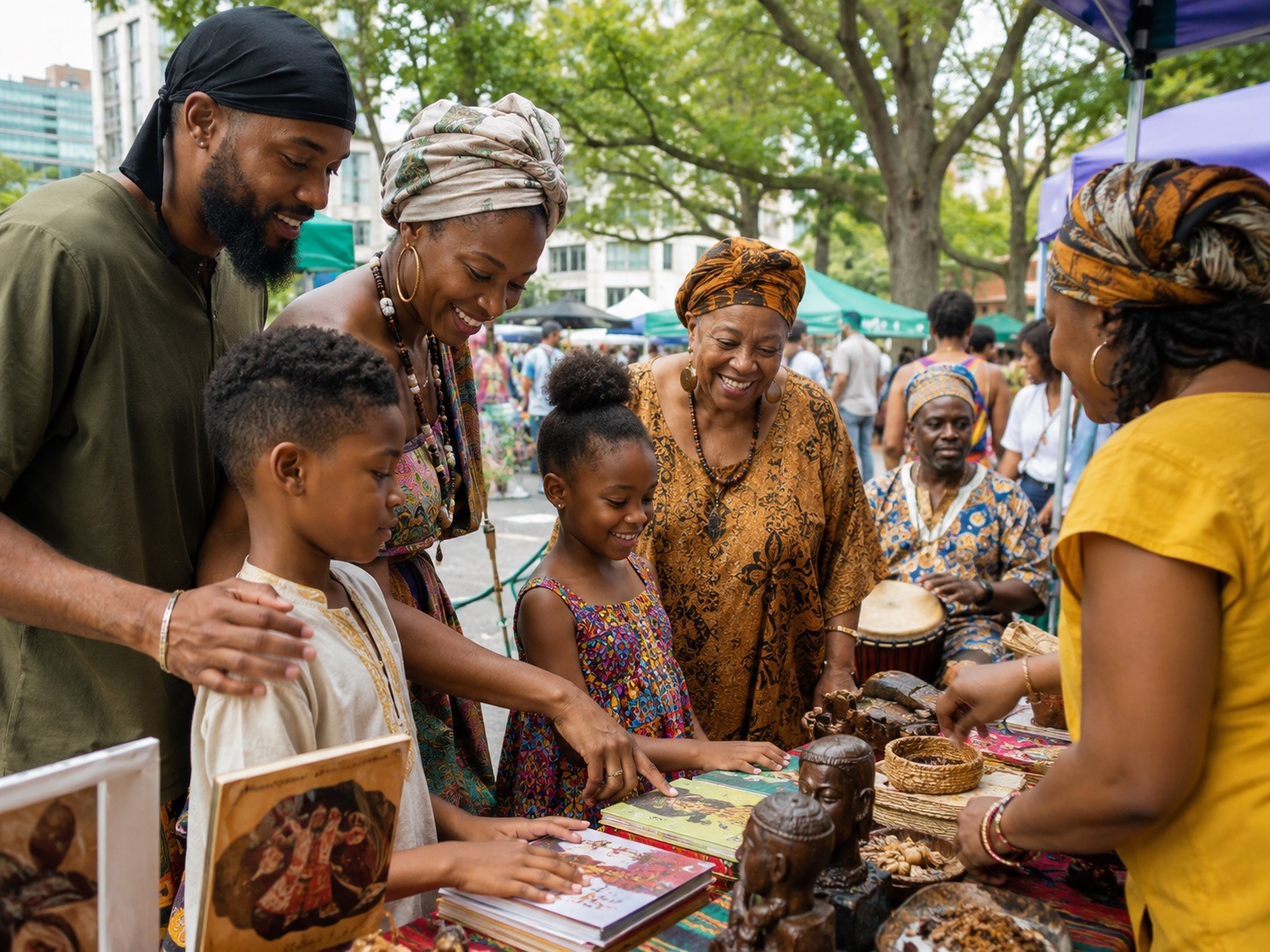
How Cultural Markets Strengthen Families Across The Black Community In The DMV.
Cultural markets are more than places to shop. They are places where families can experience community, creativity, food, music, fashion, entrepreneurship, storytelling, and cultural pride in one shared space. In the DMV, where Washington, D.C., Maryland, and Virginia are home to many African American, African, Caribbean, Afro-Latin, immigrant, and multigenerational communities, cultural markets can become powerful gathering places for families who want to feel connected to something larger than themselves. A cultural market may include food vendors, handmade jewelry, clothing, books, art, skincare products, music, children’s activities, wellness services, local organizations, community resources, and small businesses built by people with deep ties to culture and family. A child walking through a market may see fabrics, foods, languages, hairstyles, artwork, flags, books, and products that reflect the richness of the African Diaspora. A parent may meet a local business owner. An elder may recognize a food or craft from their past. A teen may discover a creative career path they had never considered before. For families across the Black community, these markets matter because they bring culture into everyday life. They show children that heritage is not only something discussed in school or celebrated once a year. It is alive in people’s work, designs, recipes, businesses, conversations, music, and community events. Markets allow families to see culture being practiced, protected, and passed forward. Cultural markets also help strengthen local economics. When families support vendors, they are often supporting parents, artists, cooks, designers, authors, farmers, beauty professionals, and entrepreneurs who are building something with skill and courage. Every purchase, review, referral, and conversation can help a local dream grow. In this way, a market visit can become both a family outing and an act of community support. 1. Cultural Markets Help Families Experience Culture In A Living Way. Culture is easiest for children to understand when they can experience it with their senses. A child may hear music, smell food cooking, touch handmade fabric, see colorful artwork, taste a dish from another part of the Diaspora, or watch a vendor explain how a product was made. These experiences make culture feel real. They move it beyond a lesson and into memory. In the DMV, cultural markets can reflect many traditions at once. Families may encounter African American soul food, Caribbean spices, West African fabrics, Afro-Latin jewelry, African-inspired art, local authors, natural hair products, handmade soaps, traditional clothing, and modern designs influenced by heritage. This variety helps children understand that the Black community is not one single story. It is wide, layered, creative, and global. Parents and caregivers can make a market visit more meaningful by asking children simple questions as they walk. What do you notice? Which table caught your attention? What food smells interesting? What do you think this item is used for? What would you ask the vendor? These questions encourage curiosity and help children pay attention to the cultural details around them. A cultural market can become a classroom without feeling like school. It teaches through experience, conversation, and discovery. Children may remember the colors, sounds, and people long after the day is over. 2. Markets Give Local Entrepreneurs A Place To Be Seen. Many small business owners begin with limited resources. They may not have a storefront, large advertising budget, or big online following. A cultural market gives them a place to meet customers face to face, share their story, show their products, and build trust with the community. For many vendors, these events are an important step in growing their business. When families visit vendor tables, they are not only looking at products. They are meeting people who have taken the risk to create something. A baker may have spent years perfecting a recipe. A jewelry maker may be carrying forward a family craft. A clothing designer may be expressing cultural pride through fabric and style. A children’s author may be creating stories that help young readers feel seen. Supporting these entrepreneurs helps keep community creativity alive. A purchase from a local vendor can help them buy more supplies, attend another event, improve packaging, support their family, or move closer to opening a larger business. Even when families cannot buy something, speaking with the vendor, taking a card, following their page, or sharing their work can still help. Markets remind children that business ownership is possible. They see real people building real products and services. That exposure can inspire them to think about their own gifts and future ideas. 3. Cultural Markets Teach Children About Entrepreneurship. A market is one of the best places to teach children how business works. Children can see products displayed, prices listed, customers asking questions, vendors explaining value, money being exchanged, and business owners managing their tables. These lessons are practical and easy to understand because children can observe them in real time. Parents can ask children to think like young entrepreneurs. What is this vendor selling? Who might want to buy it? How did they make the table attractive? What makes this product special? How does the owner talk to customers? These questions help children understand that business involves creativity, communication, planning, and service. Teens can learn even deeper lessons. They may notice branding, social media handles, packaging, payment systems, customer service, inventory, and marketing. A teen who enjoys art, cooking, fashion, photography, writing, or technology may begin to see how personal interests can become business opportunities with the right skills and discipline. Entrepreneurship should not be presented as easy. Children also need to understand that business requires hard work, patience, consistency, and responsibility. But seeing local entrepreneurs in action can help young people believe that ownership is possible and that community businesses deserve respect. 4. Food Vendors Help Preserve Diaspora Food Traditions. Food is often one of the most exciting parts of a cultural market. Families may find dishes connected to African American, Caribbean, African, Afro-Latin, Southern, or local DMV traditions. These foods may include stews, rice dishes, grilled meats, seafood, baked goods, spices, sauces, drinks, sweets, and family
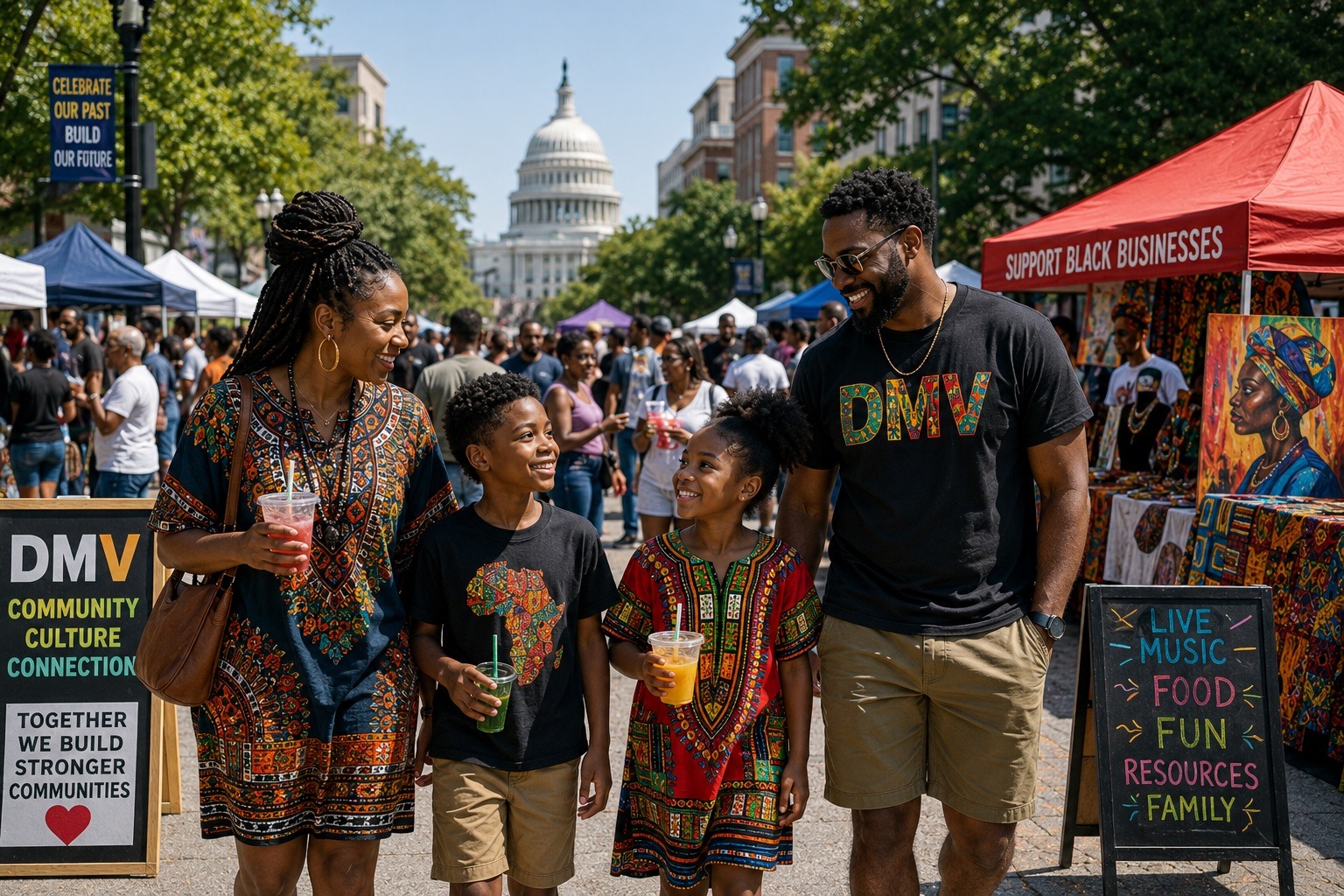
Why Local Events Matter For Black Community Families In The DMV.
Local events are one of the simplest and most powerful ways to bring people together. In the DMV, where Washington, D.C., Maryland, and Virginia are filled with many cultures, neighborhoods, histories, and community traditions, local gatherings can help families feel more connected to the people and places around them. A community event may look like a festival, business market, school program, cultural celebration, health fair, youth workshop, church gathering, neighborhood cleanup, family picnic, storytelling night, or educational seminar, but at its heart, it is a chance for people to show up and remember that they are not alone. For families across the Black community, these events can carry deep meaning. They are not only about entertainment or something to do on the weekend. They can help children see culture in real life, help parents meet other caregivers, help elders feel included, help small businesses gain support, and help young people discover positive places where they belong. When people gather in healthy community spaces, relationships begin to form, trust begins to grow, and families become more aware of the resources around them. The DMV has a special role in African Diaspora life because it includes families with African American, Caribbean, African, Afro-Latin, immigrant, faith-based, professional, student, military, and multigenerational roots. This diversity gives local events the power to introduce children and adults to many different stories, foods, languages, music styles, business owners, leaders, artists, educators, and traditions. A single afternoon at a community gathering can become a learning experience, a networking opportunity, a cultural celebration, and a family memory all at once. Local events matter because community does not grow only online. It grows when people see one another, speak to one another, support one another, and create shared experiences. In a time when many households are busy, stressed, isolated, or disconnected, showing up to local events can help rebuild the village that families need. 1. Local Events Help Families Feel A Stronger Sense Of Belonging. Belonging is one of the most important needs in family and community life. People want to know that they are part of something, that their presence matters, and that there are others around them who understand their experiences. In large metro areas like the DMV, it is possible to be surrounded by people and still feel disconnected. Families may live close to one another but not know each other’s names, needs, stories, or strengths. Local events help reduce that distance. When families attend a neighborhood festival, school gathering, cultural celebration, or community resource day, they begin to see familiar faces. A parent may meet another parent from the same school. A child may recognize someone from a youth program. An elder may reconnect with someone from church or a local organization. These small connections help people feel more rooted in the place where they live. For African Diaspora families, belonging can be especially meaningful when events reflect culture, history, and shared identity. A child who sees music, food, clothing, language, art, and stories connected to their community may feel a stronger sense of pride. Parents may feel encouraged when they see other families raising children with similar hopes and challenges. Elders may feel honored when their memories and traditions are included. Belonging does not happen in one moment, but local events create the conditions for it to grow. Every greeting, conversation, shared meal, performance, workshop, and family outing adds another thread to the fabric of community life. 2. Local Events Give Children A Living Connection To Culture. Children need to see culture as something alive, not only something discussed in school or during special months. Local events can help them experience culture through sound, movement, taste, conversation, art, and community presence. They may hear African drumming, gospel music, go-go, reggae, spoken word, jazz, Afrobeat, or storytelling. They may taste foods from different parts of the Diaspora, see traditional clothing, meet local artists, or watch performances that teach history through creativity. These experiences can stay with children in a deeper way than a simple lesson. A child may forget a paragraph from a textbook, but they may remember dancing at a festival, asking a vendor about handmade jewelry, hearing an elder speak about history, or tasting a dish connected to another part of the African Diaspora. Local events turn culture into memory. Parents and caregivers can make these outings even more meaningful by talking with children before and after the event. They can explain what kind of event they are attending, what traditions may be present, and why the experience matters. Afterward, they can ask what the child noticed, what they enjoyed, what surprised them, and what they want to learn more about. This helps children understand that culture is not distant. It is in their neighborhoods, their families, their community centers, their local businesses, and the people they meet. When children grow up experiencing culture in public and joyful spaces, they are more likely to carry pride into adulthood. 3. Community Events Help Parents And Caregivers Build Support Networks. Parenting can feel lonely when caregivers do not have a strong support system. Many parents are balancing work, school schedules, transportation, bills, health needs, childcare, homework, and emotional responsibilities. Even when they are doing their best, they may feel like they are carrying too much alone. Local events can help parents meet other caregivers who understand the daily realities of raising children. A conversation at a school event, parenting workshop, health fair, youth sports activity, or community gathering can lead to meaningful support. One parent may learn about a tutoring program. Another may find out about a scholarship opportunity, a youth mentorship group, a local doctor, a small business service, or a family-friendly event. These connections often happen naturally when people are in the same space. Support networks do not always begin with deep friendships. Sometimes they begin with a simple exchange of information, a shared concern, or a friendly conversation. Over time, these small connections can become relationships that help families navigate challenges with
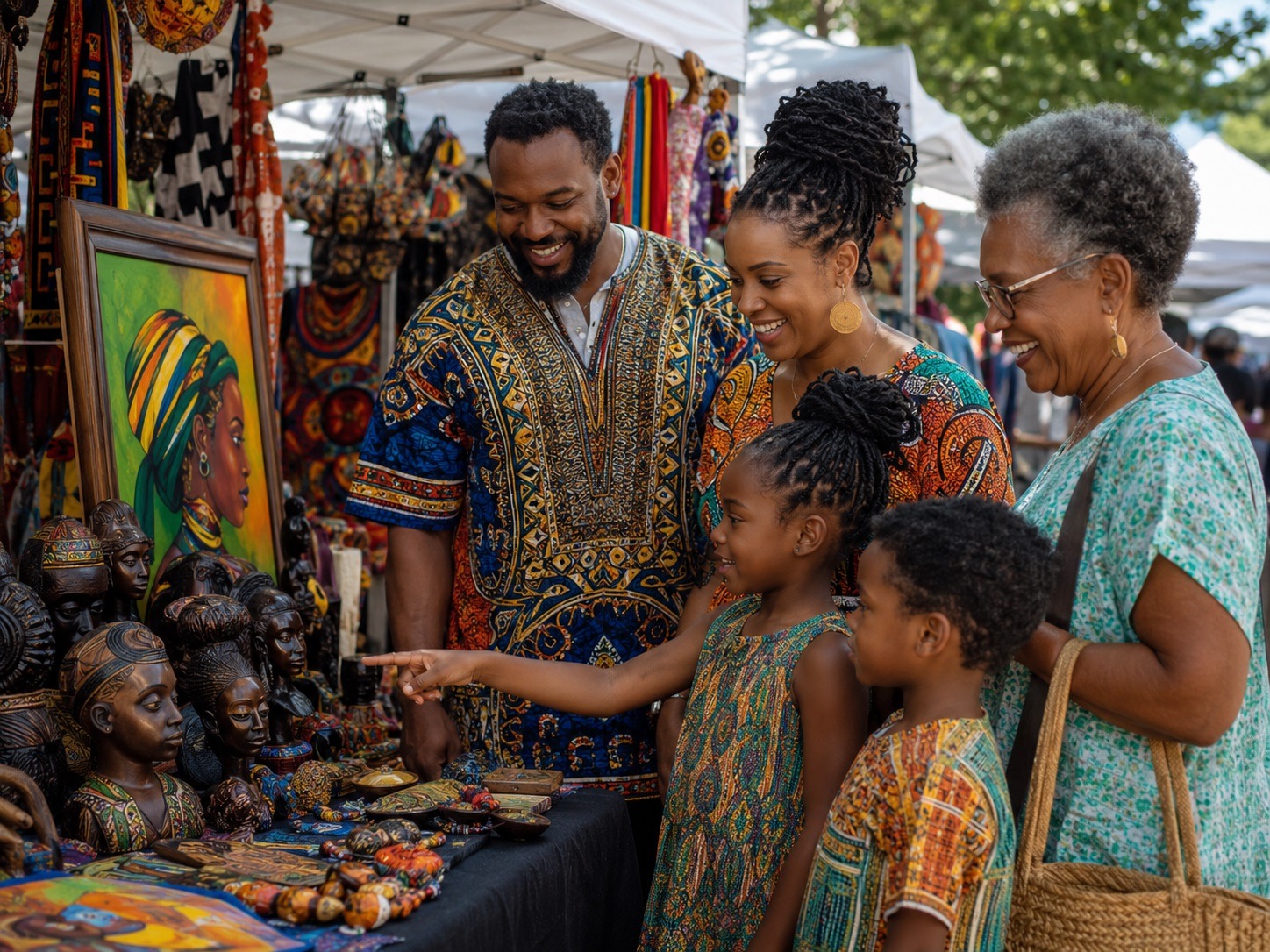
Family-Friendly Ways To Explore African Diaspora Culture In The DMV.
The DMV is full of culture. Across Washington, D.C., Maryland, and Virginia, families can find African Diaspora influence in food, music, museums, art, churches, mosques, bookstores, festivals, markets, schools, businesses, and community gatherings. For Black families, exploring culture does not always require a big trip or expensive event. Sometimes it begins with a meal, a conversation, a walk through a historic neighborhood, a visit to a local market, or a story shared by an elder at the kitchen table. Culture becomes stronger when families experience it together. Children need to see that their history is not only something in a textbook. It is alive in the people around them, the food they eat, the music they hear, the businesses they support, and the stories their families carry. The DMV gives families many ways to make those connections real. 1. Visit Local Museums And Cultural Spaces. Museums can help children understand history in a deeper way. Instead of only hearing about the past, they can see photographs, clothing, artwork, documents, inventions, music, and stories that connect to real people and real events. A museum visit can open conversations about courage, creativity, struggle, leadership, migration, and community strength. Parents can make the visit more meaningful by asking children simple questions: What did you notice?What surprised you?Which story stood out to you?What do you want to learn more about? The goal is not to make children memorize facts. The goal is to help them feel connected to the people and stories that shaped the world they live in. 2. Support Black-Owned And Diaspora-Owned Restaurants. Food is one of the most enjoyable ways to explore culture. The DMV has many Black-owned, African-owned, Caribbean-owned, and Diaspora-owned restaurants where families can experience different flavors, traditions, and stories. A family meal can become a cultural lesson. Parents can talk with children about where certain dishes come from, what ingredients are used, and why food traditions matter. A child may try jollof rice, jerk chicken, injera, plantains, collard greens, rice and peas, suya, curry, seafood, stews, or sweet treats connected to different parts of the African Diaspora. Food gives children a way to experience culture through taste, smell, and family conversation. 3. Attend Community Festivals And Cultural Events. Festivals are powerful because they bring culture to life. Families can experience music, dance, food, fashion, vendors, art, storytelling, and community pride all in one place. Children may see flags, hear different languages, watch traditional dances, meet local artists, and learn about cultures they may not encounter every day. A festival can help children understand that Black culture is not one single thing. It is wide, diverse, creative, and global. Families can make a simple plan before attending: Choose one food to try.Choose one performance to watch.Visit one vendor.Learn one new cultural fact.Take one family photo. Small goals can help children stay engaged. 4. Explore Black-Owned Bookstores And Libraries. Books help children connect with culture through imagination and knowledge. Black-owned bookstores, community libraries, and cultural book events can introduce families to stories by Black authors, African writers, Caribbean writers, poets, historians, children’s authors, and local voices. Families can look for books about: African history. African American leaders. Caribbean culture. Black inventors. Family stories. Children’s confidence. African folktales. Black joy. Diaspora food. Music and art. Local DMV history. A book does not have to be long to be powerful. One good story can start a conversation that stays with a child for years. 5. Use Music As A Cultural Bridge. Music connects generations. In the DMV, families can hear gospel, go-go, jazz, R&B, hip-hop, reggae, Afrobeat, soul, Caribbean rhythms, and traditional African sounds. Parents and grandparents can introduce children to songs they grew up with. Teens can share the music they love now. Families can talk about how music carries history, joy, resistance, celebration, and identity. A simple family playlist can become a cultural bridge. Each family member can choose a song and explain why it matters. This helps children understand that music is not only entertainment. It is memory, expression, and connection. 6. Visit Historic Neighborhoods And Landmarks. The DMV is rich with Black history. Families can take local walks or short trips to explore neighborhoods, landmarks, churches, schools, community centers, and historic sites connected to African American life. These outings help children understand that history happened close to home. They may learn about leaders, educators, artists, activists, business owners, faith communities, and families who helped shape the region. A parent can say: “People who looked like us helped build this place.” That message matters. It helps children see themselves as part of a continuing story. 7. Shop With Local Black And Diaspora Vendors. Markets, pop-ups, festivals, and small businesses give families a chance to support culture and community economics at the same time. Children can see Black entrepreneurs selling clothing, jewelry, books, food, art, skincare, home goods, music, and creative products. Parents can explain why support matters: “When we buy from local businesses, we help families grow.” “When we support Black-owned businesses, we help strengthen the community.” “When we buy from artists, we help culture continue.” Shopping can become more than spending money. It can become a lesson in ownership, creativity, and community support. 8. Ask Elders To Share Family Stories. Culture is not only found outside the home. It lives inside the family. Elders carry memories that children may never hear unless someone asks. They may remember old neighborhoods, family recipes, migration stories, church traditions, school experiences, work life, music, language, and lessons from earlier generations. Families can ask elders: What was your childhood like?What foods did your family cook?What music did you love?What traditions do you want us to keep?What lesson helped you through hard times? These conversations help children feel rooted. They also show elders that their memories matter. 9. Cook One Diaspora-Inspired Meal At Home. Families do not always need to go out to explore culture. They can bring culture into the kitchen. Choose one dish connected to the African Diaspora and prepare it
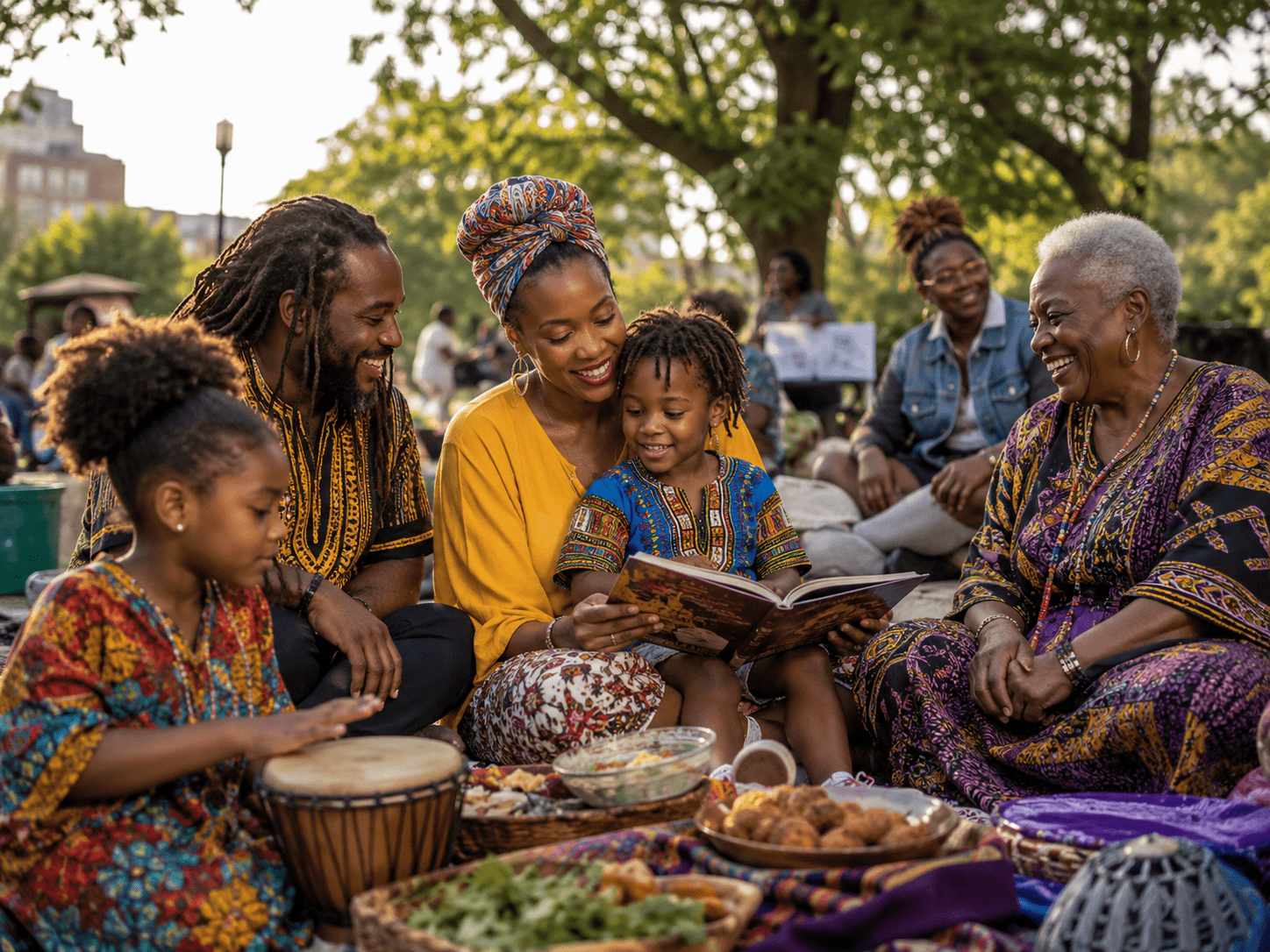
Why DMV Families Should Celebrate African Diaspora Culture Year-Round.
Culture should not only be celebrated during special months, holidays, festivals, or major events. For African Diaspora families across the DMV — Washington, D.C., Maryland, and Virginia — culture lives in everyday moments. It lives in the food prepared at home, the music played during a Saturday cleaning session, the language spoken between relatives, the stories elders share, the businesses families support, and the values passed from one generation to the next. The DMV is one of the most culturally rich regions in the United States. It is home to African American families with deep roots in the country, African immigrant communities, Caribbean families, Afro-Latino families, and many people who carry more than one cultural identity. That diversity is powerful. But culture does not preserve itself automatically. Children need to experience it, hear it, taste it, ask questions about it, and see adults value it. When families celebrate African Diaspora culture year-round, they help young people feel rooted, confident, and proud of who they are. 1. Culture Helps Children Understand Who They Are. Children are constantly learning about identity. They learn from school, friends, social media, television, music, family conversations, and the communities around them. If families do not intentionally teach culture, children may only receive incomplete or shallow messages about who they are. Cultural connection gives children a stronger foundation. It tells them: You come from people with history.You come from people with creativity.You come from people with strength.You come from people with beauty.You come from people with wisdom. When children understand their roots, they are better prepared to walk through the world with confidence. They do not have to shrink themselves to belong. They can carry pride with them. 2. The DMV Offers Many Ways To Stay Connected. One blessing of living in the DMV is that families do not have to look far to find culture. The region offers museums, cultural festivals, African markets, Caribbean restaurants, Black-owned bookstores, churches, mosques, community centers, music events, art exhibits, historical landmarks, youth programs, and local businesses that reflect the African Diaspora. Families can make cultural connection part of regular life by visiting these places throughout the year. A Saturday outing can become a learning experience.A restaurant visit can become a conversation about food history.A community festival can help children hear music from different regions.A museum visit can help young people understand the strength of past generations. Culture becomes more meaningful when children experience it in real life. 3. Food Keeps Family History Alive. Food is one of the strongest ways families preserve culture. A meal can carry generations of memory. A recipe may come from a grandmother, an auntie, a father, a church gathering, a homeland, a southern kitchen, a Caribbean island, or a family reunion. In African Diaspora families, food often tells stories of migration, survival, creativity, celebration, and love. Families can keep food traditions alive by: Cooking with children. Writing down family recipes. Asking elders who taught them certain dishes. Visiting cultural grocery stores. Trying foods from different parts of the African Diaspora. Hosting family dinners with storytelling. Teaching children the names and meanings behind certain meals. The kitchen can become a classroom. Children may forget a formal lesson, but they often remember the smell of a favorite meal and the person who made it. 4. Music And Dance Connect Generations. Music is another powerful part of cultural connection. Across the African Diaspora, music carries history, emotion, rhythm, resistance, faith, celebration, and joy. Gospel, jazz, blues, soul, reggae, Afrobeat, hip-hop, R&B, go-go, soca, dancehall, and traditional African music all tell parts of a larger story. In the DMV, music has a special place in community life. From local sounds to global rhythms, families can use music to connect generations. Parents can play songs they grew up with. Grandparents can share music from their youth. Teens can introduce newer artists. Children can dance, ask questions, and learn how sounds travel across cultures. A family playlist can become a living archive. Music teaches without always needing words. 5. Language And Sayings Matter. Some African Diaspora families speak more than one language. Others may use family sayings, cultural expressions, spiritual phrases, regional accents, or words passed down from older generations. Language carries identity. Even simple phrases can connect children to heritage. A greeting, proverb, prayer, family nickname, or cultural expression can help a child feel connected to something larger than the present moment. Families do not need to be fluent in another language to preserve meaning. They can start with small pieces: Teach children greetings. Explain family sayings. Share proverbs. Practice pronunciation. Talk about what certain words mean. Encourage children to ask elders about phrases they use. Words carry memory. When families protect language, they protect part of their story. 6. Black-Owned And Diaspora-Owned Businesses Deserve Support. Culture is also preserved through business. Across the DMV, Black-owned and Diaspora-owned businesses help keep communities alive. Restaurants, boutiques, salons, bookstores, grocery stores, creative studios, wellness services, consultants, childcare providers, artists, and event organizers all contribute to cultural and economic strength. Supporting these businesses is more than shopping. It is investing in community. Parents can teach children why support matters: “When we spend money here, we help a family business grow.” “When we support this restaurant, we help preserve food traditions.” “When we buy from this artist, we help culture continue.” Children should see entrepreneurship as part of cultural pride. They should know that businesses can carry stories, values, and legacy. 7. Elders Are Living Libraries. Every community has elders who carry history that may never be written down. They remember how neighborhoods changed. They remember family migrations. They remember traditions, challenges, celebrations, and lessons from the past. Families should make time to listen. Children can ask elders: What was your childhood like? What foods did your family cook? What music did you love? What did your parents teach you? What traditions should we keep? What challenges did our family overcome? What are you most proud of? These conversations can become priceless. A
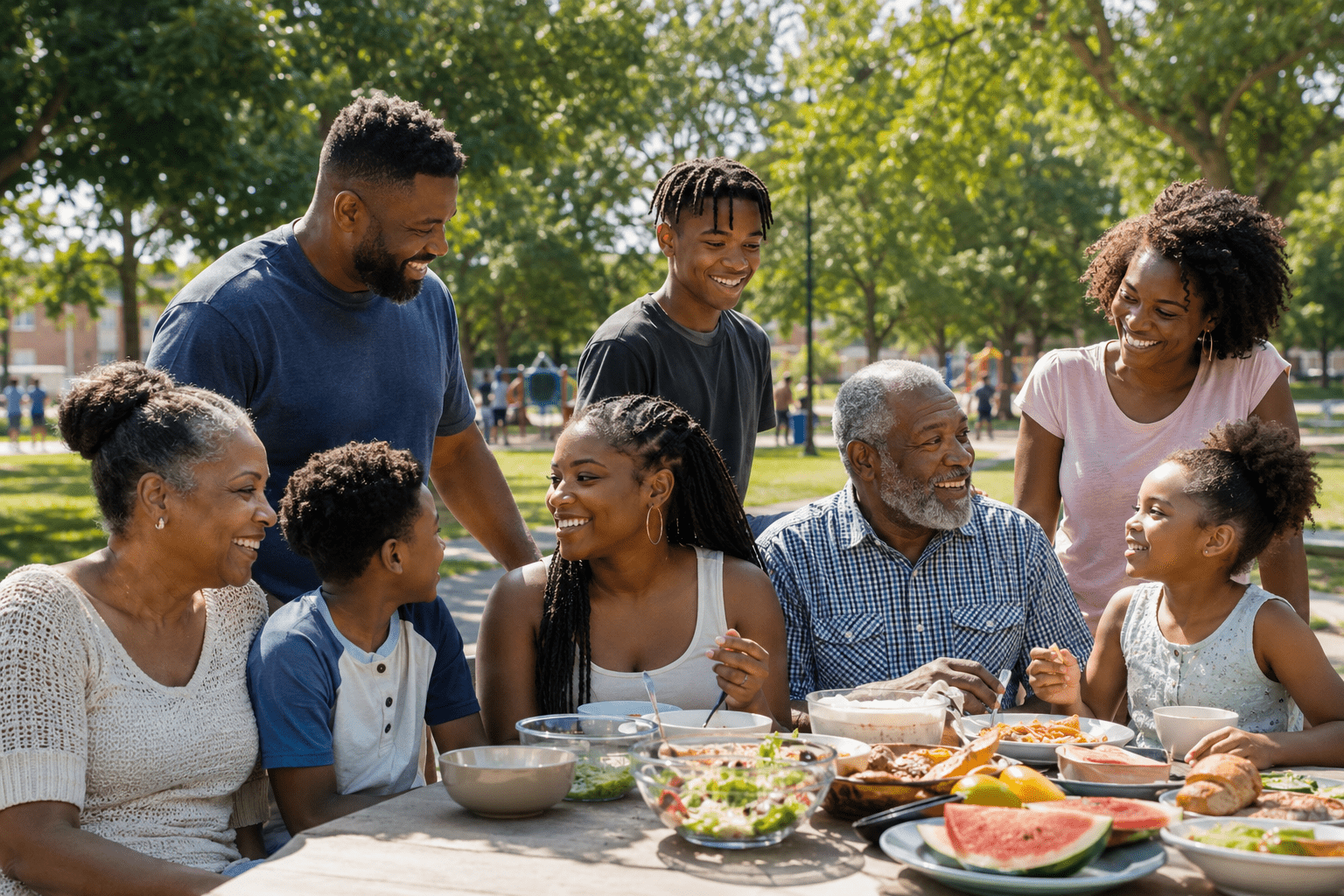
How DMV Families Can Help Children Stay Connected To African Diaspora Culture This Summer.
Summer gives families a special opportunity to slow down, reconnect, and create memories. With children out of school and more community activities happening across Washington, D.C., Maryland, and Virginia, families can use the season to help young people feel more connected to their culture and identity. For African Diaspora families in the DMV, culture can come from many places. Some families have roots in Africa. Others have Caribbean, African American, Afro-Latino, or immigrant experiences. Many children are growing up with a combination of traditions, languages, foods, music, and family stories. This diversity is a strength. But children do not automatically understand the meaning behind their culture. They need opportunities to experience it, ask questions, and feel proud of where they come from. Summer is a beautiful time to make that connection feel natural, joyful, and personal. 1. Start With Family Stories. Children often connect with culture through stories. They want to know where their parents grew up, what their grandparents experienced, how family traditions started, and what life was like before they were born. Families can make time for storytelling during summer meals, road trips, family gatherings, or quiet evenings at home. Simple questions can open meaningful conversations: Where did our family come from? What was your childhood like? What traditions did your parents teach you? What challenges did our family overcome? What are you most proud of in our family history? These stories help children understand that they are part of something larger than themselves. A child who knows their family story often feels more grounded, confident, and connected. 2. Use Food As A Cultural Classroom. Food is one of the easiest and most enjoyable ways to teach culture. A dish can carry history, memory, and family identity. Families can prepare meals that reflect their background and invite children to help. This may include African, Caribbean, African American, or regional family recipes. Cooking together gives parents and elders a chance to explain where the dish comes from, why it matters, and when it is traditionally served. Children can help wash vegetables, stir ingredients, measure spices, set the table, or ask questions while the meal is prepared. The goal is not only to eat. The goal is to create connection. A kitchen can become one of the most powerful places for cultural education. 3. Explore Local Cultural Events. The DMV is filled with opportunities to experience Black and African Diaspora culture. Families can look for community festivals, museum programs, outdoor performances, cultural markets, art exhibits, library events, food celebrations, and youth activities. These events give children a chance to see culture in a living and exciting way. They may hear music, taste new foods, watch performances, meet local artists, or learn about traditions from different parts of the African Diaspora. Parents can make the experience more meaningful by asking children what they noticed and enjoyed. Questions like these can help: What was your favorite part of the event? What food or music did you enjoy? What did you learn that you did not know before? What would you like to explore more? Local cultural events turn learning into experience. 4. Introduce Children To Music And Dance. Music and dance are deeply connected to African Diaspora culture. They carry history, creativity, rhythm, emotion, and community. Families can create playlists that include music from different generations and regions. This may include gospel, jazz, soul, reggae, Afrobeat, hip-hop, R&B, Caribbean music, African traditional music, and other cultural styles. Parents and grandparents can share songs they grew up listening to and explain why those songs matter. Children can also share the music they enjoy. Dancing together at home, attending a performance, or learning about the history behind a music style can help children feel connected to culture in a fun and natural way. Music often reaches young people in ways that lectures cannot. 5. Support Black-Owned And Diaspora-Owned Businesses. Supporting local businesses is another way to strengthen cultural connection. Black-owned and Diaspora-owned businesses often reflect the creativity, values, food, art, fashion, and stories of the communities they serve. Families can visit local restaurants, bookstores, boutiques, markets, salons, artists, vendors, and service providers across the DMV. Children should understand that supporting a business is not only about buying something. It is also about helping families grow, creating local opportunities, and strengthening the community economy. Parents can explain why they choose to support certain businesses and encourage children to ask questions about the people behind the brand. Community support becomes more meaningful when children understand the purpose behind it. 6. Teach Culture Through Books And Films. Books and films can help children explore culture in a deeper way. A family reading night, documentary evening, or movie discussion can open conversations about identity, history, creativity, and community values. Parents can choose age-appropriate books by Black authors, stories about African and Diaspora history, biographies of leaders, or children’s books that celebrate family, heritage, and confidence. Teens may enjoy documentaries, interviews, short films, or conversations about music, fashion, business, sports, or social change. The most important part is the discussion afterward. Families can ask: What did you learn? Which person or story inspired you? What did the story teach you about courage? How does this connect to our family or community? Books and films become more powerful when families talk about them together. 7. Make Space For Language And Tradition. Some families in the DMV speak more than one language or have cultural traditions that may not always be practiced consistently. Summer can be a good time to bring those traditions into everyday life. Children can learn greetings, songs, sayings, prayers, family expressions, or simple phrases connected to their heritage. They can also learn about special clothing, holiday traditions, ceremonies, or ways of showing respect to elders. Tradition does not have to feel forced. It can be shared in small ways. A phrase spoken at home, a family recipe, a song, or a story can help children feel connected to their roots. Small traditions often become powerful memories.
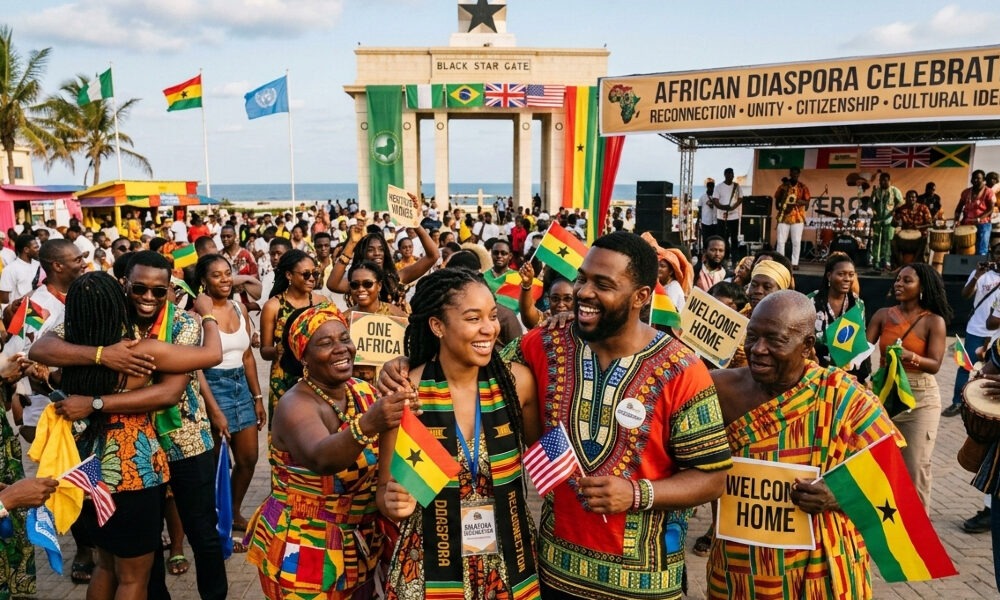
Why the DMV Is a Powerful Home for African Diaspora Families.
The DMV — Washington, D.C., Maryland, and Virginia — is more than a region on the map. For many African Diaspora families, it is a place of opportunity, culture, education, entrepreneurship, faith, family, and community connection. It is a place where people from different countries, traditions, languages, and backgrounds come together while still holding tightly to who they are. Across the DMV, you can find families with roots in Ethiopia, Nigeria, Ghana, Eritrea, Cameroon, Sierra Leone, Liberia, the Caribbean, and African American communities with deep generational history in the United States. Each family brings its own story, but together they help create a rich and powerful community identity. For African Diaspora families, the DMV is not just where people live. It is where culture grows, children are shaped, businesses are built, and families find belonging. 1. The DMV Carries Deep Black History. Washington, D.C. has long been connected to Black history, leadership, education, politics, activism, and culture. From historic neighborhoods to major institutions, the region has served as a gathering place for Black voices, ideas, and movements. For African Diaspora families, this history matters. It reminds children that they are growing up in a region where Black excellence has always had a presence. It also gives families opportunities to teach history outside of textbooks. Museums, monuments, universities, community events, churches, cultural festivals, and local organizations all help tell the story of Black strength and resilience. When young people see this history around them, they can better understand their place in a larger story. 2. The DMV Is Rich With Cultural Diversity. One of the most beautiful things about the DMV is its diversity. A family can attend an Ethiopian cultural event, visit a Caribbean restaurant, shop at an African market, hear multiple languages in one neighborhood, and meet people from many different parts of the world. This diversity helps children grow up with a broader understanding of identity. They learn that Black culture is not one single experience. It is African, African American, Caribbean, Afro-Latino, immigrant, southern, urban, spiritual, artistic, entrepreneurial, and more. When families are surrounded by cultural diversity, children learn respect. They learn pride. They learn that their own heritage is valuable, while also appreciating the traditions of others. 3. Food Helps Families Stay Connected. Food is one of the strongest ways African Diaspora families preserve culture. In the DMV, food connects people across generations and backgrounds. Whether it is injera, jollof rice, jerk chicken, collard greens, plantains, suya, rice and peas, sambusa, or homemade stew, food carries memory and meaning. Restaurants, family kitchens, community gatherings, and cultural events all become places where stories are shared. A meal can remind someone of home, childhood, grandparents, celebrations, or a country they left behind. For children born or raised in the United States, food can help them understand where their family comes from. It gives them a taste of heritage and a reason to ask questions. Food is not only nourishment. It is identity. 4. Education Is A Major Part Of Family Dreams. Many African Diaspora families come to the DMV with a strong belief in education. Parents often encourage their children to work hard, respect learning, and prepare for future opportunities. Education is seen as a path toward stability, leadership, and generational progress. The region offers access to schools, colleges, libraries, tutoring programs, mentorship opportunities, and professional networks. Families often make sacrifices to help children succeed academically. But education should not only be about pressure. Children also need encouragement, emotional support, and guidance. They need to know that their value is not only measured by grades, but also by character, creativity, kindness, and growth. Strong education works best when it is supported by strong family connection. 5. Faith And Community Spaces Help Families Belong. For many African Diaspora families, faith communities play an important role in daily life. Churches, mosques, prayer groups, and spiritual gatherings often provide more than worship. They provide friendship, guidance, support, mentorship, cultural connection, and help during difficult times. Community spaces also help families feel less alone. New immigrants may find people who speak their language or understand their journey. Parents may find other families raising children with similar values. Young people may find mentors who encourage them to stay grounded. Belonging matters. When families feel connected, they are more likely to thrive. 6. The DMV Supports Black Entrepreneurship. The DMV is also home to many Black-owned and immigrant-owned businesses. Restaurants, salons, boutiques, consulting firms, childcare services, tutoring programs, transportation companies, health services, creative studios, and professional offices all contribute to the local economy. Entrepreneurship is important because it creates independence and opportunity. When families support Black-owned and Diaspora-owned businesses, they help money circulate within the community. Small businesses also become examples for young people. A child who sees someone from their community owning a business may begin to believe, “I can build something too.” 7. Young People Need Cultural Roots And Modern Tools. Children of the African Diaspora often grow up balancing multiple worlds. They may speak English at school and another language at home. They may enjoy American culture while also being expected to respect family traditions. They may feel connected to their parents’ homeland, even if they have never lived there. This can be beautiful, but it can also be confusing. Young people need space to ask questions about identity without feeling judged. They need adults who can help them understand that they do not have to choose one part of themselves over another. They can be African and American. Caribbean and American. Black and immigrant. Traditional and modern. Rooted and growing. 8. Community Connection Protects The Next Generation. The future of African Diaspora families in the DMV depends on connection. Children need mentors. Parents need support. Elders need respect. Businesses need customers. New families need guidance. Young adults need opportunities. When the community stays connected, everyone becomes stronger. Cultural events, family programs, youth mentorship, business networking, educational workshops, and community storytelling all help build a stronger future. A connected community
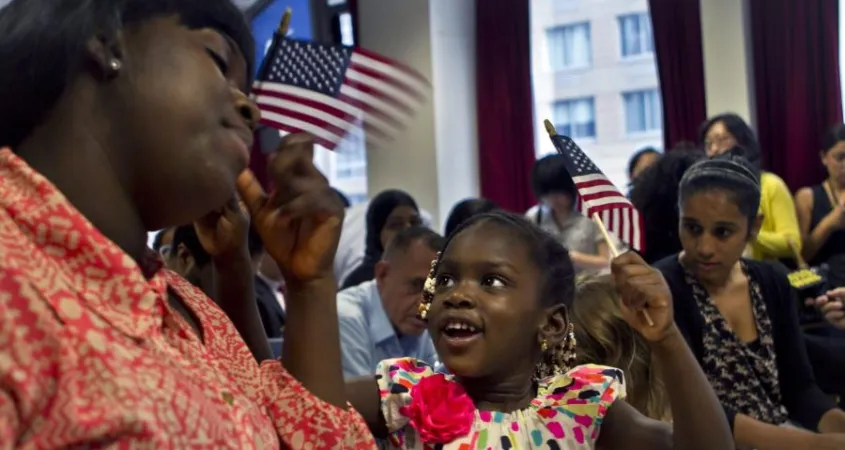
The African Diaspora and the American Dream: How Black Immigrants Are Redefining Success in the DMV
When Ashaki Robinson moved to Bowie, Maryland from Michigan, she could hardly believe what surrounded her. Not just Black professionals. Not just Black families doing well. What struck her was the scale of it — the concentration of Black wealth, Black ambition, Black achievement, sitting in suburbs that barely a generation ago were closed to families that looked like hers. “Not just middle class but, like, rich Black people,” she said. Robinson’s reaction captures something real and important about the DMV — something that the rest of America does not fully understand and that even many people who live here take for granted. This region is home to the largest concentration of wealthy Black people in the United States. It is home to the fourth-largest African immigrant population in the country. It is where Black immigrants from across the continent arrive with degrees, ambition, and a particular vision of what is possible — and where, in remarkable numbers, they build it. But the story of the African Diaspora and the American Dream in the DMV is not simply a success story. It is a complex, layered, deeply human story — full of extraordinary achievement and real barriers, of community and isolation, of pride and political vulnerability. In 2025, as immigration policy becomes one of the most contentious issues in American public life, that story has never been more important to tell. This is that story. Who Is Actually Here — The Scale of African Diaspora Life in the DMV The DMV region holds the fourth-largest African immigrant population in the United States — and that figure is almost certainly an undercount. Prince George’s County Council member Wala Blegay, herself a daughter of African immigrants, has pointed out that census data typically counts only first-generation immigrants and classifies African immigrants broadly as “Black,” erasing the specificity of their origins and contributions. “I think we’re saying that maybe around 20 percent of the population is really not properly counted,” Blegay said, “because they don’t even count someone like myself, who is a second generation.” What the data does confirm is striking. Maryland’s immigrant community makes up 21 percent of the state’s labor force — a higher share than most neighboring states. Over 300,000 Black federal workers are concentrated in the D.C. metro region alone, making the federal government the single largest employer of Black professionals anywhere in the country. The African immigrant population in D.C. itself grew by nearly 60 percent since the year 2000. These are not peripheral contributors. They are central to what the DMV is — economically, culturally, politically, and demographically. Understanding them requires more than a census table. It requires their stories. Why They Come — The Forces That Drive African Migration to the DMV African immigrants do not come to the DMV randomly. They come because the region has a specific gravitational pull that has been building for over sixty years. It begins with embassies. Washington, D.C. is home to more embassies than almost any other city in the world — including embassies from virtually every African nation. Diplomats, embassy staff, and international organization employees from the continent arrived in Washington from the 1950s onward, as newly independent African nations established diplomatic presences in the American capital. Those first arrivals created networks, communities, and a gravitational pull that drew family members and fellow countrymen in their wake. Howard University accelerated this pull dramatically. For over a century, Howard has been the premier Black university in the United States and one of the most internationally connected — attracting African students and scholars from across the continent who often stayed after graduation, building careers and raising families in the DMV. Remi Duyile, a Nigerian-born adjunct professor at Bowie State University who arrived in the early 1980s, described the dynamic simply: “Even though you’re far away from your country, your embassy represents you, your country. So that helps people to naturally gravitate towards the DMV area. People want to be among those that are their own.” Then came the refugee waves. Between 1983 and 2004, over 12,000 sub-Saharan African refugees were resettled in the D.C. metro area, fleeing conflict in Ethiopia, Eritrea, Somalia, and across the continent. The Diversity Visa Program in the 1990s opened additional pathways for educated Africans from underrepresented countries. The word spread — within diaspora networks, family-to-family, community-to-community — that the DMV was welcoming, that opportunity existed, and that community was already there. “Many felt that this was a welcoming community,” said Wala Blegay. “They started raising their kids here, and they started to tell others to come. So we have had a huge amount of African immigrants start to move here.” Redefining the Dream — What Success Looks Like for the African Diaspora The traditional American Dream — a house, a stable job, a better life for your children than you had — is not exactly what drives most African immigrants to the DMV. Their vision is often more expansive, more explicitly tied to community, and more deliberately connected to both the country they left and the one they are building in. Consider the educational profile. Nigerian immigrants are statistically one of the most highly educated immigrant groups in the entire United States — with college graduation rates that exceed the national average by a significant margin. Ethiopian, Ghanaian, Cameroonian, and Kenyan immigrants show similar patterns. They arrive not as unskilled laborers but as professionals — engineers, doctors, nurses, lawyers, professors, entrepreneurs — who have invested enormously in their own human capital before they ever stepped on American soil. And the data on immigrant economic contribution is extraordinary. A 2025 analysis of the Fortune 500 revealed that 46.2 percent of America’s largest companies — 231 out of 500 — were founded by immigrants or their children. These companies generated 8.6 trillion dollars in revenue in fiscal year 2024 and employed over 15.4 million people worldwide. Immigrants built nearly half of America’s largest corporations — not despite immigration, but through it. In the DMV specifically,
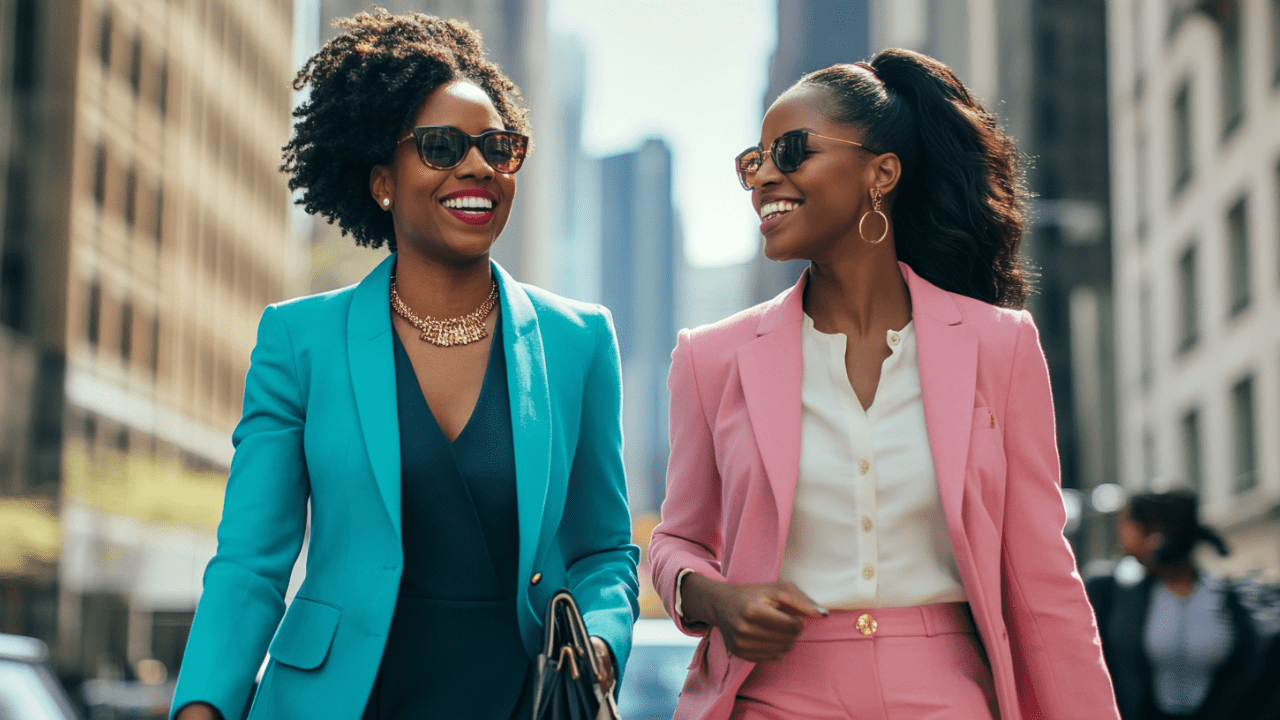
How Black Women Entrepreneurs in the DMV Are Breaking Barriers and Building Empires
Madam C.J. Walker did not wait. The first self-made female millionaire in American history — born to formerly enslaved parents in Louisiana in 1867, orphaned at seven, married at fourteen, widowed at twenty — looked at a country that offered her almost nothing and decided to build something anyway. She built a haircare empire. She built a factory. She built a national network of sales agents, most of them Black women, who she equipped with both product and economic opportunity. She said: “I had to make my own living and my own opportunity. Don’t sit down and wait for the opportunities to come. Get up and make them.” More than a century later, Black women across the DMV are living that philosophy at a scale that would astonish even Walker. They are the fastest-growing group of entrepreneurs in the United States. They are building IT firms in Waldorf, Maryland and wine subscription businesses that challenge the entire dynamics of a historically white industry. They are running salons in Prince George’s County that have become community institutions. They are launching consulting firms, healthcare practices, event companies, tech startups, and media brands — often simultaneously holding down full-time jobs, raising children, and supporting extended family. This blog is a celebration of what Black women entrepreneurs in the DMV are building — and an honest account of what they are building it against. The Numbers Are Extraordinary — and Still Not Getting Enough Attention Black women make up less than ten percent of the U.S. population. They have emerged as the fastest-growing group of entrepreneurs in the country. According to the 2024 Wells Fargo Impact of Women-Owned Businesses report, Black women-owned businesses represent approximately 2.1 million enterprises — 52.1 percent of all Black-owned businesses in the United States. Between 2017 and 2020 alone, the number of Black women-owned businesses increased by nearly 20 percent, far exceeding the growth of women-owned businesses and Black-owned businesses overall. Then the pandemic hit — and rather than slowing that momentum, it accelerated it. Black women-owned businesses saw revenues surge 32.7 percent between 2019 and 2023, compared to 12.1 percent growth for all women-owned businesses during the same period. The 2025 Wells Fargo report confirmed that Black women-owned businesses are now a key engine of economic growth in the U.S., overseeing 2 million businesses that collectively employ more than 647,000 people. A Goldman Sachs survey released in May 2024 found that six in ten Black women view entrepreneurship as an important pathway to wealth creation — and that with fewer barriers, even more would start businesses to support themselves, their families, and their communities. In 2025 specifically, as federal DEI rollbacks eliminated chief diversity officer positions and left many Black women in corporate diversity roles suddenly jobless, a significant number responded by launching businesses. “What we find that Black women do is that they leave and start their own businesses,” said Mary-Frances Winters, author of Black Fatigue and an equity expert. The pattern is consistent: when corporate America closes a door, Black women build their own. The DMV’s Black Women Entrepreneurs — Building Community Through Business The DMV region has a particular concentration of Black women entrepreneur energy — driven by the presence of HBCUs, federal employment, a large and educated Black professional class, and a community that has always understood that economic self-determination is inseparable from community power. Tamika Chance of Waldorf, Maryland built T12 Technologies — an IT support firm — and grew it by learning to market herself more effectively, eventually winning new government contracts. “As a woman entrepreneur, it’s very difficult to have people speak to you and sometimes take you seriously in the services that you do,” Chance acknowledged. But she kept building anyway. Sherelle Holder, originally from Tobago, leads Karibbean Kinks — a premier salon in Prince George’s County, Maryland that has become far more than a hair business. It is a community space, a cultural anchor, and a place where the DMV’s Caribbean Diaspora community finds both excellent service and genuine belonging. “A simple beauty service can uplift the spirit,” Holder has said — and the community that has formed around her salon demonstrates exactly that. Aja Nelson opened Salon Journey at the height of the 2020 pandemic — a daring move at a moment of maximum uncertainty. Within its first year, the company scaled to multiple six figures. The salon’s in-house initiatives extend beyond styling into events, philanthropy, and community programs. Nelson’s approach has been recognized as reviving the cultivation of community at the Black hair salon — honoring a tradition in which the Black hair salon has always been as much community gathering place as beauty destination. Christi Hairston built CARRA Hosiery — a fashion brand that emerged from grief and love, founded in memory of her late sister Carra Lavonne. Every product pays tribute to her sister’s impeccable style. Founded in sorrow and built with purpose, CARRA Hosiery is a business that carries meaning beyond commerce. These stories share something important: they are not primarily about individual ambition. They are about community. Black women entrepreneurs in the DMV build businesses with their communities in mind — creating jobs, building gathering places, meeting needs that were not being met, and putting economic resources back into the communities they serve. The business is the vehicle. The community is the destination. Turning Corporate Exclusion Into Entrepreneurial Power One of the most consistent threads running through the stories of Black women entrepreneurs — in the DMV and nationally — is that corporate America’s failure to fully value, promote, and retain Black women talent has been, paradoxically, one of the most powerful drivers of Black women’s entrepreneurship. “I could only stay in corporate for ten years,” Mary-Frances Winters told the AFRO American Newspapers. “The microaggressions, the discrimination that I faced — when people see a Black woman, the assumption is you’re not as good, you’re not as smart, and you have to be twice as good.” That exhaustion — the constant proving,

Howard University: The Mecca and Its Role in Shaping the African Diaspora in the DMV
There is a place in Northwest Washington, D.C. — 256 acres in the Shaw neighborhood, sitting on a hill above Georgia Avenue — that its community does not call a campus. They call it the Yard. And they do not call the university a school. They call it the Mecca. The name carries weight deliberately. A mecca is a place that draws pilgrims — people who travel toward it because it represents something essential, something they cannot find anywhere else. For over 157 years, Howard University has functioned exactly that way: as a gathering point for Black intellectual life, a training ground for Black leadership, a laboratory for the ideas and movements that shaped American history, and a home for people of African descent from across the world who came here to learn, to grow, and to belong. For the African Diaspora community in the DMV — whether you attended Howard, sent your children there, live in its shadow, or simply benefit from the generations of leaders it produced — the Mecca is not just a university. It is a landmark, a legacy, and a living force in the community around it. This is the full story of what Howard is, what it has built, and why it matters more right now than it ever has. Founded in Crisis, Built for Excellence — Howard’s Origin Story Howard University was established by Congress on March 2, 1867 — just two years after the end of the Civil War. The country was in the middle of Reconstruction, the formerly enslaved were navigating freedom without the education, capital, or institutional support that freedom required, and the question of what America owed its Black citizens was being asked and largely evaded at every level of government. The institution was named after General Oliver Otis Howard — the head of the Freedmen’s Bureau, who worked with Congress to charter the university and later served as its president from 1869 to 1874. The original concept was modest: a theological seminary to train Black ministers. Within weeks, the vision expanded to something far more ambitious — a full university open to all, with the principal purpose of educating African Americans who had been systematically denied access to higher education for their entire lives. The first five students to enroll were, remarkably, daughters of white faculty members. But the university’s mission was never in question: Howard was built for Black education, Black leadership, and Black excellence — at a moment when those ideas were considered radical by the American mainstream. Mordecai Wyatt Johnson, who became Howard’s president in 1926, transformed it into the modern research university it is today — building its professional schools, expanding its faculty, and establishing the institutional seriousness that would attract some of the greatest Black minds in American history to its campus as students, professors, and scholars. The Numbers That Tell the Full Story of Howard’s Impact Before going further into the human stories, it is worth sitting with some numbers — because the scale of Howard’s contribution to Black America and the African Diaspora is genuinely staggering. Howard has educated more than half of the Black doctors, dentists, and pharmacists in America — a statistic that reflects what Howard’s College of Medicine and College of Dentistry have meant to Black health access for over a century. The College of Medicine was the first and oldest at any HBCU According to a recent White House report, HBCUs produce 40 percent of Black engineers, 50 percent of Black teachers, 70 percent of Black doctors and dentists, and 80 percent of Black judges — and Howard, as the nation’s flagship HBCU, drives a significant portion of those numbers Howard produces more STEM PhDs than any other institution — a fact that directly challenges every stereotype about Black students and STEM fields In February 2025, Howard became the first HBCU to achieve the Research One (R1) Carnegie Classification — the highest designation for doctoral research activity in the country, putting it in the company of institutions like MIT, Stanford, and Johns Hopkins. It is the only HBCU with this designation In November 2025, MacKenzie Scott donated an $80 million gift to Howard — one of the largest in its history. Scott has now donated $132 million to Howard in recent years, recognizing the institution’s extraordinary return on investment for the Black community Howard’s alumni network spans over 130,000 leaders worldwide across every industry and every continent Howard’s traditional MBA program is the only HBCU program ranked among Fortune’s 2025 Best MBA Programs Howard’s law school graduated Charlotte E. Ray in 1872 — the first Black woman lawyer in the United States. It ranks among the top 20 public service law schools in the country These are not legacy statistics from an institution resting on historical achievements. They are current, active, and growing — reflecting a university that is producing at the highest level right now. The Alumni Who Changed the World — Howard’s Human Legacy The measure of any university is ultimately its people — and Howard’s alumni roster is, by any measure, one of the most extraordinary collections of achievers produced by any single institution in American history. Thurgood Marshall studied at Howard’s School of Law, where he trained under the great Charles Hamilton Houston — himself a Howard law graduate and the architect of the legal strategy that would eventually dismantle school segregation. Marshall went on to argue Brown v. Board of Education before the Supreme Court, winning the decision that declared segregation unconstitutional, before becoming the first African American Supreme Court Justice in 1967. The legal framework of modern American civil rights runs directly through Howard’s law school hallways. Kamala Harris — the first woman, first Black American, and first Asian American Vice President of the United States — is a Howard alumna, having graduated in 1986 with a degree in political science and economics. She returned to Howard’s campus during the 2024 election season, standing in front of Frederick Douglass Memorial
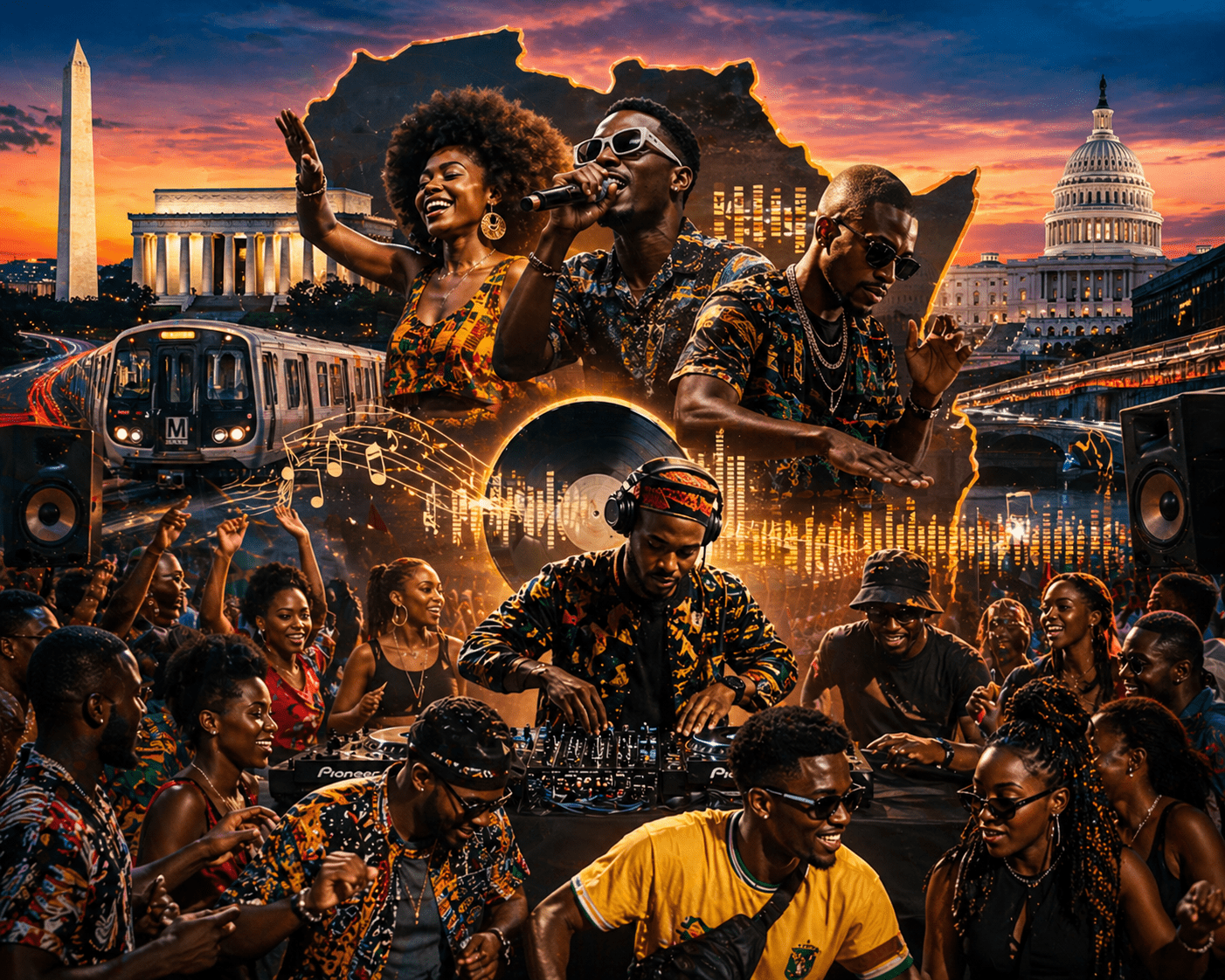
African Diaspora Music in the DMV: How Afrobeats, Highlife and Amapiano Are Taking Over
It is a Friday night in Washington, D.C. At a rooftop venue in Northeast, the bass drops — not the familiar thud of hip-hop, but the deep, rolling percussion of Amapiano, a South African genre built on log drums and shakers that has rewritten what a dance floor sounds like in the 21st century. Bodies move in unison. The crowd is Black, beautiful, and from everywhere — Nigeria, Ethiopia, Cameroon, Ghana, South Africa, the Caribbean, and deep in the roots of American soil. Languages mix. Accents meet. And for a few hours, the music makes the whole thing feel inevitable. This is the DMV’s African Diaspora music scene — and it is one of the most vibrant, diverse, and culturally rich music communities in the United States. Afrobeats nights, Amapiano day parties, Highlife evenings, Afrobeats block parties and jollof cook-offs, festival stages featuring artists from Lagos to Johannesburg to Accra — the region’s African Diaspora has built a music culture that is no longer niche, no longer underground, and no longer a secret. Here is the full story — where these sounds came from, why they matter, and exactly where to experience them right here in the DMV. Understanding the Sounds: Afrobeats, Highlife and Amapiano Are Not the Same Thing Before going further, it is worth being clear about what these terms actually mean — because they are often used interchangeably when they are, in fact, distinct musical traditions that happen to be traveling together in the same cultural moment. Afrobeats (with an ‘s’): Afrobeats is an umbrella term — not a single genre but a broad family of contemporary popular music that emerged from Nigeria and Ghana in the early 2000s. It fuses traditional West African rhythms with hip-hop, R&B, dancehall, and electronic music. Think Burna Boy, Wizkid, Davido, Rema, Tems, Ayra Starr. The term itself was coined in the early 2010s by British-Ghanaian DJ Abrantee, who needed a label for the new wave of African pop music rising out of Lagos and Accra. It is important not to confuse Afrobeats with Afrobeat — singular — the politically charged, jazz-infused genre pioneered by Fela Kuti in the 1960s and 70s. Both are African. Both are important. They are not the same. Highlife: Highlife is one of the oldest and most influential African popular music genres — born in Ghana in the late 19th century from the meeting of West African traditional music and European brass band influences brought by colonial contact. It is melodic, sophisticated, and deeply rooted in the rhythms of the Akan and other Ghanaian peoples. Highlife spread across West Africa, took root in Nigeria, and became a building block for nearly everything that followed — including Afrobeats, which draws directly on highlife’s guitar tones and rhythmic sensibility. Amapiano: Amapiano is the newest of the three — born in the townships of South Africa around 2012 and 2013, characterized by its distinctive log drum bass lines, jazz-inflected piano chords, and hypnotic, rolling rhythms. Artists like DJ Maphorisa, Kabza De Small, and Daliwonga built it from a local underground phenomenon into a global force. Tyla’s song ‘Water,’ which reached the Billboard Hot 100 and became the highest-charting single by a South African artist in U.S. history, introduced millions of American listeners to the Amapiano sound. Today Amapiano’s log drums appear in Afrobeats productions, pop songs, and on dance floors from Johannesburg to Washington, D.C. The Global Rise — How African Music Conquered the World The global rise of Afrobeats is one of the most remarkable stories in 21st century music — and it did not happen overnight or by accident. It happened through a combination of extraordinary talent, the democratizing power of streaming platforms, and the growing cultural influence of African Diaspora communities in cities like London, Toronto, Houston, Atlanta — and the DMV. The watershed moment many point to is 2016, when Drake’s global smash ‘One Dance’ featuring Nigerian superstar Wizkid topped the Billboard Hot 100 for ten weeks — making Wizkid one of the first Nigerian artists ever to reach the summit of that chart. It was a signal that could not be ignored: African music had crossed over, not as a novelty, but as a chart-dominating cultural force. What followed was extraordinary. Rema’s ‘Calm Down’ — boosted by a remix featuring Selena Gomez — became the longest-running number one in U.S. Afrobeats chart history and the longest-charting African song in Billboard Hot 100 history. Tems and Wizkid’s ‘Essence’ became the first Nigerian song to crack the Hot 100. Burna Boy performed to over 9,000 people in Brooklyn and won a Grammy for Best Global Music Album. The Grammy Awards created an entirely new category — Best African Music Performance — recognizing that African music could no longer be lumped into ‘world music’ catch-all categories. Beyoncé leaned heavily on Afrobeats artists — including Burna Boy, Wizkid, Mr Eazi, Yemi Alade, and Tiwa Savage — for her Lion King: The Gift album. That collaboration gave the sound an unprecedented level of mainstream American exposure and a cultural endorsement from one of the most influential artists alive. The music did not conquer the world by mimicking Western pop. It conquered it by being unapologetically itself — African in its rhythms, African in its language, African in its celebration of African joy. Why the DMV Is One of the Most Important African Music Cities in America The DMV is uniquely positioned to be one of the most important African music cities in the United States — and increasingly, it is claiming that position. The reason begins with demographics. The DMV holds the fourth-largest African immigrant population in the United States. It is home to Ethiopians, Nigerians, Ghanaians, Cameroonians, Senegalese, Sierra Leoneans, South Africans, Congolese, and communities from virtually every nation across the continent. These are not dispersed, isolated communities — they are concentrated, culturally active, and deeply invested in maintaining their musical identities in their adopted home. Add to that a large, educated, professionally established African American community
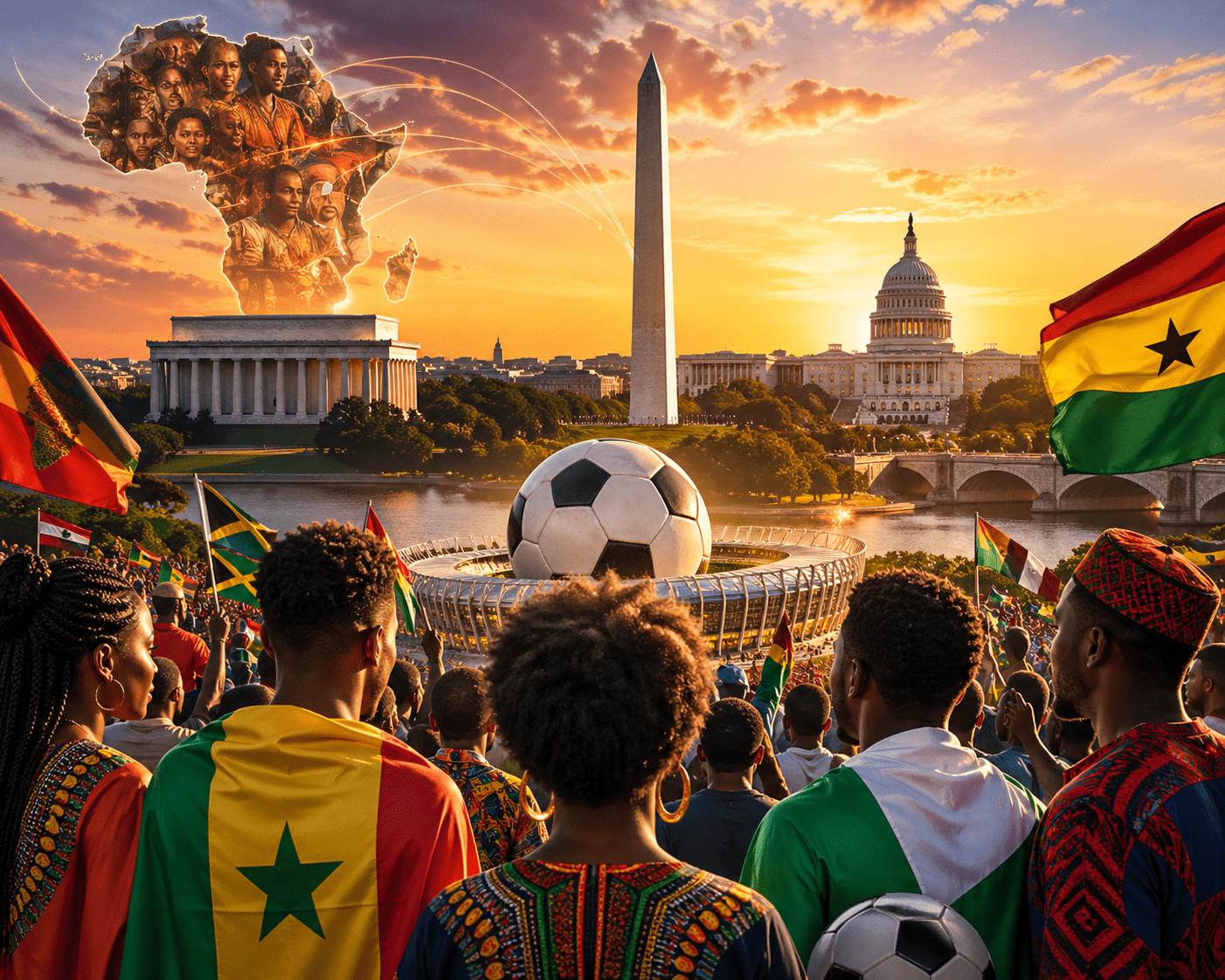
The African Diaspora and the 2026 World Cup: Why the DMV Is the Place to Be This Summer
June 13, 2026. MetLife Stadium, East Rutherford, New Jersey. Brazil — five-time world champions, the most successful nation in the history of the tournament — takes the field against Morocco, the team that made the entire continent of Africa erupt with pride when they reached the semifinal in Qatar 2022, becoming the first African side ever to do so. This is not a game on a distant continent that you will watch alone at 3 a.m. This is happening two and a half hours from Washington, D.C. And it is just the beginning. The 2026 FIFA World Cup — co-hosted by the United States, Canada, and Mexico — is the most expansive World Cup in history, featuring 48 nations across 104 matches. For the African Diaspora community in the DMV, this tournament is not just a sporting event to follow on television. It is a once-in-a-generation opportunity to experience the world’s game at the highest level, within driving or train distance, with African and African American communities across the East Coast turning every watch party, every bar, every community center into a cultural celebration. Here is everything the DMV’s African Diaspora community needs to know about the 2026 World Cup — from the matches that matter most and where to watch them, to what the tournament means for the continent and the community right here at home. Ten African Nations. One Summer. The Continent Has Never Been More Represented. The 2026 World Cup features ten African nations — the largest representation the continent has ever had at a single tournament. The expanded 48-team format created four additional slots for the CAF confederation, and African football seized every one of them. The ten African nations competing in 2026: Senegal (Group I — France, Norway, Iraq) — The AFCON 2025 champions, led by the legendary Sadio Mané in what may be his final World Cup Morocco (Group C — Brazil, Haiti, Scotland) — The Atlas Lions who made history reaching the 2022 Qatar semifinal and arriving in 2026 as AFCON title holders Algeria (Group J — Argentina, Austria, Jordan) — The Desert Warriors with their passionate, vocal support base including a large community right here in the DMV Egypt (Group G — Belgium, New Zealand) — Mohamed Salah’s Pharaohs, among the most popular African teams across the entire diaspora Ghana (Group L — England, Croatia) — The Black Stars, always dramatic, always generating emotion across the Ghanaian diaspora community Ivory Coast (Group E — Ecuador, Germany, Curacao) — Fresh off their AFCON 2023 triumph on home soil, the Elephants bring star power and passion Tunisia (Group F) — North Africa’s consistent World Cup presence, competing in their sixth tournament South Africa (Group A — Mexico, Korea, Czechia) — Bafana Bafana, the hosts of the legendary 2010 World Cup, back on the global stage Cape Verde (Group H — Spain, Saudi Arabia, Uruguay) — One of the tournament’s most exciting smaller nations, known for their attacking flair DR Congo (Group K) — Making only their third World Cup appearance, bringing one of the continent’s most passionate fan bases to the global stage For a DMV community with deep roots in Ethiopia, Nigeria, Cameroon, Senegal, Ghana, Morocco and across the continent, nearly every African team on this list has a constituency right here in the region. The Matches Every DMV African Diaspora Fan Must Know — And Where to Watch Them The closest World Cup venues to the DMV are MetLife Stadium in New Jersey and Lincoln Financial Field in Philadelphia — both accessible by train from Washington, D.C. in under three hours. Here are the African nation matches you absolutely need on your calendar: At MetLife Stadium (East Rutherford, New Jersey): June 13 — Brazil vs. Morocco, 6:00 PM ET (Group C): The match that opens MetLife’s World Cup schedule is a dream fixture. Brazil chasing redemption after a painful Qatar 2022 quarter-final exit. Morocco defending their status as Africa’s greatest footballing achievement in decades. This game will be felt across every African household in the DMV June 16 — France vs. Senegal, 3:00 PM ET (Group I): One of the most emotionally charged matches of the entire group stage. Senegal — still navigating the AFCON 2025 controversy — faces France in a rematch of the 2002 World Cup opener, when Senegal shocked the defending champions in one of the greatest upsets in tournament history. The DMV’s large Senegalese diaspora community will make this a landmark day June 22 — Norway vs. Senegal, 8:00 PM ET (Group I): Senegal’s second group match. A crucial game that could determine whether the Lions of Teranga advance from an extremely competitive group At Lincoln Financial Field (Philadelphia): June 22 — France vs. Iraq, 5:00 PM ET (Group I): France’s second group match. If Senegal beats France on June 16, this game takes on even more drama Multiple additional group stage matches — Philadelphia hosts several Group stage fixtures. Check the full schedule for matches involving Ghana, Algeria, Ivory Coast and other African nations across the tournament calendar Tickets are sold through FIFA’s official platform at FIFA.com. Some matches still have limited availability. Act quickly — and know that the train from Union Station in Washington, D.C. to New Jersey is one of the most accessible World Cup travel options on the East Coast. Senegal vs. France: The Match the Entire African Diaspora Will Be Watching Of all the matches on the 2026 World Cup schedule, one stands apart for the African Diaspora community: France vs. Senegal on June 16 at MetLife Stadium. The historical resonance is extraordinary. In the 2002 World Cup opener in Seoul, South Korea, Senegal delivered one of the greatest upsets in football history — beating the reigning world champions France 1-0 through a goal from Papa Bouba Diop. The streets of Dakar erupted. The African continent celebrated. It remains one of the defining moments in African football history. Now the two nations meet again — at MetLife Stadium, which will host

The Most Influential African Americans in DMV Politics: Leaders Who Changed the Region
The DMV — Washington, D.C., Maryland, and Virginia — is not just the political center of the United States. It is one of the most important stages in the history of Black political power in America. From the first African American mayor of a major U.S. city to the first Black governor ever elected in the country, from a civil rights warrior who became the face of D.C. home rule to the first Black woman elected to the U.S. Senate from Maryland — the region has produced leaders whose impact stretched far beyond its borders. These were not easy victories. They were won against entrenched systems, historical exclusion, and in some cases genuine personal sacrifice. Each name on this list represents not just an individual achievement, but a door opened — a barrier broken that made it possible for the next generation to walk through. Here are the most influential African American political leaders the DMV has ever produced — and why every one of them still matters today. Washington, D.C. — Power, Home Rule, and the Fight for a City’s Voice Walter Washington — The First Black Mayor of a Major American City (1967–1979) Before any elected Black mayor led any major American city, there was Walter Washington. In 1967, President Lyndon Johnson appointed Washington as mayor-commissioner of Washington, D.C. — making him the first African American to lead a major U.S. city. It was a presidential appointment, not an election, but the weight of the moment was no less historic. A Howard University-educated attorney and public servant, Washington led the city through some of its most turbulent years — including the devastating 1968 riots that followed the assassination of Dr. Martin Luther King Jr. He guided D.C. through the wreckage with a steady hand, focusing on rebuilding communities rather than simply restoring order. When Congress finally granted D.C. residents the right to elect their own mayor through the Home Rule Act of 1973, Walter Washington ran — and won, becoming the city’s first elected mayor in 1974. His legacy is foundational: he proved that Black leadership of the nation’s capital was not only possible, but essential. Marion Barry — The Mayor for Life (1978–1998) No political figure in DMV history is more complex, more beloved, more controversial, or more consequential than Marion Barry. A Mississippi sharecropper’s son who rose to become one of the most powerful local politicians in American history, Barry served as mayor of Washington, D.C. for four terms across two decades — earning the title “Mayor for Life” not from a campaign, but from the people who felt he was truly theirs. Barry came to D.C. as a Student Nonviolent Coordinating Committee (SNCC) leader and civil rights activist, and he never fully left that identity behind. He was one of the key organizers who fought for the Home Rule Act — the legislation that gave D.C. residents the right to elect their own government. When home rule arrived, he was ready. He won the school board, then the city council, then the mayor’s office in 1978. As mayor, Barry built D.C.’s government into a vehicle for Black economic empowerment. He created thousands of city jobs, established programs that opened city contracts to minority-owned businesses, and built a government workforce that looked like the people it served. The Washington Post described him as “the most powerful local politician of his generation” — a national symbol of Black self-governance. His 1990 drug arrest and conviction were widely covered and shaped his public image for years. Yet in 1994, D.C. voters returned him to the mayor’s office — a decision that spoke volumes about how his community weighed his failings against his service. Barry served his fourth and final term until 1998, then served as a D.C. Council member until his death in 2014. The story of Marion Barry is inseparable from the story of Black Washington — its aspirations, its struggles, its capacity for both disappointment and forgiveness. He was deeply flawed and genuinely great, sometimes at the same time. That complexity is part of why his legacy endures. Eleanor Holmes Norton — The Warrior on the Hill (1991–Present) Eleanor Holmes Norton has represented Washington, D.C. in Congress since 1991 — more than three decades of service as the city’s non-voting Delegate to the House of Representatives. In any other city, that tenure would be remarkable. In D.C., where the Delegate cannot cast a vote on the House floor, it requires something extraordinary: the ability to wield influence without the most basic tool of legislative power. Norton has done exactly that. A civil rights veteran who marched with SNCC, served as chair of the Equal Employment Opportunity Commission under President Jimmy Carter — becoming the first woman to lead the EEOC in 1977 — and built a legal reputation as one of the sharpest constitutional minds of her generation, she arrived in Congress with a resume that commanded respect before she said a word. Her central mission has always been D.C. statehood — the fight to give the 700,000 residents of Washington, D.C. full voting representation in Congress. That fight has not yet been won. But Norton has never stopped fighting it, and she has kept it alive in the national conversation for over thirty years through sheer tenacity and political skill. “There’s no fear with her when it comes to talking to other members of Congress, especially white men,” said one longtime colleague. “It was a no-holds-barred approach. That’s how she was so successful over the years.” D.C. is her hometown and she has never treated it as anything less than her most important responsibility. Maryland — Breaking Barriers, Building Power Walter Fauntroy — Preacher, Organizer, Pioneer (1971–1991) Before Eleanor Holmes Norton, there was Walter Fauntroy — the Baptist minister, civil rights organizer, and first elected D.C. Delegate to Congress, serving from 1971 to 1991. Born in D.C., educated at Howard University and Yale Divinity School, Fauntroy was a close aide to Dr. Martin Luther

The Untold History of Little Ethiopia in Washington D.C.
A Community That Built Itself Stand at the corner of 9th and U Streets NW in Washington, D.C. on any given evening and let your senses lead you. The low thump of Ethiopian music drifts from a restaurant door. The air carries the warm, earthy scent of berbere spice and freshly roasted coffee beans. Through a window, you see people eating injera with their hands — laughing, talking loudly, completely at home. A sign above the door reads “Dukem.” Next door is a salon. Next to that, a market stocked with injera, teff flour, and Amharic newspapers. This is Little Ethiopia — Washington D.C.’s most resilient, most fascinating, and least told immigrant success story. A community that arrived with almost nothing, settled in neighborhoods that others had abandoned, rebuilt those streets block by block, and then, when the city grew fashionable around them and the rents followed, picked up and did it all over again somewhere else. This is the story of how they did it — and why it matters to every person in the African Diaspora. Why They Came: Fleeing War, Chasing a Future Ethiopia’s story in Washington, D.C. does not begin with restaurants or street signs or community festivals. It begins with flight. Beginning in the early 1970s, Ethiopia was convulsed by political turmoil — a military dictatorship overthrew Emperor Haile Selassie, plunging the country into decades of conflict. A devastating famine struck between 1983 and 1985. War with Eritrea continued. For hundreds of thousands of Ethiopians, leaving was not a choice made in comfort. It was survival. Washington, D.C. became one of the primary landing points for this wave of refugees and asylum seekers, and for a practical set of reasons: the presence of African embassies, international organizations like the World Bank and the IMF, and the historic draw of Howard University, which had long attracted African students and scholars. Between 1983 and 2004 alone, more than 12,000 sub-Saharan African refugees were resettled in the D.C. metro area — with Ethiopians making up the largest share. They arrived in a city that was still carrying the wounds of its own upheaval. The 1968 riots that followed the assassination of Dr. Martin Luther King Jr. had torn through neighborhoods like Shaw, Columbia Heights, and the U Street corridor, leaving burnt-out buildings, shuttered businesses, and a generation of economic decay. The city’s Black neighborhoods were struggling. And into that landscape stepped a wave of newcomers determined to build something. Adams Morgan: Where It All Began The first chapter of Little Ethiopia was not written in Shaw. It was written on 18th Street in Adams Morgan. In the late 1970s and through the 1980s, Ethiopian immigrants began clustering in Adams Morgan — at that time an economically mixed, culturally diverse neighborhood that offered affordable storefronts and a tolerance for newcomers. In 1978, a restaurant called Mamma Desta opened its doors, becoming the very first Ethiopian restaurant to introduce Washingtonians to injera, doro wat, and the communal tradition of eating together from a shared plate. It would not be the last. Restaurant after restaurant followed. By the late 1980s and early 1990s, 18th Street in Adams Morgan had become a genuine Ethiopian commercial hub — restaurants, beauty salons, specialty grocery stores, and informal gathering spaces where the community could speak Amharic, hear familiar music, and simply exhale from the pressures of building a new life in a foreign country. The Ethiopian community had not just survived in Adams Morgan. It had revitalized it. But Washington was changing. Adams Morgan was becoming fashionable. Rents climbed. What had been affordable storefronts were now premium addresses. And so, in a pattern that would repeat itself more than once, the Ethiopian community did what communities with deep roots and flexible feet do — they moved. Shaw and the U Street Corridor: Rebuilding on Broken Ground In the mid-1990s, Ethiopian entrepreneurs began migrating to a stretch of 9th Street NW in the Shaw neighborhood — a corridor that still bore the scars of the 1968 riots. Buildings sat abandoned. Storefronts were boarded up. The street had the quiet, hollow feel of a neighborhood that had been left behind. The Ethiopians saw something different. They saw possibility. They bought those abandoned buildings. They rebuilt them with their own labor, their own money, and the financial muscle of an extraordinary community institution called the ekub. The ekub is a traditional Ethiopian rotating savings group — a form of community banking where members pool money together and take turns receiving the full sum. For immigrant entrepreneurs with no established U.S. credit history, no wealthy relatives, and no access to the kinds of capital that mainstream banks were willing to lend, the ekub was a lifeline. It spread wealth across the community, allowed risk-takers to take risks, and bound people together through mutual financial trust. It was, in many ways, the engine behind Little Ethiopia’s rise. Restaurant after restaurant appeared near the intersection of 9th and U Streets. U-Turn, Queen Makeda, Dukem, and others opened within a short walk of each other. Salons, markets, and nightspots followed. Within a few years, the block had been transformed from a post-riot ghost corridor into one of the most vibrant commercial strips in Northwest Washington. Belay Sahlemariam, co-owner of the popular U-Turn restaurant, later described what the community had accomplished with characteristic directness: “We bought abandoned buildings, rebuilt them and cleaned this area up to make it what it is.” The Washington Post noted in 2011 that Ethiopians had become “so successful in redeveloping retail strips that urban histories see their arrival in a neighborhood as a first sign of gentrification — way before the better known waves of hipsters and gay urban pioneers.” That observation carries a complicated truth: the very communities that were being displaced by gentrification elsewhere were themselves the original revitalizers of the neighborhoods that would later gentrify around them. The Entrepreneur Spirit: One Business Becomes Ten Part of what made the Ethiopian business community so powerful

How African Immigrants Are Reshaping the DMV Economy — One Business at a Time
Drive down Georgia Avenue in Silver Spring on a Saturday morning. Walk through the Skyline area of Falls Church, Virginia. Stroll along the U Street corridor in D.C. What you will find, tucked between the chain stores and the familiar American storefronts, is something remarkable — a thriving, growing, layered economy built largely by people who arrived in this country with a suitcase, a skill set, a dream, and a willingness to work harder than most people can imagine. African immigrants have been quietly — and not so quietly — reshaping the economic landscape of the DMV for decades. From Ethiopian restaurants that have turned Silver Spring into a dining destination, to Nigerian-American tech entrepreneurs building companies out of co-working spaces in Maryland, to Ghanaian and Cameroonian professionals filling critical roles in healthcare, education, and government — the African Diaspora is not just living in the DMV. It is building it. This is their story. The Numbers Tell a Story That’s Often Undercounted The DMV region holds the fourth-largest African immigrant population in the United States — and that number is almost certainly an undercount. Prince George’s County Council member Wala Blegay, herself a daughter of African immigrants, has been vocal about why: census data typically counts only first-generation immigrants, not their American-born children. And African immigrants are often simply categorized as “Black” in broader statistics, erasing the specificity of their origins and contributions. “Typically, African immigrants are counted just as Black people here,” Blegay has noted. “And we are Black people, but we want to be recognized for the contributions that we have in the culture, which is important.” Here is what the data does confirm: immigrants make up 21 percent of Maryland’s labor force — a higher share than most neighboring states and above the national average. Their labor force participation rates have been 7 to 9 percentage points higher than U.S.-born Marylanders for over a decade. In D.C. itself, the African immigrant population grew by nearly 60 percent since the year 2000. And across the DMV, African immigrants show some of the highest education levels, highest labor participation rates, and most active entrepreneurship of any immigrant group in the region. These are not marginal contributors. They are pillars of a regional economy that would look very different without them. Why the DMV? The Roots of a Migration Story African immigrants did not end up in the DMV by accident. The story begins in the late 1950s and early 1960s, when diplomats from newly independent African nations arrived in Washington as part of the United States’ expanding international footprint. Students followed — many of them drawn to Howard University, the historically Black institution that had long been a beacon for African scholars and intellectuals. Then came the refugees. Between 1983 and 2004, more than 12,000 sub-Saharan African refugees were resettled in the D.C. metro area. Many arrived from Ethiopia and Eritrea, fleeing war and political turmoil. Others came through the Diversity Visa Program in the 1990s, bringing education, ambition, and deep roots in cultures where community and enterprise went hand in hand. The presence of African embassies, the World Bank, international organizations, and historically Black universities created a kind of gravitational pull. Word spread within diaspora networks — that the DMV was welcoming, that opportunities existed, that community was already there waiting. “People want to be among those that are their own,” says Remi Duyile, a Nigerian-born adjunct professor at Bowie State University who arrived in the early 1980s. “Some came here because they had family here. Many felt this was a welcoming community. They started raising their kids here, and they started to tell others to come.” The Ethiopian Community: Building a City Within a City If you want to understand what African immigrant entrepreneurship looks like at scale in the DMV, start with the Ethiopian community — the largest African immigrant group in the region, making up roughly one-fifth of the entire African Diaspora population here. Estimates of the Ethiopian population in the metro area range from 75,000 to over 200,000, depending on the source — and even the higher end may be an undercount given how many second-generation Ethiopians are not captured in immigration data. What is not in dispute is the scale of their economic presence. According to the Ethiopian Community Development Council, there are approximately 1,200 Ethiopian-owned businesses in the DMV region alone. The community even publishes its own Yellow Pages. The business footprint is striking. Downtown Silver Spring has dozens of Ethiopian restaurants — from upscale white-tablecloth dining to casual sports bars to what regulars describe as an “Ethiopian Chipotle” — along with coffee shops, grocery stores stocked with injera and berbere, beauty salons, clothing boutiques, and professional services firms. Alexandria, Virginia has developed its own thriving Ethiopian business corridor, so significant that CNN once described it as “a second unofficial Little Ethiopia.” The impact of these businesses extends far beyond the Ethiopian community. Restaurant owner Tefera Zwedie noted that in the early days, it was remarkable to see a single non-Ethiopian diner walk through the door. Today, roughly 95 percent of his customers are not Ethiopian. The food has become a destination. Tourists come specifically to experience it. Anthony Bourdain visited an Ethiopian market in Skyline, Falls Church for his show No Reservations. These businesses are not just serving a community — they are defining a region’s culinary identity. And it does not stop at food. The Ethiopian community has built churches, cultural centers, media outlets in Amharic, tech startups, and political representation — with members of the Prince George’s County Council now proudly identifying as part of the African Diaspora. West African Entrepreneurs: Education, Tech, and Professional Services The West African presence in the DMV — led by Nigerians, Ghanaians, Sierra Leoneans, and Cameroonians — has carved out a distinct and powerful economic footprint, particularly in professional services, technology, healthcare, and education. Nigerian immigrants, statistically among the most highly educated immigrant groups in the entire United States, are disproportionately

They Won on the Pitch. Then Lost in a Boardroom. The AFCON 2025 Final Scandal Nobody Saw Coming.
They Won on the Pitch. Then Lost in a Boardroom. The AFCON 2025 Final Scandal Nobody Saw Coming. January 18, 2026. Rabat, Morocco. The Prince Moulay Abdellah Stadium is electric. Ninety thousand fans packed inside for the Africa Cup of Nations final — the biggest game in African football. On one side: Morocco, the host nation, chasing their first AFCON title in fifty years. On the other: Senegal, the defending champions, led by the legendary Sadio Mané in what he declared would be his final tournament for the Lions of Teranga. What happened next was not just a football match. It was a scandal, a legal battle, a protest parade, and a crisis of credibility for African football — all rolled into one breathtaking, heartbreaking story. And it is still not over. If you are part of the African Diaspora community and care about this sport, this one hits differently. Sit down. Here is everything that happened. A Final That Was Already Tense Before a Ball Was Kicked The build-up to the final was already charged with controversy. Senegal’s federation had publicly raised concerns before kickoff — about their accommodation, logistics, training facilities, and ticketing arrangements — putting pressure on the Confederation of African Football (CAF) to prove it was running an impartial tournament. There was also a growing narrative, whispered in the stands and spoken more openly in sports media, that Morocco was receiving favorable treatment from officials throughout the competition. Cameroon had two penalties denied in their quarter-final against Morocco. Eyebrows were raised. Temperatures were rising. Into this atmosphere stepped two of Africa’s finest squads. Morocco, featuring PSG superstar Achraf Hakimi and Real Madrid forward Brahim Diaz, were the slight favorites as hosts. Senegal had Sadio Mané, Édouard Mendy, and Pape Gueye — a team that had already proven it could win everything. The final promised to be a classic. The Goal That Was Stolen — Then the Penalty That Broke Everything The match was tight, tense, and goalless heading into stoppage time. Then, in the second minute of the eight allocated added minutes, Senegal thought they had won it. Ismaïla Sarr stooped to head home after a scramble in the box. The Lions of Teranga tore off in celebration — it was, remarkably, the first goal Senegal had ever scored in an AFCON final. Except it was ruled out. Congolese referee Jean-Jacques Ndala blew his whistle for a foul by Abdoulaye Seck on Achraf Hakimi in the build-up. TV replays showed what looked like minimal contact — the kind of tussle that happens on every corner kick in every match, everywhere in the world. The Senegalese players were furious. Their fans were incensed. And then, almost immediately, something even more explosive happened. In the final minute of stoppage time, Morocco’s Brahim Diaz went to ground in the penalty area after a challenge from El Hadji Malick Diouf. The referee initially waved play on. Then VAR intervened — and awarded a penalty to the hosts. The stadium erupted. The Senegalese bench erupted. And then, in a moment that would define this entire saga, Senegal head coach Pape Thiaw ordered his players off the pitch. Sixteen Minutes That Changed African Football Forever For sixteen extraordinary minutes, the AFCON final was suspended. Most of Senegal’s players had disappeared down the tunnel. Fans clashed with security at one end of the stadium. Police flooded the pitch. The fate of the entire match hung in the air. The one man who stayed on the pitch, calm and resolute in the middle of total chaos, was Sadio Mané. This was supposed to be his last tournament. He had already said he would retire from international duty after this AFCON. And here he stood, in the eye of a storm, trying to hold everything together. Eventually, through a combination of Mané’s leadership and consultation with former Senegal coach Claude Le Roy, the players returned. They walked back out. The penalty was taken. Brahim Diaz chipped a soft Panenka — straight into the arms of goalkeeper Édouard Mendy. Saved. The stadium fell silent. And seconds later, Senegal and Morocco went to extra time. In the 94th minute of extra time, Pape Gueye curled a stunning left-footed strike into the net. Senegal 1, Morocco 0. The Lions of Teranga had won the Africa Cup of Nations for the second time in five years. Mané lifted the trophy. The celebration was real, and it was earned. The Fallout Begins — Coaches, Players, and Insults on the Field Even before the lawyers got involved, the war of words had already started. Morocco head coach Walid Regragui did not hold back in his post-match comments. He called the scenes in the final “shameful” and said that what Senegal’s coach did “does not honour Africa.” Morocco’s players and fans felt robbed — not of the game itself, but of the night. Of the moment. Of the celebration that every footballer dreams about. During the chaos of those sixteen minutes on the pitch, tensions between players boiled over into physical confrontations. Senegal’s Abdoulaye Seck and Morocco’s Ismaël Saibari squared up to each other — an altercation that would later cost Saibari a two-match CAF suspension. Ball boys at the game, reportedly instructed to give Morocco’s goalkeeper every advantage, were caught stealing Édouard Mendy’s towel — and at one point, even Achraf Hakimi was caught up in the bizarre towel-stealing incident. Senegal coach Pape Thiaw, to his credit, apologized. He told BeIN Sports: “I don’t want to go over all the incidents. I apologize for the football. We accept the errors of the referee. We shouldn’t have done it, but it’s done.” It was a rare moment of humility in the middle of a very heated situation. It was also, as it turned out, not enough to save Senegal’s title. The Courtroom: CAF Does the Unthinkable At an initial disciplinary hearing, CAF fined both federations over one million dollars and handed bans to players from both sides — but crucially, left

Celebrating African Diaspora Art in the DMV: Where Identity, Heritage, and Creativity Collide
Walk through certain neighborhoods in Washington, D.C., and you will find it on walls. In galleries tucked between coffee shops and corner stores. In community centers where teenagers are learning to paint their grandparents’ stories. Art is everywhere in the DMV — but the work coming out of the African Diaspora community is something particular. It is not just decoration. It is documentation. It is defiance. It is love. The DMV — Washington, D.C., Maryland, and Virginia — has long been one of the most culturally significant regions in the United States for Black art and expression. It is a place where African and African American artists have built something remarkable: a creative ecosystem rooted in ancestral memory and constantly evolving with the times. This post is a celebration of that work, and an invitation to pay closer attention to it. Art as Memory, Resistance, and Joy African Diaspora art carries weight — not as a burden, but as a kind of inheritance. Every canvas, sculpture, photograph, and installation made by an artist connected to the African Diaspora exists in conversation with something larger than itself: a centuries-long story of displacement, survival, resilience, and, crucially, joy. This is art that does multiple things at once. It mourns. It celebrates. It demands to be seen. It preserves traditions that formal history has too often ignored, while simultaneously pushing those traditions into new shapes and new conversations. Some of the most consistent themes woven through this body of work include: Cultural identity — exploring what it means to carry African heritage in an American context Social justice and resistance — bearing witness to ongoing struggles with unflinching honesty Spirituality and ritual — honoring traditions that connect the present to the ancestral past Community and belonging — centering the everyday lives and dignity of Black families and neighborhoods Innovation — merging traditional African art forms with contemporary digital and mixed-media techniques These are not separate categories — they are threads that run through the same work simultaneously, which is part of what makes African Diaspora art so layered and enduring. Why the DMV Is One of the Most Important Stages for This Work The DMV is not a random backdrop for this story. It is one of the most politically and culturally significant regions in the country — home to the federal government, a historically deep-rooted Black community, and a long tradition of activism and intellectual life. Howard University alone has shaped generations of Black artists, thinkers, and cultural leaders. The region’s identity is inseparable from Black history and Black creativity. Today, that legacy is alive in institutions like the Smithsonian National Museum of African American History and Culture — one of the most visited museums in the world — and in dozens of smaller galleries, community art spaces, and outdoor murals that make the streets themselves a kind of open-air museum. The DMV’s African Diaspora art scene is not confined to one type of space or one demographic. It is in prestigious galleries and neighborhood rec centers. It speaks to people who grew up in the city and people who recently arrived from across the African continent. That breadth is one of its defining strengths. The Many Forms This Art Takes One of the most striking things about African Diaspora art in the DMV is its range. There is no single style, no single medium, no single voice. The work spans disciplines, generations, and aesthetic approaches — which makes it impossible to reduce to a single image or idea. Visual Arts and Painting Painters working within this tradition use color, symbolism, and composition in ways that are often immediately identifiable — bold, layered, full of reference. Portraits that insist on dignity. Abstracts that draw on African textile patterns and cosmological symbols. Canvases that feel simultaneously historical and urgent. Sculpture and Installation Three-dimensional work in this space tends to command attention in a different way — it occupies physical space, demands to be walked around, sometimes asks to be touched. From monumental public sculptures honoring historical figures to intimate gallery installations exploring memory and grief, this medium carries a particular power. Photography Black photographers in the DMV have long used their cameras to push back against how Black life is typically depicted in mainstream media. Their work is documentary and artistic at once — capturing joy, complexity, and humanity in images that refuse simplification. Digital and Graphic Art Younger artists are doing something genuinely exciting by merging technology with tradition. Digital illustration, motion graphics, and interactive installations are expanding what African Diaspora art can be and where it can live — including online spaces that reach global audiences in real time. Traditional African Art Forms Masks, hand-woven textiles, carvings, and beadwork are not relics — they are living art forms carried across generations and across oceans. Artists in the DMV who work in these traditions are doing preservation work and creative work simultaneously, ensuring that ancestral knowledge survives and continues to speak. Murals: The Streets as Gallery Some of the most powerful African Diaspora art in the DMV is not behind glass — it is outside, on building walls, underpasses, and fences, visible to anyone who walks by. Public murals in neighborhoods across D.C., Prince George’s County, and Northern Virginia have transformed ordinary streets into sites of cultural memory and civic pride. These murals do something that gallery art sometimes cannot: they meet people where they are. They are created for the community they depict, and they stay there, becoming landmarks that residents recognize as part of their neighborhood’s identity. They are not temporary. They are a statement of permanence. Investing in the Next Generation The future of African Diaspora art in the DMV is being shaped right now — in after-school studios, summer programs, and youth workshops where young people are being handed brushes, cameras, and tools and told: your story matters, and you have the right to tell it. Youth art programs do more than teach technique. They give young