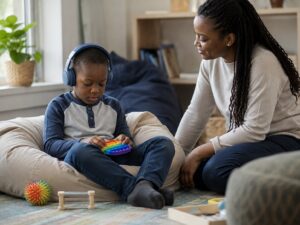

How Sensory-Friendly Spaces Support Autistic Children Across The Black Community.
Sensory-friendly spaces can make a meaningful difference for autistic children and their families. Many autistic children experience sound, light, touch, smell, movement, crowds, clothing textures, food textures, and busy environments more intensely than others. A room that seems normal to one person may feel overwhelming to a child who is sensitive to noise, bright lights, strong smells, or too much activity. When families and communities understand sensory needs, they can respond with more patience and care. Across the Black community, many parents and caregivers are still learning how autism and sensory processing can affect daily life. A child may cover their ears at church, cry in a crowded store, refuse certain clothes, become upset during hair care, avoid loud family gatherings, or struggle with transitions at school. Too often, these reactions are misunderstood as bad behavior, disrespect, stubbornness, or poor discipline. But sometimes the child is not trying to be difficult. Their body may be overwhelmed. Creating sensory-friendly spaces does not mean giving children everything they want or removing every challenge from life. It means making thoughtful adjustments so children can feel safer, calmer, and more able to participate. A sensory-friendly space may include softer lighting, less noise, a quiet corner, headphones, visual schedules, comfortable seating, fewer strong smells, clear expectations, and permission to take breaks. Families, schools, churches, community centers, barbershops, salons, libraries, and local events can all become more welcoming when they consider sensory needs. Small changes can reduce stress for children and parents. They can also help the wider community become more understanding and inclusive. 1. Sensory Needs Are Real. Sensory needs are not imaginary, and they are not simply a child being dramatic. Some autistic children process sensory input differently. A loud sound may feel painful. A clothing tag may feel unbearable. A strong smell may cause distress. Bright lights may feel exhausting. A crowded room may become too much to handle. When adults understand this, they can respond with compassion. Instead of asking, “Why are you acting like that?” they can ask, “What is overwhelming you?” This shift can change the whole situation. A child who is overwhelmed may cry, run, hide, cover their ears, refuse to move, become quiet, or have a meltdown. These reactions are often signs that the child needs support, not shame. Respecting sensory needs helps children feel safer. It also helps parents feel less judged when their child struggles in public or family settings. 2. Quiet Spaces Can Help Children Regulate. A quiet space gives an autistic child a place to calm down when the environment becomes too much. This space does not need to be fancy. It can be a bedroom corner, small room, library area, church side room, classroom calm corner, or quiet seat away from the crowd. A good quiet space should feel safe and predictable. It may include soft seating, dimmer lighting, noise-reducing headphones, a favorite object, books, sensory toys, or calming visuals. The goal is to help the child settle, not punish them. Families should avoid treating quiet breaks like time-outs unless the child has done something that truly needs discipline. A sensory break is different. It is a way to help the body and mind calm down. When children know they have a safe place to go, they may feel more confident participating in family events, school activities, church services, or community programs. 3. Loud Environments May Need Adjustment. Many community spaces are loud. Churches may have music, microphones, clapping, and crowds. Family gatherings may include laughter, children playing, cooking sounds, and multiple conversations at once. Schools may have bells, lunchrooms, assemblies, and hallways. Stores may have carts, announcements, and bright lights. For some autistic children, these sounds can build up quickly. A child may be fine at first and then suddenly become overwhelmed. Adults may think the reaction came from nowhere, but the child may have been trying to tolerate the noise for a long time. Noise-reducing headphones, quieter seating, shorter visits, advance preparation, and break options can help. Families can also explain to relatives or leaders that the child is not being rude if they need to step away. Reducing noise stress can help children stay connected without becoming overwhelmed. 4. Visual Schedules Can Reduce Anxiety. Many autistic children feel more comfortable when they know what will happen next. A visual schedule can help by showing the order of events. This may include pictures, drawings, words, or simple icons that explain the day’s plan. At home, a schedule might show breakfast, getting dressed, school, homework, dinner, bath, reading, and bedtime. At church, it might show singing, prayer, lesson, snack, and pickup. At a family event, it might show arrival, greeting relatives, eating, playtime, quiet break, and going home. Visual schedules help children prepare for transitions. They reduce the fear of the unknown. They also give adults a clear way to explain changes. When a schedule changes, caregivers can show the change calmly. This helps the child understand what is happening instead of feeling surprised or confused. 5. Hair Care May Need Sensory Patience. Hair care can be difficult for some autistic children because of sensory sensitivities. Washing, detangling, brushing, braiding, clipping, buzzing, water temperature, scalp pulling, product smells, or sitting still for a long time can all feel overwhelming. In many Black families, hair care is deeply connected to culture, grooming, confidence, and family tradition. But sensory needs should still be respected. A child who struggles during hair care may not be trying to disrespect the process. They may be experiencing discomfort or overload. Caregivers can help by breaking hair care into shorter sessions, using gentle tools, explaining each step, offering breaks, reducing strong smells, allowing comfort items, and choosing styles that are manageable for the child. Some families may need sensory-friendly stylists or barbers who are patient and understanding. Hair care can still be done with dignity. The goal is to protect both the child’s appearance and emotional safety. 6. Clothing Comfort Matters. Some autistic children are very sensitive to