We’re hiring passionate Mentors, Tutors, Program Coordinators & Security Officers to empower youth in Maryland, Washington D.C., Virginia Apply now and make a difference!
Life Youth Mentorship & Tutoring (LYMT) – Second Batch Now Open!
After successfully completing our first year LYMT program, we’re excited to welcome our second batch of students! Led by college educated mentors & tutors, LYMT offers academic support, life skills, STEM tutoring, and enriching activities to help youth excel.
Special Offer: Enroll now for just $200/month (was $250) – limited seat only! (Click here)

Day: September 13, 2026

Global Bites & Tales
Muhammed Wasim

How Family Food Stories Help Children Understand Their Heritage

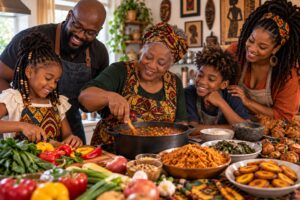
Food can tell a family story in a way that few other things can. A recipe may carry the memory of a grandmother’s kitchen, a migration from one country to another, a Sunday dinner tradition, a holiday gathering, a church event, or a dish that helped a family stretch what they had during a difficult season. When children learn the stories behind the foods they eat, they begin to understand that meals are connected to people, places, history, and identity. Across the Black community and the wider African Diaspora, food traditions are rich and diverse. African American, African, Caribbean, Afro-Latin, and Southern families may all have different ingredients, cooking methods, flavors, and customs, but many share the experience of using food to bring people together. Recipes become part of family memory. Certain dishes appear at celebrations, funerals, reunions, church gatherings, birthdays, and holidays because they carry meaning. Children may enjoy the food without knowing the story behind it. They may eat greens, rice, plantains, stew, cornbread, beans, fish, jerk chicken, jollof rice, patties, gumbo, sweet potato pie, or another family favorite without knowing why it matters. That is where family storytelling can make a difference. Families do not need formal history lessons to begin. A simple question at the dinner table can open the door. Who taught you to make this? Did you eat this when you were young? Is this recipe from our family, our region, or our country? Why do we make this during special occasions? These questions can turn an ordinary meal into a meaningful connection with heritage. 1. Recipes Can Carry Generational Memory. Some recipes have been passed down for decades. They may not be written in a cookbook. Instead, they may live in the memory of a grandmother, auntie, uncle, father, or family friend. One person knows how much seasoning to add by sight. Another knows when the dough feels right. Someone else knows exactly how the sauce should taste. These kinds of recipes carry memory because they are tied to the people who made them. When children learn the recipe, they are also learning about the person behind it. Families can preserve these memories by writing down recipes, recording elders cooking, taking photos, or asking questions while preparing the dish. A child can help measure ingredients, write notes, or create a family recipe card. Preserving recipes is not only about food. It is about preserving family knowledge before it disappears. 2. Food Can Help Children Learn Where Their Family Comes From. A dish can become a starting point for learning geography and culture. A family recipe may connect to the American South, West Africa, the Caribbean, Latin America, or another region. Children can look at a map and see where ingredients and traditions come from. A parent might explain that a certain spice is common in one region or that a dish changed after the family moved to a new place. These stories help children understand migration and adaptation. For families whose ancestors moved across countries or generations, food may be one of the traditions that stayed strong. A recipe can travel even when everything else changes. When children understand where family foods come from, they begin to see themselves as part of a larger story. 3. Elders Can Bring Food History To Life. Elders often remember details that younger family members do not know. They may remember what people ate during childhood, how food was prepared without modern appliances, where ingredients were bought, or which dishes appeared during holidays. Children can learn a great deal simply by sitting with an elder and asking questions. What did you eat for breakfast when you were young? Who was the best cook in the family? What meal did everyone look forward to? Did you grow any food? What dish reminds you most of home? These questions can lead to stories about family, neighborhoods, work, school, migration, faith, and community. When elders share food stories, children learn history through a personal voice. That makes the past feel closer and more meaningful. 4. Shared Meals Help Children Feel Connected. Sitting down together for a meal gives families time to connect. Even if the meal is simple, the experience of eating together can help children feel rooted. A family meal can become a place where stories are shared naturally. Someone may mention how a dish used to be made, where an ingredient came from, or why a certain meal is connected to a holiday. These conversations do not need to be planned. Parents can simply make room for them. Children who hear family stories during meals may grow up with a stronger sense of belonging. They understand that the table is not only a place to eat. It is also a place where memory is passed down. 5. Cultural Foods Can Build Confidence. Some children may feel embarrassed by foods that seem different from what classmates eat. A strong family connection to food can help protect against that embarrassment. Parents can teach children that cultural foods are something to be proud of. The smell, texture, spice, or preparation may be different, but that difference carries history and creativity. Families can explain the meaning behind the dish and encourage children to talk about it with confidence. A school culture day, potluck, or family event can become an opportunity to share food proudly. When children understand the story behind their food, they are more likely to value it instead of seeing it as something unusual. Cultural confidence grows when traditions are explained, celebrated, and respected. 6. Food Stories Can Teach Children About Migration. Many family food traditions changed because people moved. A family may have left one country, state, city, or neighborhood and adapted recipes to what was available in the new place. One ingredient may have been replaced with another. A recipe may have become less spicy. A dish may have been combined with another tradition. These changes tell a migration story. Parents can explain that food traditions often

Read More »
Social Topics-Blog
Muhammed Wasim

Rebuilding Community Connections: Why Strong Relationships Still Matter Across the Black Community

Community Is More Than Living Near One Another There was a time when knowing your neighbors felt ordinary. Children knew which houses they could visit. Families shared food. Someone noticed when an elderly neighbor had not been outside for a few days. Parents knew other parents. Local business owners recognized customers by name, and community events brought together people who might otherwise have had little reason to meet. That experience has not disappeared, but modern life has changed the way many people connect. Work schedules are demanding. Families move more frequently. Entertainment comes directly into our homes. Social media gives us access to hundreds or thousands of people while sometimes leaving us unfamiliar with the person living a few doors away. For communities across the United States, including Black and African Diaspora households, rebuilding meaningful local connections can create something digital interaction alone cannot provide: a genuine sense of belonging. Strong communities are not created by slogans. They are created by relationships. 1. Start With the People Already Around You Building community can sound like a large project. It does not have to be. Sometimes it starts by learning someone’s name. Say hello to the neighbor you regularly pass. Introduce yourself to another parent at your child’s school. Talk with the owner of a local store. Attend a neighborhood gathering instead of assuming you will go next time. Small interactions create familiarity, and familiarity can eventually create trust. You do not need to become close friends with everyone around you. Community simply becomes stronger when people recognize one another and feel comfortable communicating. A five-minute conversation can be the beginning of a relationship that lasts for years. 2. Create More Opportunities to Gather Relationships need places to develop. Community events, neighborhood cookouts, youth activities, cultural celebrations, school programs, recreational leagues, book clubs, workshops, and local festivals all create opportunities for people to meet naturally. These gatherings do not always need large budgets or complicated planning. A group of families could organize a picnic at a local park. Neighbors could create a monthly potluck. Parents might arrange a weekend activity for children. A community organization could host a discussion around careers, education, health, technology, or financial literacy. The activity gives people a reason to arrive. The conversations that happen while they are there often become the more valuable part. 3. Make Room for Different Generations One of the greatest resources available to any community is experience. Older adults carry stories, lessons, skills, and perspectives that younger generations may never encounter online. Younger people bring new technology, ideas, creativity, energy, and ways of seeing the world. Both have something to contribute. The problem is that generations do not always have enough opportunities to interact. Imagine a community program where older residents teach cooking, gardening, sewing, home maintenance, history, or traditional skills while younger participants help with smartphones, computers, social media, or other technology. Nobody arrives simply as the teacher. Everybody has something to learn. Those exchanges can create respect while preserving knowledge that might otherwise disappear. 4. Support Local Businesses With More Than Likes Supporting community businesses has become a common message on social media, but meaningful support requires action. If a local business provides something you need and offers good service, consider purchasing from it. Leave a thoughtful review. Recommend the business to friends. Share its information when someone asks for a recommendation. Return when you need the service again. Small businesses depend heavily on repeat customers and referrals. Supporting a local entrepreneur can help more than one individual. Businesses hire workers, purchase supplies, sponsor activities, pay for services, and contribute to the economic activity of the surrounding area. A thriving business community can become part of a thriving neighborhood. 5. Check on People Without Waiting for a Crisis People are often surrounded by others while still feeling alone. A coworker may be struggling. An elderly relative may spend most days without meaningful conversation. A new parent may be exhausted. A teenager may feel disconnected. Someone who recently moved into the neighborhood may not know anybody nearby. Checking on someone does not require a dramatic reason. A simple phone call, message, visit, or invitation can matter. “Hey, I haven’t talked to you in a while. How are you doing?” Those words can open a door. Community care works best when relationships exist before emergencies happen. 6. Give Young People Meaningful Roles Children and teenagers should not only attend community activities. They should help shape them. Young people can volunteer, help organize events, create social media content for local organizations, assist older residents with technology, participate in neighborhood cleanups, mentor younger children, or help plan recreational activities. Responsibility communicates trust. It tells a young person, “You are not just living in this community. You are part of what makes it work.” That sense of ownership can change the way young people view the places where they live. It also gives adults an opportunity to discover talents that may otherwise go unnoticed. 7. Bring Back the Practice of Sharing Knowledge Every community contains people who know useful things. Someone understands taxes. Someone knows how to repair cars. Another person understands college admissions. Someone knows construction. Another person understands computers. There may be nurses, teachers, entrepreneurs, artists, tradespeople, chefs, engineers, financial professionals, caregivers, and retirees living within a few miles of one another. What happens when that knowledge remains isolated? Not much. But imagine regularly creating opportunities for people to share what they know. A mechanic could teach teenagers basic vehicle maintenance. A business owner could explain how they started. A college graduate could help families understand applications. A gardener could teach families how to grow vegetables. A technology professional could host a basic digital-skills workshop. Knowledge becomes more powerful when it moves between people. 8. Use Technology to Strengthen Real Relationships Technology does not have to compete with community. It can support it. Neighborhood groups can share information about events, lost pets, local services, school activities, job opportunities, and safety concerns. Families

Read More »
Skip to content