

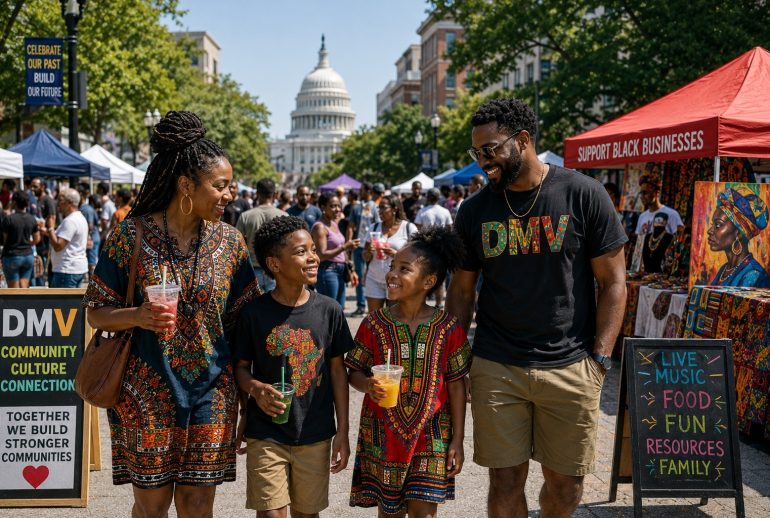
Local events are one of the simplest and most powerful ways to bring people together. In the DMV, where Washington, D.C., Maryland, and Virginia are filled with many cultures, neighborhoods, histories, and community traditions, local gatherings can help families feel more connected to the people and places around them. A community event may look like a festival, business market, school program, cultural celebration, health fair, youth workshop, church gathering, neighborhood cleanup, family picnic, storytelling night, or educational seminar, but at its heart, it is a chance for people to show up and remember that they are not alone.
For families across the Black community, these events can carry deep meaning. They are not only about entertainment or something to do on the weekend. They can help children see culture in real life, help parents meet other caregivers, help elders feel included, help small businesses gain support, and help young people discover positive places where they belong. When people gather in healthy community spaces, relationships begin to form, trust begins to grow, and families become more aware of the resources around them.
The DMV has a special role in African Diaspora life because it includes families with African American, Caribbean, African, Afro-Latin, immigrant, faith-based, professional, student, military, and multigenerational roots. This diversity gives local events the power to introduce children and adults to many different stories, foods, languages, music styles, business owners, leaders, artists, educators, and traditions. A single afternoon at a community gathering can become a learning experience, a networking opportunity, a cultural celebration, and a family memory all at once.
Local events matter because community does not grow only online. It grows when people see one another, speak to one another, support one another, and create shared experiences. In a time when many households are busy, stressed, isolated, or disconnected, showing up to local events can help rebuild the village that families need.
1. Local Events Help Families Feel A Stronger Sense Of Belonging.
Belonging is one of the most important needs in family and community life. People want to know that they are part of something, that their presence matters, and that there are others around them who understand their experiences. In large metro areas like the DMV, it is possible to be surrounded by people and still feel disconnected. Families may live close to one another but not know each other’s names, needs, stories, or strengths.
Local events help reduce that distance. When families attend a neighborhood festival, school gathering, cultural celebration, or community resource day, they begin to see familiar faces. A parent may meet another parent from the same school. A child may recognize someone from a youth program. An elder may reconnect with someone from church or a local organization. These small connections help people feel more rooted in the place where they live.
For African Diaspora families, belonging can be especially meaningful when events reflect culture, history, and shared identity. A child who sees music, food, clothing, language, art, and stories connected to their community may feel a stronger sense of pride. Parents may feel encouraged when they see other families raising children with similar hopes and challenges. Elders may feel honored when their memories and traditions are included.
Belonging does not happen in one moment, but local events create the conditions for it to grow. Every greeting, conversation, shared meal, performance, workshop, and family outing adds another thread to the fabric of community life.
2. Local Events Give Children A Living Connection To Culture.
Children need to see culture as something alive, not only something discussed in school or during special months. Local events can help them experience culture through sound, movement, taste, conversation, art, and community presence. They may hear African drumming, gospel music, go-go, reggae, spoken word, jazz, Afrobeat, or storytelling. They may taste foods from different parts of the Diaspora, see traditional clothing, meet local artists, or watch performances that teach history through creativity.
These experiences can stay with children in a deeper way than a simple lesson. A child may forget a paragraph from a textbook, but they may remember dancing at a festival, asking a vendor about handmade jewelry, hearing an elder speak about history, or tasting a dish connected to another part of the African Diaspora. Local events turn culture into memory.
Parents and caregivers can make these outings even more meaningful by talking with children before and after the event. They can explain what kind of event they are attending, what traditions may be present, and why the experience matters. Afterward, they can ask what the child noticed, what they enjoyed, what surprised them, and what they want to learn more about.
This helps children understand that culture is not distant. It is in their neighborhoods, their families, their community centers, their local businesses, and the people they meet. When children grow up experiencing culture in public and joyful spaces, they are more likely to carry pride into adulthood.
3. Community Events Help Parents And Caregivers Build Support Networks.
Parenting can feel lonely when caregivers do not have a strong support system. Many parents are balancing work, school schedules, transportation, bills, health needs, childcare, homework, and emotional responsibilities. Even when they are doing their best, they may feel like they are carrying too much alone. Local events can help parents meet other caregivers who understand the daily realities of raising children.
A conversation at a school event, parenting workshop, health fair, youth sports activity, or community gathering can lead to meaningful support. One parent may learn about a tutoring program. Another may find out about a scholarship opportunity, a youth mentorship group, a local doctor, a small business service, or a family-friendly event. These connections often happen naturally when people are in the same space.
Support networks do not always begin with deep friendships. Sometimes they begin with a simple exchange of information, a shared concern, or a friendly conversation. Over time, these small connections can become relationships that help families navigate challenges with more confidence.
For families across the Black community, trusted networks are especially important because people often rely on word of mouth to find reliable services, safe spaces, childcare, educational support, and community resources. Local events give parents and caregivers a chance to build those networks in person.
4. Local Events Can Help Youth Find Positive Places To Belong.
Young people need safe spaces where they can be seen, encouraged, and guided. When youth have access to positive community events and programs, they are more likely to meet mentors, explore talents, build friendships, and feel connected to something meaningful. A local event may introduce a young person to music, art, entrepreneurship, technology, sports, public speaking, volunteering, or leadership opportunities.
Many young people are searching for identity and direction, even if they do not say it directly. They may be influenced by social media, school pressure, peer expectations, and the desire to fit in. Community events can expose them to real people doing positive work. They may see a local business owner, artist, educator, coach, organizer, pastor, nonprofit leader, or college student who inspires them.
These moments can quietly shape a young person’s imagination. A teen who attends a youth business event may begin thinking about entrepreneurship. A child who watches a dance group may want to join a cultural program. A young person who volunteers at a community event may discover that they enjoy serving others.
Local events also help youth feel noticed by adults outside their immediate household. A kind word from a mentor, a compliment from a vendor, or encouragement from a program leader can matter more than adults realize. When young people feel valued in the community, they are more likely to see themselves as part of its future.
5. Events Create Opportunities To Support Local Businesses.
Local events are often where small businesses and vendors meet the community face to face. Food vendors, clothing designers, authors, artists, beauty professionals, wellness providers, tutors, photographers, bakers, consultants, and handmade product sellers often depend on community gatherings to build visibility and trust. When families attend these events and support vendors, they help strengthen the local economy.
This kind of support matters because many community businesses are family-run or built from personal dreams. A purchase at a local event may help an entrepreneur pay for supplies, grow a brand, support a household, or keep moving forward during a difficult season. Even when families are not able to buy something, they can still support by taking a business card, sharing a page, leaving a review, or telling someone else about the service.
Local business events also teach children about ownership. When young people see community members selling products, managing tables, greeting customers, and building brands, entrepreneurship becomes more visible. They begin to understand that business is not only something done by large companies. It can begin with a skill, a recipe, a service, an idea, and the courage to start.
In the DMV, where there are many talented entrepreneurs across the African Diaspora, local events can become bridges between culture and commerce. They allow families to support creativity while keeping money and visibility moving through the community.
6. Local Gatherings Help Elders Stay Included And Valued.
Elders are an important part of community life, but they can sometimes become isolated when families are busy, transportation is limited, or events are not designed with them in mind. Local gatherings can help elders stay connected, share wisdom, enjoy fellowship, and feel seen by younger generations. Their presence brings memory, history, and perspective into community spaces.
When elders attend events, children and teens have a chance to interact with people who carry lived experience. They may hear stories about the neighborhood, migration, family traditions, civil rights, faith communities, work life, education, or earlier community struggles and victories. These conversations help younger generations understand that the present is connected to the past.
Events should be welcoming to elders by considering seating, accessibility, clear information, transportation options, safe walking areas, and respectful inclusion. A community that values elders does not only invite them when it is time to be honored. It makes room for them to participate, speak, laugh, teach, and enjoy themselves.
For families, bringing elders to local events can also strengthen family bonds. A grandparent attending a festival with grandchildren or a senior joining a community meal can create memories that matter. These moments remind children that elders are not separate from community life. They are part of its foundation.
7. Local Events Can Connect Families To Helpful Resources.
Many families need resources but do not always know where to find them. A local event can introduce people to health services, school support, mental health resources, job training, housing information, food assistance, legal guidance, youth programs, elder care support, financial education, small business help, and cultural organizations. When resources are shared in a community setting, they may feel more accessible and less intimidating.
Some people avoid seeking help because they feel embarrassed, overwhelmed, or unsure where to begin. Meeting someone at a table during a community event can feel easier than making a phone call to an unfamiliar office. Families can ask questions, collect flyers, sign up for programs, or learn about services they did not know existed.
Resource events are especially helpful when they are culturally aware and family-friendly. People are more likely to engage when they feel respected, understood, and welcomed. Language access, clear explanations, childcare-friendly spaces, and trusted community partners can make a major difference.
Information can change a family’s direction. A parent may discover a scholarship program. A teen may find a mentorship opportunity. An elder may learn about a health screening. A caregiver may connect with support for autism, mental health, or education. Local events can place life-changing information within reach.
8. Community Events Encourage Healthier Social Connection.
Healthy relationships are part of wellness. Families need social connection, not only for entertainment, but for emotional health and resilience. When people feel isolated, stress can become heavier. When families have trusted community connections, they often feel more supported during hard seasons.
Local events create low-pressure spaces for social connection. People can talk while walking through vendor tables, watching performances, waiting for food, attending a workshop, or sitting near one another at a program. These casual conversations can lead to friendships, partnerships, referrals, and support.
Children also learn social skills through community events. They learn how to greet people, ask questions, show respect to elders, interact with peers, and behave in public spaces. These experiences help them understand that they are part of a wider community, not only their household or school.
For adults, social connection can reduce stress and renew energy. A parent who feels tired may leave an event feeling encouraged because they spoke with someone who understands. An elder may feel less lonely after seeing familiar faces. A teen may feel more confident after being welcomed by a positive group. These emotional benefits are real.
9. Local Events Help Communities Celebrate Joy, Not Only Respond To Problems.
Communities often gather when there is a crisis, a loss, a need, or a serious issue to address. Those moments are important, but communities also need spaces for joy. Local events give people a chance to celebrate culture, creativity, youth talent, family milestones, small businesses, art, food, music, and shared identity.
Joy is not a distraction from real issues. It is part of resilience. Families need moments that remind them life is not only struggle. Children need to see adults laughing, dancing, creating, singing, serving, and enjoying one another. Elders need to see traditions continuing. Entrepreneurs need to feel celebrated. Artists need spaces to share their gifts.
When the community gathers in joy, it builds emotional strength. People remember why connection matters. They see beauty in the people around them. They experience pride in local culture and shared history. These positive experiences can help balance the weight of daily challenges.
A strong community is not built only through problem-solving. It is also built through celebration. Local events give families a reason to come together around what is good, beautiful, creative, and hopeful.
10. Events Can Strengthen Trust Between Organizations And Families.
Trust is important in community life. Families are more likely to use resources, attend programs, ask for help, and participate in initiatives when they trust the people and organizations involved. Local events help build that trust because they give families a chance to meet organizers, ask questions, observe how people are treated, and see whether the work feels sincere.
A website, flyer, or social media post can share information, but in-person interaction often creates deeper confidence. When families meet staff, volunteers, educators, health workers, mentors, or community leaders face to face, they can better understand the heart behind the work. They can also give feedback and ask for what they need.
Organizations also benefit from listening during events. They can learn what families are concerned about, what services are missing, what times work best, what barriers exist, and what kind of support is most needed. This helps programs become more responsive and community-centered.
Trust grows when organizations show up consistently, communicate clearly, follow through on promises, and treat people with respect. Local events can be the beginning of that relationship.
11. The DMV Needs Spaces Where Diaspora Communities Can Meet And Learn From One Another.
The DMV is home to many communities connected to the African Diaspora. People may have roots in African American history, Ethiopia, Eritrea, Nigeria, Ghana, Cameroon, Somalia, Sudan, Jamaica, Haiti, Trinidad, Barbados, the Dominican Republic, Brazil, and many other places. This creates a rich cultural environment, but families may not always have opportunities to learn from one another in meaningful ways.
Local events can help bridge these communities. A cultural festival, food event, panel discussion, market, youth program, or storytelling gathering can bring people together across different backgrounds. Families can learn about one another’s traditions, histories, languages, foods, music, and migration stories.
These connections help reduce misunderstanding and build respect. Children learn that the Black community is not one single story. It is diverse, global, and full of different experiences. Adults may find common ground through parenting, faith, business, education, health, and community concerns.
When Diaspora communities gather with respect, everyone benefits. Culture becomes wider, relationships become stronger, and families gain a deeper understanding of the people around them.
12. Showing Up Helps Build The Village One Event At A Time.
The village does not build itself. It grows when people show up, participate, volunteer, share resources, attend programs, invite others, support vendors, encourage youth, honor elders, and stay connected beyond one event. Every gathering is an opportunity to strengthen the community, even if the event seems small.
Showing up matters because attendance tells organizers, businesses, youth groups, and community leaders that their work has value. A small event with strong community support can grow into something larger. A first-time vendor may gain confidence. A youth performer may feel proud. A parent may find a needed resource. An elder may feel remembered. A child may experience a moment that stays with them.
Families do not have to attend every event. Life is busy, and schedules can be full. But choosing to attend even a few meaningful gatherings each year can help keep community connection alive. The more families participate, the stronger local networks become.
Building the village is not only about big programs. It is about repeated moments of presence. A greeting, a shared table, a conversation, a referral, a business card, a child’s performance, a family photo, or a volunteer hour can all become part of the larger work of community-building.
Conclusion.
Local events matter for Black community families in the DMV because they create spaces for connection, culture, support, learning, and joy. They help children experience heritage in real life, help parents and caregivers build networks, help elders stay included, help small businesses grow, and help youth discover positive places to belong. These gatherings remind families that community is not only an idea. It is something people build together.
The DMV is rich with cultural diversity, history, talent, and family strength. Local events give people a chance to experience that richness up close. Whether the gathering is a festival, workshop, market, school program, health fair, cultural event, or neighborhood meetup, it can become a meaningful part of family and community life.
Families do not need to wait for a major celebration to get involved. They can start by attending one local event, inviting another family, supporting one vendor, asking about one resource, or helping children reflect on what they learned. Small acts of participation can help build stronger relationships and a deeper sense of belonging.
Akukulu Family encourages DMV families and community members to attend one local event this month. Visit a cultural festival, support a community market, join a family workshop, attend a youth program, or invite an elder to a local gathering. Every time families show up, they help strengthen connection, culture, and community life across the DMV.
