

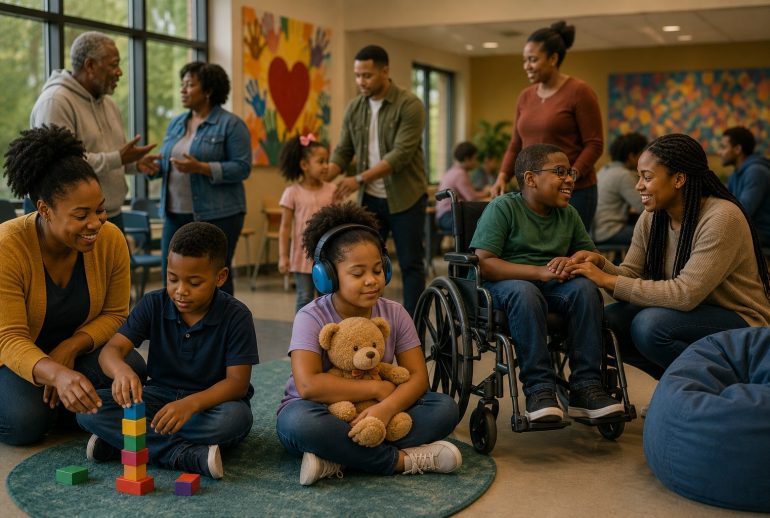
Inclusive community spaces help children feel welcomed, understood, and valued, even when they do not learn, communicate, move, behave, or respond exactly like everyone else. Every child deserves to participate in family gatherings, school events, church programs, cultural celebrations, recreation activities, libraries, festivals, youth programs, and community spaces without being treated like a problem before anyone understands their needs. Inclusion begins when adults choose patience over judgment and make room for children who experience the world differently.
Across the Black community, inclusive spaces matter because many families are caring for children with autism, ADHD, speech delays, sensory needs, learning differences, anxiety, physical disabilities, emotional challenges, medical needs, or other developmental differences. Some of these needs are visible, while others are not. A child may look like they are being difficult when they are actually overwhelmed. A child may seem like they are ignoring adults when they are processing language differently. A child may cry, run, cover their ears, refuse food, avoid eye contact, or become upset in a crowded space because their body is responding to stress that others cannot see.
Families often carry the pressure of explaining their child again and again. They may worry about stares, comments, judgment, or being told that their child simply needs more discipline. Some parents and caregivers may stop attending community events because the emotional cost feels too high. They may love the community, but if spaces are not patient, flexible, or informed, families can begin to feel isolated.
Inclusive community spaces help change that experience. They remind families that they do not have to hide. They teach children that they belong. They help siblings feel less embarrassed and more supported. They help elders understand how to respond with compassion. They help community organizations become more thoughtful and prepared. Most importantly, they allow children to be seen as whole people with strengths, needs, feelings, and potential.
1. Inclusion Begins With Understanding, Not Assumptions.
One of the biggest barriers to inclusion is the habit of making quick assumptions about children. When a child is loud, quiet, restless, emotional, delayed, distracted, or unable to follow directions right away, adults may quickly assume disrespect, bad parenting, laziness, or poor behavior. These assumptions can be harmful because they focus on judgment before understanding.
A more inclusive response begins with curiosity. Instead of immediately asking, “Why is this child acting like that?” adults can ask, “What might this child need?” That small shift changes the tone of the entire situation. A child may need a quieter space, more time, clearer instructions, a sensory break, food, water, rest, reassurance, or help understanding what is happening. When adults slow down, they are more likely to respond with wisdom.
This does not mean children should never receive guidance or correction. All children need boundaries, safety, and loving structure. But discipline without understanding can create shame and confusion, especially for children whose behavior is connected to developmental or sensory needs. Inclusion means looking beneath the surface before deciding how to respond.
Families feel safer in spaces where people are willing to understand first. A parent who sees others respond with patience may feel less alone. A child who is treated with dignity may feel less afraid. An inclusive community does not require every adult to know everything, but it does require people to be willing to learn.
2. Sensory-Friendly Spaces Can Help Children Participate.
Many children experience sensory input more intensely than others. Loud music, bright lights, crowded rooms, strong smells, scratchy clothing, sudden noises, or too much activity can feel overwhelming. A child with sensory sensitivities may cover their ears, cry, hide, leave the room, refuse to enter a space, or have a meltdown when the environment becomes too much. This is not always misbehavior. Sometimes it is the child’s nervous system saying, “I cannot handle this right now.”
Community spaces can become more inclusive by creating sensory-friendly options. This may include a quiet room, lower-volume areas, softer lighting, flexible seating, shorter wait times, clear schedules, calm corners, or permission for children to use headphones, comfort items, or movement breaks. These changes do not take away from other families. They simply make participation possible for more children.
A festival, church service, library event, youth workshop, or family gathering can be planned with sensory needs in mind. Organizers can tell families ahead of time what to expect, where quiet areas are located, and whether the event will include loud music, flashing lights, or crowded activities. This helps caregivers prepare their children instead of arriving unsure.
When sensory needs are respected, children are more likely to participate successfully. They may stay longer, feel calmer, and enjoy the experience more. Inclusion does not always mean changing the whole event. Sometimes it means offering thoughtful choices that allow families to participate in the way that works best for them.
3. Communication Differences Should Be Respected.
Children communicate in many different ways. Some speak clearly and confidently. Some use short phrases. Some use gestures, pictures, devices, sign language, repeated words, facial expressions, sounds, or behavior. Some need extra time to answer. Some understand more than they can say. A child’s communication style should not determine whether they are treated with respect.
Inclusive spaces make room for different ways of communicating. Adults can speak clearly, use simple instructions, give children time to respond, avoid forcing eye contact, and pay attention to nonverbal cues. They can also respect communication tools such as tablets, picture cards, or other supports. These tools are not distractions. They may be the child’s voice.
It is important not to talk about a child as if they are not present. Even when a child does not speak much, they may still understand tone, facial expressions, and the feeling of being discussed. Adults should speak with dignity and include the child when appropriate. Saying, “We are glad you are here,” or “You can take your time,” can help the child feel more welcome.
Families also appreciate when community members ask how to communicate with the child. A simple question like, “What helps them understand best?” can show respect. Communication differences should not lead to exclusion. With patience and openness, more children can be included in meaningful ways.
4. Parents And Caregivers Need Support, Not Public Judgment.
Parents and caregivers of children with different needs often carry a heavy emotional load. They may be managing appointments, school meetings, therapy, family expectations, behavior concerns, communication challenges, sleep issues, medical needs, and worries about the future. When they enter public or community spaces, they may already be preparing themselves for possible judgment.
Public criticism can be deeply painful. A caregiver may hear comments about discipline, parenting, or the child’s behavior from people who do not understand the full situation. These comments can make families feel embarrassed and unwelcome. Over time, caregivers may choose isolation because it feels easier than constantly defending their child.
A supportive community responds differently. Instead of staring, whispering, or criticizing, people can offer kindness. They can give space, ask if help is needed, or simply continue treating the family normally. Sometimes the most helpful response is calm acceptance. A parent whose child is overwhelmed may not need advice from strangers. They may simply need the community not to make the moment worse.
Caregivers also need practical support. A trusted relative can learn the child’s routine. A church volunteer can help create a quieter area. A program leader can ask about accommodations before an event. A friend can check in after a difficult week. Support does not have to be dramatic to matter. It only needs to be thoughtful and respectful.
5. Inclusive Spaces Help Siblings Feel Supported Too.
When one child in a family has higher support needs, siblings may experience their own emotions. They may feel protective, proud, confused, embarrassed, frustrated, or overlooked at different times. They may love their sibling deeply but still struggle when public spaces become stressful or when family routines are shaped around one child’s needs. Inclusive community spaces can help siblings feel less alone.
When a community responds with kindness, siblings do not have to carry as much embarrassment or fear. They see that their brother or sister is welcome, not treated as a burden. They also learn that difference is not something to hide. This can help them develop empathy without feeling like they must constantly defend the family.
Siblings also need spaces where their own needs are noticed. A family-friendly event can include activities for all children, not only the child with higher support needs. Adults can ask siblings how they are doing, include them in conversations, and give them room to enjoy the event without making them responsible for caregiving.
Inclusion works best when the whole family is considered. Supporting one child should not mean forgetting the others. A strong community makes room for every child’s emotional experience.
6. Churches And Faith Spaces Can Lead With Compassion.
Churches and faith communities have long been important gathering places for families across the Black community. They provide worship, teaching, music, fellowship, meals, youth programs, elder care, and emotional support. Because of this, faith spaces can play a major role in creating inclusion for children with autism, disabilities, sensory needs, and learning differences.
A compassionate faith space understands that not every child can sit quietly for a long service, handle loud music, participate in group activities, or respond to instruction in the same way. Instead of treating families as disruptions, churches can ask how to help. They might create a quiet area, train volunteers, offer visual schedules, provide flexible seating, or communicate with parents about children’s ministry needs.
Inclusion in faith spaces also means being careful with language. Families should not be made to feel that their child’s diagnosis or disability is a sign of failure, punishment, or lack of faith. Words matter. Compassionate language can help families feel loved rather than judged.
When churches welcome children with different needs, they reflect the heart of community care. They teach the congregation that every child has dignity and that worship spaces should make room for families who may already feel excluded elsewhere.
7. Schools And Community Programs Should Work With Families.
Schools, tutoring programs, youth groups, recreation activities, and community organizations can better support children when they work with families. Parents and caregivers often know what helps their child succeed. They know what triggers stress, what calms the child, what communication works best, and what supports have helped in the past. Community programs should treat that knowledge as valuable.
Before a program begins, staff can ask families about needs, allergies, communication styles, sensory concerns, safety issues, and successful strategies. These questions show that the program wants to include the child thoughtfully. They also help prevent problems that may happen when adults are unprepared.
Programs should also communicate clearly. Families need to know schedules, expectations, activity types, noise levels, food plans, and any changes that may affect the child. Many children with autism or anxiety do better when they know what to expect. Clear communication helps both the child and caregiver prepare.
When schools and community programs partner with families, children are more likely to participate with confidence. Inclusion becomes a shared effort rather than a parent having to fight alone for every accommodation.
8. Inclusive Recreation Helps Children Build Confidence.
Recreation is important for children’s development. Sports, arts, music, dance, library programs, playgrounds, camps, and community events help children build confidence, friendships, movement skills, creativity, and social understanding. Children with different needs should have access to recreation too, even if participation looks different.
Inclusive recreation may require flexibility. A child may need shorter activity times, extra instructions, a buddy system, sensory breaks, adaptive equipment, or a calmer environment. They may not participate exactly like every other child, but they can still experience joy, growth, and belonging.
Adults should focus on participation rather than perfection. A child who joins a game for five minutes, tries a new art activity, listens to music from a quieter corner, or watches before joining is still participating. Progress may look small, but it can be meaningful for the child and family.
Recreation also helps other children learn acceptance. When children grow up around peers with different needs, they learn patience, kindness, and flexibility. Inclusive play can teach lessons that last into adulthood.
9. Community Events Should Be Planned With Different Needs In Mind.
Many community events are planned for the average participant, but not every family experiences events the same way. Loud music, long lines, crowded rooms, unclear directions, limited seating, strong smells, and lack of quiet areas can make events difficult for children with sensory, developmental, or emotional needs. Planning with inclusion in mind can make events more welcoming.
Organizers can take simple steps. They can provide clear event information ahead of time, offer quiet spaces, create family-friendly seating, reduce unnecessary loud sounds when possible, include accessible restrooms, train volunteers, and allow families to step in and out of activities without embarrassment. These changes can make a major difference.
Events can also include visual signs or schedules, but they should avoid making families feel singled out. The goal is to create a welcoming environment for everyone. Many inclusion practices help all families, not only those with diagnosed needs. Clear directions, calm spaces, and flexible expectations benefit many children and adults.
When community events become more inclusive, attendance can grow because families who once stayed home may begin to feel safe enough to participate. That strengthens the whole community.
10. Inclusion Teaches Children Empathy And Respect.
Children learn from the environments adults create. If they see adults mock, exclude, or judge children who are different, they may learn to do the same. If they see adults respond with patience, respect, and kindness, they learn that every person has value. Inclusive spaces help teach empathy in a natural and practical way.
Children should be taught that some people communicate differently, move differently, learn differently, or need different supports. This should be explained without shame. A parent might say, “Everyone’s brain and body work in different ways,” or “Some children need quiet when things feel too loud,” or “We can be kind even when we do not fully understand yet.”
This kind of teaching helps reduce bullying and exclusion. Children who understand difference are less likely to fear it. They are more likely to include classmates, cousins, neighbors, and peers who may otherwise be left out.
Empathy is a skill that grows through practice. Inclusive community spaces give children repeated chances to practice patience, kindness, and respect. These lessons help shape stronger future adults.
11. Inclusive Spaces Recognize Strengths, Not Only Needs.
Children with autism, disabilities, learning differences, or sensory needs are often described only by their challenges. While support needs are real, every child also has strengths, interests, personality, and gifts. Inclusive spaces look for those strengths and make room for them.
A child may have a strong memory, deep focus, creativity, honesty, humor, musical ability, artistic talent, interest in numbers, love for animals, leadership potential, or a gentle spirit. These strengths should be noticed and celebrated. When adults focus only on what a child cannot do, they may miss what the child can offer.
Community programs can support strengths by offering different types of activities. Not every child enjoys sports. Some may love art, books, building, music, cooking, nature, computers, or helping with tasks. Giving children multiple ways to participate helps more strengths appear.
A child who feels valued for their strengths is more likely to build confidence. Inclusion is not only about making room for needs. It is also about making room for gifts.
12. Building Inclusive Spaces Strengthens The Whole Village.
A strong village does not only welcome children who are easy to understand. It makes room for children who need patience, flexibility, advocacy, and support. When the community becomes more inclusive, families feel less isolated, children feel more valued, and adults become more compassionate.
Building inclusive spaces is not one person’s job. Parents, caregivers, elders, teachers, pastors, event organizers, business owners, librarians, coaches, mentors, and neighbors all have a role to play. Each person can choose to respond with more patience, learn more about different needs, and help create spaces where families feel welcome.
Inclusion also prepares the community for the future. Children who grow up in inclusive spaces learn how to respect difference. Families who receive support are more likely to stay connected. Community organizations that practice inclusion become more trusted. The village becomes stronger because more people can participate.
Inclusion is not about perfection. It is about willingness. A community that is willing to learn, adjust, and care can become a safer and more loving place for every child.
Conclusion.
Inclusive community spaces support children across the Black community by helping families feel welcomed, understood, and valued. Children with autism, disabilities, sensory needs, learning differences, emotional challenges, and communication differences deserve places where they can participate with dignity. Families should not have to choose between community connection and protecting their child from judgment.
Inclusion begins with understanding, patience, and thoughtful planning. It grows when adults listen to caregivers, respect sensory needs, communicate clearly, support siblings, welcome different communication styles, and recognize children’s strengths. These practices help create community spaces where more families can show up without fear.
Every child belongs to the village. When community spaces become more inclusive, they teach compassion, strengthen families, reduce isolation, and help children grow with confidence. A more inclusive community is a stronger community for everyone.
Akukulu Family encourages families, community leaders, educators, faith groups, and local organizations to take one step toward inclusion this month. Create a quiet space, ask caregivers what support helps, train volunteers, speak kindly about children with different needs, or make one event more welcoming for all families. One thoughtful change can help a child and family feel truly included.
