

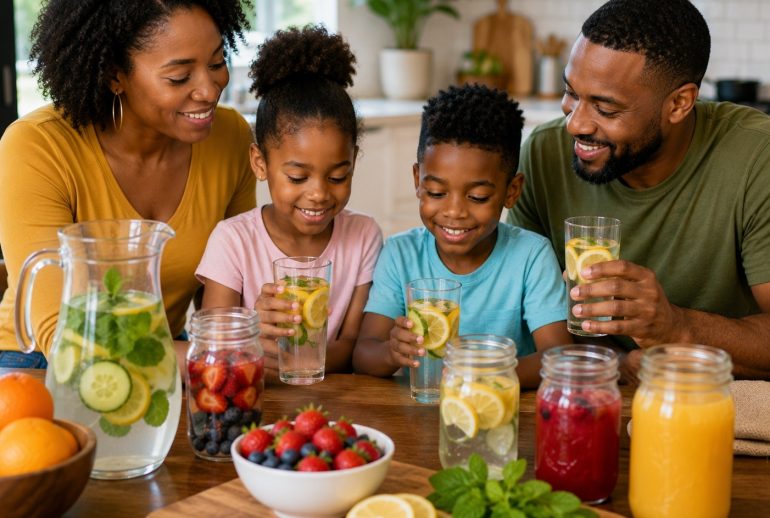
Healthy drink choices can have a bigger impact on family wellness than many people realize. Families often talk about meals, snacks, exercise, and vitamins, but drinks are part of health too. What children, teens, adults, and elders drink every day can affect energy, hydration, mood, digestion, dental health, weight, blood sugar, focus, and long-term wellness. A household may be working hard to prepare better meals, but if most drinks are high in sugar, caffeine, or artificial ingredients, the family may still be taking in more than the body needs.
Across the Black community, beverage habits are often connected to family routines, culture, celebrations, and convenience. Sweet tea, fruit punch, soda, flavored drinks, sports drinks, juice, coffee, lemonade, bottled beverages, and special occasion drinks may all show up at family gatherings, cookouts, church events, school lunches, parties, and everyday meals. These drinks can feel familiar and comforting, but families also need to understand how daily choices affect health over time.
This does not mean every enjoyable drink must disappear from the home. Balance matters. A child can enjoy a special drink sometimes and still learn that water should be the main everyday choice. Adults can enjoy tea or coffee while also paying attention to sugar and portion sizes. Families can make homemade drinks that taste good without relying on too much added sugar. The goal is not to create fear around beverages. The goal is to help families make thoughtful choices that support the body.
Small changes can make a real difference. Drinking more water, reducing sugary drinks, choosing unsweetened or lightly sweetened options, adding fruit or herbs for flavor, reading labels, limiting energy drinks, and teaching children why hydration matters can all support healthier habits. When families build better drink routines, they are investing in wellness in a simple and practical way.
1. Water Should Be The Main Everyday Drink.
Water is one of the most important drinks for the body. It helps with hydration, digestion, circulation, temperature control, energy, focus, and overall wellness. Children need water to play, learn, and stay active. Adults need water to manage busy days, physical work, caregiving, and stress. Elders need hydration to support energy and body function, especially during hot weather or when managing health conditions.
Many families know water is important, but drinking enough can still be difficult. Some children prefer sweet drinks because that is what they are used to. Some adults reach for coffee, soda, juice, or flavored beverages throughout the day because water feels plain. Building a water habit takes time, especially if the household has relied on sugary drinks for years.
Families can make water easier by keeping it visible and available. A pitcher in the refrigerator, reusable water bottles, cold water with meals, or bottles packed for school and outdoor activities can help. Children may drink more water when it is part of the routine instead of something offered only when they are already thirsty.
Water does not have to feel boring. Families can add slices of lemon, lime, cucumber, orange, berries, mint, or other fruit to give it a natural flavor. This can make water more appealing without turning it into a sugary drink. The goal is to help the family see water as normal, refreshing, and necessary.
2. Sugary Drinks Can Add Up Quickly.
Sugary drinks can add a lot of sugar to the day without making people feel full. Soda, fruit punch, sweet tea, lemonade, flavored drinks, sports drinks, energy drinks, and some bottled juices can contain more sugar than families expect. A child may drink sugar at breakfast, lunch, after school, and dinner without anyone realizing how much has been added throughout the day.
This matters because too much added sugar can affect energy, dental health, weight, blood sugar, and overall wellness. Children may experience quick energy followed by a crash. Adults may find it harder to manage healthy routines. Elders and people with certain health concerns may need to be especially mindful of sugar intake. While one drink may not seem like a big deal, repeated daily habits can become a problem over time.
Families can begin by looking at labels together. Children and teens can learn to check how much sugar is in a drink. Parents can explain that some beverages that look healthy may still contain a lot of added sugar. This helps children become more thoughtful consumers instead of choosing only by flavor or packaging.
Reducing sugary drinks does not have to happen overnight. A family might begin by replacing one sugary drink per day with water, choosing smaller portions, watering down juice, or saving sweet drinks for special occasions. Small steps are easier to maintain and can lead to better long-term habits.
3. Juice Should Be Used With Balance.
Many parents think juice is always healthy because it comes from fruit. While some juices contain vitamins, they can also contain a lot of natural sugar and sometimes added sugar. Juice also does not usually provide the same fullness and fiber as whole fruit. A child may drink a large amount of juice quickly without feeling satisfied.
Whole fruit is usually a better everyday choice because it gives the body fiber along with natural sweetness. An orange, apple, berries, grapes, melon, or peach can help children enjoy sweetness while also giving them more nutrition than many packaged drinks. Juice can still have a place, but it should be used with balance.
Parents and caregivers can choose 100% juice when possible and serve smaller portions. They can also dilute juice with water for younger children or use it occasionally instead of making it the main drink all day. This helps children enjoy flavor without relying too heavily on sweet drinks.
It is also helpful to teach children that fruit and fruit drinks are not the same thing. A child who understands that whole fruit gives the body more to work with may begin to make better choices. These simple lessons can support nutrition awareness early in life.
4. Homemade Drinks Can Be Healthier And More Meaningful.
Homemade drinks can help families enjoy flavor while controlling ingredients. Instead of buying heavily sweetened beverages, families can make drinks at home with fruit, herbs, tea, water, and smaller amounts of sweetener when needed. Homemade options can be refreshing, budget-friendly, and connected to family creativity.
A family might make infused water with fruit and mint, lightly sweetened iced tea, homemade lemonade with less sugar, fruit smoothies, herbal teas, or warm drinks during colder months. Children can help wash fruit, stir ingredients, taste flavors, and choose combinations. This turns drink preparation into a family activity.
Homemade drinks also allow families to adjust sweetness slowly. If children are used to very sweet drinks, reducing sugar all at once may be difficult. Families can gradually use less sugar over time so taste buds adjust. A drink can still be enjoyable without being overly sweet.
These drinks can also connect to culture. Families may have traditional beverages connected to African, Caribbean, Southern, or African American foodways. These traditions can be honored while still thinking about health. A family recipe may be prepared with less sugar, more water, or smaller portions while keeping its meaning.
5. Tea Can Be A Healthy Option When Prepared Wisely.
Tea can be a comforting and healthy drink choice when prepared with care. Herbal teas, black tea, green tea, and other tea varieties can be enjoyed hot or cold. Tea can be part of a calming routine, a family conversation, or a simple replacement for more sugary drinks. However, the health value depends on how it is prepared.
Sweet tea is a familiar drink in many households, but it can contain a large amount of sugar when heavily sweetened. Families do not have to give up tea completely. They can prepare it with less sugar, use fruit for flavor, add lemon or mint, or choose unsweetened tea for everyday use. Small adjustments can make a familiar drink more balanced.
Caffeine should also be considered. Some teas contain caffeine, which may not be appropriate for young children and may affect sleep or anxiety in some people. Herbal teas are often caffeine-free, but families should still check labels and be careful with herbs if someone has medical concerns or takes medications.
Tea can support healthier habits when families use it thoughtfully. A warm cup of tea in the evening or a cold lightly sweetened tea on a summer day can be enjoyable without becoming a heavy sugar habit. Balance is the key.
6. Sports Drinks Are Not Always Needed.
Sports drinks are often marketed as necessary for active children and teens, but they are not always needed for regular play. Many sports drinks contain sugar, artificial colors, and ingredients that children may not need unless they are involved in long or intense physical activity. For most everyday outdoor play, water is usually enough.
This matters because families may give sports drinks to children after school, during casual play, or with meals, thinking they are healthier than soda. While they may be useful in certain situations, they should not automatically replace water. Children need to understand that bright colors and athletic branding do not always mean a drink is the best choice.
For sports practices, games, and hot days, water should still be the first option. If a child is exercising for a long time, sweating heavily, or participating in intense activity, families can talk with coaches or health professionals about what hydration support is appropriate. The decision should be based on actual need, not marketing.
Teaching children this difference helps them become wiser about advertising. They learn that not every product labeled as healthy or athletic is necessary for daily life. This lesson supports both health and smart consumer habits.
7. Energy Drinks Are Not Safe Everyday Choices For Youth.
Energy drinks are popular among some teens, but they can be risky because they often contain high caffeine levels, sugar, and other stimulants. Young people may use them to stay awake, study, play sports, game, or feel more alert, but these drinks can affect sleep, heart rate, anxiety, mood, and focus. They are not a healthy solution for tiredness.
Families should talk openly with teens about energy drinks. A teen may not realize how much caffeine they are consuming, especially if they also drink coffee, soda, or other caffeinated beverages. They may think energy drinks are normal because friends use them or because they are widely advertised.
Instead of relying on energy drinks, teens need healthier energy habits. Sleep, balanced meals, water, movement, and better time management are more sustainable. If a teen is constantly exhausted, the family should look deeper at sleep routines, stress, school pressure, screen time, or health concerns.
Parents and caregivers should not wait until energy drinks become a daily habit. Honest conversation and clear boundaries can help protect young people. Youth should learn that energy is not something to chase through stimulants when the body may actually be asking for rest.
8. Drinks Can Affect Dental Health.
Sugary and acidic drinks can affect children’s teeth. Soda, juice, fruit drinks, sweet tea, sports drinks, and some flavored beverages can contribute to tooth decay when consumed often. Children may brush their teeth, but frequent sipping on sweet drinks throughout the day can still create problems.
Dental health matters because tooth pain, cavities, and dental visits can affect a child’s comfort, school attendance, eating habits, and confidence. Preventing problems is easier than treating them after they become serious. Drink choices are one part of that prevention.
Families can help by offering water between meals and limiting how often children sip sweet drinks. If a sweet drink is served, it is better to have it during a meal rather than sipping it slowly for hours. Children should also maintain brushing routines and regular dental care when possible.
Teaching children that drinks affect teeth helps them understand health in a practical way. They learn that caring for the mouth is part of caring for the whole body. Water becomes not only a hydration choice, but also a tooth-friendly choice.
9. Elders Need Hydration Support Too.
Hydration is important for elders, but some older adults may not drink enough water. They may not feel thirsty as often, may limit fluids because of bathroom concerns, may forget to drink, or may prefer coffee, tea, or sweet drinks. Families should pay attention to elder hydration with patience and respect.
Dehydration can affect energy, mood, dizziness, digestion, and overall wellness. During hot weather, illness, or certain medical conditions, hydration becomes even more important. Families can encourage elders to drink water throughout the day and keep water nearby where it is easy to reach.
Some elders may enjoy flavored water, herbal tea, broth-based soups, or fruits with high water content. The goal is to support hydration in ways that fit their preferences and health needs. If an elder has fluid restrictions or medical concerns, families should follow guidance from their healthcare provider.
Including elders in healthy drink habits can also strengthen family connection. A family might share tea, prepare fruit-infused water, or check in during hot days. These simple acts show care and help protect wellness across generations.
10. Children Should Learn To Read Drink Labels.
Reading labels is a valuable life skill. Many drinks have packaging that looks healthy, but the nutrition label may tell a different story. Children and teens can learn to check serving size, sugar, caffeine, and ingredients. This helps them make choices based on information, not only color, flavor, or advertising.
Parents can teach label reading in simple steps. They might ask, “How much sugar is in this?” or “How many servings are in the bottle?” or “Does this drink have caffeine?” These questions help children become more aware. Older children and teens can compare two drinks and decide which one is the better everyday choice.
Label reading also teaches critical thinking. Young people learn that companies design packaging to attract attention. A drink may use words like natural, vitamin, sport, energy, or fruit, but that does not always mean it is the best choice for daily use. Children who understand this are less likely to be easily influenced by marketing.
This skill can support health for years. A teen who learns to read labels may make better choices in school, college, work, and adulthood. Small lessons at home can become lifelong habits.
11. Family Gatherings Can Still Be Fun With Healthier Drinks.
Many family gatherings include sweet drinks because they feel festive and familiar. Cookouts, birthday parties, church events, holidays, and community gatherings often include soda, punch, lemonade, sweet tea, and juice. Families may worry that healthier drink options will make the event feel less enjoyable. But gatherings can still be joyful with more balanced choices.
A drink table can include water, fruit-infused water, lightly sweetened tea, homemade lemonade with less sugar, sparkling water, and smaller portions of traditional sweet drinks. This gives people options without making anyone feel judged. Children can still enjoy the gathering while learning that water belongs at celebrations too.
Presentation can help. A pitcher of cold water with sliced fruit can look inviting. A large container of iced herbal tea can feel special. Cups with ice, fruit, and fresh mint can make simple drinks feel festive. Healthy choices are easier when they are attractive and available.
Community events should also make water easy to access, especially during hot weather. Offering water is part of hospitality. It shows care for children, elders, and everyone attending.
12. Better Drink Habits Build A Healthier Future.
Healthy drink habits may seem small, but they can shape the future. A child who grows up drinking water regularly, understanding sugar, reading labels, and seeing adults make balanced choices is more likely to carry those habits into adulthood. These habits can support long-term health and reduce dependence on overly sweet drinks.
Families do not need to change everything at once. They can begin with one step, such as serving water with dinner, cutting back on soda, making homemade iced tea with less sugar, packing water for school, or teaching children to read labels. One habit can lead to another.
Better drink habits can also support community wellness. Schools, churches, youth programs, sports teams, and family events can all help normalize water and healthier drink options. When children see these choices in multiple places, the habit becomes stronger.
A healthier future is built through repeated small decisions. What families drink every day is one of those decisions. With patience and consistency, healthier beverage habits can become part of family life.
Conclusion.
Healthy drink choices matter across the Black community because beverages affect hydration, energy, dental health, sugar intake, focus, and long-term wellness. Families may be working hard to improve meals, but drinks should not be overlooked. Water, homemade beverages, lightly sweetened options, balanced juice habits, and label reading can all help support healthier routines.
The goal is not to remove every enjoyable drink or shame family traditions. The goal is balance. Sweet drinks can be occasional, while water becomes the everyday foundation. Children can learn why hydration matters, teens can understand the risks of energy drinks, adults can reduce sugar, and elders can receive better hydration support.
Families can begin with one small change this week. Replace one sugary drink with water, prepare fruit-infused water, read labels with children, or bring water to the next outdoor activity. Small choices, repeated over time, can help build healthier homes and stronger community wellness.
Akukulu Family encourages families, caregivers, schools, youth leaders, and community members to make one healthier drink choice this week. Serve water with a family meal, reduce sugary drinks at a gathering, teach a child to read a label, prepare a homemade drink with less sugar, or check on an elder’s hydration during hot weather. One simple change can support better health for the whole family.
