

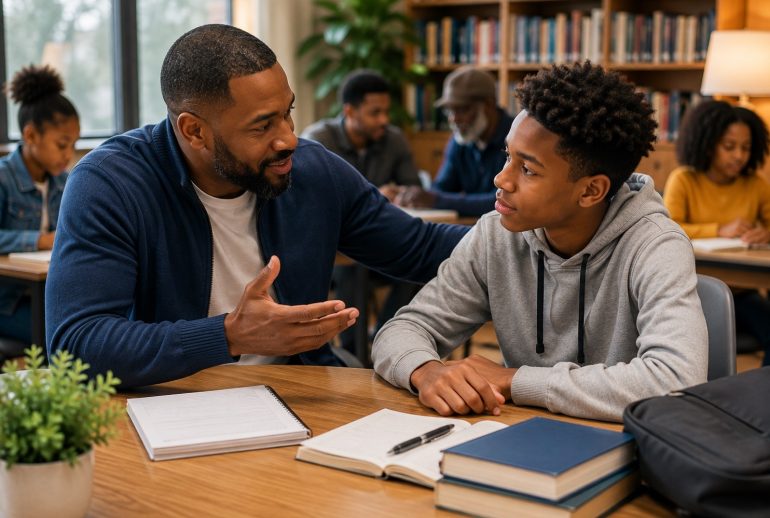
Youth mentorship is one of the strongest ways a community can invest in its future. Children and teens need parents, caregivers, teachers, and family members, but they also benefit from other trusted adults who can encourage them, guide them, challenge them, and help them see possibilities beyond their current situation. A mentor can become a steady voice in a young person’s life, reminding them that their choices matter, their future is worth preparing for, and they do not have to figure everything out alone.
Across the Black community, mentorship carries deep importance because young people are growing up with many pressures around them. They may be dealing with school stress, social media comparison, peer pressure, identity questions, family responsibilities, community challenges, emotional struggles, or uncertainty about what comes next after high school. Some youth have strong support at home, while others may need additional guidance from the wider village. In both cases, mentorship can help young people feel seen, valued, and supported.
A mentor does not have to be famous, wealthy, or perfect to make a difference. Sometimes the best mentors are everyday people who show up consistently. A mentor may be a teacher, coach, pastor, auntie, uncle, elder, business owner, college student, barber, stylist, community volunteer, youth leader, or trusted neighbor. What matters most is that the mentor is responsible, patient, honest, caring, and willing to guide young people with respect.
Mentorship is not about controlling a young person’s life. It is about walking beside them while they grow. A good mentor listens, asks questions, shares wisdom, helps youth think through choices, celebrates progress, and corrects with care when needed. When mentorship is healthy, it helps young people build confidence, character, life skills, emotional strength, and a clearer vision for their future.
1. Mentorship Helps Young People Feel Seen And Valued.
Many young people are surrounded by people but still feel unseen. They may go to school, attend activities, spend time online, and live in busy households, yet still wonder if anyone truly notices what they are carrying. A mentor can help change that experience by paying attention. When a trusted adult asks how a young person is doing, remembers their goals, notices their mood, and checks in consistently, the youth begins to feel that their life matters.
Feeling seen can be powerful for a child or teen. It tells them that they are not invisible. It tells them that someone cares enough to listen. A mentor may notice strengths that the young person does not see in themselves. They may say, “You explain things well,” “You have leadership in you,” “You are creative,” or “You handled that better than you did last time.” These words can stay with a young person for years.
Young people often need adults who can see beyond one mistake, one bad grade, one attitude problem, or one difficult season. A mentor can help them understand that they are still growing and that their current struggle does not define their entire future. This kind of support can protect confidence and help youth keep trying.
When young people feel valued, they are more likely to value themselves. That sense of worth can influence friendships, school effort, decision-making, and emotional wellness.
2. Mentors Can Help Youth Build Better Decision-Making Skills.
Children and teens make decisions every day. Some decisions seem small, such as how to spend free time, what to post online, or whether to finish homework. Other decisions can have bigger consequences, such as choosing friends, responding to peer pressure, handling conflict, dating, skipping school, or managing anger. Young people need guidance as they learn how choices affect their future.
A mentor can help youth slow down and think before acting. Instead of only saying, “Do not do that,” a mentor can ask thoughtful questions. What could happen if you make that choice? Does this match the person you want to become? Who might be affected? Is this pressure or wisdom? What would you tell a younger child in the same situation? These questions help young people develop judgment.
Good decision-making is learned through practice. A mentor gives youth a safe place to talk through situations before they become bigger problems. A teen may be more honest with a mentor about peer pressure, school struggles, or confusion because the relationship feels supportive. This does not replace parents or caregivers, but it can add another layer of guidance.
When young people learn to pause, think, and ask for advice, they become more prepared for adulthood. They begin to understand that freedom and responsibility go together.
3. Mentorship Can Strengthen School Confidence.
School can be encouraging for some students and discouraging for others. A young person may struggle with reading, math, writing, organization, motivation, test anxiety, behavior expectations, or confidence in the classroom. If they begin to believe they are not smart, they may stop trying fully. Mentorship can help rebuild school confidence by reminding youth that learning is a process.
A mentor can help a young person set academic goals, organize assignments, create study habits, prepare for tests, ask teachers for help, or connect with tutoring. Sometimes youth do not need someone to do the work for them. They need someone to help them believe they can improve and then show them how to take the next step.
Mentors can also connect school to real life. A young person may not understand why reading, writing, math, technology, or communication skills matter. A mentor can explain how those skills connect to jobs, business, college, trades, leadership, money management, and community service. When school feels connected to purpose, students may become more motivated.
A mentor can celebrate progress, not only perfect grades. Improving from failing to passing, completing assignments on time, reading more confidently, or asking for help can all be signs of growth. Youth need adults who notice those steps.
4. Mentors Help Youth Imagine More Possibilities.
Young people often dream based on what they have seen. If they have never met someone in a certain career, business, trade, college path, creative field, or leadership role, they may not imagine that path for themselves. Mentors can expand a young person’s view of what is possible.
A mentor might introduce youth to careers in healthcare, technology, education, business, law, construction, design, music, social work, engineering, skilled trades, entrepreneurship, public service, or the arts. They may take youth to events, introduce them to professionals, help them research programs, or share their own life journey. Exposure can open a door in the mind before any official opportunity appears.
This matters because many young people have talent but limited information. A teen may be good with computers but not know about cybersecurity or software development. A student may love helping people but not know about counseling, nursing, or nonprofit leadership. A creative child may not know that design, photography, writing, music, or animation can become real career paths.
Mentorship helps youth connect gifts to future possibilities. It tells them that their interests are worth exploring and that there are many ways to build a meaningful life.
5. Mentorship Supports Emotional Wellness.
Young people need emotional support, especially during seasons of stress. They may be dealing with friendship problems, anxiety, grief, anger, family changes, bullying, social media pressure, identity questions, or fear about the future. Some youth keep these feelings inside because they do not want to worry their family or because they do not know how to explain what they feel.
A mentor can provide a safe listening ear. This does not mean the mentor becomes a therapist unless they are trained for that role. It means they can listen with patience, encourage healthy coping, help the young person name emotions, and guide them toward additional support when needed. Sometimes a young person simply needs someone to say, “I hear you,” or “That sounds hard,” or “Let’s think through what you can do next.”
Mentors can also model healthy emotional strength. They can show youth that it is okay to ask for help, apologize, manage anger, take a break, pray, journal, talk through stress, or seek professional support when needed. Young people learn by watching how adults handle pressure.
Emotional wellness improves when youth know they are not alone. A mentor can become one part of a wider support system that includes family, school, faith, community programs, and mental health resources when needed.
6. Mentors Can Help Youth Build Cultural Pride And Identity.
A strong sense of identity can help young people move through the world with more confidence. Mentors can help youth connect with Black history, African Diaspora culture, family stories, local community history, music, food, literature, business, art, faith, and leadership. These connections remind young people that they belong to a larger story.
Cultural pride matters because youth may encounter stereotypes, limited representation, or messages that make them question their value. A mentor can help balance those messages by teaching truth. They can introduce young people to leaders, inventors, artists, entrepreneurs, writers, activists, educators, and everyday community builders whose stories show strength and brilliance.
Mentorship can also help youth understand that culture is not only about the past. It is alive now. It is in local businesses, family traditions, creative projects, community events, clothing, hairstyles, music, and the way people support one another. When youth see culture as living and personal, pride becomes stronger.
A young person who knows their identity is less likely to be shaped only by outside opinions. They can stand with more confidence because they know they come from a people with history, resilience, creativity, and future.
7. Mentorship Teaches Life Skills That Schools May Not Fully Cover.
Young people need practical life skills. They need to learn how to communicate, manage time, handle money, prepare for interviews, cook simple meals, resolve conflict, use technology wisely, care for their health, build routines, and make responsible choices. Schools teach many important subjects, but life skills often require personal guidance and repeated practice.
A mentor can help fill that gap. They might teach a teen how to write a resume, practice a job interview, open a bank account with family guidance, create a budget, send a professional email, dress for an event, prepare for college, learn a trade, or develop a small business idea. These lessons can make adulthood feel less confusing.
Life skills also include character skills. A mentor can teach patience, honesty, humility, discipline, respect, and follow-through. These qualities matter in every field and every relationship. A young person who learns how to show up on time, keep their word, and speak respectfully is building a foundation for future success.
Mentorship works best when lessons are practical. A young person may remember a real experience, such as visiting a workplace, practicing a budget, helping at an event, or shadowing a business owner, more than a long lecture. Life skills grow through action.
8. Mentors Can Help Youth Recover From Mistakes.
Every young person makes mistakes. They may choose the wrong friend, fail a class, get into conflict, break a rule, say something hurtful, or make a poor decision online. Mistakes need accountability, but they also need guidance. Without guidance, shame can take over and make a young person feel like they cannot change.
A mentor can help youth understand that one mistake does not have to become their whole identity. They can say, “What happened was serious, but this is not the end of your story.” That kind of message can help a young person face the truth without giving up. Accountability and hope must work together.
A mentor can help the youth reflect on what went wrong, who was affected, what needs to be repaired, and what can be done differently next time. This teaches responsibility without crushing confidence. It also helps young people develop the habit of learning from consequences.
When youth learn how to recover from mistakes, they become more resilient. They understand that growth includes correction, honesty, apology, and better choices. That lesson is essential for adulthood.
9. Mentorship Can Strengthen Families, Not Replace Them.
Healthy mentorship does not replace parents, caregivers, or family authority. It supports the family by adding another trusted voice to the young person’s life. Many parents are doing their best while managing work, bills, caregiving, stress, and household responsibilities. A mentor can help reinforce positive values and provide extra support.
A strong mentor respects the family. They communicate appropriately with parents or caregivers, honor boundaries, and understand their role. They do not encourage secrecy, disrespect, or division. Instead, they help the young person grow in a way that supports family relationships and personal responsibility.
Parents can benefit from mentorship too. A mentor may notice a young person’s strengths, suggest resources, encourage tutoring, connect the family to programs, or help the youth open up about goals and challenges. This can reduce the pressure on parents who may feel they must carry everything alone.
The village works best when families and mentors cooperate. Young people need a circle of caring adults who are pulling in the same direction.
10. Community Programs Can Create Safe Mentorship Spaces.
Mentorship can happen naturally, but organized programs can also play an important role. Schools, churches, libraries, nonprofits, community centers, sports teams, arts programs, business groups, and youth organizations can create safe spaces where young people meet caring adults and positive peers.
A good mentorship program should be structured, safe, and consistent. It should have clear expectations, responsible adult leadership, appropriate background checks when needed, parent communication, respectful boundaries, and meaningful activities. Safety is important because families need to trust the spaces where youth are being guided.
Programs can include tutoring, life skills workshops, career exposure, cultural learning, financial literacy, mental health conversations, leadership training, creative arts, sports, technology, entrepreneurship, and community service. These activities help youth grow in many areas, not only academics.
Community mentorship programs also reduce isolation. Young people see that others are working toward growth too. They meet peers who want positive direction and adults who care about their future. This kind of environment can be powerful.
11. Elders Have A Special Role In Mentorship.
Elders carry wisdom that younger generations need. They have lived through change, hardship, family seasons, work, community struggles, faith journeys, and lessons that cannot always be found online. When elders mentor youth, they help pass down memory, values, patience, and perspective.
An elder may teach a young person through stories. They may explain how the community used to support one another, how they handled difficult times, what mistakes they learned from, or what values helped them survive. These stories can help youth feel rooted and less alone.
Elder mentorship can also build respect across generations. Young people may realize that elders were once young, ambitious, uncertain, and growing too. Elders may also better understand the pressures youth face today. Conversation can create empathy in both directions.
Families and community programs should intentionally include elders when possible. A storytelling circle, skill-sharing workshop, family history project, cooking lesson, gardening project, or community conversation can create meaningful mentorship moments. Elders are not only to be cared for. They also have much to give.
12. Mentorship Builds A Stronger Future For The Whole Community.
Youth mentorship is not only about helping one child. It is about strengthening the future of the whole community. A mentored young person may become more confident, responsible, skilled, and hopeful. Over time, that young person may become a mentor to someone else. This creates a cycle of guidance that can continue across generations.
A community that mentors its youth is saying, “You matter to us.” That message is powerful. It tells children and teens that adults are invested in their future. It tells them that their gifts are needed. It tells them that the village is not only watching for mistakes but also looking for potential.
Mentorship can help reduce disconnection. It can support school success, emotional wellness, leadership, career readiness, cultural pride, and better decision-making. It can help young people choose healthier paths because they have people walking with them.
The future of the Black community depends in part on how well young people are guided today. Mentorship is one way to make that future stronger, wiser, and more connected.
Conclusion.
Youth mentorship matters for the future of the Black community because it helps young people feel seen, supported, guided, and prepared. A mentor can help a child or teen build confidence, make better decisions, strengthen school habits, develop life skills, recover from mistakes, and imagine new possibilities. Mentorship gives young people another trusted voice in their corner.
Families, schools, churches, elders, local businesses, community organizations, and caring adults all have a role to play. A mentor does not need to be perfect. They need to be consistent, responsible, respectful, and willing to help youth grow with patience and care. The strongest mentorship relationships are built on trust, honesty, and steady presence.
When young people are mentored well, they are more likely to believe in their own value and future. They learn that they are not alone, that their choices matter, and that their gifts can serve a larger purpose. A strong mentorship culture helps rebuild the village and prepare the next generation to lead.
Akukulu Family encourages parents, caregivers, elders, mentors, educators, and community members to support one young person this month. Offer encouragement, share a life lesson, help with school goals, invite them to learn a skill, connect them with a positive program, or simply check in and listen. One steady adult can make a lasting difference in a young person’s life.
