

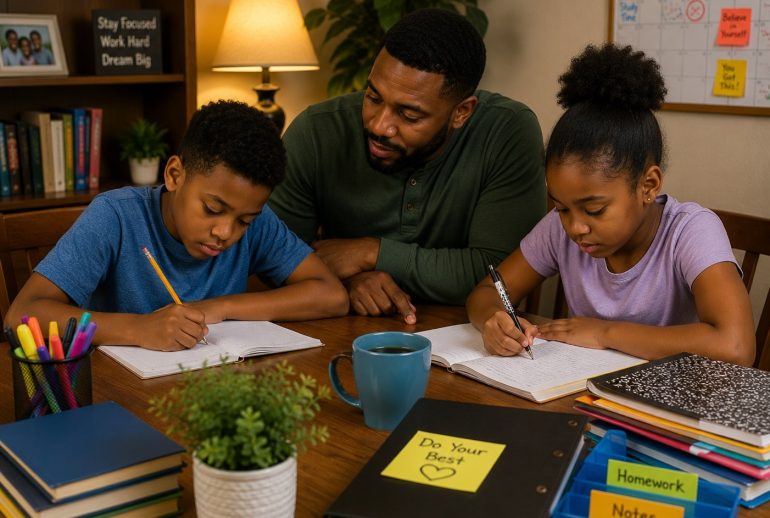
Homework can be one of the most stressful parts of the school week. Children may come home tired, hungry, distracted, or frustrated after a long day in class. Parents and caregivers may be balancing work, dinner, errands, younger siblings, bills, transportation, and evening responsibilities. Teens may have sports, jobs, social pressure, phones, and multiple assignments from different teachers. Without a routine, homework can quickly become a daily argument instead of a helpful learning habit.
Across the Black community, education has always been connected to opportunity, preparation, dignity, and generational progress. Families want children to succeed in school, but success does not happen only inside the classroom. Home routines matter too. A child who learns how to organize assignments, manage time, ask for help, complete work, and prepare for the next day is building skills that reach far beyond homework. These are life skills.
A good homework routine does not mean every child will love homework. It also does not mean parents have to know every answer. Many caregivers feel pressure when children bring home assignments that look different from what they learned years ago. Some parents may not feel confident helping with math, writing, reading, technology, or online school portals. But support is not only about having the answer. It is about creating structure, encouragement, accountability, and a calm place for children to try.
Homework routines work best when they are realistic. A routine should fit the child’s age, family schedule, school expectations, and home environment. Some children need a snack and a short break before starting. Others work better right away before they lose focus. Some need quiet. Some need an adult nearby. Some need timers, checklists, or step-by-step guidance. The goal is to help each child build a habit that supports learning without creating unnecessary stress.
1. Homework Routines Help Children Know What To Expect.
Children often do better when they know what comes next. If homework happens at a different time every day, in a different place, with different expectations, children may resist more. A routine helps remove confusion. It tells the child, “This is when we work, this is where we work, and this is what needs to happen before free time.”
A routine might look simple. A child comes home, washes hands, eats a snack, takes a short break, then begins homework at the kitchen table. Another child may do homework at a desk after dinner. A teen may review assignments after school, take a break, then work in blocks of time before evening activities. There is no single perfect schedule. The best routine is the one the family can keep consistently.
When children know what to expect, parents may not have to restart the same argument every day. The routine becomes the guide. Instead of saying, “Do your homework” over and over, the family can say, “It is homework time.” That small shift can reduce stress.
Consistency also teaches responsibility. Children begin to understand that homework is part of the daily rhythm, not something optional that depends on mood. Over time, this habit can help them become more independent.
2. A Good Homework Space Supports Focus.
Children need a place where they can focus. This does not have to be a perfect desk or private room. Many families do not have extra space, and that is okay. A homework space can be a kitchen table, bedroom corner, dining area, library table, community center, or quiet spot after school. What matters is that the child has enough room, light, and supplies to work.
A helpful homework space should reduce distractions when possible. Television, loud music, phones, toys, and unnecessary screens can make it harder for children to concentrate. Some children can work with background noise, but many need fewer distractions, especially when reading, writing, or solving math problems.
Families can create a small homework basket with pencils, paper, crayons, calculator, ruler, glue, scissors, index cards, and other supplies. This prevents children from wasting time searching for materials. For older students, folders, notebooks, chargers, and planners may be more important.
The space should also feel supportive, not punishing. Homework should not feel like isolation or shame. A child who struggles may need an adult nearby for encouragement. A comfortable, organized space can help children approach homework with more confidence.
3. Breaks Can Help Children Work Better.
Some children cannot sit and focus for long periods without a break. This is especially true for younger children, active children, and students who feel overwhelmed by difficult assignments. Trying to force a tired child to work for a long stretch may lead to frustration, tears, arguments, or careless work. Short breaks can help the brain reset.
A break might include stretching, drinking water, walking around, taking deep breaths, or having a quick snack. It should not always become a long screen break because phones, videos, and games can make it harder to return to homework. The goal is to refresh the child, not pull them completely away from the task.
Timers can be helpful. A child might work for fifteen or twenty minutes, then take a five-minute break. Older students may work for longer blocks. The timing should fit the child’s age and attention span. Some children feel more motivated when they know they only have to focus for a set amount of time.
Breaks also teach self-awareness. Children learn to notice when their mind is tired and how to return to work responsibly. This is an important skill for school, college, jobs, and adult life.
4. Parents Can Support Without Doing The Work.
Parents and caregivers want children to succeed, but it is important not to do the homework for them. Homework is meant to help the child practice skills, show understanding, and build responsibility. If an adult gives all the answers, the child may finish the assignment but miss the learning.
Support can look different. A parent can read directions aloud, ask the child to explain the problem, help organize materials, review completed work, or encourage the child to try again. A caregiver can say, “Show me what your teacher asked you to do,” or “What part do you understand?” or “Let’s look at the example together.” These questions help the child think.
If the parent does not know the answer, honesty is okay. They can say, “I am not sure, but let’s see what resources your teacher gave you,” or “Let’s write this question down so you can ask tomorrow.” This teaches children that not knowing is not failure. It is a reason to seek help.
The goal is to guide children toward independence. Over time, they should learn how to read instructions, attempt problems, check their work, and ask for support when needed.
5. Organization Helps Prevent Missing Assignments.
Many students struggle not because they cannot do the work, but because they lose papers, forget deadlines, miss instructions, or fail to turn in completed assignments. Organization is a major part of homework success. Children need systems that help them keep track of what needs to be done.
Younger children may need a homework folder that travels between school and home. Parents can check it each evening. Older children and teens may need planners, calendars, online portals, reminder apps, or notebooks divided by subject. The tool matters less than the habit of checking assignments daily.
Families can create a simple routine: check the backpack, review assignments, complete homework, place finished work back in the folder, and pack the bag for tomorrow. This helps reduce morning panic and missing work.
Teens may need help learning how to manage multiple classes. A caregiver can sit with them once a week to review upcoming deadlines, tests, projects, and missing assignments. This does not mean controlling every detail. It means helping them build a system until they can manage it more independently.
6. Homework Can Reveal When A Child Needs Extra Help.
Homework gives families a window into how a child is doing in school. If a child consistently struggles, cries, avoids assignments, takes much longer than expected, or seems confused by basic instructions, it may be a sign that extra support is needed. Parents should pay attention to repeated patterns.
A child may need tutoring, teacher clarification, reading support, math practice, vision screening, attention support, special education evaluation, language support, or emotional encouragement. Struggle does not mean the child is lazy or incapable. It may mean the child needs a different kind of help.
Families can communicate with teachers when homework becomes a regular problem. Useful questions include: How long should this assignment take? Is my child behind in a certain skill? Are they completing work in class? What can we practice at home? Are tutoring or support services available?
Early support matters. A small learning gap can become larger if it is ignored. When families respond with patience and advocacy, children are more likely to receive help before frustration becomes discouragement.
7. Encouragement Builds Homework Confidence.
Children need encouragement while building homework habits. If they only hear criticism, they may begin to believe they are bad students. Encouragement helps them keep trying, especially when assignments are difficult. A child who feels supported is more likely to stay engaged.
Parents can praise effort, focus, improvement, and responsibility. They might say, “I noticed you started without arguing today,” or “You kept trying even though that was hard,” or “Your handwriting is clearer than last week,” or “You asked for help instead of giving up.” Specific praise helps children understand what they are doing well.
Encouragement should be honest. Children do not need fake praise for careless work. They need adults who believe they can improve and who help them correct mistakes without shame. A parent can say, “This part needs fixing, but I know you can do it.”
Confidence grows through repeated effort. When children see that practice leads to progress, they begin to trust their ability to learn. That confidence can carry into the classroom.
8. Screens Should Be Managed During Homework Time.
Phones, tablets, television, gaming systems, and social media can make homework harder. A child may think they can work while checking messages or watching videos, but constant interruptions reduce focus. Even adults struggle with this. Children and teens need guidance around screens during study time.
Families can create clear screen rules. Phones may stay in another room until homework is done. Television may stay off during study time. Gaming may happen only after assignments are complete. Computers may be used only for school-related tasks during homework time, with parent checks when needed.
Teens may need a more mature conversation about distraction. Parents can explain that focus is a skill and that multitasking often makes work take longer. A teen who removes distractions may finish faster and have more free time later.
Screen boundaries should be consistent. If screens are allowed to interrupt homework every day, the routine becomes harder to protect. A focused homework period helps children build discipline in a world full of digital distractions.
9. Homework Routines Teach Time Management.
Time management is one of the most important skills students can learn. Homework routines teach children how to plan, start tasks, finish assignments, and prepare for deadlines. These skills will help them in middle school, high school, college, work, and family life.
Younger children can learn simple time habits, such as starting homework before playtime or packing their backpack before bed. Older children can learn to break large assignments into smaller steps. Teens can learn to plan for tests, projects, sports schedules, jobs, and family responsibilities.
Parents can help children estimate how long assignments will take. Many students underestimate time and wait too long to begin. A caregiver can ask, “How long do you think this will take?” and then help the child compare that estimate to reality. This builds awareness.
Time management also reduces stress. A student who starts early has more room to ask for help. A student who waits until the last minute may feel overwhelmed and rush through the work. Homework routines help children learn that planning brings peace.
10. Reading Should Be Part Of The Homework Culture.
Even when children do not have written homework, reading can be part of the evening routine. Reading strengthens vocabulary, focus, imagination, writing, and school confidence. A child who reads regularly is building skills that support every subject.
Families can make reading part of homework time by setting aside a few minutes for books, library reading, articles, poetry, Bible reading if part of the household, or age-appropriate nonfiction. Children should have some choice in what they read because interest matters.
For younger children, adults can read with them. For older children, families can ask about what they are reading and what they think about it. Teens may prefer articles, biographies, novels, graphic novels, or books connected to their interests.
Reading should not feel like punishment. It should be treated as part of learning and family growth. A homework culture that includes reading helps children become stronger thinkers and communicators.
11. Homework Should Not Take Over The Whole Evening.
Homework is important, but children also need rest, play, family time, meals, sleep, and emotional balance. If homework takes over every evening, the family may need to look closer. The work may be too much, the child may be struggling, or the routine may need adjustment.
Parents can ask teachers how long homework should usually take. If a child is spending far longer than expected, it may signal a problem. The child may need help understanding directions, practicing a skill, or managing distractions. In some cases, the teacher may need to know that the workload is taking too long at home.
Children should also have time to unwind. A healthy routine includes work and rest. Finishing homework should not mean the child immediately falls into bed exhausted every night. Balance supports learning.
Families can protect evenings by starting homework earlier when possible, breaking assignments into smaller steps, and communicating with teachers when needed. Homework should support education, not overwhelm the whole household.
12. Strong Homework Habits Build A Stronger Future.
Homework routines are about more than assignments. They help children build responsibility, focus, organization, time management, persistence, and confidence. These habits become part of how students approach challenges in life.
A child who learns to sit down, attempt hard work, ask questions, correct mistakes, and finish responsibilities is building character. A teen who learns to plan ahead and manage deadlines is preparing for adulthood. These skills matter in every career, business, college path, trade, and family responsibility.
Families, schools, mentors, and community programs can work together to support homework success. Parents can provide structure at home. Teachers can communicate clearly. Mentors can help with accountability. Community programs can offer tutoring and quiet study spaces. Children need a village that supports learning.
When homework routines become steady, students gain more than completed assignments. They gain habits that help them walk into the future with more confidence and preparation.
Conclusion.
Homework routines support student success across the Black community because they help children build structure, focus, responsibility, and confidence. A good routine gives students a clear time, place, and process for completing assignments. It also helps families notice when children need extra support.
Parents and caregivers do not need to know every answer to make a difference. They can create a calm space, check assignments, encourage effort, manage screen distractions, communicate with teachers, and help children stay organized. These acts of support show children that education matters and that they are not alone.
Strong homework habits begin with small steps. A regular time, a homework folder, a quiet space, a short reading routine, or a weekly assignment check can help children feel more prepared. Over time, these habits can support stronger learning, calmer evenings, and better school confidence.
Akukulu Family encourages parents, caregivers, mentors, and educators to support one homework habit this week. Set a clear homework time, organize a study space, check a child’s folder, reduce screen distractions, or ask a teacher how to help. One simple routine can support stronger learning and greater student confidence.
