

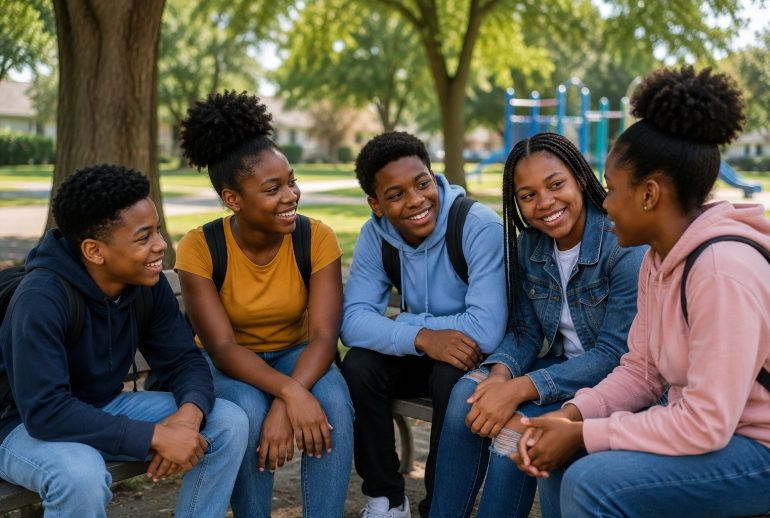
Friendships play a powerful role in a young person’s life. Children and teens are shaped not only by family, school, and community, but also by the people they spend time with. A good friend can encourage a young person, help them feel included, celebrate their success, listen during hard moments, and support better choices. An unhealthy friendship can create stress, pressure, insecurity, conflict, and confusion. This is why families should pay attention to the quality of children’s friendships, not only whether they have friends.
Across the Black community, positive friendships matter because young people are growing up with many pressures around them. They may face school stress, social media comparison, identity questions, peer pressure, neighborhood challenges, family responsibilities, and worries about the future. During these years, friends can either help youth stay grounded or pull them away from the values and goals their families are trying to build.
A healthy friendship does not mean young people will never disagree. Even good friends have misunderstandings, hurt feelings, and different opinions. But a positive friendship should include respect, honesty, kindness, accountability, and care. Young people should not feel constantly embarrassed, controlled, used, ignored, pressured, or made to feel small by the people they call friends.
Parents, caregivers, mentors, teachers, elders, and community leaders can help youth understand what healthy friendship looks like. Children and teens need guidance because they are still learning how to choose relationships, set boundaries, handle conflict, and recognize when a friendship is not good for them. When families talk openly about friendship, youth are more prepared to build relationships that support their growth.
1. Positive Friends Help Youth Feel Seen And Accepted.
Every young person wants to feel accepted. Children and teens want to know that someone enjoys their company, listens to their thoughts, laughs with them, and includes them. Positive friendships can give youth a sense of belonging outside the home. This can support confidence and emotional wellness.
A good friend makes a young person feel comfortable being themselves. They do not require the youth to change their personality, hide their interests, or act against their values just to be included. They respect the person’s feelings and make room for honesty. This kind of acceptance can be especially important during adolescence, when many teens are trying to understand who they are.
When youth feel accepted by positive friends, they may become more confident in school, community activities, sports, creative programs, and social settings. They may be more willing to speak up, try new things, and express themselves. Friendship can help them feel less alone.
Families can support this by asking children how their friends make them feel. A simple question like, “Do you feel like you can be yourself around them?” can help a child begin thinking more deeply about friendship quality.
2. Healthy Friendships Encourage Better Choices.
Friends influence choices. A young person may be more likely to study, attend school, join a program, avoid trouble, or try something positive when their friends are also moving in that direction. Positive friends can encourage each other to do better without making one another feel judged.
This does not mean every friend has to be perfect. No young person is perfect. But the general direction of the friendship matters. Are they encouraging growth or encouraging trouble? Are they helping each other think wisely or pushing each other into risky behavior? Are they building confidence or creating pressure?
Youth need to understand that friendship is not only about having fun. It is also about influence. A friend who constantly pushes someone to lie, skip school, disrespect family, bully others, break rules, or make unsafe choices may not be a healthy friend. A friend who encourages honesty, effort, kindness, and responsibility is helping build a stronger future.
Parents can talk about influence without attacking every friend. Instead of saying, “I do not like that child,” they can ask, “How do you act when you are around them?” or “Do they help you make good choices?” This helps youth reflect instead of only becoming defensive.
3. Positive Friendships Can Reduce Loneliness.
Loneliness can affect children and teens even when they are surrounded by people. A young person may attend school, have social media contacts, and be around classmates every day, but still feel disconnected. Positive friendships can help reduce that loneliness by giving youth someone they can talk to, laugh with, and trust.
Loneliness matters because it can affect mood, confidence, motivation, and emotional health. A child who feels left out may become quiet, angry, clingy, or withdrawn. A teen who feels lonely may spend more time online looking for connection, sometimes in unsafe or unhealthy spaces. Healthy friendships can provide real-life connection that supports emotional balance.
Families should take loneliness seriously. If a child says they have no friends or feels excluded, adults should listen with care. They can help the child explore activities where they may meet positive peers, such as youth programs, sports, art classes, church groups, tutoring programs, library events, or community service.
Friendship cannot be forced, but families can help create opportunities. Sometimes one safe friendship can make a major difference in a young person’s life.
4. Youth Need To Learn The Difference Between Friendship And Popularity.
Many children and teens confuse popularity with friendship. Being known by many people is not the same as being cared for by real friends. A young person may have many followers, group chats, classmates, or social connections, yet still not have people they can truly trust.
Popularity can become stressful because it often depends on attention, appearance, trends, gossip, humor, or social status. A young person may feel pressure to act a certain way to stay accepted. They may worry about being left out, judged, or replaced. This can create anxiety and insecurity.
True friendship is different. A real friend does not only show up when things are exciting or when the person is popular. A real friend cares when life is hard. They respect boundaries, avoid humiliation, and want the person to grow. They do not use private information as entertainment.
Families can help youth understand that one or two trustworthy friends may be more valuable than a large group that creates stress. Quality matters more than quantity. A small circle of positive support can be healthier than a large circle filled with drama.
5. Good Friends Respect Boundaries.
Boundaries are important in every healthy relationship. Children and teens need to learn that a good friend respects their limits. A friend should not pressure someone to share secrets, send private pictures, break family rules, spend money, lie, or do something that makes them uncomfortable. Respecting “no” is part of friendship.
Some young people struggle with boundaries because they fear losing friends. They may go along with things they do not want to do because they do not want to be rejected. This can place them in unsafe or unhealthy situations. Families need to teach youth that real friends do not require them to ignore their own values.
Boundary language can be practiced at home. Young people can learn phrases like, “I do not want to do that,” “That does not feel right,” “I need to go,” “Do not talk to me that way,” or “I am not comfortable with that.” Practicing these words can make it easier to use them in real situations.
A friend who becomes angry every time a boundary is set may not be a safe friend. Youth should learn to notice that sign early.
6. Friendship Conflict Can Teach Communication Skills.
Even healthy friendships have conflict. Children may argue over games, sharing, group projects, birthday invitations, sports, rumors, or hurt feelings. Teens may deal with misunderstanding, jealousy, dating concerns, online messages, social media posts, or shifting friend groups. Conflict can be painful, but it can also teach communication skills.
Young people need help learning how to handle conflict without cruelty. They can learn to speak honestly, listen, apologize, forgive, and decide whether a friendship can be repaired. Not every disagreement means the friendship is over. But not every friendship needs to continue if disrespect becomes repeated.
Families can guide children through questions. What happened? What did you feel? What did you say? Did you listen? Was an apology needed? Is this a one-time conflict or a repeated pattern? These questions help youth think clearly.
Conflict skills matter for life. The way young people learn to handle friendship problems can shape how they later handle family relationships, work relationships, marriage, parenting, and community disagreements.
7. Parents Should Know Their Children’s Friends.
Parents and caregivers should try to know who their children spend time with. This does not mean controlling every social interaction, but it does mean staying aware. Knowing friends helps families understand influences, social patterns, and possible concerns before problems become serious.
Parents can invite friends to the home, meet other parents when possible, ask about school friendships, and pay attention to how children act after spending time with certain peers. Does the child seem encouraged, peaceful, and happy? Or do they seem anxious, secretive, disrespectful, or upset? These patterns can reveal a lot.
Teens may want more privacy, but caregivers still have a responsibility to guide. Parents can respect growing independence while asking clear questions about where teens are going, who they are with, and what the plan is. Trust and accountability should work together.
When parents know a child’s friends, they are better able to support healthy relationships and address concerns early. This is part of protecting the child’s emotional and social wellness.
8. Online Friendships Need Careful Guidance.
Many young people build friendships online through games, social media, group chats, and digital communities. Some online friendships may feel meaningful, but they also require caution. Youth may not always know who they are talking to, and online spaces can include pressure, bullying, inappropriate content, scams, or unsafe requests.
Families should talk openly about online friendship safety. Children and teens should not share private information such as their address, school, phone number, passwords, personal photos, or family details with online friends. They should also be careful about moving conversations into private spaces without adult awareness.
Online friendships can also affect emotions. A group chat can create stress. A social media comment can hurt deeply. Being excluded from an online conversation can feel painful. Parents should not dismiss online experiences as “not real” just because they happen digitally. The emotions can still be real.
Healthy digital guidance includes both safety and listening. Youth should know they can come to an adult if something online makes them uncomfortable. They should not feel that telling the truth will only lead to punishment. Trust keeps communication open.
9. Positive Friendships Support Cultural Pride And Identity.
Friendships can also support identity. Young people benefit from friends who respect their culture, family background, hair, skin tone, traditions, faith, language, interests, and personal values. A positive friend does not mock a young person’s identity or make them feel ashamed of where they come from.
Across the Black community and African Diaspora, youth may have different family stories, cultural traditions, foods, accents, hairstyles, and experiences. Good friendships make room for those differences. They allow young people to learn from each other and celebrate who they are.
Friends can also encourage cultural pride by attending events together, reading books, joining youth programs, supporting local businesses, learning history, or participating in community activities. Shared pride can strengthen confidence.
Families can encourage youth to choose friends who respect their whole self. A young person should not have to hide their culture, values, or family identity to be accepted. Healthy friendships help youth stand more confidently in who they are.
10. Mentors Can Help Youth Navigate Friendships.
Sometimes young people need a trusted adult outside the immediate household to talk to about friendships. A mentor, teacher, coach, youth leader, elder, counselor, or relative can help a child or teen think through relationship problems with wisdom. This can be especially helpful when youth feel embarrassed talking to parents.
A mentor can ask questions, share experiences, and help the young person see patterns. They may help a teen recognize peer pressure, understand jealousy, repair conflict, or walk away from a harmful friendship. A mentor can also affirm the young person’s worth when they feel rejected.
Mentorship does not replace family guidance. It adds another layer of support. Young people need a village of caring adults who can help them make sense of relationships.
Community programs can include friendship and relationship skills as part of youth development. Teaching healthy friendships is part of preparing young people for emotional wellness and future leadership.
11. Youth Should Learn When To Walk Away.
Not every friendship is meant to continue. Some friendships become harmful. A young person may need to walk away from a friend who repeatedly lies, manipulates, bullies, embarrasses, pressures, insults, excludes, or disrespects boundaries. Ending a friendship can be painful, but sometimes it is necessary for emotional health.
Youth need to know that walking away is not always mean. Sometimes it is wise. A person can care about someone and still recognize that the relationship is not healthy. Families can help children understand this with compassion.
Walking away may look different depending on the situation. It may mean spending less time together, leaving a group chat, choosing different lunch companions, telling an adult about bullying, or clearly saying the friendship is no longer healthy. If safety is a concern, adults should be involved.
This lesson helps young people protect their peace and self-respect. A child who learns to leave unhealthy friendships is building an important life skill.
12. Strong Friendships Help Build A Stronger Future.
Positive friendships can help young people become stronger, more confident, and more emotionally grounded. A good friend can encourage school effort, celebrate goals, support healthy choices, and help youth feel less alone. These relationships can become part of the support system that helps children and teens grow.
Friendship skills also prepare youth for adulthood. The ability to choose healthy relationships, communicate clearly, set boundaries, apologize, forgive, and walk away when needed will help them in work, family, marriage, parenting, and community life.
Families and communities should not treat friendships as a small issue. Friendships shape identity, confidence, behavior, and emotional wellness. Helping youth build healthy friendships is part of helping them build healthy futures.
When young people are surrounded by positive peers and caring adults, they are more likely to feel supported, make wise choices, and believe in their own value. That strengthens not only the individual child, but the whole community.
Conclusion.
Positive friendships support youth across the Black community by helping children and teens feel accepted, confident, encouraged, and emotionally supported. Healthy friendships can reduce loneliness, support better choices, teach communication, and help young people understand the importance of respect and boundaries.
Families have an important role in guiding friendship choices. Parents and caregivers can ask thoughtful questions, get to know friends, teach online safety, model healthy communication, and help youth recognize when a relationship is harmful. Mentors, teachers, elders, and community programs can also help young people build stronger social skills.
A good friendship can become a source of strength during the growing years. When youth learn to choose friends who respect them, encourage them, and support their growth, they are better prepared for school, family life, community leadership, and adulthood.
Akukulu Family encourages parents, caregivers, mentors, educators, and community members to talk with one young person about friendship this week. Ask how their friends make them feel, encourage healthy boundaries, praise positive peer choices, or help them think through a friendship challenge. One honest conversation can help a young person build stronger relationships and greater confidence.
