

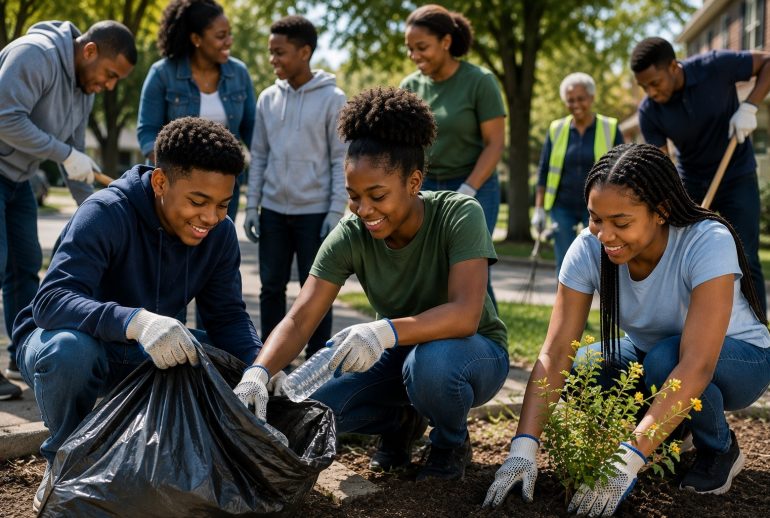
Community service helps young people understand that their lives matter beyond themselves. When children and teens serve others, they begin to see that they have something valuable to give. They learn that helping an elder, cleaning a park, packing food boxes, volunteering at an event, tutoring a younger child, supporting a neighbor, or joining a community project can make a real difference. Service teaches youth that they are not only receivers of care. They can also become contributors to the village.
Across the Black community, service has always been connected to survival, faith, family, leadership, and collective strength. Communities have often depended on people showing up for one another through meals, rides, childcare, church work, mutual aid, mentoring, neighborhood support, and family responsibility. Young people need to see that tradition not only as history, but as something they can practice today.
Community service is not only about completing volunteer hours for school. It is about character. It helps children and teens build empathy, discipline, patience, humility, gratitude, teamwork, and leadership. It also gives young people a healthier sense of purpose. In a world where many youth are surrounded by social media pressure, comparison, and self-focus, service reminds them that real value is also found in helping others.
Families, schools, churches, elders, mentors, local businesses, and community organizations can all help youth find meaningful ways to serve. The service does not have to be large. A small act done with care can teach a powerful lesson. When young people learn to serve, they become more connected, more responsible, and more prepared to build a stronger future.
1. Community Service Helps Youth See Their Own Value.
Many young people wonder if they matter. They may compare themselves to others, feel overlooked, or believe they have nothing important to offer. Community service can help change that. When a child or teen helps someone and sees the impact, they begin to understand that their time, effort, and presence have value.
A young person might help set up chairs at a community event, carry groceries for an elder, read to a younger child, clean up a neighborhood space, or help prepare meals for others. These actions may seem small, but they show youth that they can be useful and needed. That feeling can build confidence.
Service also helps young people see themselves differently. Instead of only being told what they should not do, they are given a chance to do something good. Instead of only being corrected, they are trusted with responsibility. This can be especially meaningful for youth who may not always feel successful in school or other areas.
When young people feel useful, they often become more motivated. They begin to believe that they can contribute to their home, school, neighborhood, and future. That belief is powerful.
2. Serving Others Builds Empathy.
Empathy grows when young people learn to notice the needs of others. Community service helps youth understand that everyone carries something. An elder may need help with groceries. A family may need food support. A child may need tutoring. A neighborhood may need cleaning. A community event may need volunteers. Service teaches youth to look beyond their own wants and notice real human needs.
This kind of awareness is important. Children and teens naturally focus on their own world, but service helps expand their perspective. They begin to understand that people have different challenges, responsibilities, and stories. They may become slower to judge and quicker to help.
Empathy does not mean feeling sorry for people in a shallow way. It means learning to care with respect. Youth should be taught to serve without looking down on others. The goal is not to act superior, but to stand with people and support the community.
When empathy grows, relationships become healthier. Young people who understand the feelings and needs of others are more likely to become kind friends, responsible family members, thoughtful leaders, and caring adults.
3. Community Service Teaches Responsibility.
Serving others requires responsibility. If a young person signs up to volunteer, people are counting on them. They may need to arrive on time, follow instructions, complete tasks, work with others, and stay focused. These are life skills that matter far beyond the service project.
Responsibility grows through practice. A teen who helps with a food drive learns to organize items and follow a process. A child who helps clean a park learns to finish a task. A youth who supports an event learns teamwork. These experiences teach that good intentions are not enough. Follow-through matters.
Adults can help by giving youth age-appropriate responsibilities. Younger children may help sort supplies or greet people. Teens may help lead a small team, manage a sign-in table, carry equipment, or mentor younger participants. Giving real responsibility shows trust.
Youth also learn that service is not always convenient. Sometimes helping others requires effort, patience, and sacrifice. That lesson helps prepare them for adulthood, where responsibility often means showing up even when it is not easy.
4. Service Can Strengthen Youth Leadership.
Leadership is not only about being in charge. It is about serving with purpose, solving problems, listening, organizing, and helping others move forward. Community service gives youth a practical way to develop leadership skills in real situations.
A young person may lead a cleanup team, help plan a youth event, speak during a community program, organize donations, guide younger children, or help solve a problem during a volunteer project. These moments give youth a chance to practice confidence and decision-making.
Leadership through service is especially healthy because it teaches humility. Young people learn that leadership is not only about attention or titles. It is about responsibility. A good leader may be the person who stays late to clean up, helps someone quietly, or notices what needs to be done without being asked.
Families and community programs should look for ways to let youth lead safely. When young people are trusted with meaningful roles, they begin to see themselves as capable. That confidence can carry into school, work, business, and community life.
5. Helping Elders Builds Intergenerational Connection.
Elders are an important part of the village. They carry wisdom, history, memory, and life experience. Community service can help youth connect with elders in meaningful ways. This may include helping with yard work, carrying groceries, reading together, visiting, recording family stories, helping with technology, or supporting elder events.
These moments help young people understand that elders should not be forgotten. They also give youth a chance to learn from older generations. An elder may share stories about family, work, faith, community changes, and lessons learned through life. These conversations can teach more than any classroom assignment.
Helping elders also builds respect. Young people learn patience, listening, and gratitude. They begin to see aging as part of community life, not something separate or invisible. Elders, in return, may feel valued and included.
Intergenerational service strengthens the whole community. It connects the energy of youth with the wisdom of age. That connection helps preserve culture, memory, and care.
6. Neighborhood Projects Help Youth Build Pride In Their Community.
When young people help improve their own neighborhood, they begin to see the area with more pride. A cleanup day, garden project, mural support, park improvement, community event, or safety awareness project can teach youth that their surroundings matter. They learn that the neighborhood is not only where they live. It is a place they can help care for.
Community pride grows when youth are included in solutions. Instead of only hearing adults complain about problems, they get to participate in improvement. They may pick up trash, plant flowers, help paint, pass out flyers, set up tables, or assist with youth activities. These actions help them feel invested.
This investment can reduce disconnection. A young person who helps clean a park may be less likely to treat it carelessly later. A teen who helps organize a community event may feel more connected to neighbors. Service helps youth feel ownership in a healthy way.
Neighborhood service also shows children that change does not always begin with large organizations. Sometimes it begins with families, neighbors, and young people deciding to care.
7. Service Helps Youth Build Gratitude.
Gratitude grows when young people understand that many people work hard to support families and communities. Service helps youth see the effort behind meals, events, programs, clean spaces, school activities, church functions, and neighborhood support. They begin to realize that things do not happen by themselves.
A child who helps prepare food for an event may appreciate the work of caregivers more. A teen who volunteers at a community program may understand the effort adults put into creating safe spaces. A young person who helps with donations may become more aware of needs in the community.
Gratitude should not be forced through guilt. It should be taught through awareness. Adults can say, “Do you see how many people helped make this happen?” or “How did it feel to help someone today?” These questions help youth reflect.
Grateful young people are often more thoughtful. They may become more willing to help at home, respect others’ labor, and recognize blessings in their own lives. Service helps gratitude become practical.
8. Community Service Can Support Mental And Emotional Wellness.
Helping others can support emotional wellness by giving young people a sense of purpose and connection. Youth who feel isolated, discouraged, or unsure of themselves may benefit from being part of something meaningful. Service can remind them that they are needed and that their actions can bring good into the world.
This does not mean service replaces counseling, family support, or mental health care when those are needed. But service can be one healthy part of emotional development. It can help young people feel less trapped in their own stress by connecting them to people, purpose, and positive action.
Service can also reduce loneliness. A youth who volunteers may meet caring adults and positive peers. They may build friendships around shared values. They may feel included in a group that is working toward something good.
Families can pay attention to what types of service bring youth joy. Some may enjoy working with children. Some may enjoy animals, nature, food service, technology help, sports, music, or elder care. Service is most powerful when it connects with a young person’s gifts and interests.
9. Families Can Serve Together.
Community service becomes even stronger when families serve together. A parent and child can volunteer at a food pantry, join a neighborhood cleanup, visit an elder, help at church, prepare care packages, support a school event, or assist a local nonprofit. Serving together creates shared memories and teaches values through action.
Children learn more from what adults do than from what adults say. When they see parents, caregivers, and elders serving, they understand that helping others is part of family life. Service becomes normal, not unusual.
Family service does not need to be complicated. A family might choose one service activity each month or one seasonal project. They might help a neighbor, donate gently used items, prepare a meal for someone, or support a community event. The key is consistency and purpose.
Serving together also strengthens family communication. After the activity, families can talk about what they learned, who they helped, what felt meaningful, and what they might do next. These conversations help children connect action to values.
10. Schools And Youth Programs Can Encourage Service.
Schools and youth programs can play a major role in helping young people serve. Service clubs, student leadership groups, mentorship programs, community projects, food drives, school cleanups, peer tutoring, and volunteer days can all teach students responsibility and care.
Service should not feel like punishment. It should be presented as an opportunity to contribute. When youth are invited to serve with dignity, they are more likely to take pride in the work. Schools can explain how service connects to leadership, citizenship, teamwork, and future readiness.
Youth programs can also help students reflect on service. Reflection turns activity into learning. Students can discuss what they noticed, what problem they helped address, what skills they used, and how the experience changed their perspective.
When schools and community programs make service part of youth development, they help raise young people who are not only academically prepared, but also socially responsible and community-minded.
11. Local Businesses Can Support Youth Service.
Local businesses can help create opportunities for youth service. A restaurant may support a community meal. A barbershop may sponsor a back-to-school event. A boutique may collect clothing donations. A grocery store may donate water for a cleanup. A business owner may mentor youth during a service project. These partnerships connect entrepreneurship with community care.
Young people benefit from seeing businesses serve the neighborhood. They learn that business success can include generosity and responsibility. They also see local leaders using their resources to support others.
Businesses can invite youth to help with organized service efforts in safe and appropriate ways. Teens might help pack supplies, promote an event, set up tables, create flyers, or assist with community outreach. These experiences can also introduce youth to professional skills.
When businesses, families, and youth work together, the community becomes stronger. Service becomes a shared responsibility instead of something left to only a few people.
12. Service Builds A Stronger Future For The Whole Village.
Community service prepares youth to become adults who care about more than themselves. It teaches them to notice needs, take action, work with others, respect elders, support families, and improve shared spaces. These lessons are part of building a stronger future.
A young person who serves today may become a mentor tomorrow. A teen who helps at a community event may later organize one. A child who learns to care for neighbors may become an adult who leads with compassion. Service plants seeds that can grow over time.
The future of the Black community is strengthened when young people understand that they are part of a village. They are not disconnected individuals moving through life alone. They belong to families, neighborhoods, schools, churches, organizations, and histories of care. Service helps them feel that connection.
When youth learn to serve, the community gains more than volunteers. It gains future leaders with empathy, responsibility, and purpose.
Conclusion.
Community service builds stronger youth across the Black community because it helps children and teens develop confidence, empathy, responsibility, gratitude, leadership, and purpose. Service teaches young people that they have value and that their actions can support others in meaningful ways.
Families, schools, churches, elders, mentors, local businesses, and community organizations can all create opportunities for youth to serve. These opportunities do not have to be large or expensive. Helping an elder, joining a cleanup, supporting a food drive, volunteering at an event, or mentoring a younger child can all teach important lessons.
When youth serve, they become more connected to the village. They learn that community is not only something they receive from. It is something they help build. That lesson can shape stronger students, stronger families, stronger leaders, and a stronger future.
Akukulu Family encourages parents, caregivers, mentors, educators, elders, and community members to invite one young person into service this month. Help them volunteer, support an elder, join a cleanup, assist at a community event, or give back in a simple way. One act of service can help build confidence, compassion, and purpose.
