

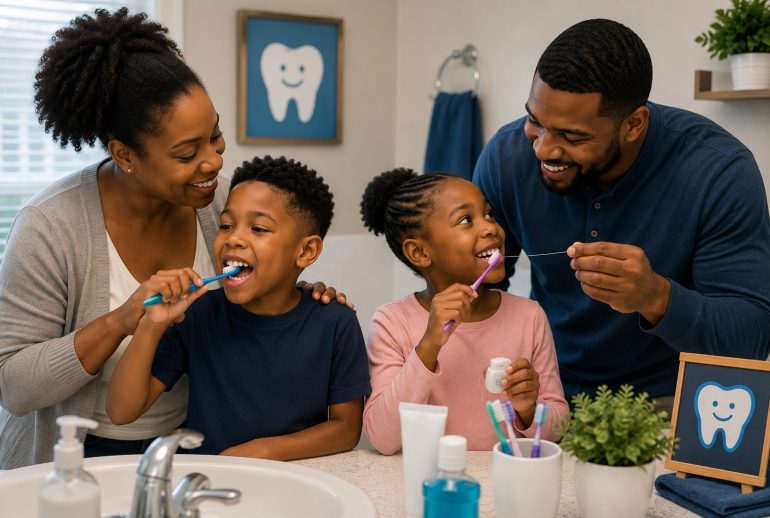
Dental care is an important part of a child’s overall health. Healthy teeth and gums help children eat comfortably, speak clearly, smile with confidence, focus in school, and avoid pain that can interrupt daily life. Many families think about dental care only when a child has a toothache, cavity, loose tooth, or upcoming appointment, but oral health is built through small habits repeated every day.
Across the Black community, family wellness often includes many responsibilities at once. Parents and caregivers may be focused on school, meals, transportation, homework, sleep, clothing, safety, and emotional support. In the middle of busy routines, brushing, flossing, dental visits, and healthy drink choices can sometimes be rushed or forgotten. But dental care deserves regular attention because problems in the mouth can affect the whole child.
Children do not automatically know how to care for their teeth well. They need reminders, examples, patience, and supervision. A young child may brush too quickly. An older child may forget to floss. A teen may drink sugary beverages often or skip brushing at night. Families can help by making dental care part of the daily rhythm, just like getting dressed, eating breakfast, packing a backpack, or preparing for bed.
Dental care should not be taught through fear or shame. Children need to understand that caring for their teeth is an act of self-respect and health. A healthy smile is not only about appearance. It is about comfort, confidence, prevention, and long-term wellness. When families build strong dental habits early, children are more likely to carry those habits into adulthood.
1. Brushing Twice A Day Builds A Strong Foundation.
Brushing is one of the most basic dental care habits, but it still needs consistency. Children should learn that brushing in the morning and before bed helps remove food particles and plaque from the teeth. Morning brushing helps them begin the day fresh, while nighttime brushing is especially important because food and sugar should not sit on the teeth while the child sleeps.
Younger children usually need adult help or supervision. They may miss back teeth, brush too lightly, swallow toothpaste, or rush through the routine. A caregiver can stand nearby, help guide the toothbrush, and make sure the child brushes long enough. As children grow, they can take more responsibility, but parents should still check habits from time to time.
A routine can make brushing easier. Children can brush after breakfast and again during the bedtime routine. If brushing happens at the same times each day, it becomes less of an argument and more of a normal habit. Families can use timers, songs, charts, or simple reminders to help younger children stay on track.
Brushing should be explained as care, not punishment. Children need to understand that their teeth help them eat, speak, and smile. Taking care of them is part of taking care of the body.
2. Flossing Helps Clean Where Toothbrushes Cannot Reach.
Many families focus on brushing but forget about flossing. Flossing matters because food and plaque can get stuck between teeth where a toothbrush cannot reach well. If those areas are ignored, cavities and gum problems can develop over time. Children need to learn that brushing and flossing work together.
Flossing may feel difficult at first, especially for younger children. Parents can use child-friendly floss picks or help children floss until they are old enough to do it properly. The goal is to make the habit feel normal instead of waiting until there is a dental problem.
Some children may resist flossing because it feels uncomfortable or boring. Families can start slowly and build the habit over time. Even flossing a few times a week is a better beginning than ignoring it completely. As children become more comfortable, it can become part of the nightly routine.
Flossing also teaches children attention to detail. It reminds them that health is not only about what is easy to see. Sometimes the hidden spaces need care too.
3. Sugary Drinks Can Affect Teeth Quickly.
Sugary drinks can be hard on children’s teeth. Soda, fruit punch, sweet tea, sports drinks, flavored drinks, lemonade, and even large amounts of juice can leave sugar on the teeth. When children sip sweet drinks often throughout the day, their teeth may be exposed to sugar again and again.
This does not mean children can never enjoy a sweet drink. Balance matters. But water should be the main everyday drink. Families can serve water with meals, pack water bottles for school, and encourage children to drink water after snacks. This helps protect teeth and supports hydration at the same time.
Parents can also teach children to notice how often they drink sugary beverages. One sweet drink at a special event is different from sipping sugar all day. Children and teens need to understand that frequency matters. The more often teeth are exposed to sugar, the more risk there may be.
Healthy drink habits support dental care and overall wellness. When children learn to choose water more often, they are protecting their teeth, body, and future habits.
4. Snacks Can Support Or Hurt Dental Health.
Snacks are part of many children’s daily routines. After school, during homework, on the way to activities, or between meals, children may want something to eat. Some snacks are better for teeth than others. Sticky candies, sugary treats, cookies, and chips that cling to teeth can create more dental risk when eaten often.
Healthier snack options can support the body and teeth. Fruit, cheese, yogurt, vegetables, nuts when safe, whole-grain crackers, boiled eggs, and water can be better everyday choices. Families do not need to remove every treat, but they should avoid making sugary and sticky snacks the default option.
Timing also matters. Constant snacking throughout the day can keep food on the teeth for long periods. It may be better to have planned snack times instead of endless grazing. Children can learn that snacks are meant to support energy, not just entertain boredom.
Families can make healthier snacks easier by keeping them visible and ready. Washed fruit, cut vegetables, or simple containers in the refrigerator can help children make better choices without needing a lot of preparation.
5. Dental Checkups Help Catch Problems Early.
Regular dental checkups are important because some problems are easier to fix when they are found early. A child may have a small cavity, gum irritation, bite issue, or brushing problem that a dentist can identify before it becomes painful. Waiting until there is a toothache can make care more stressful and expensive.
Families may face challenges with dental appointments, including cost, insurance, transportation, scheduling, or fear. These barriers are real. Still, when possible, families should try to make dental visits part of routine healthcare. Schools, community clinics, health programs, and local resources may also help some families access care.
Children should be prepared for dental visits in a calm way. Adults can explain what will happen without creating fear. They can say that the dentist helps keep teeth healthy, counts teeth, cleans them, and checks for problems. Positive language can help children feel safer.
Dental visits also give families a chance to ask questions. Parents can ask about brushing technique, flossing, fluoride, sealants, braces, tooth pain, thumb sucking, grinding, or any concern they notice at home. Asking questions is part of good care.
6. Parents Should Model Good Dental Habits.
Children learn by watching adults. If parents and caregivers brush, floss, drink water, and speak positively about dental care, children are more likely to see those habits as normal. If adults ignore dental care but demand it from children, the message may feel weaker.
Family dental routines can help. A parent might brush alongside a younger child in the morning or evening. Siblings can brush at the same time. A caregiver can say, “We all take care of our teeth in this house.” This makes dental care part of family culture.
Adults should also be honest if they are improving their own habits. A parent might say, “I am working on flossing more too.” This teaches children that healthy habits can be learned and strengthened at any age.
Modeling does not require perfection. It requires consistency and willingness. When children see adults caring for their own health, they learn that self-care is a lifelong responsibility.
7. Teens Need Dental Guidance Too.
Teenagers may seem independent, but they still need guidance around dental health. Busy schedules, sports, school stress, social media, late nights, braces, sugary drinks, coffee, energy drinks, and snacking can all affect teen oral health. Some teens may skip brushing at night because they are tired or distracted.
Parents can support teens without treating them like small children. A respectful conversation can go further than constant nagging. Adults can explain that dental care affects breath, confidence, health, and future costs. Teens may care more when they understand how habits affect daily life.
Teens with braces or retainers may need extra support. Food can get stuck more easily, and cleaning may take more effort. Parents can remind them that orthodontic care is an investment and that good cleaning protects that investment.
Teen dental habits can follow them into adulthood. Helping them stay consistent now can prevent bigger problems later.
8. Tooth Pain Should Not Be Ignored.
Children may not always explain tooth pain clearly. They may avoid chewing on one side, complain about cold foods, refuse certain textures, have swollen gums, wake up at night, or become irritable. Families should pay attention to signs that something may be wrong.
Tooth pain can affect more than eating. It can make it hard for children to sleep, focus in school, speak comfortably, or enjoy normal activities. A child in pain may appear distracted or emotional when the real issue is discomfort.
Parents should not wait too long if a child complains about tooth pain. A dental professional can help identify the cause and recommend treatment. Early care may prevent the problem from becoming more serious.
Children should also be encouraged to speak up when something hurts. They need to know that pain is not something to hide. Telling an adult early is a responsible choice.
9. Mouthguards Can Protect Active Children.
Children and teens involved in sports or active play may benefit from mouth protection. Basketball, football, soccer, martial arts, skating, biking, and other activities can create risks for dental injuries. A mouthguard can help protect teeth during certain sports and physical activities.
Parents can ask coaches, dentists, or healthcare providers whether a mouthguard is recommended for the child’s activity. Some sports may require them, while others may not. The important thing is thinking ahead before an injury happens.
Dental injuries can be painful and costly. A chipped, broken, or knocked-out tooth can affect confidence and require urgent care. Prevention is often easier than treatment.
Families should include dental safety in sports preparation along with water, proper shoes, helmets when needed, and protective gear. Teeth deserve protection too.
10. Dental Care Can Support Confidence.
Children and teens may feel self-conscious about their teeth, breath, or smile. Dental problems can affect confidence, especially in school and social settings. A child who has tooth pain, visible decay, bad breath, or embarrassment about their smile may avoid speaking, laughing, or participating.
Good dental habits can help children feel more confident. Brushing, flossing, drinking water, and regular checkups can support a healthier mouth and fresher breath. This confidence is not about vanity. It is about helping children feel comfortable and proud when they interact with others.
Families should be careful not to shame children about dental issues. If a child has cavities or dental problems, the response should be supportive and solution-focused. Shame can make children avoid talking about problems. Encouragement helps them build better habits.
A healthy smile can support emotional wellness, communication, and self-esteem. Dental care is part of helping children show up with confidence.
11. Dental Habits Can Be Part Of Bedtime Routines.
Bedtime is one of the best times to strengthen dental care. A simple routine can include putting away screens, bathing or washing up, brushing teeth, flossing, choosing clothes for the next day, reading, prayer or quiet time if part of the household, and sleep. When brushing and flossing are built into bedtime, they become more consistent.
Night brushing is especially important because food and sugar should not remain on teeth overnight. Children may be tired and try to skip it, so caregivers need to keep the habit steady. A chart or checklist can help younger children.
Parents can also reduce bedtime snacks after brushing. If a child brushes and then eats a sugary snack, the benefit is weakened. If a child needs something after brushing, water is the safest choice.
A strong bedtime dental routine supports both oral health and family structure. It helps children end the day with care and preparation.
12. Strong Dental Habits Build Lifelong Wellness.
Dental care habits formed in childhood can last into adulthood. A child who learns to brush, floss, drink water, attend checkups, and pay attention to tooth pain is more likely to become an adult who values oral health. These habits can protect comfort, confidence, and health for years.
Families should view dental care as part of generational wellness. Many adults may have grown up without strong dental education or regular access to care. Teaching children now helps build a healthier future. Children do not have to learn every lesson through pain or emergency visits.
Community spaces can also support dental wellness. Schools, churches, clinics, youth programs, and family organizations can share information, host dental health events, and connect families to resources. The village can help reinforce healthy habits.
Strong dental care is built through small daily actions. Every brushing routine, water choice, dental appointment, and supportive reminder helps children develop lifelong self-care.
Conclusion.
Dental care habits support children across the Black community because oral health affects comfort, confidence, school focus, nutrition, sleep, and long-term wellness. Children need daily guidance to brush, floss, drink water, limit sugary drinks, make better snack choices, and speak up when something hurts.
Families do not need perfect routines to begin. They can start with brushing twice a day, adding flossing slowly, replacing one sugary drink with water, scheduling a dental checkup, or creating a bedtime dental routine. Small steps can protect children’s teeth and help them understand the value of self-care.
When children learn dental habits early, they gain more than a healthy smile. They gain confidence, responsibility, and a stronger foundation for lifelong wellness.
Akukulu Family encourages parents, caregivers, mentors, educators, and community members to support one dental care habit this week. Help a child brush at bedtime, add flossing to the routine, pack water instead of a sugary drink, schedule a dental checkup, or talk with a teen about oral health. One small habit can help protect a child’s smile and future wellness.
