

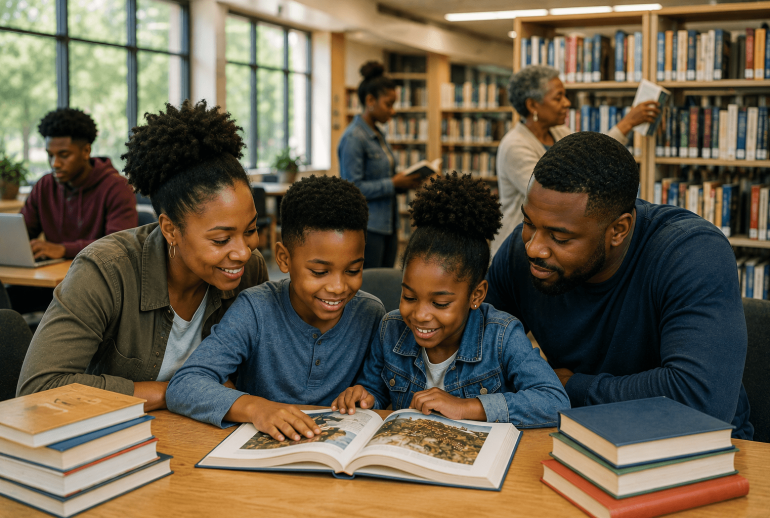
Libraries are one of the most valuable resources a family can use. They are places where children can discover books, teens can study, parents can find support, elders can stay connected, and families can explore learning without needing to spend a lot of money. A library is more than a building with shelves. It can be a doorway to reading, technology, research, imagination, community programs, cultural history, and lifelong education.
Across the Black community, access to learning has always mattered deeply. Reading, education, storytelling, and knowledge have been connected to freedom, opportunity, leadership, family progress, and community strength. Many families want children to succeed in school, build confidence, and dream beyond their current surroundings. Library visits can support that goal in practical and powerful ways.
A child who visits the library regularly learns that books are not only for school assignments. They are also for enjoyment, imagination, history, creativity, and personal growth. A teen who uses the library may find a quiet place to study, research college options, prepare for a career, or explore new interests. A parent may find parenting books, job resources, children’s programs, or technology support. An elder may find community events, reading groups, or a peaceful space to continue learning.
Library habits do not have to be complicated. A family can begin with one visit a month, one library card, one story time, one homework session, one book by a Black author, or one quiet afternoon exploring the shelves. Small library routines can help build stronger readers, stronger students, and stronger family learning habits.
1. Libraries Help Children Build Reading Confidence.
Children become stronger readers when they have regular access to books. Libraries make that access easier because families can borrow books for free and explore many reading levels, subjects, and formats. A child who has not yet found a love for reading may discover it when given enough choices.
Some children enjoy picture books. Others prefer graphic novels, mysteries, biographies, sports books, science books, poetry, or funny stories. A library gives children room to explore without the pressure of buying every book. If one book does not interest them, they can try another. This freedom helps reading feel less stressful and more personal.
Reading confidence grows when children can choose books that match their interests and abilities. A child who struggles with reading may need easier books that still feel interesting. A child who reads well may need more challenging books to stay engaged. Librarians can help families find both.
When children visit the library often, they begin to see themselves as readers. That identity can support school success, vocabulary growth, imagination, and confidence.
2. Library Cards Teach Responsibility.
A library card may seem small, but it can teach children responsibility. When a child checks out a book, they learn that they are trusted to care for it and return it on time. This teaches respect for shared resources and helps children understand that community spaces work when everyone does their part.
Parents and caregivers can help children create a simple library routine. Books can be kept in a special basket or shelf at home so they do not get lost. Families can write down return dates, use phone reminders, or make library visits part of a regular schedule. These habits teach organization.
Children can also learn how to choose books carefully. They may be allowed to pick a few books for fun and one book for learning. This gives them ownership while still guiding them toward growth.
Responsibility learned through library use can carry into school and life. Returning books, caring for materials, and following library rules are small habits that help children become more dependable.
3. Libraries Support Homework And School Success.
Many libraries offer resources that can help students with homework and school projects. They may provide quiet study areas, research databases, computers, printers, tutoring programs, reference books, and help from librarians. These resources can be especially helpful for families who need extra academic support.
A child working on a school report may need help finding reliable information. A teen preparing for a test may need a quiet place to study. A student without strong internet access at home may need a computer. Libraries can help fill these gaps.
Parents do not need to know every answer to use the library well. They can ask librarians for help finding books, databases, or homework resources. Librarians are trained to guide people toward information, and families should feel comfortable asking questions.
When students learn how to use the library for schoolwork, they gain research skills. They learn how to find information, compare sources, read carefully, and complete assignments with more confidence.
4. Libraries Give Families Access To Technology.
In today’s world, technology access is important for school, jobs, applications, communication, and learning. Not every family has reliable internet, updated devices, printers, or quiet digital workspaces at home. Libraries can help by offering public computers, Wi-Fi, printing, scanning, online resources, and sometimes technology classes.
This access can make a major difference. A parent may need to apply for a job. A teen may need to complete an online assignment. A family may need to print forms. An elder may need help learning basic computer skills. The library can become a practical support center.
Children also need to learn responsible technology use. Libraries can help them understand that computers are tools for research, writing, learning, and creativity, not only entertainment. This broadens their view of what technology can do.
Digital access is part of educational equity. When families use library technology, they gain tools that can support school success, career preparation, and family organization.
5. Story Time Programs Support Early Learning.
Many libraries offer story time programs for young children. These programs may include reading aloud, songs, movement, rhymes, crafts, and early literacy activities. For young children, story time can be a joyful introduction to books and language.
Story time helps children build listening skills, vocabulary, attention, and social confidence. They learn how to sit with a group, respond to questions, follow simple routines, and enjoy stories with other children. These skills can help prepare them for school.
Parents and caregivers also benefit. They may learn new books, songs, and reading strategies they can use at home. They may meet other families and discover community resources. A simple library story time can become part of a family’s early learning support system.
Early literacy begins before a child can read independently. Hearing stories, touching books, singing words, and seeing adults value reading all help children develop a strong foundation.
6. Libraries Can Help Teens Explore Their Future.
Teens need spaces where they can study, think, and explore who they are becoming. Libraries can provide books and resources about careers, college, trades, entrepreneurship, financial literacy, mental health, writing, art, technology, and leadership. These resources can help teens imagine future possibilities.
A teen may use the library to research scholarships, write a resume, prepare for exams, explore career paths, or learn a new skill. Some libraries offer teen programs, volunteer opportunities, book clubs, creative workshops, gaming events, coding classes, or college readiness sessions.
Libraries also give teens a safe place to be productive after school. A quiet table, computer access, helpful staff, and positive environment can support focus. For teens who need a break from noise, pressure, or distractions, the library can become a place of calm.
Families can encourage teens to use the library not only for assignments, but also for personal growth. A library can help them prepare for adulthood one resource at a time.
7. Books By Black Authors Help Children Feel Seen.
Representation matters in reading. Children and teens need books that reflect their families, culture, history, hair, skin tones, neighborhoods, traditions, language, dreams, and challenges. Libraries can help families find books by Black authors and books about African Diaspora experiences.
When children see themselves in books, reading can feel more meaningful. They understand that their lives and communities are worthy of being written about. They may feel more connected to stories that reflect familiar experiences, while also learning about the diversity within the Black community.
Libraries can also introduce families to books about Black history, inventors, artists, leaders, scientists, athletes, writers, entrepreneurs, and everyday families. These books help children build pride and knowledge.
Parents can ask librarians for recommendations. They can also create a family goal to borrow at least one book by a Black author during each library visit. This small habit can strengthen cultural confidence and reading interest.
8. Libraries Can Support Parents And Caregivers.
Libraries are not only for children. Parents and caregivers can find books and resources about parenting, child development, education, nutrition, financial literacy, job searching, small business, mental wellness, technology, and family activities. These resources can support adults as they guide their households.
A parent trying to help a child with reading may find literacy guides. A caregiver looking for meal planning ideas may find cookbooks. A parent exploring a career change may find resume help or business resources. A family dealing with a new diagnosis, such as autism or ADHD, may find books that explain the topic with care.
Libraries may also host workshops and community programs for adults. These can include computer classes, financial education, health information, job search assistance, or family events. Parents should check local library calendars regularly.
When adults keep learning, children notice. A parent using the library models curiosity, humility, and growth. This teaches children that learning does not end after school.
9. Libraries Offer Safe And Positive Community Space.
Families need safe, welcoming spaces where children and adults can spend time without pressure to buy something. Libraries offer that kind of space. They are often quiet, structured, and open to people of different ages and backgrounds.
A library visit can become a peaceful family outing. Children can browse books, teens can study, adults can read or work, and elders can relax. Families can spend time together in a setting that encourages learning and calm.
Community spaces matter because many families are surrounded by busy schedules, screens, traffic, noise, and stress. A library can provide a slower environment where minds can settle. For some children, this calm space may help them focus better than at home.
Libraries also help families feel connected to the wider community. Events, displays, book clubs, and programs bring people together around learning and shared interests.
10. Libraries Can Encourage Lifelong Learning.
One of the greatest lessons libraries teach is that learning is lifelong. A person can learn at five, fifteen, forty-five, or eighty-five. There is always another book to read, skill to practice, story to hear, or idea to explore.
Children benefit when they see adults continuing to learn. An elder checking out a history book, a parent taking a computer class, or a teen researching careers all show that education is not limited to school walls. Learning is part of life.
Lifelong learning helps families adapt to change. Technology changes. Careers change. Health information changes. Community needs change. Families that know how to find information are better prepared to respond.
Libraries support this by making knowledge accessible. They remind families that curiosity is valuable and that growth can continue at every age.
11. Library Visits Can Become A Family Tradition.
A regular library visit can become a meaningful family tradition. A Saturday morning library trip, a monthly book day, a summer reading challenge, or a bedtime book routine can create memories children carry into adulthood.
Traditions do not need to be expensive. A child may remember walking through the shelves, choosing books, attending story time, or sitting with a parent in the children’s section. These memories can shape how they feel about reading and learning.
Families can make library trips special by allowing each child to choose a book, reading together afterward, visiting a nearby park, or talking about what everyone found. This turns the library into more than an errand. It becomes part of family culture.
When reading and learning become family traditions, children are more likely to value them. They learn that books and knowledge are part of who the family is.
12. Libraries Help Build A Stronger Community Future.
Libraries support the future by giving families access to knowledge, technology, reading materials, programs, and safe learning spaces. When families use libraries, children become stronger readers, teens become better prepared, adults gain resources, and elders stay connected.
A strong community needs places where people can learn together. Libraries help fill that role. They support education, creativity, job readiness, cultural pride, and community connection. They also help reduce barriers by offering many resources at little or no cost.
Across the Black community, library use can become part of a larger commitment to education and empowerment. Families can encourage one another to get library cards, attend programs, borrow books, and use available resources.
A library visit may seem simple, but it can open a door. One book can spark a dream. One program can build a skill. One quiet study session can support success. One family routine can shape a child’s future.
Conclusion.
Library visits support learning across the Black community by helping families access books, technology, homework support, cultural resources, youth programs, and lifelong education. Libraries are valuable spaces where children can build reading confidence, teens can explore their future, parents can find support, and elders can stay connected.
Families do not need a complicated plan to begin. They can start with one library card, one visit, one story time, one book by a Black author, or one homework session in a quiet library space. Small library habits can become powerful learning routines over time.
When families use the library, they are investing in knowledge, imagination, confidence, and community strength. A library is more than a place to borrow books. It is a place where futures can begin to grow.
Akukulu Family encourages parents, caregivers, mentors, educators, elders, and community members to visit a library this month. Help a child get a library card, attend story time, borrow a book by a Black author, use a homework resource, or explore a free community program. One library visit can open a new door for learning.
