

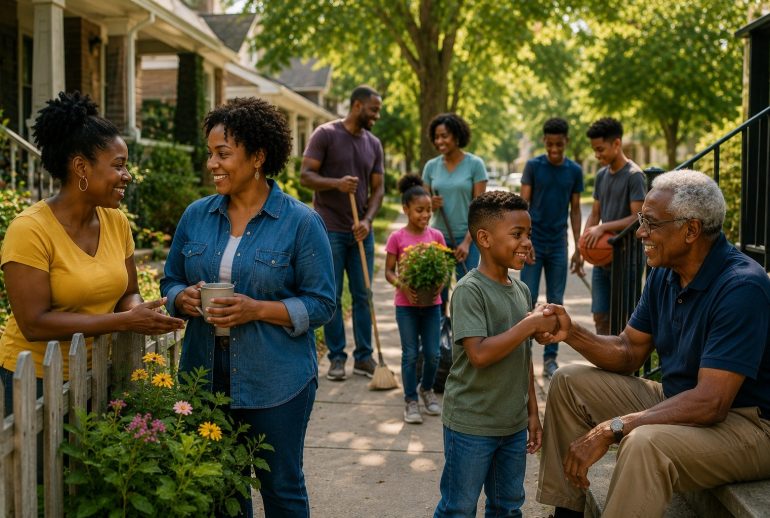
Neighborly support is one of the quiet strengths that can hold a community together. A good neighbor may check on an elder, watch out for children walking home, share information about local resources, help carry groceries, offer a ride, support a family during hard times, or simply greet people with warmth and respect. These small actions may not always make headlines, but they help families feel less alone.
Across the Black community, the idea of the village has always mattered. Families have often depended on neighbors, church members, elders, aunties, uncles, teachers, coaches, and community friends to help raise children, protect households, share wisdom, and respond during need. Neighborly support is one way the village becomes real in everyday life.
Modern life can make neighbor relationships harder. People may be busy, tired, cautious, private, or disconnected. Some families may not know who lives nearby. Others may feel unsure about how to build trust. In some neighborhoods, safety concerns or past conflict may make people hesitant. Still, communities become stronger when families find respectful ways to know, support, and look out for one another.
Neighborly support does not mean being involved in everyone’s private business. It means building enough care and trust that people can share helpful information, respond to real needs, and create a more connected environment. Strong neighborhoods help children feel safer, elders feel seen, parents feel supported, and families feel rooted.
1. Neighborly Support Begins With Simple Respect.
Strong neighborhood relationships often begin with simple respect. A greeting, a wave, a kind word, or holding the door for someone can open the way for connection. People do not always need long conversations at first. Sometimes the first step is simply acknowledging one another with dignity.
Respect also means understanding boundaries. Not every neighbor wants to talk for a long time or share personal details. Some people are private. Others may be cautious because of past experiences. Neighborly support should grow naturally and patiently.
Families can teach children to greet neighbors politely, respect shared spaces, avoid damaging property, and speak with kindness. These lessons help children understand that community life includes responsibility. How we treat people nearby matters.
A respectful neighborhood does not require everyone to be close friends. It requires people to treat one another like human beings worthy of care and consideration.
2. Knowing Neighbors Can Help Families Feel Safer.
Safety is stronger when people know who belongs in the area and who may need help. A neighbor who knows the children on the block may notice if something seems wrong. A parent who knows nearby families may feel more comfortable asking for help in an emergency. An elder who knows a trusted neighbor may have someone to call if they need support.
This does not mean neighbors should watch one another with suspicion. It means healthy awareness. Families can look out for one another in respectful ways. If a child misses the bus, if an elder has not been seen in a while, or if something unusual happens nearby, a trusted neighbor may be able to help.
Neighborhood safety also grows through communication. Families can share information about school schedules, community alerts, lost pets, local events, or safety concerns. Clear communication can prevent confusion and help people respond wisely.
When neighbors know one another, the community becomes less anonymous. That sense of connection can help families feel more secure.
3. Elders Need Neighborly Connection.
Elders are an important part of the community, but some may feel isolated. They may live alone, have limited transportation, struggle with technology, or need help with small tasks. Neighborly support can make a meaningful difference in their daily lives.
A neighbor might check in after bad weather, help carry groceries, shovel a walkway, bring a meal, assist with a phone issue, or simply spend a few minutes talking. These small acts can help elders feel seen and valued.
Children can also learn respect by participating in elder support. A child may draw a picture, help deliver food, wave during walks, or listen to a story. These moments teach that older adults are part of the village and should not be forgotten.
Supporting elders does not require taking over their independence. It means honoring them enough to notice when care is needed and offering help with respect.
4. Children Benefit From Positive Neighborhood Adults.
Children need caring adults around them. A trusted neighbor, coach, teacher, youth leader, or elder can become part of a child’s support system. Positive neighborhood adults can encourage children, notice their growth, correct them kindly when needed, and help them feel known.
A child who is greeted by name may feel a stronger sense of belonging. A teen who hears encouragement from a neighbor may feel seen beyond school or home. A younger child who knows safe adults nearby may feel more secure.
Families should be wise about safety and boundaries, but they should also recognize the value of positive adult presence. Children benefit when the community notices them in healthy ways.
A strong neighborhood does not replace parents and caregivers. It supports them. When children are surrounded by caring adults, they receive a stronger message that their lives matter.
5. Parents Can Support One Another Through Shared Information.
Parents and caregivers often face similar challenges. They may need information about schools, childcare, tutoring, sports, transportation, health clinics, youth programs, food resources, jobs, or community events. Neighborly connection makes it easier to share helpful information.
A parent may know about a free summer program. Another may know a good dentist. Someone else may know about a scholarship, school meeting, or local event. When families share information, everyone becomes more prepared.
This kind of support can happen through casual conversations, neighborhood groups, school connections, church networks, or community pages. The goal is to help families access resources they might otherwise miss.
Shared information is a form of community care. Sometimes one helpful tip can reduce stress for a family and open a new opportunity for a child.
6. Neighborly Support Can Help During Emergencies.
Emergencies remind families why community connection matters. A sudden illness, car trouble, power outage, bad weather, family crisis, or unexpected need can become easier to handle when trusted neighbors are nearby.
A neighbor may help with a ride, watch children briefly, share supplies, check on an elder, or call for help. These acts may be simple, but during a stressful moment they can mean a lot.
Families can build emergency trust before emergencies happen. They can exchange contact information with a trusted neighbor, learn who may need extra help during storms, and know where to go for community updates.
Emergency support should be handled with wisdom and boundaries. Still, a connected neighborhood can respond faster and more compassionately than a disconnected one.
7. Shared Spaces Need Shared Responsibility.
Neighborhoods often include shared spaces such as sidewalks, parks, apartment hallways, courtyards, parking areas, playgrounds, community rooms, or common yards. These spaces affect everyone. When people care for them together, families benefit.
Shared responsibility may include picking up trash, reporting safety concerns, respecting noise levels, cleaning after pets, watching children at play, helping with neighborhood cleanups, or keeping walkways clear. These habits show respect for the whole community.
Children should be taught that shared spaces are not no one’s responsibility. They are everyone’s responsibility. A clean and cared-for space helps people feel more pride and safety.
When families work together to care for shared spaces, the neighborhood becomes more welcoming. Pride grows when people see that their actions matter.
8. Kindness Can Reduce Isolation.
Many people feel lonely even when they live near others. A single parent may feel overwhelmed. An elder may go days without conversation. A teen may feel unseen. A new family may not know anyone. Kindness from neighbors can reduce that isolation.
A simple greeting, invitation, check-in, or small act of help can remind someone that they are not invisible. These moments do not require a major commitment. They simply require awareness and care.
Families can practice kindness in small ways. They can welcome a new neighbor, ask an elder how they are doing, share extra garden produce, offer encouragement, or speak respectfully during everyday encounters.
Isolation weakens community. Kindness helps repair it. A neighborhood becomes stronger when people feel noticed and valued.
9. Conflict Should Be Handled With Respect.
No neighborhood is perfect. People may disagree about noise, parking, pets, children, property lines, shared spaces, or behavior. Conflict can damage relationships if handled with anger, gossip, or disrespect. But when handled wisely, conflict can sometimes lead to better understanding.
Respectful communication matters. Instead of starting with accusations, a neighbor can begin with a calm explanation. “I wanted to talk with you about something,” or “Can we find a solution?” can go further than yelling or public embarrassment.
Some situations may need outside support from landlords, neighborhood associations, community leaders, or local authorities. Safety should always be taken seriously. But many smaller issues can be improved through direct, respectful communication.
Families should also teach children how to handle neighbor conflict. They should not insult, threaten, or escalate. They should learn that peace in the community is worth protecting.
10. Local Businesses Can Be Part Of Neighborly Support.
Local businesses often play a role in neighborhood connection. A barber shop, salon, corner store, restaurant, boutique, childcare center, grocery market, repair shop, or café can become a place where people exchange information, build relationships, and support local families.
Business owners may sponsor youth events, donate to community needs, offer jobs, mentor young people, or provide a familiar place where neighbors see one another. Supporting local businesses can help strengthen the neighborhood’s economic and social life.
Families can support these businesses when possible by buying, reviewing, recommending, and treating workers with respect. Children can learn that businesses are not only places to spend money. They are also part of the community network.
When local businesses and families support one another, the whole neighborhood becomes stronger.
11. Neighborly Support Helps Build Trust Across Generations.
A strong neighborhood includes children, teens, adults, and elders. Trust grows when generations interact with respect. Elders can share wisdom. Adults can provide guidance. Teens can help with technology or service projects. Children can learn respect and responsibility.
Intergenerational connection helps young people understand that they are part of a larger community story. They learn from people who have lived longer and experienced more. Elders also benefit when youth are respectful, helpful, and interested in their stories.
Neighborhood events, cleanups, block gatherings, cultural celebrations, school activities, and community service projects can bring generations together. These moments help reduce distance and misunderstanding.
When generations trust one another, the village becomes stronger. Children grow up with more support, and elders know their wisdom still matters.
12. Strong Neighborly Support Builds A Stronger Future.
Neighborly support builds a stronger future because it creates relationships that help families thrive. Children feel safer. Parents feel less alone. Elders feel valued. Local businesses feel supported. Community spaces improve. People are more likely to share resources, solve problems, and celebrate together.
A strong neighborhood does not happen all at once. It grows through repeated small actions. One greeting, one check-in, one shared resource, one act of kindness, one respectful conversation, and one family showing care can all become part of a larger culture of support.
Across the Black community, rebuilding the village begins close to home. It begins with the people we pass on the sidewalk, the elders on the block, the children playing nearby, the parents at school pickup, and the families living next door.
When neighbors choose care over distance, the community becomes stronger for everyone.
Conclusion.
Neighborly support builds stronger families across the Black community because it strengthens trust, safety, connection, elder care, youth encouragement, and shared responsibility. Families do not need to know every neighbor deeply to begin. They can start with respect, kindness, awareness, and small acts of support.
A strong neighborhood can help children feel seen, parents feel supported, elders feel valued, and families feel less isolated. It can also help people respond more wisely during emergencies, conflicts, and community needs.
When neighbors support one another, the village becomes more than an idea. It becomes a daily practice. Strong families grow stronger when they are surrounded by a community that notices, cares, and shows up.
Akukulu Family encourages parents, caregivers, elders, youth, business owners, and community members to take one neighborly step this month. Greet a neighbor, check on an elder, share a helpful resource, support a local business, join a cleanup, or offer encouragement to a young person. One small act of care can help strengthen the whole community.
