

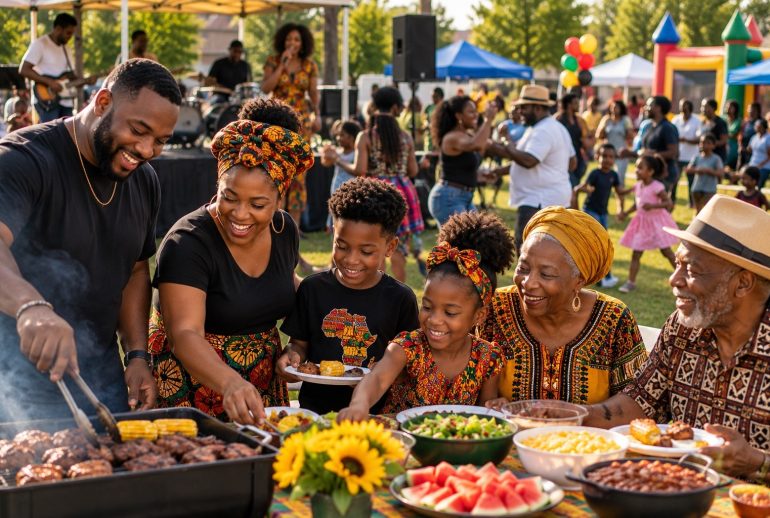
Community celebrations are more than fun events. They are moments where families gather, stories are shared, children feel included, elders are honored, and culture is kept alive. A celebration can happen at a church anniversary, graduation party, family reunion, cultural festival, neighborhood cookout, school event, birthday gathering, Juneteenth event, heritage program, block party, or community awards night. These gatherings remind families that joy is part of community strength.
Across the Black community, celebration has always carried deep meaning. Families and communities have gathered through hard seasons and joyful seasons, using music, food, prayer, dance, storytelling, fashion, laughter, and shared meals to remember who they are. Celebration is not only about entertainment. It is also about survival, gratitude, identity, and belonging.
Children and teens need to experience positive community gatherings. They need to see adults encouraging one another, elders sharing memories, local businesses being supported, families helping with food and setup, and young people being celebrated for their growth. These moments teach youth that they are part of something larger than themselves.
Community celebrations do not need to be expensive or perfect. A simple gathering with food, music, games, family stories, and encouragement can still make a lasting impact. What matters most is connection, respect, and the shared reminder that the community has reasons to gather, rejoice, and support one another.
1. Celebrations Help Families Feel Connected.
Busy life can make families feel separated. Work, school, bills, transportation, homework, technology, and daily stress can keep people moving in different directions. Community celebrations create a reason to pause and reconnect.
At a celebration, relatives and neighbors may see each other after months apart. Children may meet cousins, elders, mentors, or family friends they do not see every day. Parents may reconnect with other caregivers. These moments help strengthen relationships.
Connection grows through simple things. A shared meal, a hug, a conversation, a family photo, a dance, or a game can become a memory. Children often remember the feeling of being surrounded by people who care about them.
When families gather in joyful spaces, they are reminded that they are not alone. They belong to a wider community.
2. Celebrations Teach Children Cultural Pride.
Community celebrations can help children understand and appreciate their culture. Music, food, clothing, dance, language, history, art, and family traditions all become visible during gatherings. Children can see culture lived out, not only talked about.
A cultural festival may teach children about African, Caribbean, African American, or Afro-Latin traditions. A family reunion may teach them about ancestors and family history. A church celebration may teach them about faith and community service. These experiences help children build pride.
Parents and elders can make celebrations more meaningful by explaining what certain traditions mean. A child may ask about a song, dish, outfit, flag, or ritual. Those questions become opportunities for teaching.
Cultural pride helps young people feel rooted. It reminds them that their family and community story is rich, beautiful, and worth carrying forward.
3. Elders Can Share Wisdom During Gatherings.
Elders often carry memories that younger generations need to hear. Community celebrations give elders a natural place to share stories, advice, family history, and cultural knowledge. They may talk about how things used to be, who started a tradition, or why a certain gathering matters.
Children benefit when they hear elders speak. They learn that older adults are not only guests at events. They are keepers of wisdom and memory. Their presence helps connect the past to the present.
Families can include elders intentionally. Give them comfortable seating, invite them to speak, ask them to bless the meal, record their stories, or simply make sure youth spend time listening to them.
When elders are honored, the whole community becomes stronger. Children learn respect, and elders feel valued.
4. Food Brings People Together.
Food is often at the center of community celebrations. A potluck table, barbecue grill, dessert tray, family recipe, cultural dish, or shared meal can help people feel welcome. Food creates warmth and conversation.
Across the African Diaspora, food traditions carry history and love. A dish may remind someone of home, childhood, church gatherings, holidays, or family reunions. When children taste these foods and hear the stories behind them, they learn culture through experience.
Food also teaches generosity. Families bring what they can. Someone cooks. Someone serves. Someone packs plates for elders. Someone cleans up. These small acts show children that celebrations are built by many hands.
A shared meal can turn a gathering into a family memory. It helps people feel cared for and included.
5. Celebrations Give Youth A Chance To Be Seen.
Children and teens need positive recognition. Community celebrations can create moments where youth are honored for school progress, sports, art, music, service, leadership, graduation, personal growth, or simply being part of the village.
Recognition matters. A young person who hears applause, encouragement, or kind words from the community may feel more confident. They may understand that their effort is noticed and that people believe in their future.
Celebrations can include youth performances, award moments, open mic time, art displays, dance showcases, sports recognition, or simple public encouragement. These moments help youth feel valued.
When young people are celebrated, they are more likely to feel connected to the community. They learn that their gifts matter.
6. Community Events Support Local Businesses.
Celebrations often create opportunities to support local businesses. Caterers, food vendors, clothing designers, photographers, decorators, musicians, DJs, barbers, stylists, artists, and small shops may all be part of community events. Supporting them helps strengthen local economic life.
A community celebration can become a marketplace of talent. Families may discover a local baker, designer, tutor, photographer, or business owner. Young people may see examples of entrepreneurship and creativity.
Event organizers can intentionally invite local vendors and promote small businesses. Families can support by buying when possible, sharing business pages, leaving reviews, and recommending services.
When celebrations support local businesses, joy and economics work together. The community grows socially and financially.
7. Celebrations Build Positive Memories For Children.
Children carry memories from community gatherings for years. They may remember playing outside with cousins, dancing with family, eating a favorite dish, winning a game, hearing an elder speak, or watching adults laugh together. These memories become part of their emotional foundation.
Positive memories help children feel that they belong to a loving community. They learn that family life is not only chores, rules, and responsibilities. It also includes joy, laughter, music, food, and togetherness.
Families can help preserve these memories through photos, stories, scrapbooks, videos, or simple conversations after the event. A parent might ask, “What was your favorite part?” or “Who did you enjoy seeing?” This helps children reflect.
Memories become stronger when families talk about them. Celebration stories can become part of family history.
8. Celebrations Can Strengthen Faith And Values.
Many community celebrations include faith, prayer, gratitude, service, or reflection. Church anniversaries, family blessings, graduations, memorial gatherings, and holiday events often remind families of the values that guide them.
These moments teach children that celebration can include thankfulness and purpose. A family may celebrate a graduation while thanking God, honoring ancestors, or recognizing the sacrifices that made the moment possible. This gives the celebration deeper meaning.
Values can also be taught through how people treat one another. Respecting elders, welcoming guests, sharing food, helping clean up, and encouraging youth all show children what the family believes.
Celebration becomes stronger when joy is connected to gratitude, responsibility, and love.
9. Community Gatherings Help Reduce Isolation.
Some families feel isolated even when they live near others. A parent may feel overwhelmed. An elder may feel lonely. A teen may feel disconnected. Community celebrations can help people feel seen and included.
An invitation can matter. A family invited to a neighborhood cookout, church event, school celebration, or cultural festival may feel less alone. A new family may begin building relationships. An elder may feel remembered. A child may find new friends.
Community events should be welcoming. Organizers can think about families with different needs, including elders, children with disabilities, single parents, new residents, and families with limited transportation. Inclusion helps more people participate.
When people gather with warmth, isolation loses some of its power. The village becomes visible again.
10. Celebrations Teach Teamwork And Service.
A successful celebration takes teamwork. Someone plans. Someone cooks. Someone decorates. Someone sets up chairs. Someone watches children. Someone welcomes guests. Someone cleans up afterward. These tasks teach children that joy often requires service.
Youth can be included in age-appropriate ways. They can help carry supplies, set tables, greet guests, serve food, organize games, take photos, or clean up. This teaches responsibility and pride.
Adults can explain that every role matters. The person sweeping the floor contributes just as much as the person on the microphone. The person serving elders is helping the event succeed.
Teamwork teaches children that community life is built by participation. Celebrations become better when everyone helps.
11. Celebrations Can Honor History And Progress.
Community celebrations can be a time to remember history and recognize progress. A Juneteenth event, Black History program, graduation ceremony, family reunion, or community awards night can remind families of what previous generations endured, built, and passed down.
Children need to hear these stories. They should know that their present opportunities are connected to past struggle, faith, courage, and effort. They should also see that progress is worth celebrating.
Honoring history does not make a celebration heavy. It gives it depth. Music, food, speeches, photos, storytelling, and prayer can all help connect joy to memory.
When communities remember where they came from, they become more intentional about where they are going.
12. Celebrations Build A Stronger Village.
A strong village needs moments of joy. Communities cannot only gather during crisis, loss, or conflict. They also need to gather for laughter, gratitude, achievement, culture, and shared love. Celebration helps restore energy and strengthen relationships.
When families celebrate together, children see community care in action. Elders are honored. Youth are encouraged. Local businesses are supported. Neighbors connect. Cultural traditions continue. These moments help the village stay alive.
Celebrations do not need to be perfect. There may be noise, planning stress, weather changes, or small disagreements. But the value remains. People showed up. They shared space. They remembered they belong to one another.
A community that knows how to celebrate together is also better prepared to support one another in hard times.
Conclusion.
Community celebrations strengthen families across the Black community by creating space for joy, cultural pride, family bonding, elder wisdom, youth encouragement, local business support, and shared tradition. These gatherings remind children and adults that community is not only about need. It is also about belonging and celebration.
Families can begin with simple gatherings such as a cookout, birthday, family game day, school celebration, church event, cultural festival, or neighborhood block party. The most important part is not the size of the event, but the connection it creates.
When families celebrate together, they build memories, honor culture, and strengthen the village. Joy is not extra. It is part of community wellness.
Akukulu Family encourages parents, caregivers, elders, youth leaders, business owners, and community members to support one community celebration this season. Attend a local event, invite a neighbor, honor an elder, encourage a young person, support a vendor, or help with setup and cleanup. One shared celebration can help families feel more connected and proud.
