

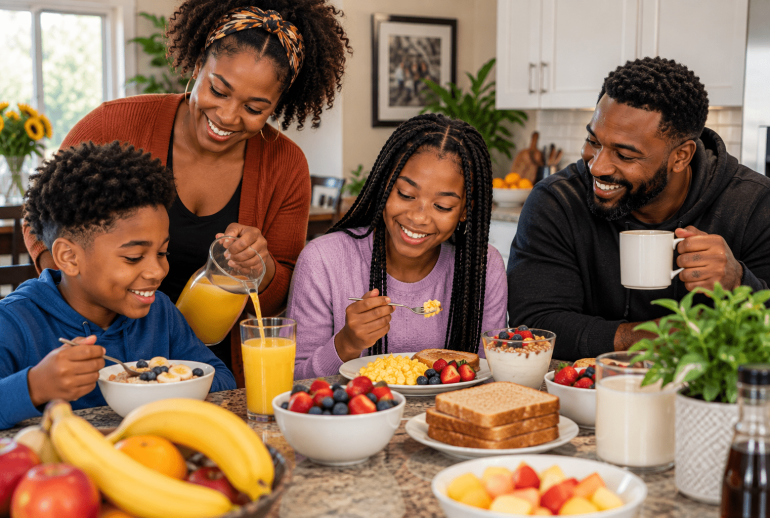
Breakfast can shape the way a child begins the day. A calm and nourishing morning meal can help children feel more prepared for school, homework, sports, activities, and family responsibilities. When children leave home hungry or only eat sugary foods, they may feel tired, distracted, irritable, or low on energy before the day has truly started. A healthy breakfast does not have to be fancy, expensive, or perfect. It simply needs to give the body something steady to work with.
Across the Black community, many families are balancing busy mornings. Parents and caregivers may be rushing to work, getting children dressed, packing lunches, managing transportation, checking school items, and handling different schedules. In the middle of that rush, breakfast can become an afterthought. Some children may skip it completely. Others may grab whatever is easiest, even if it does not keep them full for long.
Healthy breakfast habits matter because children need energy for learning and growth. A child who eats a balanced breakfast may have an easier time paying attention, participating in class, managing emotions, and staying active. Breakfast can also become a small moment of family care, even on busy days. It tells children, “Your body matters. Your day matters. We want you to be ready.”
Families do not need complicated meal plans to begin. A simple breakfast with protein, fiber, fruit, whole grains, or healthy fats can make a difference. Oatmeal with fruit, eggs with toast, yogurt with granola, peanut butter on whole-grain bread, leftovers from dinner, smoothies, or a simple breakfast wrap can all support the morning. The goal is consistency, not perfection.
1. Breakfast Gives Children Morning Energy.
Children use a lot of energy throughout the day. They need energy to walk to class, listen to teachers, read, write, solve problems, play at recess, and participate in activities. After sleeping through the night, the body often needs fuel. Breakfast helps children start the day with more steadiness.
When children skip breakfast, they may feel tired or distracted. Some may become cranky before lunch. Others may have trouble focusing because their body is asking for food. Parents may think a child is being difficult, when the real problem may be hunger.
A strong breakfast does not have to be large. Even a small meal can help. A boiled egg and fruit, oatmeal, yogurt, toast with nut butter, or a banana with milk can be better than leaving the house with nothing.
Helping children connect breakfast to how they feel can build awareness. They can learn that food is not only about taste. It is also about energy, focus, and care for the body.
2. A Balanced Breakfast Helps Children Stay Full Longer.
Some breakfasts taste good but do not keep children full. Sugary cereal, pastries, candy-like snacks, or sweet drinks may give quick energy, but children may feel hungry again soon. A more balanced breakfast includes foods that help the body feel satisfied longer.
Protein can come from eggs, yogurt, milk, beans, cheese, turkey, nut butter, or other family favorites. Fiber can come from oatmeal, whole-grain bread, fruit, vegetables, or whole-grain cereals. Healthy fats can come from avocado, nuts, seeds, or nut butter when appropriate. These foods help create steadier energy.
Families can build breakfast by asking a simple question: Will this keep the child full until the next meal or snack? If not, something can be added. Fruit can be paired with yogurt. Toast can be paired with eggs. Cereal can be paired with milk and a banana.
Small upgrades can make breakfast more helpful without making mornings complicated.
3. Morning Routines Make Breakfast Easier.
Many families skip breakfast because mornings feel rushed. A simple routine can make breakfast easier to manage. Preparing small things the night before can reduce stress in the morning. Clothes can be chosen, backpacks packed, water bottles filled, and breakfast items set out.
Breakfast routines can be simple. Children may know that they eat after getting dressed or before putting on shoes. Older children and teens can take more responsibility by preparing easy items for themselves. This teaches independence.
Families can keep a short list of quick breakfast options. When everyone already knows the choices, mornings move faster. A list might include oatmeal, boiled eggs, fruit, toast, yogurt, cereal with milk, breakfast wraps, smoothies, or leftovers.
A routine does not mean every morning will be smooth. But having a plan helps reduce confusion and makes breakfast more likely to happen.
4. Breakfast Can Support School Focus.
School requires attention. Children need to listen, remember, write, read, ask questions, and follow directions. Hunger can make all of that harder. A child who is hungry may think more about lunch than the lesson.
Breakfast can support school focus by giving the brain and body fuel. Children may feel more alert and more ready to participate. Teachers may notice that students who are nourished are better able to stay engaged.
Parents can talk with children about the connection between breakfast and learning. A simple statement like, “We eat breakfast so your brain has energy for school,” helps children understand the purpose.
Breakfast is only one part of school readiness. Sleep, homework routines, emotional support, and attendance matter too. But breakfast is a practical daily habit that can help children start stronger.
5. Teens Need Breakfast Too.
Teenagers often skip breakfast. They may wake up late, feel rushed, dislike eating early, or choose coffee, energy drinks, or snacks instead of food. But teens are still growing and learning. They need steady nutrition for school, activities, jobs, sports, and emotional balance.
Parents can help teens find breakfast options that fit their schedule. Some teens may prefer something quick like a smoothie, yogurt, breakfast sandwich, fruit, boiled eggs, or overnight oats. Others may eat better after arriving at school if breakfast is available there.
It helps to involve teens in planning. Ask what breakfast foods they will actually eat. A realistic breakfast is better than an ideal meal that no one touches.
Teens also need to understand that skipping meals can affect mood and energy. A respectful conversation can help them make better choices without feeling controlled.
6. Cultural Breakfast Foods Can Be Nourishing Too.
Healthy breakfast does not have to look the same in every family. Many cultural foods can be part of a nourishing morning. Across African American, African, Caribbean, Afro-Latin, and Southern traditions, families may enjoy porridge, eggs, beans, rice dishes, plantains, fish, grits, fruit, bread, tea, vegetables, or leftovers from dinner.
Families can honor culture while making thoughtful choices. A traditional breakfast can be balanced by adding fruit, reducing extra sugar, choosing water more often, or including protein and fiber. Culture and wellness can work together.
Children benefit when they see family foods treated with respect. They learn that healthy eating does not mean abandoning heritage. It means caring for the body while honoring the family’s food story.
Breakfast can become a way to teach both nutrition and cultural pride.
7. Sugary Drinks Can Weaken The Breakfast Habit.
Many children enjoy juice, sweet tea, soda, flavored drinks, or sugary coffee-style drinks. These drinks can add a lot of sugar without helping children feel full. If sweet drinks become the main part of breakfast, children may miss the steady energy that comes from real food.
Families do not need to ban every sweet drink forever. Balance matters. But water and milk can become stronger everyday choices. Juice can be limited or served in smaller portions. Sweet drinks can be saved for special occasions instead of daily mornings.
Children can learn that drinks affect the body too. What they drink can affect energy, teeth, focus, and hunger. This lesson is part of overall wellness.
A healthier breakfast habit often begins by making water available and reducing sugary drinks little by little.
8. Breakfast Can Become A Family Connection Moment.
Even when mornings are busy, breakfast can become a small moment of connection. Families may not have time for a long meal, but they can still share a few minutes together. A parent can ask about the day ahead, offer encouragement, or remind a child of something positive.
A calm breakfast moment can help children feel supported before leaving home. They may carry those words into the school day. Even a quick “You’ve got this today” can matter.
Families with different schedules can still create connection. A caregiver may prepare something ahead, leave breakfast ready, or sit with a child for a few minutes when possible. The meal does not have to be perfect to communicate care.
Food and encouragement together can help children begin the day with a stronger heart.
9. Children Can Help Prepare Breakfast.
Children are more likely to value breakfast when they help prepare it. Younger children can wash fruit, place napkins, stir oatmeal, pour cereal with help, or choose between two healthy options. Older children can make toast, peel boiled eggs, prepare yogurt bowls, or help pack breakfast for busy mornings.
Teens can learn to cook simple breakfast meals. Eggs, oatmeal, smoothies, breakfast wraps, fruit bowls, or leftovers can help them build independence. These skills prepare them for adulthood.
Helping with breakfast also teaches responsibility. Children learn that feeding a family takes planning and effort. They become contributors, not only receivers.
The kitchen can become a daily classroom where children learn food skills, time management, and self-care.
10. Budget-Friendly Breakfasts Can Still Be Healthy.
Families do not need expensive foods to create a good breakfast. Many simple foods can be nourishing and affordable. Oatmeal, eggs, bananas, apples, whole-grain toast, peanut butter, yogurt, beans, rice, grits, frozen fruit, and leftovers can all support morning meals.
Planning helps stretch the budget. Families can buy larger containers of oatmeal or yogurt, prepare boiled eggs ahead of time, use leftover vegetables in eggs, or turn dinner leftovers into breakfast. A little preparation can reduce the need for expensive convenience foods.
Children can also learn budget lessons through breakfast. Parents can explain why the family chooses certain foods, compares prices, or plans meals ahead. This teaches money wisdom alongside nutrition.
Healthy eating does not have to mean costly eating. Simple, steady choices can support family wellness.
11. Breakfast Habits Can Support Emotional Balance.
Hunger can affect mood. A child who has not eaten may be more likely to cry, argue, become frustrated, or feel overwhelmed. Teens may also become irritable or tired when they skip meals. Breakfast can help create a steadier start to the day.
This does not mean food solves every emotional issue. Children still need listening, guidance, rest, and support. But a nourished body can make emotions easier to manage.
Parents can notice patterns. Does the child have harder mornings when breakfast is skipped? Does the teen feel better after eating something with protein? These observations can help families adjust routines.
Supporting emotional wellness includes many small habits. Breakfast is one of them.
12. Healthy Breakfast Habits Build Long-Term Wellness.
Breakfast habits learned in childhood can continue into adulthood. A child who grows up understanding how to feed their body in the morning may become an adult who values preparation, nutrition, and self-care. These habits can support school, work, parenting, and health over time.
Families can start with one change. Add fruit. Serve water. Prepare breakfast the night before. Keep boiled eggs ready. Choose oatmeal twice a week. Help a teen find a quick option they like. Small changes are easier to keep.
The goal is not to make every breakfast perfect. The goal is to help children understand that their bodies deserve care. A healthy morning routine can become part of a stronger family culture.
When breakfast becomes a habit, children begin the day with more support, more energy, and more readiness.
Conclusion.
Healthy breakfast habits support children across the Black community by helping them begin the day with energy, focus, emotional balance, and a stronger sense of care. Breakfast does not need to be expensive or complicated. Simple foods like eggs, oatmeal, fruit, yogurt, toast, beans, smoothies, or leftovers can help children feel more prepared for school and daily life.
Families can begin by creating a morning routine, preparing simple foods ahead of time, reducing sugary drinks, involving children in breakfast preparation, and choosing meals that fit the household’s culture and budget. Small changes can make mornings feel calmer and healthier.
When children start the day nourished, they are better prepared to learn, play, grow, and participate. A steady breakfast habit is one small way families can build stronger wellness for the future.
Akukulu Family encourages parents, caregivers, educators, mentors, and community members to support one healthy breakfast habit this week. Prepare a simple morning meal, add fruit to breakfast, help a teen choose a quick option, reduce one sugary drink, or talk with a child about how food supports learning. One better breakfast can help a child start the day stronger.
