

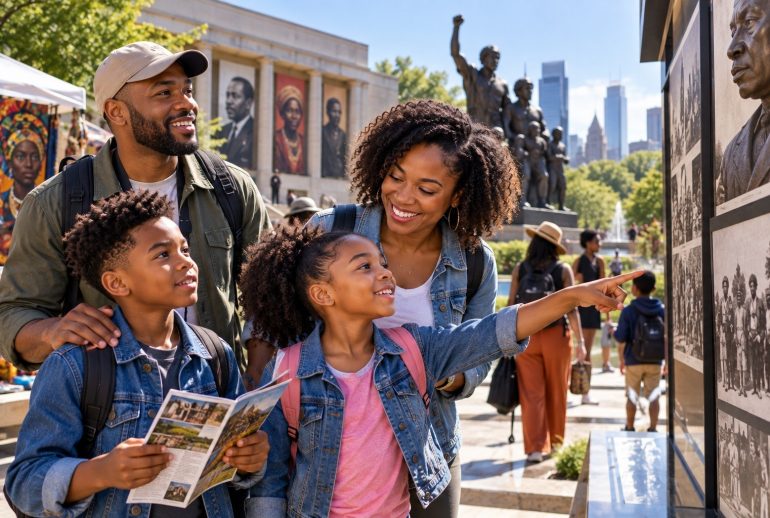
Local day trips can give families a meaningful way to explore culture without needing a long vacation, expensive flights, or complicated travel plans. A day trip might be a visit to a museum, cultural festival, historical site, Black-owned restaurant, local park, library event, college campus, farmers market, art exhibit, or nearby city. These simple outings can help children learn, help parents create memories, and help families feel more connected to their community.
Across the Black community, travel and exploration do not have to be limited to faraway places. Many families live near powerful stories, cultural spaces, historic neighborhoods, community landmarks, and local businesses that children may not know about yet. Sometimes a meaningful learning experience is only a short drive, bus ride, or walk away. When families intentionally visit these places, they help children understand that history and culture are not distant ideas. They are alive in nearby streets, buildings, food, music, art, and people.
Day trips can also make family learning feel joyful. Children may not always want another lecture or worksheet, but they may become curious when they walk through a museum, taste a new dish, hear live music, see a mural, visit a cultural market, or listen to an elder explain a place from the past. These experiences can open conversations that stay with children longer than facts alone.
Families do not need perfect schedules or large budgets to begin. One Saturday afternoon, one Sunday outing, one school break day, or one summer morning can become a chance to explore. What matters is choosing a place with purpose, going together, and talking about what was learned.
1. Day Trips Make Learning Feel Real.
Children often learn best when they can see, touch, hear, and experience something for themselves. A history lesson becomes more memorable when a child stands inside a museum or visits a local landmark. A conversation about culture becomes more meaningful when children taste food, hear music, see art, or meet people connected to that tradition.
Day trips help turn learning into experience. A child may remember a mural, a festival drumbeat, a storyteller’s voice, a museum exhibit, or a family photo in front of a historic building. These moments can help information feel alive.
Parents and caregivers can support learning by asking simple questions during and after the trip. What did you notice? What surprised you? What did you learn? What do you want to know more about? These questions help children reflect instead of simply moving from one activity to the next.
When learning becomes real, children may become more curious. Curiosity is one of the strongest foundations for education.
2. Local History Helps Children Feel Rooted.
Many communities have Black history that is not always taught fully in schools. There may be local churches, schools, neighborhoods, leaders, businesses, cemeteries, museums, civil rights sites, community centers, or historic homes connected to important stories. Visiting these places can help children feel rooted in a larger history.
Children need to know that their community has stories worth remembering. They need to understand that people before them built, worked, organized, worshiped, created, taught, and led in meaningful ways. Local history helps children see that the past is not only national. It is also close to home.
Families can look for local walking tours, museum exhibits, historical markers, library archives, community elders, or cultural organizations that share these stories. Even a simple visit to an old neighborhood can become meaningful if someone explains why it matters.
When children learn local history, they may feel more connected to where they live and more respectful of the people who helped shape it.
3. Cultural Festivals Can Build Pride.
Cultural festivals can be powerful day trips for families. Music, dance, food, clothing, art, language, storytelling, vendors, and community performances all help children experience culture in a joyful public space. These events can make children feel proud of who they are and where they come from.
Across the African Diaspora, cultural festivals may reflect African, Caribbean, African American, Afro-Latin, and many other traditions. Children can learn that the Black community is rich, diverse, and full of creativity. They may see flags, fabrics, hairstyles, foods, dances, and music that connect to different parts of the Diaspora.
Parents can make festivals more meaningful by explaining what children are seeing. A dish, rhythm, garment, or dance may carry history. A child’s question can become a teaching moment.
Cultural festivals remind children that heritage is not only something discussed at home. It is something that can be celebrated openly with others.
4. Food Trips Teach Culture Through Taste.
Food is one of the easiest ways to introduce children to culture. A local day trip to a Black-owned restaurant, African market, Caribbean bakery, soul food spot, food truck, farmers market, or family-owned café can become a meaningful cultural experience.
Children can learn where certain foods come from, what ingredients are used, and why some dishes matter to different families. They may taste jollof rice, jerk chicken, injera, plantains, gumbo, collard greens, patties, rice and peas, cornbread, stew, or other cultural favorites. These meals can start conversations about family history and Diaspora traditions.
Food trips can also teach children about supporting local businesses. Families can explain that when they buy from small restaurants and vendors, they are supporting someone’s work, dream, and household.
A meal can become more than lunch. It can become a memory, a lesson, and an act of community support.
5. Museums Can Open Important Conversations.
Museums can help children explore history, science, art, culture, and community stories. A museum day trip gives families a chance to learn together in a structured but engaging space. Children can walk through exhibits, ask questions, see artifacts, and connect ideas to real objects and images.
Black history museums, African art exhibits, civil rights displays, local history centers, children’s museums, and cultural institutions can all offer valuable learning. Families can choose museums based on the child’s age, attention span, and interests.
Some exhibits may include painful history. Parents should prepare children in age-appropriate ways and allow space for questions and feelings. Children can learn hard truths while also learning about courage, resistance, creativity, faith, and leadership.
Museums help families talk about where the community has been and what kind of future children can help build.
6. Parks And Nature Trips Support Family Wellness.
Not every day trip has to be centered indoors. Parks, gardens, trails, lakes, rivers, nature centers, and outdoor cultural sites can help families relax, move, and reconnect. Outdoor trips support both learning and wellness.
A park visit can include walking, playing, picnicking, reading, drawing, bird watching, or simply resting together. Families can talk about nature, neighborhood history, environmental care, and the importance of shared public spaces.
Outdoor day trips can also be affordable. Families can pack food, bring water, wear comfortable shoes, and spend time together without paying for expensive entertainment. These outings can be especially helpful for children who need movement and fresh air.
Nature gives families a chance to slow down. Sometimes the best family conversations happen during a walk, picnic, or quiet moment outside.
7. Day Trips Can Help Teens Explore Their Future.
Teenagers can benefit from day trips that connect to future planning. A visit to a college campus, trade school, local business, career fair, community event, technology center, art studio, or entrepreneurship workshop can help teens imagine future possibilities.
Many teens need exposure before they can make confident decisions. They may not know what careers exist or what environments inspire them. A day trip can help them see options more clearly. A student might become curious about healthcare after visiting a hospital event, or interested in business after meeting local vendors.
Families can use these trips to ask thoughtful questions. What did you like about this place? Could you see yourself doing something like this? What skills would you need? Who could we talk to next?
Day trips can help teens connect dreams to real steps. This kind of exposure can support motivation and confidence.
8. Local Art Helps Children See Community Creativity.
Art can help children understand culture, history, emotion, and imagination. A day trip to a mural, gallery, community art show, theater performance, music event, or cultural craft market can help children see creativity in action.
Black artists have always helped tell community stories. Through painting, music, dance, sculpture, photography, fashion, poetry, and performance, artists preserve memory and inspire change. Children need to see that creativity has value.
Families can ask children what they notice in the art. What colors stand out? What story do you think the artist is telling? How does it make you feel? What would you create if you were the artist? These questions encourage observation and expression.
Local art trips can also support artists and cultural organizations. When families attend and share these events, they help keep creative spaces alive.
9. Libraries Can Be Day Trip Destinations.
Libraries are excellent local day trip destinations. They offer books, story times, teen programs, computer access, cultural events, workshops, quiet study spaces, and community resources. A library visit can support reading, learning, and family connection.
Families can make library trips feel special. Children can choose books, explore new subjects, attend a program, or read together in a cozy corner. Teens can find resources about careers, college, creative writing, technology, or personal interests.
Libraries often host cultural events, author talks, history programs, craft days, and summer reading activities. These events can help families learn without spending much money.
A library day trip teaches children that learning is available in the community. It also helps reading become part of family life.
10. Day Trips Create Strong Family Memories.
Children often remember the simple outings that made them feel loved. They may remember the car ride, music, snacks, funny moments, pictures, a new food, a museum display, a park game, or a conversation with a parent. These memories become part of family identity.
Day trips give families stories to tell later. “Remember when we went to that festival?” “Remember when you asked that question at the museum?” “Remember when Grandma told us about that neighborhood?” These stories strengthen connection.
Families can preserve memories through photos, journals, drawings, postcards, or simple conversations. A child can write one sentence about the trip or draw what they saw. A teen can take photos or create a short reflection.
The value of a day trip is not only what happens that day. It is also the memory it leaves behind.
11. Planning Helps Day Trips Feel Easier.
A little planning can make day trips more enjoyable. Families can check hours, cost, parking, transportation, weather, food options, stroller access, sensory needs, and restrooms before leaving. Planning reduces stress and helps the family focus on the experience.
Parents can also prepare children. Tell them where they are going, what they might see, how long they will stay, and what behavior is expected. Children often do better when they know what to expect.
Families should bring basics such as water, snacks, comfortable shoes, jackets, chargers, and any needed supplies. For children with sensory needs, headphones, comfort items, or planned breaks may help.
A day trip does not need to be perfectly organized, but preparation can help the family enjoy it with less pressure.
12. Local Exploration Builds A Stronger Community Future.
When families explore local culture, they strengthen community connection. They support museums, libraries, artists, small businesses, parks, cultural organizations, and historic spaces. They also teach children that their community has value.
Local exploration helps children become more aware of the world around them. They learn that culture is not only online or far away. It is present in nearby places and people. This awareness can inspire pride and responsibility.
Families who take day trips may also become more engaged in community life. They may attend more events, support more businesses, volunteer, or share resources with others. Small outings can lead to deeper connection.
A stronger future is built when children know their history, value their culture, and feel connected to the place they call home.
Conclusion.
Local day trips help families explore culture across the Black community by making learning, history, food, art, travel, and family bonding more accessible. Families do not need expensive vacations to create meaningful experiences. A museum visit, cultural festival, park walk, local restaurant, library event, historical site, or nearby college tour can all become powerful learning moments.
Children benefit when they see culture and history in real spaces. Teens benefit when they explore future possibilities. Parents and caregivers benefit from shared memories and deeper conversations. These outings help families feel more connected to one another and to the community around them.
When families explore locally, they teach children that their story matters. One day trip can open curiosity, build pride, and create memories that last.
Akukulu Family encourages parents, caregivers, elders, mentors, and community members to plan one local day trip this month. Visit a museum, cultural festival, library event, Black-owned restaurant, historic site, park, or college campus. One simple outing can help children learn, connect, and feel proud of their community.
