

Walking through a grocery store today can make healthy eating seem expensive. Fresh produce, meat, eggs, dairy products, and even basic pantry items can quickly fill a shopping cart while pushing the total higher than expected.
For households already balancing housing, transportation, childcare, school expenses, utilities, and other necessities, spending significantly more money on food may simply not be realistic.
But eating healthier does not necessarily require buying expensive organic products, specialty health foods, or ingredients that nobody in the house enjoys.
In many cases, healthier eating starts with something much simpler: making better use of familiar foods.
Across the Black community, food is also about much more than nutrition. Recipes carry memories. Sunday dinners bring generations together. Certain dishes remind us of grandparents, neighborhoods, celebrations, reunions, and places our families once called home.
Eating healthier does not require leaving that history behind. Instead, we can find practical ways to build healthier habits around foods we already know and love.
1. Plan Around Meals, Not Individual Ingredients
One of the easiest ways to overspend at the grocery store is to shop without knowing what the food will become.
A bag of spinach looks healthy. A package of chicken looks useful. Tomatoes, peppers, rice, yogurt, and fruit all seem like sensible purchases.
But what meals will they make?
Before shopping, choose several meals for the coming week. They do not need to be complicated. You might plan baked chicken with vegetables one evening, beans and rice another night, a large pot of vegetable soup for another meal, and leftover chicken turned into wraps or salads for lunch.
Now the shopping list has a purpose.
This approach can also reduce the frustrating experience of opening a refrigerator full of groceries and still feeling like there is “nothing to eat.”
2. Give Affordable Staples More Attention
Some of the most useful foods for a budget-conscious kitchen are surprisingly simple.
Beans, lentils, brown or white rice, oats, potatoes, sweet potatoes, frozen vegetables, canned tomatoes, eggs, cabbage, carrots, onions, and seasonal produce can form the foundation of many filling meals.
Beans are an especially useful example. They can work in soups, rice dishes, salads, wraps, stews, and side dishes. They provide protein and fiber and can stretch meals that would otherwise require larger amounts of meat.
The goal does not have to be removing meat entirely. A household might simply use a little less meat and add beans or vegetables to make the meal go further.
That small adjustment can help both the grocery budget and the nutritional balance of the plate.
3. Do Not Ignore the Frozen Food Aisle
There is sometimes an assumption that healthy food has to come from the fresh produce section.
It doesn’t.
Frozen fruits and vegetables can be incredibly convenient, particularly when fresh produce frequently spoils before it gets used.
A frozen bag of broccoli can wait until you need it. Frozen berries can go into oatmeal or smoothies. Frozen spinach can be added to eggs, pasta, soups, or rice dishes.
The important distinction is between frozen whole foods and heavily processed frozen meals.
Plain frozen vegetables and fruits can be useful staples because households can use only what they need and return the rest to the freezer. That can significantly reduce food waste.
4. Make Water the Everyday Drink
One healthy change costs almost nothing: making water the default beverage.
Sweet tea, soda, juice drinks, flavored coffees, sports drinks, and other sugary beverages can quietly add both calories and grocery expenses.
This does not mean a family can never enjoy a favorite drink.
Instead, think about what happens every day.
If water becomes the normal drink at lunch and dinner, while sweet beverages become occasional choices rather than automatic ones, a household can make a meaningful change without redesigning the entire menu.
For people who find plain water boring, adding lemon, lime, cucumber, berries, or mint can provide flavor without turning every glass into another sugary drink.
5. Keep the Flavor
Healthy eating should not mean eating bland food.
Seasoning is one of the great strengths of many African American, Caribbean, African, and Southern food traditions. Garlic, onion, thyme, paprika, cayenne, black pepper, ginger, herbs, citrus, peppers, and spice blends can bring tremendous flavor to simple ingredients.
Instead of relying entirely on salt, butter, sugar, or heavy sauces for flavor, experiment with herbs, spices, citrus, and aromatics.
Consider something as simple as vegetables.
Plain steamed vegetables may not excite everyone at the dinner table. But roast those vegetables with onion, garlic, black pepper, paprika, and a little olive oil, and the experience changes considerably.
Healthy food is much easier to maintain when people actually look forward to eating it.
6. Adjust Family Favorites Instead of Abandoning Them
Food traditions matter, and healthier eating does not require replacing every beloved recipe with something unfamiliar.
Small changes are often easier to maintain.
A favorite fried dish might occasionally be baked, grilled, or air-fried. Greens can still have plenty of seasoning while experimenting with different ways of creating smoky flavor. Macaroni and cheese can remain part of a celebration without needing to become an everyday side dish.
Portion size matters too.
There is a major difference between saying, “We can never eat this again,” and saying, “We enjoy this food, but it doesn’t need to fill half the plate.”
That second approach leaves room for culture, pleasure, and family tradition while still making space for vegetables, fruits, whole grains, and other nutritious choices.
7. Cook Once and Use It Twice
Time can be just as important as money.
After working all day, helping children with schoolwork, commuting, running errands, and handling household responsibilities, cooking a completely new dinner every evening may be unrealistic.
That is where intentional leftovers become valuable.
If you bake chicken, prepare enough for tomorrow’s lunch. If you cook beans, make a larger pot and freeze part of it. Extra roasted vegetables can become part of an omelet, rice bowl, wrap, or lunch the following day.
This is different from simply hoping leftovers get eaten.
You are deliberately cooking food that has a second purpose.
It can save money, reduce waste, and make it less tempting to order takeout on an exhausting evening.
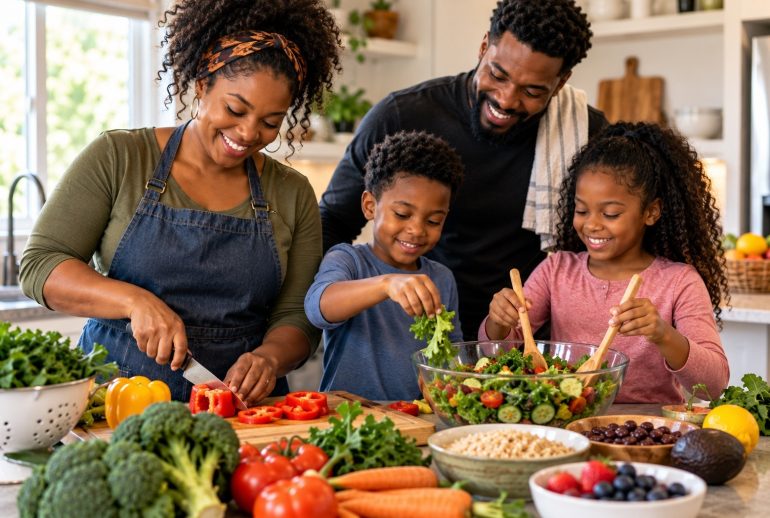
8. Let Children Participate
Healthy habits become more meaningful when children are involved rather than simply being told what they should eat.
Depending on their age, children can wash vegetables, mix ingredients, choose fruit for the week, help write the grocery list, or select one vegetable to try with dinner.
Older children can learn to prepare a few simple meals themselves.
These are more than kitchen skills. They are life skills.
A young person who leaves home knowing how to cook eggs, prepare vegetables, make rice and beans, season chicken, read a food label, and shop within a budget has a valuable foundation for adulthood.
There is also something powerful about recipes traveling between generations. Cooking together creates opportunities for grandparents, parents, caregivers, and young people to share stories that might never come up around an ordinary conversation.
9. Stop Expecting Perfection
One unhealthy meal does not destroy a healthy lifestyle.
Neither does birthday cake, Thanksgiving dinner, barbecue at a family reunion, or grabbing fast food during an unusually busy day.
The bigger question is what happens most of the time.
If breakfast becomes a little more balanced, water becomes more common, vegetables appear more often at dinner, portions become more reasonable, and home-cooked meals replace takeout a few additional times each week, those changes add up.
Trying to change everything at once can make healthier living feel exhausting.
Changing one or two habits and allowing them to become normal is often more sustainable.
10. Make Healthy Eating a Community Conversation
Food habits do not develop in isolation. They are influenced by family traditions, neighborhood access, work schedules, advertising, transportation, income, and the foods available nearby.
That means conversations about nutrition should include compassion and practicality.
Instead of judging what another household puts on the table, communities can share solutions.
Neighbors can exchange recipes. Parents can share affordable meal ideas. Community organizations can offer cooking demonstrations. Churches and local groups can incorporate healthier options into gatherings without eliminating traditional favorites.
Even sharing information about an affordable grocery store, farmers market, community garden, or local food program can make a difference for someone else.
Health becomes more achievable when knowledge travels through the community.
Conclusion: Small Choices Can Build Healthier Generations
Healthy eating does not begin with an expensive grocery cart.
It begins with everyday decisions.
Plan a few meals before shopping. Use affordable staples. Keep frozen vegetables available. Drink more water. Cook enough for tomorrow. Keep the flavors your family loves. Teach children how to prepare real food.
Most importantly, remember that healthier eating does not require rejecting the foods and traditions that connect generations.
The goal is not perfection.
The goal is creating everyday habits that help people feel better, live stronger, and give the next generation a healthier foundation to build upon.
What affordable healthy meal has become a favorite in your household? Share the recipes, shopping strategies, and family traditions that have worked for you. One simple idea shared within the community could help another household make its next healthy choice a little easier.
