

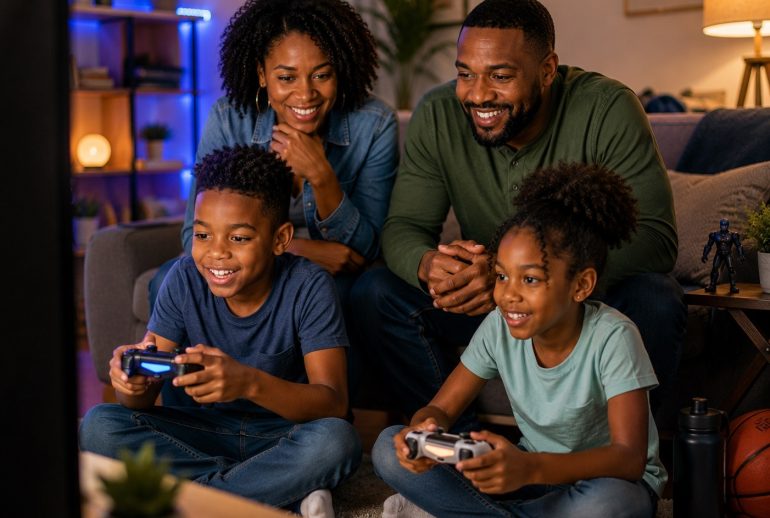
Gaming has become a normal part of childhood for many families. Children and teens play games on phones, tablets, consoles, computers, and online platforms. Some games are simple and relaxing, while others are competitive, social, creative, or fast-paced. For many young people, gaming is not only entertainment. It can be a way to connect with friends, solve problems, build skills, explore stories, compete, create, and relax after a long day.
Across the Black community, families are often trying to find the right balance with technology. Parents and caregivers may understand that gaming can be fun and sometimes useful, but they may also worry about too much screen time, online strangers, inappropriate language, expensive in-game purchases, sleep problems, anger during games, school distractions, and children becoming disconnected from family life. These concerns are real, and they deserve thoughtful attention.
Healthy gaming habits do not mean banning every game or treating technology like the enemy. Games can support creativity, teamwork, strategy, hand-eye coordination, problem-solving, and social connection when they are used with wisdom. At the same time, gaming can become unhealthy when it takes over sleep, schoolwork, chores, outdoor play, reading, family conversation, emotional control, or real-life friendships. The goal is not fear. The goal is balance.
Families can help children build healthier gaming habits by creating clear expectations, setting routines, checking game content, talking about online safety, watching emotional reactions, encouraging other activities, and staying involved. Children need guidance because they are still learning self-control. A healthy gaming routine teaches them that technology can be enjoyed without controlling their whole life.
1. Gaming Should Fit Into A Balanced Childhood.
A healthy childhood includes many kinds of experiences. Children need school, rest, reading, outdoor play, physical movement, family time, chores, creativity, friendships, faith or community activities when part of the household, and quiet time. Gaming can be part of that life, but it should not replace everything else. Balance is the key.
When gaming becomes the main activity every day, children may miss other important parts of growth. They may become less active, avoid homework, lose sleep, stop reading, or have fewer face-to-face conversations. This does not happen to every child, but families should pay attention to patterns. If a child becomes upset every time they are asked to stop playing, that may be a sign that gaming needs stronger boundaries.
Parents can help by treating gaming as one activity among many. A child might play after homework, chores, and reading are done. A teen might have gaming time after responsibilities are handled. Younger children may need shorter sessions and more direct supervision. The message should be clear: games can be enjoyed, but they do not come before health, school, family, and responsibility.
Balance also teaches children self-control. They learn that enjoyable things still need limits. This lesson will help them later with phones, social media, money, entertainment, and other adult responsibilities.
2. Clear Gaming Rules Reduce Daily Arguments.
Many family arguments happen because gaming rules are unclear. A child may think they can play as long as they want, while the parent expects them to stop after a short time. A teen may assume online gaming with friends is allowed late at night, while the caregiver expects devices to be off before bed. When expectations are not clear, conflict becomes more likely.
Families can reduce stress by creating clear rules before problems happen. These rules may include when gaming is allowed, how long children can play, what games are approved, whether online chat is allowed, what happens before gaming time begins, and what consequence happens if rules are ignored. The rules should fit the child’s age, maturity, school schedule, and household needs.
It helps to explain the reason behind the rule. Instead of only saying, “Because I said so,” a parent can say, “Gaming has to stop by this time because sleep helps your body and brain,” or “Homework comes first because school is your responsibility,” or “I need to know who you are talking to online because safety matters.” Children may not always like the rule, but they are more likely to understand it when the purpose is clear.
Consistency matters. If the rule changes every day based only on the adult’s mood, children may keep pushing. A steady routine helps everyone know what to expect.
3. Parents Should Know What Games Children Are Playing.
Not every game is appropriate for every child. Some games include violence, mature language, sexual content, gambling-like features, online chats, or themes that may not fit the child’s age. Parents and caregivers should know what games are being played, not only the name of the console or device. A game may look harmless from a distance but still include content that needs attention.
Adults can start by asking children to show them the games they enjoy. This should not always feel like an interrogation. It can be a conversation. What do you like about this game? Who do you play with? Can you talk to other players? Is there fighting or mature content? Are there purchases inside the game? These questions help parents understand the gaming environment.
Families can also check ratings, reviews, parental controls, and privacy settings. Game ratings are not perfect, but they can provide helpful guidance. Parents should also remember that online play can change the experience. A game that seems appropriate by content may still expose children to strangers or inappropriate chat if online features are open.
Being informed does not mean parents need to become gaming experts. It means they should be involved enough to guide safely. Children should know that gaming is not a private world with no adult awareness. It is part of family technology life and should be handled responsibly.
4. Online Safety Must Be A Priority.
Many games allow children to communicate with other players through voice chat, text chat, friend requests, messages, or shared online spaces. This can be fun when children are connecting with real-life friends, but it can also create risks. Children may encounter strangers, bullying, inappropriate language, scams, pressure to share personal information, or harmful conversations.
Families should teach children that online players are not always who they say they are. A person who sounds friendly may still be unsafe. Children should not share their full name, address, school, phone number, passwords, family details, photos, or private information while gaming. They should also know not to move conversations to private apps or secret chats without a parent’s knowledge.
Parents can set rules about who children are allowed to play with. Younger children may only be allowed to play with siblings, cousins, classmates, or friends approved by parents. Teens may have more freedom, but they still need safety expectations. Families can also turn off chat features or use parental controls when appropriate.
The most important safety rule is that children should feel safe telling an adult if something uncomfortable happens online. If they fear immediate punishment, they may hide the problem. Parents can say, “If someone says something strange, asks for personal information, or makes you uncomfortable, come tell me. You will not be in trouble for telling the truth.” This builds trust and protection.
5. Gaming Should Not Steal Sleep.
Sleep is one of the first things affected when gaming habits become unhealthy. Children and teens may want to play one more round, finish one more level, or stay online because friends are still playing. Before long, bedtime is delayed, the child is tired in the morning, school focus drops, and mood becomes more difficult. Sleep loss can affect the whole household.
Families should protect bedtime with clear technology boundaries. Devices may need to be turned off at a certain time. Consoles may need to stay outside the bedroom. Phones and tablets may need to charge in a shared family space overnight. These rules can help reduce late-night gaming and hidden screen use.
Teens may argue that gaming helps them relax, but late-night screen time can still interfere with sleep routines. Competitive games can increase excitement, frustration, or adrenaline right before bed. Even if the teen eventually sleeps, their mind may not settle easily. A better evening routine may include quiet reading, music, prayer, journaling, stretching, or calm conversation before sleep.
Children need to understand that sleep is not a punishment. It supports growth, mood, focus, memory, and health. Gaming should never become more important than rest.
6. Emotional Reactions During Games Matter.
Games can bring out strong emotions. Children may feel excited, proud, disappointed, frustrated, embarrassed, or angry while playing. Some emotional reaction is normal, especially in competitive games. But if a child regularly screams, throws controllers, insults others, cries intensely, becomes aggressive, or cannot calm down after losing, parents should pay attention.
Gaming can be a useful place to teach emotional regulation. A child can learn how to lose with self-control, take breaks when frustrated, speak respectfully to teammates, and try again without exploding. These lessons matter because emotional control is important in real life too.
Parents can set a rule that disrespectful behavior pauses the game. If a child throws something or speaks harshly, gaming time may stop until they calm down and talk about what happened. The goal is not to shame the child, but to teach that emotions need boundaries. A parent might say, “It is okay to feel frustrated. It is not okay to throw things or yell at people.”
Families can also help children notice their own signs of frustration. Tight fists, loud voice, racing heart, or blaming everyone else may mean it is time for a break. Learning to pause is a powerful skill. Gaming can become a training ground for self-control when adults guide it with patience.
7. Gaming Should Not Replace Real Relationships.
Online gaming can help children stay connected with friends, but it should not replace real-life relationships completely. Children and teens still need face-to-face conversation, outdoor play, family time, school friendships, community activities, and social skills that happen away from screens. A child who only interacts through gaming may miss important parts of relationship development.
Families can encourage children to balance online and offline friendship. If a child enjoys playing games with a cousin or classmate, that can be positive. But families can also invite that friend to a park, birthday gathering, study session, church event, sports activity, or family outing when appropriate. This helps relationships grow beyond the screen.
Parents should also protect family connection. Meals, car rides, family visits, and bedtime routines should not always be interrupted by gaming. Children need moments when adults are fully present, and adults need the same from children. A family may choose device-free dinners, no gaming during visits with elders, or certain evenings reserved for family activities.
Gaming is healthiest when it supports connection without replacing the people closest to the child. Real relationships need time, attention, eye contact, conversation, and shared experiences.
8. In-Game Purchases Need Strong Boundaries.
Many games include purchases for skins, characters, upgrades, coins, passes, tools, or special features. Children may not fully understand that small purchases can add up quickly. Some games are designed to make spending feel exciting, urgent, or necessary to keep up with others. Without boundaries, families may face surprise charges or repeated requests for money.
Parents should make clear rules about in-game spending. Children should not have access to saved payment cards without permission. Passwords, purchase approval settings, and parental controls can help prevent accidental or unauthorized spending. A child should understand that virtual items still cost real money.
This can also become a financial literacy lesson. Parents can explain that spending five dollars here and ten dollars there can add up over time. Older children can compare the cost of in-game items to real-world needs or savings goals. They can learn to ask whether a purchase is worth it or whether they are being pressured by the game.
Families may choose to allow limited spending through gift cards or a set budget. This gives children practice making choices without giving them unlimited access. The key is that the adult stays in control of payment decisions and teaches wisdom around digital spending.
9. Gaming Can Be Creative When Used Well.
Not all gaming is passive. Some games encourage building, storytelling, design, strategy, coding, teamwork, music, problem-solving, or creative thinking. Children may build digital worlds, design characters, solve puzzles, manage resources, create stories, or learn how systems work. These skills can connect to technology, art, engineering, writing, and future careers.
Parents can ask children what they are creating or learning through games. A child who builds structures may be practicing design thinking. A teen who modifies games may become interested in coding. A young person who enjoys game stories may become interested in writing, animation, music, or digital art. Gaming can sometimes reveal talents that adults should notice.
Families can encourage children to move from only playing to also creating. This might include learning basic coding, drawing game characters, writing a game story, making music, studying animation, or exploring game design in a safe educational setting. This helps children see technology as something they can build with, not only consume.
Creative gaming still needs limits, but it can be part of learning. When adults show interest, children may begin to think more deeply about the skills behind the games they enjoy.
10. Parents Can Play Or Watch Sometimes To Understand The Child’s World.
Many parents do not understand why children love certain games. Instead of dismissing gaming completely, it can be helpful to watch or play with them sometimes. This does not mean adults have to enjoy every game, but involvement can open communication. A child may feel valued when a parent asks them to explain something they care about.
Playing together can also help parents observe content, emotional reactions, online interactions, and skill level. A parent may notice that the game is harmless fun, or they may notice concerns that were not obvious before. Either way, involvement creates better guidance.
Family gaming can also become a bonding activity when chosen carefully. Some games are family-friendly and encourage teamwork, sports, puzzles, music, racing, or creativity. A game night with clear time limits can be fun and social. This is very different from a child gaming alone for hours without interaction.
When parents show interest, children may become more willing to listen to limits. They see that the adult is not only trying to take something away but is trying to understand and guide. That can reduce conflict and build trust.
11. Gaming Breaks Should Be Part Of The Routine.
Long gaming sessions can affect posture, eyes, mood, movement, and attention. Children may sit in one position for too long, forget to drink water, avoid bathroom breaks, or become mentally overstimulated. Regular breaks can help protect health and reduce irritability.
Families can set break rules. After a certain amount of time, the child may need to stand up, stretch, drink water, use the bathroom, step outside, or rest their eyes. Younger children need more frequent breaks. Teens may need reminders, especially during long online sessions with friends.
Breaks also teach self-awareness. Children learn to notice when their body needs movement or rest. They learn that enjoyable activities still require care for the body. This lesson applies beyond gaming to schoolwork, phones, television, and future desk jobs.
Parents can make breaks easier by giving warnings. Instead of suddenly turning off the game, they might say, “You have ten minutes left,” or “Finish this round, then take a break.” This helps children transition with less frustration. Clear break routines can reduce arguments.
12. Healthy Gaming Habits Teach Digital Responsibility.
Gaming is one part of a larger digital life. The habits children build with games can affect how they use phones, social media, school technology, streaming, and online communication. Healthy gaming teaches digital responsibility. Children learn limits, safety, respect, budgeting, emotional control, and balance.
Families should treat gaming as a training opportunity. Instead of only asking whether gaming is good or bad, parents can ask what habits are being formed. Is the child learning patience? Are they managing time? Are they speaking respectfully online? Are they protecting privacy? Are they balancing responsibilities? These questions help adults guide more wisely.
Digital responsibility is important for the future. Children will grow into adults who use technology for work, learning, relationships, finances, creativity, and communication. If they learn healthy habits early, they will be better prepared to handle larger digital responsibilities later.
A family that teaches healthy gaming is not only controlling screen time. It is helping children develop wisdom for a technology-filled world.
Conclusion.
Healthy gaming habits help children across the Black community enjoy technology while still protecting schoolwork, sleep, emotional wellness, family connection, physical activity, and online safety. Gaming can be fun, creative, and social, but it needs guidance. Children are still learning self-control, and they need adults who will create structure with patience and consistency.
Families do not need to ban every game to build healthier habits. They can begin with clear rules, approved games, time limits, online safety settings, device-free family moments, bedtime boundaries, and regular conversations about how gaming affects mood and responsibilities. Small changes can create a healthier digital routine.
When gaming is handled with balance, children learn that technology is a tool, not the boss of their life. They can play, create, connect, and enjoy games while still growing into responsible, healthy, and well-rounded young people.
Akukulu Family encourages parents, caregivers, mentors, and community members to review one gaming habit this week. Check what games children are playing, set a clear time limit, talk about online safety, create a bedtime device rule, or plan one device-free family activity. One thoughtful boundary can help children build healthier gaming habits and stronger digital responsibility.
