

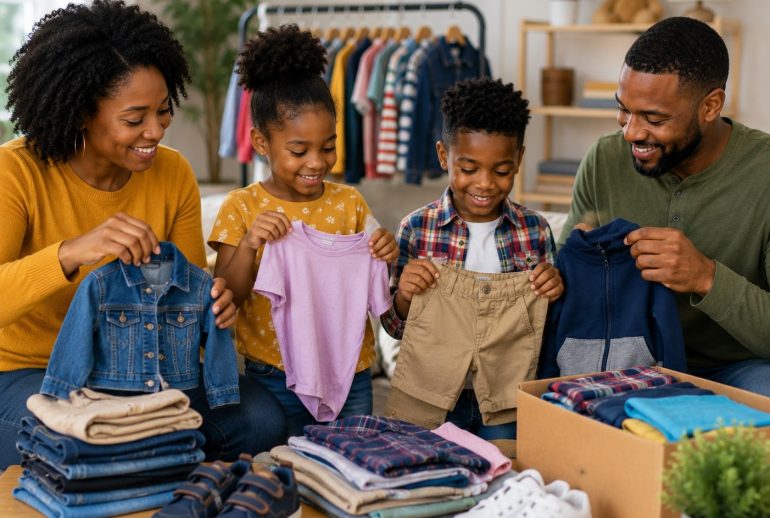
Dressing children well does not have to mean spending more than the family can afford. Children grow quickly, play hard, stain clothes, lose jackets, wear out shoes, change sizes, and sometimes outgrow items before they have been worn many times. For parents and caregivers, keeping children clothed for school, church, family events, sports, travel, holidays, and everyday life can become expensive if there is no plan. That is why learning how to shop wisely matters.
Across the Black community, clothing has often carried meaning beyond basic need. Families have long understood the value of showing up with dignity, whether for school, church, work, family gatherings, graduations, community events, or special occasions. Many parents and grandparents made sure children looked presentable even when money was tight because they wanted them to feel confident and respected. That tradition of care still matters today, but families also need practical ways to balance style, comfort, quality, and budget.
Children do not need the most expensive brands to look good or feel confident. They need clothing that fits well, feels comfortable, matches the season, allows them to move, and helps them show up with self-respect. A simple clean outfit, a good pair of shoes, a warm coat, a few strong basics, and thoughtful accessories can do more than a closet full of items that do not fit or last. Dressing well is not only about money. It is about planning, care, and knowing how to make smart choices.
Budget-friendly clothing also gives families a chance to teach children important lessons. Children can learn the difference between needs and wants, how to take care of what they own, why quality matters, how to shop sales, how to avoid pressure from trends, and how to feel confident without comparing themselves to others. When clothing is handled with wisdom, it becomes more than fashion. It becomes a lesson in responsibility, confidence, and family values.
1. Start With What Children Actually Need.
Before buying new clothes, families should begin by looking carefully at what the child already has. Many closets and drawers hold items that still fit, items that need washing, items that can be repaired, and items that were forgotten. Taking inventory helps parents avoid buying duplicates and makes it easier to see what is truly missing.
A child may not need a completely new wardrobe. They may need two pairs of school pants, a few shirts, socks, underwear, a jacket, shoes, or one outfit for a special event. When families shop from a clear list, they are less likely to be pulled into impulse purchases. This is especially helpful during back-to-school season, holidays, and seasonal changes when stores encourage families to buy more than they planned.
Children can be included in this process in age-appropriate ways. A parent might ask the child to try on clothes, separate items that no longer fit, and help identify what they still like. This teaches children to understand clothing as part of planning rather than constant shopping. It also helps them appreciate what they already have.
Starting with real needs protects the family budget. It also reduces clutter. A smaller wardrobe that fits well and is used often is usually better than a large wardrobe full of items that are uncomfortable, outdated, or rarely worn.
2. Build A Wardrobe Around Strong Basics.
Strong basics are the foundation of affordable children’s clothing. These are the items children can wear again and again in different combinations. Basics may include solid color shirts, jeans, leggings, joggers, hoodies, sweaters, cardigans, school pants, simple dresses, sneakers, jackets, and comfortable shoes. When basics are chosen wisely, families can create many outfits from fewer pieces.
This approach is helpful because children often need clothes that can handle real life. They need items for school, play, errands, family visits, and casual events. Trendy pieces can be fun, but basics usually stretch the budget further. A plain shirt can be worn under a jacket, with jeans, with a skirt, under overalls, or with school pants. A good hoodie can work for many casual days. A comfortable pair of shoes may be used almost every day.
Families can choose neutral colors mixed with a few brighter pieces. Neutral colors like black, navy, gray, denim, white, tan, and brown are easier to match, while brighter colors and prints can add personality. This gives children style without requiring too many separate outfits.
Basics also make mornings easier. When most items match, children can get dressed with less stress. Parents can spend less time searching for something that works and more time helping children prepare calmly for the day.
3. Quality Matters More Than Quantity.
When shopping on a budget, it can be tempting to buy the cheapest item every time. Sometimes that works, especially for children who grow quickly. But the cheapest item is not always the best value if it falls apart, shrinks badly, fades quickly, or becomes uncomfortable after a few washes. Families should think about cost per wear, not only the price tag.
A slightly better pair of shoes, coat, backpack, or school pants may last longer than a cheaper version that has to be replaced quickly. For items children wear often, quality matters. This is especially true for shoes, winter coats, uniforms, jeans, and clothing used for active play. Spending wisely on these items can save money over time.
Families can check seams, fabric thickness, zippers, buttons, soles, and washing instructions before buying. A quick check can help avoid items that look nice in the store but do not hold up well. Parents can also read reviews when shopping online to see whether other families mention sizing, durability, or shrinking.
Quality does not always mean expensive. Many affordable stores carry strong basics if families shop carefully. Clearance racks, outlet stores, resale shops, and seasonal sales can also make better-quality items more reachable.
4. Shop Sales With A Plan, Not Panic.
Sales can help families save money, but only when shopping is done with a plan. A sale is not helpful if the family buys items they do not need, sizes that do not work, or trendy pieces the child will never wear. Stores use sales to create urgency, but families should still shop with clear priorities.
Before shopping, parents can make a list of sizes, needed items, preferred colors, school dress code requirements, and budget limits. This makes it easier to focus. A sale on coats is useful if the child needs a coat. A sale on shoes is helpful if the child’s shoes are getting tight. But buying extra items just because they are discounted can still waste money.
End-of-season sales can be especially useful. Families may buy coats after winter, sandals after summer, or school basics during clearance events. The key is estimating the child’s future size carefully. This can be harder for fast-growing children, but for some families it works well.
Shopping sales with a plan also teaches children financial wisdom. They learn that saving money is not only about buying cheap things. It is about timing, planning, and choosing what truly serves the family.
5. Clothing Swaps Can Support The Whole Community.
Children outgrow clothing quickly, and many items still have life left in them. Clothing swaps allow families to share gently used items with one another instead of letting clothes sit unused. A swap can happen between relatives, neighbors, church members, school families, community groups, or local organizations. This can help families save money and reduce waste.
Across the Black community, shared support has always been part of family and neighborhood life. Passing down clothes from cousins, siblings, neighbors, or church families is not something to be ashamed of. It is a practical way to care for one another. When clothing is clean, respectful, and in good condition, it can bless another household.
A clothing swap can be simple. Families bring items their children have outgrown, sort them by size, and take what they need. Leftover items can be donated to families, shelters, schools, or community closets. Organizers can also include shoes, coats, backpacks, belts, uniforms, and accessories if they are in good condition.
Children can learn generosity through clothing swaps. They see that something they no longer use can help another child. They also learn that receiving support is normal and that community care works both ways.
6. Teach Children To Care For Their Clothes.
Taking care of clothing is part of making a budget stretch. Children can learn to hang up jackets, place dirty clothes in the laundry, avoid throwing clothes on the floor, keep track of shoes, zip backpacks carefully, and change out of school clothes before messy play when appropriate. These small habits help clothing last longer.
Parents and caregivers can teach clothing care patiently. Younger children may need reminders. Older children can help fold laundry, match socks, organize drawers, polish shoes, or prepare outfits for the next day. These tasks are not only chores. They are life skills.
Children should also learn that clothing costs money and should be treated with respect. This does not mean they should be afraid to play or enjoy childhood. Clothes will get dirty. Children will spill things. Play is normal. But there is a difference between normal use and careless treatment. Teaching that difference builds responsibility.
Care habits can also support confidence. A child who learns how to keep clothing neat, clean, and organized is better prepared for school, interviews, events, and adulthood. Presentation begins with simple daily habits.
7. Avoid The Pressure Of Every Trend.
Children and teens may feel pressure to wear certain brands, shoes, colors, or styles because of classmates, social media, celebrities, or influencers. This pressure can become stressful for families, especially when trendy items are expensive or quickly replaced by the next trend. Parents need to help children understand that style should not depend only on outside approval.
Trends can be fun, but they should not control the family budget. A child can have personal style without owning every popular item. Families can allow children to choose one or two trendy pieces while keeping the rest of the wardrobe practical. This gives children some expression without creating financial strain.
Parents can also talk honestly about comparison. A child may feel embarrassed if they do not have what others have. Adults should listen with compassion while teaching perspective. They can say, “I understand you like that style, but we are making a wise choice for our family,” or “You can still look nice without having every brand.”
Helping children resist trend pressure builds confidence. They learn that their worth is not based on labels. They learn to develop personal style with creativity, not just spending.
8. School Clothing Should Be Practical And Comfortable.
School clothes need to support learning, movement, and daily routines. Children should be able to sit, walk, play, write, eat lunch, and move comfortably. Clothing that is too tight, itchy, distracting, difficult to manage, or against dress code can create unnecessary stress during the school day.
Families should check school dress codes before buying. Some schools have rules about colors, logos, shorts, shoes, hoodies, uniforms, or accessories. Knowing the rules early can prevent wasted purchases. For children in uniforms, families can focus on durable basics, comfortable shoes, and enough pieces to get through the week.
Comfort matters because children may not always explain why they are irritated. A shirt tag, tight waistband, uncomfortable shoes, or heavy fabric can affect mood and focus. Parents can ask children how clothes feel, not only how they look. This is especially important for children with sensory sensitivities.
A practical school wardrobe helps mornings go smoother and supports children during the day. When children feel comfortable and prepared, they can focus more on learning and less on clothing problems.
9. Special Occasion Outfits Can Be Planned Ahead.
Families often need special outfits for church programs, weddings, graduations, birthday parties, holidays, family photos, cultural events, or school ceremonies. These moments matter, but they can become expensive if families wait until the last minute. Planning ahead helps reduce stress and cost.
Parents can keep one or two dressier pieces available that can be used for multiple events. A nice dress, button-down shirt, blazer, dress pants, skirt, cardigan, or polished pair of shoes can work for many occasions when styled differently. Accessories can help change the look without buying a whole new outfit each time.
Shopping early also gives families more options. Last-minute shopping often leads to higher prices and rushed decisions. Looking ahead at the calendar can help parents identify upcoming events and prepare slowly.
Children can also learn that dressing for special occasions is part of respect. It does not mean wearing expensive clothing. It means showing care for the moment, the people involved, and the purpose of the gathering. This lesson connects fashion to values.
10. Resale And Thrift Shopping Can Be Smart Choices.
Resale shops, thrift stores, consignment stores, online marketplaces, and community sale groups can help families find affordable clothing. Many children’s items are lightly used because children grow so quickly. Families may find coats, shoes, school clothes, baby items, dresses, suits, sports gear, and accessories at lower prices.
Thrift shopping works best when families have time to look carefully. Parents should check for stains, holes, broken zippers, missing buttons, strong odors, and correct sizing. Some items may need washing or small repairs. When chosen well, secondhand clothing can be a smart and responsible choice.
There should be no shame in thrift shopping. Many families with different income levels use resale options because they are practical and sustainable. Children can learn that value is not always found in something being brand new. A clean, well-chosen secondhand item can serve just as well as a new one.
Parents can also make thrift shopping fun by giving children a small budget and teaching them how to search for quality. This builds decision-making skills and creativity.
11. Children Can Learn Budgeting Through Clothing Choices.
Clothing shopping is a good opportunity to teach children about budgeting. Parents can explain that the family has a certain amount to spend and must choose carefully. Children can learn that buying one expensive item may mean having less for other needs. This helps them understand trade-offs.
For older children and teens, parents can provide a clothing budget for certain items and allow them to help make decisions. For example, a teen may need shoes, jeans, and shirts. If they choose very expensive shoes, they may need to select more affordable shirts. These choices teach real-life financial thinking.
Budgeting also helps children appreciate what they receive. When they understand that clothing costs money and planning, they may be more likely to care for their items. They also learn that adults make thoughtful decisions, not random ones.
These lessons prepare children for adulthood. One day they will need to manage their own clothing, work attire, laundry, shopping, and spending. Family shopping can become a practical training ground.
12. Dressing Well Should Build Confidence, Not Comparison.
The purpose of dressing children well should be confidence, comfort, dignity, and care, not comparison. Children should not feel that their value depends on having the newest shoes, the most expensive jacket, or the trendiest outfit. They should learn that style can be creative, budget-friendly, and rooted in self-respect.
Families can speak positively about children’s appearance without making appearance the center of their identity. A child can hear, “You look neat and ready,” or “That color looks nice on you,” while also hearing, “You are kind,” “You are smart,” “You are responsible,” and “Your character matters.” This balance helps children understand that clothing is part of presentation, not the whole person.
Confidence also grows when children feel included in choosing their style. A child who has some say in colors, patterns, or outfit combinations may feel more comfortable. Parents can guide choices while still allowing personality to show.
Dressing well on a budget teaches children that dignity does not require overspending. It teaches that confidence can come from care, creativity, and knowing who they are.
Conclusion.
Families can dress children well on a budget across the Black community by planning carefully, focusing on strong basics, choosing quality when it matters, shopping sales wisely, using clothing swaps, caring for clothes, and avoiding unnecessary pressure from trends. Children do not need expensive wardrobes to feel confident. They need clothing that fits, feels comfortable, supports their daily life, and helps them show up with dignity.
Budget-friendly clothing choices can also teach important life lessons. Children can learn responsibility, financial awareness, self-care, patience, and confidence. They can understand that style is not only about brands or price. It is about creativity, comfort, respect, and thoughtful choices.
Families do not need to do everything at once. They can start by organizing what children already have, making a clear shopping list, planning for the next season, or teaching one child how to care for their clothes. Small steps can help the family save money while still helping children feel prepared and proud.
Akukulu Family encourages parents, caregivers, mentors, and community members to take one smart clothing step this month. Organize a child’s closet, plan a back-to-school clothing list, support a clothing swap, teach children how to care for their clothes, or help a family find affordable basics. One thoughtful choice can support confidence, budgeting, and family wellness.
