

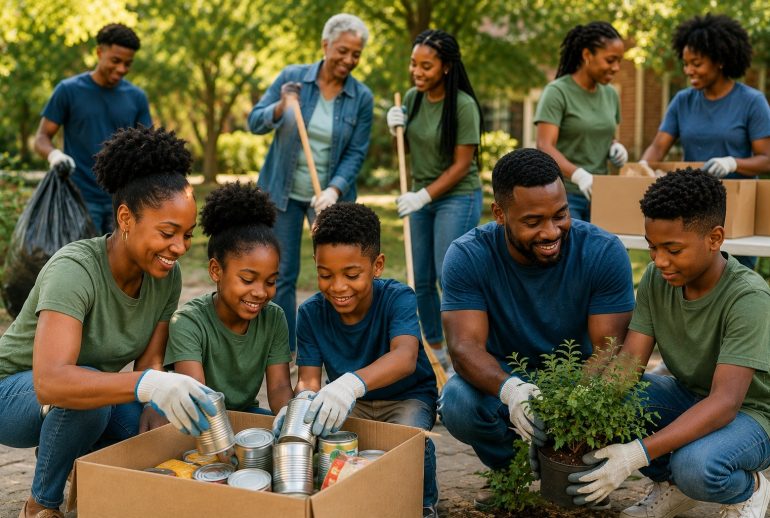
Family volunteering is one of the most meaningful ways to teach children what community really means. When families serve together, children learn that helping others is not only something adults talk about. It is something the family practices. Whether the service is helping at a food drive, visiting elders, cleaning a neighborhood space, supporting a school event, volunteering at church, mentoring younger children, or helping a local nonprofit, volunteering teaches values through action.
Across the Black community, service has always been connected to family, faith, survival, dignity, and collective care. Many families know what it means to help a neighbor, share a meal, watch someone’s child, give someone a ride, support a funeral, celebrate a graduation, or show up when someone is in need. These acts of care have helped communities endure difficult seasons and celebrate joyful ones. Family volunteering continues that tradition.
Volunteering as a family does not require a large budget or perfect schedule. A family can serve once a month, once a season, or whenever there is a real need. Children can help in age-appropriate ways. Teens can take on more responsibility. Elders can share wisdom. Parents and caregivers can model compassion, humility, and follow-through. What matters is the lesson: our family is part of something larger than ourselves.
When volunteering becomes part of family life, children grow up seeing service as normal. They learn that community is not only a place where they receive help. It is also a place where they can contribute. This mindset helps build stronger homes, stronger youth, and a stronger village.
1. Volunteering Teaches Children Compassion.
Children learn compassion when they see the needs of others and are invited to respond with care. Volunteering helps them understand that people around them may be hungry, lonely, overwhelmed, grieving, aging, struggling in school, or needing support. These lessons help children look beyond their own wants and notice the human needs around them.
A child who helps pack food boxes may begin to understand food insecurity. A teen who visits elders may begin to understand loneliness. A family that cleans a park may begin to understand shared responsibility. These experiences build empathy in a way that lectures often cannot.
Compassion should be taught with respect. Families should remind children that volunteering is not about looking down on anyone. It is about standing with people, honoring their dignity, and helping where help is needed. The goal is not pity. The goal is care.
When children practice compassion early, they are more likely to become adults who notice needs, treat people kindly, and respond with responsibility.
2. Serving Together Strengthens Family Bonds.
Volunteering can bring families closer because it gives them a shared purpose. Instead of only spending time around screens, errands, chores, or daily stress, families can work side by side to do something meaningful. Shared service can create memories and conversations that last.
A parent and child may talk while sorting donations. Siblings may laugh while setting up chairs for an event. A teen may feel proud when the family completes a project together. An elder may share a story while helping prepare meals. These moments build connection.
Family volunteering also helps children see different sides of their relatives. They may see a parent being patient with others, a grandparent offering wisdom, or an older sibling leading a task. This can deepen respect inside the family.
The family does not need to volunteer for hours at a time. Even a short act of service can strengthen connection when everyone participates with the right heart.
3. Volunteering Helps Youth Build Responsibility.
Young people need opportunities to practice responsibility in real settings. Volunteering gives them tasks that matter. People may be counting on them to arrive on time, follow instructions, carry supplies, greet guests, organize items, clean up, or help younger children. These responsibilities teach youth that their effort affects others.
Responsibility grows when adults trust young people with meaningful work. A teen can help manage a sign-in table, lead a group of younger volunteers, prepare materials, or help with social media for a community event. A younger child can hand out items, sort supplies, or help clean a space.
These tasks help youth understand follow-through. If they commit to serving, they should show up. If they start a task, they should finish it. If they represent the family, they should do so with respect.
Volunteering gives youth practice in habits they will need for school, work, leadership, and adulthood.
4. Family Service Helps Children Understand Gratitude.
Volunteering can help children grow in gratitude. When they see how many people need support and how much effort goes into helping others, they may better appreciate what their family has and what others do for them. Gratitude becomes more than saying thank you. It becomes awareness.
A child who helps distribute school supplies may understand the value of having what they need for class. A teen who volunteers at a meal program may better appreciate food at home. A family that helps another household may remember the times others helped them.
Gratitude should not be taught through guilt. Children should not be made to feel ashamed for having blessings. Instead, families can teach that blessings come with responsibility. When we have the ability to help, we should consider how to use that ability wisely.
Gratitude grows stronger when it leads to generosity. Volunteering helps children make that connection.
5. Volunteering Builds Respect For Elders.
Elders have given much to families and communities, and family volunteering can help children learn to honor them. Visiting elders, helping with errands, assisting at senior events, reading together, helping with technology, or listening to stories can all become meaningful forms of service.
When children serve elders, they learn patience and respect. They begin to understand that older adults have wisdom, memories, and needs that should not be ignored. They also learn that community care includes every generation.
Elders benefit from being included and supported. Some may feel lonely or disconnected. A visit, meal, phone call, or helping hand can make them feel seen. These acts remind elders that they still matter to the village.
Families can make elder support a regular part of service. Even one visit or phone call can teach children that honoring elders is not only a phrase. It is a practice.
6. Volunteering Introduces Children To Community Needs.
Children may not always understand the needs around them until they see them directly. Volunteering can introduce youth to issues such as hunger, literacy, elder isolation, neighborhood cleanup, school support, disability inclusion, youth mentorship, and family wellness. This awareness can help children become more thoughtful and engaged.
Parents can explain community needs in age-appropriate ways. A young child does not need heavy details, but they can understand that some families need extra help. Teens can have deeper conversations about why needs exist and how communities can respond.
These conversations can build critical thinking. Youth may begin asking why some neighborhoods lack resources, why some families need food support, or why elders feel isolated. Adults can guide these questions with honesty and hope.
Awareness is the beginning of responsibility. When young people understand community needs, they are more prepared to become part of solutions.
7. Service Projects Can Teach Teamwork.
Volunteering often requires teamwork. Families may serve alongside neighbors, teachers, church members, nonprofit workers, local business owners, students, or community leaders. Everyone has a role, and the work succeeds when people cooperate.
Children learn that teamwork means listening, sharing tasks, helping without being asked, and respecting leadership. They also learn that not every job is exciting, but every job matters. Setting up tables, carrying boxes, sweeping floors, or organizing supplies may not feel glamorous, but these tasks help the whole project succeed.
Teamwork teaches humility. A child may learn that being helpful is more important than being noticed. A teen may learn that leadership includes serving beside others, not just giving directions.
These lessons are valuable for school, sports, work, family life, and future community leadership.
8. Families Can Choose Service That Matches Their Values.
Every family has different interests, schedules, skills, and values. Some families may enjoy food service. Others may care about education, elder support, youth mentorship, environmental cleanup, health events, cultural programs, church service, or small business support. Volunteering works best when families choose opportunities that feel meaningful and realistic.
A family that loves reading may volunteer at a book drive or library event. A family that enjoys cooking may prepare meals for others. A family with teens may help with youth programs. A family with elders may support senior outreach. Matching service to family values makes the work more natural.
Children can be included in choosing service projects. Parents can ask, “What kind of helping do you care about?” or “Who do you think we should support this month?” This gives young people ownership and helps them think about their own values.
When service connects to family values, it becomes more than an event. It becomes part of family identity.
9. Local Organizations Need Family Support.
Many community organizations depend on volunteers. Schools, churches, nonprofits, food pantries, libraries, youth programs, cultural groups, senior centers, and neighborhood associations often need help with events, outreach, setup, cleanup, tutoring, mentoring, donations, and administration. Families can make a real difference by showing up.
Volunteering also helps families learn about local resources. A parent may discover a tutoring program, food support, youth activity, health workshop, or family service while helping at an event. Service creates connection in both directions.
Community organizations can make volunteering easier by offering family-friendly opportunities, clear instructions, safe environments, and flexible time commitments. When families feel welcomed, they are more likely to return.
A strong village needs both organizations and families. When they work together, community support becomes more effective.
10. Volunteering Can Help Teens Build Future Skills.
Teenagers can gain valuable experience through volunteering. They can learn communication, leadership, time management, problem-solving, teamwork, and professionalism. These skills can help with school applications, scholarships, jobs, internships, and future careers.
A teen who volunteers regularly may also discover career interests. Helping at a health fair may spark interest in healthcare. Tutoring younger children may reveal a gift for teaching. Supporting an event may introduce event planning or nonprofit work. Helping a local business with a community project may inspire entrepreneurship.
Volunteering can also give teens positive references and real examples of responsibility. A mentor or program leader may later write a recommendation or connect the teen to other opportunities.
Families should help teens see volunteering as both service and growth. It is a way to give back while also preparing for the future.
11. Volunteering Builds Community Pride.
When families help improve their community, they often feel more connected to it. Cleaning a park, supporting a school event, helping at a cultural festival, mentoring youth, or serving meals can create pride. People feel proud when they know they contributed to something good.
Community pride matters because it helps reduce disconnection. Families are more likely to care about spaces they have helped build, clean, or support. Children are more likely to respect a community space when they understand the effort behind it.
Volunteering also shows children that the community is not only shaped by officials, organizations, or outside help. It is shaped by everyday people who care enough to show up. This is an empowering lesson.
A community becomes stronger when families feel ownership, responsibility, and pride in the place they call home.
12. Family Volunteering Builds A Stronger Village.
Family volunteering helps rebuild the village because it connects generations, teaches values, and supports real needs. Children learn compassion. Teens learn responsibility. Adults model service. Elders feel honored. Organizations receive support. Neighbors become more connected.
A strong village does not happen by accident. It is built through repeated acts of care. One meal delivered, one child mentored, one park cleaned, one elder visited, one event supported, and one family showing up can all become part of a larger pattern of community strength.
Family volunteering also reminds young people that they belong to a community with history and responsibility. They are not only individuals moving through life alone. They are part of families, neighborhoods, schools, faith spaces, and cultural traditions that need their gifts.
When families serve together, they help build the kind of community children can one day lead.
Conclusion.
Family volunteering builds stronger community values across the Black community because it teaches compassion, responsibility, gratitude, teamwork, elder respect, and shared purpose. When families serve together, children see values in action. They learn that helping others is part of building a strong village.
Families do not need a perfect schedule or large project to begin. They can start small by helping a neighbor, supporting a school event, visiting an elder, joining a cleanup, volunteering at church, or helping a local organization. Small acts of service can become powerful family habits.
When families volunteer, they strengthen more than the people they serve. They strengthen themselves. They build memories, teach life lessons, and help children understand that community care is something everyone can practice.
Akukulu Family encourages parents, caregivers, elders, mentors, educators, and community members to choose one family service activity this month. Help an elder, volunteer at a school event, support a food drive, join a neighborhood cleanup, or serve with a local organization. One shared act of service can help build stronger values and a stronger village.
