

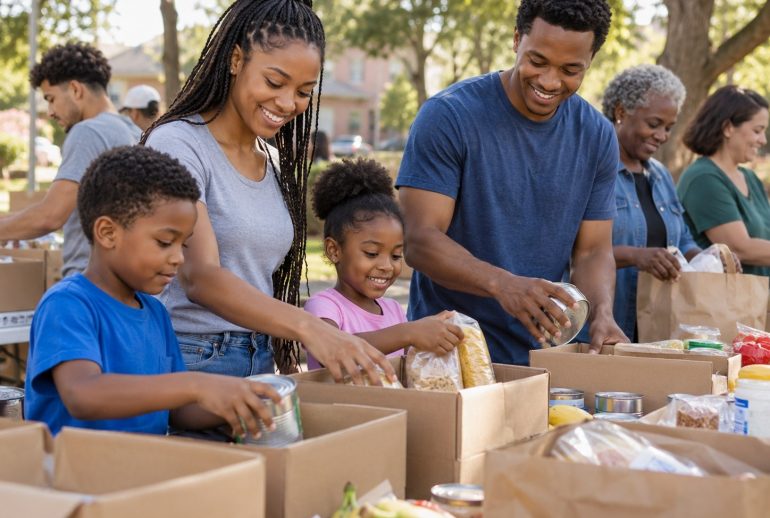
Family volunteering can turn an ordinary weekend into something meaningful. A parent and child might help pack food boxes, clean a neighborhood park, visit an elder, assist at a community event, organize donated clothing, help at church, or support a local school. These activities may seem small, but they teach children that strong communities are built when people are willing to show up for one another.
Across the Black community, service has long been part of family and community life. Churches, neighborhood groups, civic organizations, schools, sororities and fraternities, local businesses, extended families, and community leaders have often worked together to meet needs that could not be solved by one person alone. Food was shared. Rides were offered. Children were watched. Elders were checked on. Young people were encouraged. Families helped families.
Volunteering gives children and teens a chance to experience that tradition firsthand. Instead of only hearing adults talk about responsibility, compassion, and community, young people can practice those values. They learn that they have something to contribute even before adulthood.
Family volunteering does not have to be complicated. A household does not need to commit every weekend or join a large organization immediately. One service project each month, one neighborhood cleanup, one meal prepared for someone who needs help, or one afternoon supporting a community event can make a difference. The goal is consistency, connection, and teaching children that service is part of belonging to a community.
1. Volunteering Teaches Children That They Can Make A Difference
Children sometimes believe that only adults can solve problems. Volunteering shows them that their actions matter too.
A young child can sort canned goods, carry light supplies, make encouragement cards, or help collect litter with supervision. An older child can help organize materials, serve food, read to younger children, or assist at an event. Teens may volunteer more independently, mentor younger students, help with technology, support local organizations, or take leadership roles.
These experiences show youth that contribution is not limited by age.
When children see the result of their work, they gain confidence. A park looks cleaner. Food boxes are ready for families. An elder smiles because someone visited. A younger child understands homework better because a teen helped.
Service turns kindness into something visible.
2. Family Service Builds Stronger Bonds
Volunteering together gives families a shared purpose outside the home.
Parents and children may work side by side, solve problems, meet new people, and talk about what they experienced afterward. These moments can create a different kind of connection from ordinary family routines.
A teenager who is usually quiet at home may become more talkative while working on a project. A child may see a parent demonstrating patience and generosity. Parents may discover strengths in their children they had not noticed before.
Family service also creates shared memories.
Years later, children may remember the winter clothing drive, neighborhood cleanup, church outreach, or community meal where everyone worked together.
Those memories reinforce the idea that the family does not only care about itself. It also cares about others.
3. Volunteering Helps Youth Build Confidence
Confidence often grows when young people realize they are useful.
A teen who helps organize an event may discover leadership ability. A child who reads to younger students may realize they are patient and encouraging. A young person helping at a food distribution site may learn how well they communicate with adults.
These experiences provide real evidence of ability.
Instead of only hearing, “You are capable,” youth experience situations where they solve problems, complete tasks, and receive appreciation.
This matters because many young people struggle with self-doubt.
Volunteer work gives them a place to practice skills without the pressure of grades or competition.
Over time, those experiences can help young people feel more prepared for school, work, interviews, and leadership opportunities.
4. Service Helps Children Understand Gratitude
Children can easily become focused on what they do not have.
They may compare clothes, devices, vacations, homes, or possessions with classmates and people they see online.
Volunteering can widen their perspective.
Helping others does not mean telling children they should feel guilty because someone else has less. That kind of message can create shame instead of compassion.
A healthier approach is, “We have something we can share, and everyone needs help sometimes.”
This teaches gratitude without superiority.
Children begin to see food, time, family support, transportation, skills, and opportunities as things worth appreciating.
They also learn that circumstances can change and that receiving help is not something to be ashamed of.
5. Community Cleanups Teach Shared Responsibility
Neighborhood cleanups are simple family volunteer activities that can create immediate results.
Families can pick up litter, plant flowers, clear shared spaces, or help maintain a park or playground through an organized community effort.
Children learn that public spaces belong to everyone.
Instead of thinking, “Someone else should clean this,” they begin to understand that communities improve when residents participate.
Parents can use the activity to discuss respect for neighborhoods and shared property.
Why does litter matter? Why should parks be cared for? What makes a neighborhood feel welcoming?
Community service helps children see that civic responsibility begins close to home.
6. Volunteering Can Connect Youth With Elders
Elders may benefit from practical help, companionship, and connection with younger generations.
Families can volunteer through senior centers, faith communities, neighborhood programs, or personal relationships. Children might deliver meals, help with simple yard work, read aloud, assist with technology, or spend time talking with an elder.
These interactions benefit both generations.
Young people hear stories and wisdom they might not encounter elsewhere. Elders receive companionship and the reassurance that younger generations still value them.
Teens may also discover patience, empathy, and listening skills.
Intergenerational service strengthens the village because it reminds young people that community includes people of every age.
7. Food Service Can Teach Compassion And Practical Skills
Food drives, community meals, pantry work, and meal preparation can be meaningful volunteer opportunities.
Children can sort donations, pack bags, organize supplies, help prepare food, or assist with cleanup.
These activities teach practical lessons about hunger, planning, teamwork, and generosity.
Parents can explain that families experience hardship for many reasons. Job loss, illness, housing costs, emergencies, or unexpected expenses can all make food assistance necessary.
This helps children avoid judgment.
It also teaches them that supporting neighbors during difficult seasons is part of community care.
Food service connects compassion with action.
8. Faith Communities Can Create Service Opportunities
For many families, churches and faith organizations are natural places to begin volunteering.
A congregation may organize food distribution, clothing drives, tutoring, youth programs, elder care, neighborhood outreach, disaster assistance, or holiday support.
Children and teens can participate in age-appropriate ways.
Families can also talk about the values behind the service. Why do we help? What does compassion look like? Why should we serve people without expecting praise?
Connecting service with values helps children understand that volunteering is more than completing hours.
It becomes part of character.
9. Teen Volunteering Can Support Career Exploration
Volunteer experiences can introduce teens to careers.
A young person helping at a hospital program may become interested in healthcare. A student working with children may consider education. Someone volunteering at an animal shelter may explore veterinary work. A teen helping with community events may discover interests in marketing, nonprofit leadership, hospitality, or event planning.
Volunteering gives youth exposure without requiring them to commit to a career.
They can observe workplaces, meet adults, ask questions, and learn what certain roles actually involve.
These experiences may also strengthen future resumes, scholarship applications, or college applications.
But the deeper value is discovery.
Young people begin to understand what kinds of work energize them.
10. Service Helps Teens Build Professional Skills
Volunteering teaches skills employers value.
Young people learn to arrive on time, follow instructions, communicate with adults, work with a team, complete tasks, solve problems, and behave responsibly.
These habits may be new for teens who have never had a job.
A volunteer role provides a lower-pressure environment where they can practice.
Parents can help teens reflect afterward.
Did you arrive on time? What did your supervisor ask you to do? What was difficult? What would you do differently next time?
Reflection turns volunteering into practical preparation for work.
11. Local Businesses Can Participate In Community Service
Small businesses are often deeply connected to neighborhoods.
Barbershops, salons, restaurants, boutiques, contractors, grocery stores, and professional offices may sponsor school supplies, youth programs, sports teams, food drives, or community events.
Families can support these efforts by volunteering alongside local businesses.
Children see entrepreneurship connected to responsibility.
They learn that a business can contribute more than products or services. It can become part of the community support system.
Business owners may also become mentors.
A young person helping at a community event may meet someone who later introduces them to a job, skill, or career path.
12. Volunteering Can Help Youth Build Leadership Skills
Leadership is not only standing on a stage.
It can mean taking responsibility, helping others, solving problems, and following through.
Volunteer projects give young people opportunities to practice those skills.
A teen might organize supplies, lead younger volunteers, coordinate a small activity, or help communicate instructions.
Adults should allow youth to take appropriate responsibility instead of doing everything for them.
Mistakes may happen.
That is part of learning.
Leadership grows when young people are trusted with real tasks and supported while they develop.
13. Families Can Choose Service That Matches Their Values
There are many ways to volunteer.
Families do not need to participate in every cause.
They can choose service connected to what matters to them: education, elders, food access, animals, faith, environmental care, youth mentorship, arts, neighborhood improvement, or cultural preservation.
Children can help choose.
A family conversation might begin with, “What problem in our community do you care about?”
That question gives young people ownership.
When volunteering connects to personal values, families are more likely to stay engaged.
14. Service Should Respect The People Being Helped
Healthy volunteering should always protect dignity.
People receiving food, clothing, shelter, or other assistance should not be treated like props for photographs or examples used to make volunteers feel better about themselves.
Parents can teach children that anyone may need support during a difficult season.
Service should be respectful, private when appropriate, and free from humiliation.
Families should follow the guidance of the organization they are supporting and listen to what communities actually need.
Compassion is not about feeling superior.
It is about treating people the way we would want to be treated if circumstances were reversed.
15. Small Acts Of Service Still Matter
Some families may feel they do not have enough time for formal volunteering.
Service can still happen in smaller ways.
A family might check on an elderly neighbor, deliver a meal, donate books, help another child with homework, clean up litter during a walk, support a school event, or help a relative who is overwhelmed.
These actions still teach children the habit of noticing needs.
Not every act has to involve an organization or official volunteer title.
Community care often happens quietly.
The important question is whether families are helping young people learn to look beyond themselves.
16. Volunteering Can Become A Family Tradition
Service can become part of family identity.
A household might volunteer every Thanksgiving, participate in a yearly school supply drive, clean a neighborhood each spring, or help with a community event every summer.
Repeated service creates tradition.
Children begin to expect that part of family life includes giving time to others.
As they grow older, they may continue the tradition independently.
What begins as a parent-led activity can become a lifelong value.
Conclusion
Family volunteering can strengthen communities across the Black community by helping children develop compassion, confidence, responsibility, leadership, and a stronger sense of belonging.
Service also strengthens families themselves. Parents and children work together, meet neighbors, support elders, and discover needs and strengths within their community.
Families do not need to begin with a major commitment. One food drive, neighborhood cleanup, school event, elder visit, mentoring opportunity, or community project can be enough to start.
The most important lesson is simple: everyone has something to contribute.
When children grow up seeing service as a normal part of family life, they learn that a strong community is not something other people create for them.
It is something they help build.
Akukulu Family encourages parents, caregivers, youth, elders, educators, business owners, and community members to choose one act of service this month. Volunteer at a local event, help an elder, donate books, support a food drive, clean a shared space, or mentor a young person. One family giving a few hours can become part of a much stronger village.
