

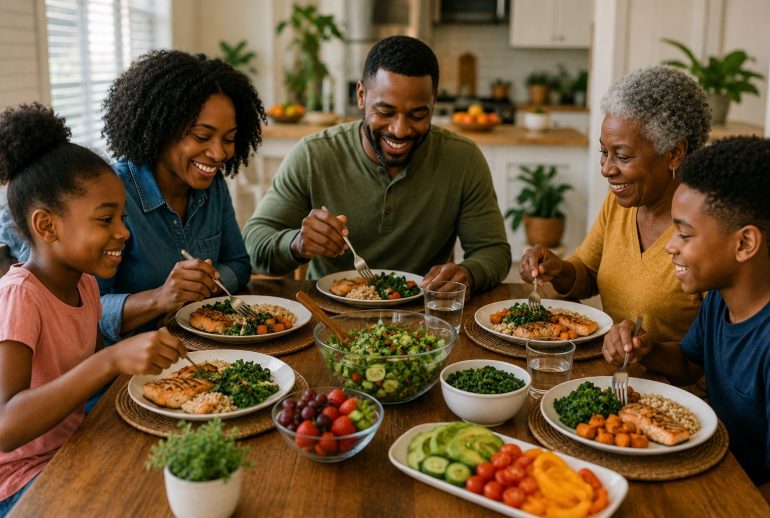
Healthy family meals can do more than fill a plate. They can support the body, strengthen relationships, teach children life skills, preserve culture, and create a calmer rhythm inside the home. In many households, meals are one of the few times when family members can slow down, sit near one another, talk about the day, and feel connected. Even when life is busy, a shared meal can become a small act of care that supports both physical and emotional wellness.
Across the Black community, food carries deep meaning. It is connected to family history, celebration, faith, comfort, culture, survival, migration, creativity, and love. Meals often remind people of grandparents, Sunday dinners, church gatherings, holidays, cookouts, family reunions, Caribbean flavors, African dishes, Southern traditions, and recipes that have traveled across generations. Because food is so personal, conversations about healthy eating should be handled with respect. The goal is not to shame cultural foods or make families feel guilty. The goal is to find balance that honors tradition while supporting long-term health.
Many families want to eat healthier but feel overwhelmed by time, cost, picky eaters, work schedules, school activities, and the pressure of daily responsibilities. Healthy eating can sound expensive or complicated when people imagine perfect meals, strict diets, or ingredients that do not fit their household. But healthier family meals do not have to be perfect. They can begin with simple changes, such as adding more vegetables, drinking more water, cooking at home more often, reducing sugary drinks, choosing smaller portions, or preparing one balanced meal a few times a week.
When families approach meals with patience and purpose, food can become a tool for wellness instead of stress. A healthier meal routine can help children build better habits, help adults manage energy, help elders feel included, and help the household stay more connected. One meal will not solve every health concern, but repeated small choices can help build a stronger foundation for the future.
1. Healthy Meals Begin With Balance, Not Perfection.
Many people give up on healthy eating because they think it requires perfection. They imagine that every meal must be fresh, organic, expensive, low-calorie, and completely different from the foods they grew up enjoying. That kind of pressure can make families feel defeated before they even begin. A more realistic approach is to focus on balance.
A balanced meal usually includes a mix of foods that help the body feel satisfied and supported. This may include vegetables, fruit, protein, grains, beans, water, and healthy portions of favorite foods. A family meal does not have to be fancy to be nourishing. A simple plate with baked chicken, greens, rice, beans, and water can support the body. A bowl of vegetable soup, a turkey sandwich with fruit, or leftovers with an added salad can also be part of a healthier routine.
Balance also means leaving room for cultural foods and family favorites. Families do not need to remove every traditional dish from the table. Instead, they can think about how often certain foods are eaten, how they are prepared, and what else is served with them. A favorite meal can be enjoyed with smaller portions, more vegetables, less salt, or a lighter cooking method.
Children learn better from balance than from fear. When food is always discussed as “good” or “bad,” children may develop guilt or confusion around eating. When food is discussed as fuel, culture, care, and balance, they can build a healthier relationship with meals.
2. Family Meals Create Space For Connection.
A shared meal can become one of the most important connection points in a busy household. Families may not always have long conversations during the day because everyone is moving in different directions. Parents may be working, children may be at school, teens may be involved in activities, and elders may have their own routines. Sitting down together, even a few times a week, gives people a chance to reconnect.
The meal does not need to be perfect or formal. It can be breakfast before school, dinner after work, Sunday lunch, a weekend cooking day, or a simple evening meal at the kitchen table. What matters is the intention to be present. When family members eat together without rushing, they can ask about the day, notice changes in mood, share stories, and laugh together.
Mealtime can also help children feel emotionally secure. A predictable meal routine gives children something to count on. It tells them that the family will pause and gather. During these moments, children may share things they would not bring up during a serious conversation. A child may talk about school, friendships, worries, or something exciting that happened.
For adults, shared meals can also reduce emotional distance. A family that eats together regularly may find it easier to talk about decisions, support one another, and notice when someone needs help. Food becomes part of relationship-building, not just nutrition.
3. Cultural Foods Can Be Part Of A Healthy Lifestyle.
Healthy eating should not require families to reject culture. Many traditional foods across the African Diaspora include nourishing ingredients such as greens, beans, rice, fish, okra, sweet potatoes, peppers, plantains, lentils, stews, soups, herbs, spices, and fresh vegetables. These foods can be part of a healthy lifestyle when prepared with balance and care.
Sometimes the concern is not the food itself, but the amount of salt, sugar, fat, frying, or portion size used in preparation. Families can make small adjustments without losing flavor. They may bake instead of fry sometimes, use smoked turkey instead of higher-fat meats in greens, reduce salt by adding herbs and spices, include more vegetables in stews, or balance heavier dishes with fresh sides.
These changes should be discussed respectfully, especially when elders are involved. A recipe may carry emotional meaning, and people may feel hurt if traditional food is criticized too harshly. Families can frame changes as care rather than rejection. They can say, “We want to keep the flavor and also support our health,” or “Let’s try a version that works better for everyday meals.”
Culture and wellness can work together. A healthy family table can include tradition, creativity, and care for the body. Children should learn that their food heritage is valuable and that caring for health is one way to protect that heritage for the next generation.
4. Children Learn Eating Habits At Home.
Children learn a great deal by watching how adults eat, cook, shop, and talk about food. If children see adults drinking water, eating vegetables, trying new foods, cooking at home, and enjoying balanced meals, they are more likely to see those habits as normal. If they hear constant negative comments about bodies, dieting, or shame, they may develop stress around food.
Parents and caregivers can teach healthy eating in a positive way. Instead of saying, “You need to eat this because you are gaining weight,” they can say, “This food helps your body grow strong,” or “Vegetables help your body get important nutrients,” or “Water helps your brain and body work better.” This kind of language teaches care without shame.
Children also benefit from being included in meal preparation. A young child can wash fruit, stir a bowl, or set the table. Older children can help plan meals, read recipes, chop ingredients with supervision, or pack lunches. When children help prepare food, they often become more willing to taste it.
Healthy habits grow slowly. A child may not like a new vegetable the first time. That does not mean the effort failed. Families can keep offering foods in different ways without pressure. Over time, children may become more open to balanced meals when they feel included and encouraged.
5. Meal Planning Can Reduce Stress During Busy Weeks.
Many families want to cook more at home, but the week becomes busy quickly. Work schedules, school pickup, homework, appointments, sports, church activities, errands, and caregiving can make dinner feel stressful. When there is no plan, families may rely more often on fast food, snacks, or whatever is easiest in the moment.
Meal planning can help reduce that stress. It does not have to be complicated. Families can choose a few meals for the week, prepare some ingredients ahead of time, cook extra portions for leftovers, or keep simple backup meals available. Even planning three home-cooked meals a week can make a difference.
A practical meal plan might include one large pot of soup, a tray of baked chicken, cooked rice, washed greens, chopped vegetables, boiled eggs, fruit, or a simple breakfast option ready for busy mornings. The goal is to make healthy choices easier when everyone is tired.
Families can also involve children and teens in planning. Each person might choose one meal idea or help make the grocery list. This gives young people a sense of ownership and helps them understand that meals require thought, time, and teamwork. Meal planning teaches organization while supporting health.
6. Healthy Meals Can Support School Focus And Energy.
Food can affect how children feel during the school day. A child who skips breakfast, eats mostly sugary snacks, or does not drink enough water may have trouble focusing, staying calm, or keeping energy steady. While food is not the only factor in school performance, it can play an important role in helping children feel ready to learn.
A simple breakfast can make a difference. It might be oatmeal, eggs, fruit, yogurt, whole-grain toast, leftovers, or another option that fits the family’s culture and budget. The meal does not need to be perfect. It simply needs to give the child enough energy to begin the day.
Lunch and after-school snacks also matter. Children and teens often come home hungry and may reach for whatever is easiest. Families can keep healthier options available when possible, such as fruit, nuts if safe for the household, cheese, yogurt, whole-grain crackers, boiled eggs, vegetables with dip, or leftovers. These options can help reduce reliance on sugary drinks and highly processed snacks.
Parents and caregivers can talk with children about how food affects energy. They can ask, “How did you feel after eating that?” or “What foods help you feel full longer?” These conversations help children connect food choices to how their bodies feel.
7. Cooking Together Builds Life Skills.
Cooking is one of the most useful life skills a young person can learn. A child who grows up knowing how to prepare simple meals is better prepared for adulthood. They can feed themselves, save money, support their health, and care for others. Cooking also teaches patience, responsibility, math, reading, safety, planning, and confidence.
Families can treat cooking as a shared learning experience. Children can learn how to measure ingredients, follow steps, season food, use kitchen tools safely, clean up, and understand timing. Teens can learn how to cook a few complete meals before leaving home. These skills can help them avoid depending only on fast food or expensive takeout later.
Cooking together also creates emotional connection. A parent and child may talk more easily while chopping vegetables or stirring a pot. An elder may share stories while teaching a recipe. Siblings may laugh while preparing a dessert. These moments turn food preparation into family bonding.
Mistakes should be expected. A child may spill something, over-season food, or take longer than an adult would. Patience matters. The goal is not only a perfect meal. The goal is teaching confidence and connection through practice.
8. Healthy Meals Can Include Elders With Care.
Elders often have special food needs connected to health, medication, dental concerns, appetite changes, blood pressure, diabetes, heart health, or digestion. At the same time, elders may have strong connections to traditional meals and family recipes. Supporting elder nutrition requires both respect and awareness.
Families can include elders in meal planning by asking what foods they enjoy, what foods they need to limit, and what textures or portions work best for them. If an elder has medical advice from a provider, the family can help prepare meals that support those needs while still offering flavor and dignity. No elder should feel punished by food changes.
Meals are also important for elder connection. Eating with family can reduce loneliness and help elders feel included. A shared meal gives them a chance to talk, share stories, bless the food, teach recipes, and enjoy the company of younger generations. This emotional nourishment matters too.
Families can also check whether elders have enough food at home. Some may need help with groceries, cooking, transportation, or understanding nutrition labels. Supporting elder meals is one way to honor the people who helped feed and care for others across many years.
9. Budget-Friendly Meals Can Still Be Nourishing.
Healthy eating is often presented as expensive, but many nourishing foods can be budget-friendly when families plan carefully. Beans, rice, lentils, frozen vegetables, canned vegetables with lower sodium when available, oats, eggs, cabbage, sweet potatoes, tuna, chicken, seasonal fruit, and homemade soups can help families prepare filling meals without spending too much.
Budget-friendly cooking often depends on planning and reducing waste. Families can use leftovers in new ways, freeze extra portions, cook larger batches, and choose ingredients that can be used in multiple meals. For example, baked chicken can become dinner one night, salad topping the next day, and soup later in the week. Beans can be served with rice, added to soups, or used in wraps.
Families can also compare prices, use store brands, shop sales, visit local markets, or share bulk purchases with relatives when practical. These strategies may not solve every food cost challenge, but they can help stretch the budget.
It is important not to shame families who rely on convenience foods during difficult seasons. Many households are doing the best they can with limited time and resources. The goal is to offer practical ideas, not judgment. Every small improvement counts.
10. Family Meals Can Support Emotional Wellness.
A meal can create emotional safety when families use the time with care. Sitting together gives people a chance to check in, listen, and feel connected. This can be especially important for children and teens who may be carrying stress from school, friendships, social media, or personal worries.
The table should not always be a place of criticism. If every meal becomes a time for arguments, lectures, or pressure, family members may begin to avoid it. Instead, families can use mealtime to ask gentle questions, share something good from the day, tell stories, or talk about plans. Hard conversations may still happen, but the overall feeling should include warmth.
A simple mealtime question can open connection. What was one good thing about today? What was one hard thing? Who made you laugh? What are you looking forward to? These questions help family members hear one another.
Food cannot fix every emotional issue, but shared meals can create a rhythm of care. They remind people that the family is still connected, even during busy or stressful seasons.
11. Reducing Sugary Drinks Can Be A Strong First Step.
One practical health step many families can take is reducing sugary drinks. Soda, sweet tea, fruit drinks, energy drinks, and some flavored beverages can add a lot of sugar without making people feel full. For families trying to improve health, adding more water can be a simple and meaningful change.
This does not mean every sweet drink must disappear overnight. Families can begin by drinking water with more meals, keeping cold water available, adding fruit slices for flavor, or limiting sugary drinks to certain occasions. Children may resist at first if they are used to sweet drinks often, but consistency helps.
Parents and caregivers can explain why water matters. Water helps the body stay hydrated, supports energy, helps digestion, and supports the brain. Children may understand better when the message is connected to how their body feels, rather than framed as punishment.
Small drink changes can support larger health goals. A family that begins drinking more water may find it easier to make other healthy changes later. One habit can lead to another.
12. Healthy Family Meals Build A Stronger Future.
Healthy meals are not only about today’s dinner. They are about the habits and memories families pass forward. Children who learn to cook, eat balanced meals, appreciate cultural foods, drink water, try vegetables, and gather around the table may carry those habits into adulthood. They may one day teach their own children the same lessons.
This is part of legacy. Legacy is not only money or property. It is also knowledge, routines, recipes, values, and care. A child who learns that food can be both cultural and nourishing receives a powerful inheritance. They learn how to honor the past while caring for the future.
Families across the community can strengthen wellness by making meals a shared priority. This does not mean every household will eat together every night or cook everything from scratch. Real life is busy. But every intentional meal, every cooking lesson, every healthier choice, and every family conversation at the table matters.
A stronger future is built through repeated acts of care. Healthy family meals are one of those acts. They feed the body, connect the heart, and teach the next generation how to care for themselves and one another.
Conclusion.
Healthy family meals support wellness across the Black community because they help families build better habits, strengthen relationships, honor culture, teach children life skills, and create routines that support long-term health. Food is deeply connected to memory and identity, so healthy eating should be approached with respect, balance, and compassion.
Families do not need perfect meals to begin. They can start with one home-cooked dinner, one extra vegetable, one glass of water, one meal planned ahead, one recipe made with children, or one healthier version of a family favorite. Small steps can become lasting habits when they are practiced consistently.
When families gather around food with intention, they are doing more than eating. They are teaching care, building connection, preserving culture, and investing in the next generation’s wellness. A healthy table can become one of the strongest places in the home.
Akukulu Family encourages families and community members to prepare one healthy family meal this week. Add a vegetable, drink water together, invite children to help cook, ask an elder about a recipe, or sit down for one meal without rushing. One thoughtful meal can support wellness, connection, and family strength.
