

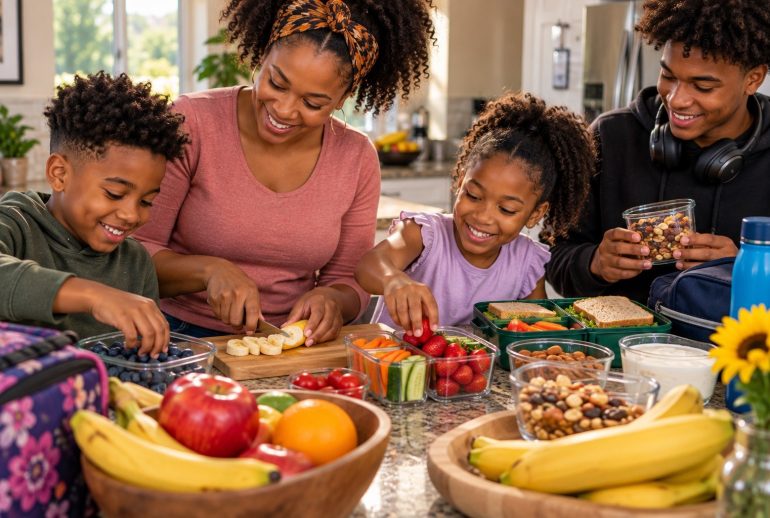
Snacks are a regular part of childhood. Children may want something to eat after school, during homework, before sports, on road trips, at church events, during family outings, or while relaxing at home. Snacks can help children stay energized between meals, but they can also become a source of too much sugar, salt, and processed food if families do not build balanced habits. A healthy snack routine does not mean children can never enjoy treats. It means helping them understand how to choose foods that support their bodies most of the time.
Across the Black community, many families are managing busy schedules. Parents and caregivers may be working, driving children to activities, preparing dinner, helping with homework, and trying to stretch grocery budgets. In the middle of all that, snacks are often chosen quickly. Chips, candy, cookies, sweet drinks, and packaged snacks may be easy to grab, especially when time is short. But with a little planning, families can make healthier snacks more available without making life complicated.
Healthy snacks can support focus, mood, digestion, sports performance, and overall wellness. A child who eats a balanced snack after school may have more patience for homework. A teen who grabs fruit, yogurt, nuts, or a sandwich before practice may have steadier energy. A younger child who has water and a simple snack before an outing may be less likely to become cranky from hunger.
The goal is not perfection. Families will still have birthday cake, cookout treats, holiday desserts, movie snacks, and special foods. Those moments can be enjoyed with balance. What matters most is the everyday pattern. When children learn healthy snack habits early, they gain a simple form of self-care that can support them for life.
1. Snacks Can Help Children Stay Energized.
Children use energy all day. They are learning, playing, walking, talking, thinking, and growing. Sometimes meals are several hours apart, and a child may need a snack to stay steady. A good snack can help prevent hunger from turning into irritability, tiredness, or poor focus.
After school is one of the most important snack times. Many children come home hungry, and if they do not eat something helpful, homework and evening routines may become harder. A balanced snack can give them a better start before dinner.
Good snack choices can be simple. Fruit with peanut butter, yogurt, cheese and crackers, boiled eggs, vegetables with dip, trail mix, oatmeal, a small sandwich, or leftovers can all help children feel satisfied. Families can choose options that fit their budget, culture, and household needs.
When children understand that snacks give energy, they begin to see food as fuel, not only something that tastes good.
2. Balanced Snacks Help Children Stay Full Longer.
Some snacks taste good but do not keep children full. Candy, sugary drinks, pastries, and chips may satisfy a craving for a short time, but children may feel hungry again quickly. A balanced snack gives the body more steady support.
A helpful snack often includes protein, fiber, or healthy fats. Protein may come from eggs, yogurt, cheese, beans, nut butter, turkey, tuna, or other family favorites. Fiber can come from fruit, vegetables, oats, whole-grain crackers, popcorn, or whole-grain bread. These foods help children feel full longer.
Families can teach children to pair foods. Fruit with yogurt. Crackers with cheese. Vegetables with hummus. Toast with nut butter. A boiled egg with fruit. Pairing foods can make snacks more satisfying.
Balanced snacking helps children avoid constantly grazing without feeling full. It supports energy and reduces the need to reach for sweets again and again.
3. Snack Planning Can Make Busy Days Easier.
Planning snacks ahead can reduce stress. When children are hungry, they often want food immediately. If healthier options are not ready, families may rely on whatever is easiest. Preparing snacks in advance can help children make better choices without a long wait.
Parents and caregivers can wash fruit, cut vegetables, portion crackers, boil eggs, prepare yogurt cups, make simple snack boxes, or keep easy items in a visible place. Older children and teens can help prepare snacks for the week.
A snack shelf or basket can also help. Families might keep approved snacks in one area so children know what they can choose. This gives children some independence while still guiding their options.
Planning does not have to be fancy. Even having bananas, apples, water, yogurt, and whole-grain crackers available can make a difference during a busy week.
4. Sugary Snacks Should Be Balanced With Better Choices.
Children naturally enjoy sweet foods. Candy, cookies, cakes, sweet cereals, fruit snacks, pastries, and sugary drinks can be tempting. These foods do not need to be treated as forbidden forever, but they should not become the main everyday snack.
Too much sugar can affect energy, mood, teeth, and hunger patterns. A child may feel a quick burst of energy and then become tired or irritable later. Families can help children understand that sweet snacks are occasional treats, while everyday snacks should help the body feel strong.
Instead of removing everything at once, families can make gradual changes. Serve fruit more often. Offer water instead of sweet drinks. Choose smaller portions of treats. Pair something sweet with a more filling food. Save candy and desserts for special moments.
Balance helps children build a healthy relationship with food. They learn that treats can be enjoyed, but they do not need to control the whole snack routine.
5. School Snacks Need Practical Choices.
School snacks should be easy to pack, easy to eat, and able to last until snack time. Families may need to follow school rules about allergies, packaging, or classroom cleanliness. Practical planning helps children have something ready when hunger comes.
Good school snack options may include fruit, whole-grain crackers, cheese sticks, yogurt if kept cold, applesauce, boiled eggs, popcorn, granola bars with lower sugar, trail mix when allowed, or simple sandwiches. Families can choose what works best for the child and school setting.
Children should also have water when possible. A reusable bottle can help them stay hydrated during the school day. Snacks and water work together to support focus and comfort.
A packed snack can prevent children from depending only on vending machines, candy, or whatever a friend shares. It gives families more control over daily nutrition.
6. Teens Need Better Snack Guidance Too.
Teenagers often make more snack choices on their own. They may buy food after school, stop at convenience stores, eat during sports practice, snack while studying, or grab food late at night. They may choose chips, soda, energy drinks, candy, fast food, or coffee drinks because those choices are convenient and socially common.
Teens still need guidance, but they also need respect. Instead of only criticizing, parents can talk with them about energy, skin, mood, sports performance, sleep, money, and focus. These are real-life concerns teens may understand more easily.
Families can help teens find snack options they actually like. Smoothies, wraps, fruit, nuts, yogurt, boiled eggs, leftovers, sandwiches, granola, or homemade snack boxes may work better than unrealistic rules. A teen is more likely to follow a plan they helped create.
Snack habits in the teen years can follow young people into adulthood. Helping teens make better choices now can support their future wellness.
7. Snacks Can Support Sports And Activities.
Children and teens involved in sports, dance, marching band, outdoor play, or active programs need steady energy. A good snack before or after activity can help the body prepare and recover. Without enough food and water, young people may feel tired, weak, or distracted.
Before activity, a child may need something light and energizing, such as fruit, yogurt, toast, crackers, or a small sandwich. After activity, they may need a snack with protein and fluids to help the body recover. Water should be part of the routine.
Families should also be careful with sports drinks and sugary beverages. They may be useful in some long or intense activities, but they should not replace water every day. Many children simply need water and balanced food.
Coaches, parents, and youth leaders can support healthy snacking by encouraging water breaks and practical snack choices during events.
8. Cultural Foods Can Be Part Of Healthy Snacking.
Healthy snacks do not have to look the same in every home. Cultural foods can be part of a strong snack routine. Across African American, African, Caribbean, Afro-Latin, and Southern traditions, families may enjoy fruit, roasted corn, boiled eggs, plantains, beans, nuts, sweet potatoes, homemade breads, patties, soups, yogurt drinks, or leftovers from family meals.
Families can honor culture while making thoughtful choices. A snack can be filling, flavorful, and connected to heritage. Children should not feel that healthy eating means giving up foods connected to family identity.
Parents can also teach the stories behind snacks and ingredients. A child may learn where plantains are common, how peanuts are used in different cuisines, or why certain fruits are part of family memories. Food becomes both nourishment and culture.
Healthy snacking works best when it respects the family’s real tastes, traditions, and budget.
9. Children Can Help Prepare Snacks.
Children are more likely to enjoy healthy snacks when they help prepare them. A young child can wash fruit, place crackers on a plate, stir yogurt, or choose between two snack options. Older children can cut soft foods with supervision, make simple wraps, prepare snack bags, or help organize the refrigerator.
Helping with snacks teaches responsibility and independence. Children learn how to feed themselves with care. They also become more aware of what goes into their bodies.
Teens can learn to prepare snacks for school, work, practice, or studying. This helps them avoid relying only on fast food or packaged sweets. A teen who can prepare simple snacks is better prepared for adult life.
Snack preparation can be a small daily lesson in health, planning, and self-care.
10. Budget-Friendly Snacks Can Still Be Healthy.
Healthy snacks do not have to be expensive. Many simple options can support children without stretching the budget too far. Bananas, apples, oranges, carrots, popcorn, peanut butter, boiled eggs, oatmeal, yogurt, beans, whole-grain toast, frozen fruit, and leftovers can all be useful.
Planning helps reduce waste. Families can buy foods that can be used in several ways. For example, apples can be eaten alone, paired with peanut butter, or added to oatmeal. Leftover chicken can become a small wrap. Beans can become a filling snack or side.
Buying large packages and portioning at home may cost less than buying small individual snack packs. Families can compare prices and choose what works.
Children can learn money lessons through snack planning. They can see how the family makes choices that support both health and budget.
11. Snack Habits Can Support Dental Health.
Snack choices can affect teeth. Sticky candies, sugary drinks, and frequent sweet snacks can leave sugar on teeth for long periods. This can increase the risk of dental problems over time. Water, fruits, vegetables, cheese, and lower-sugar options can be better everyday choices.
Families can teach children to drink water after snacks, especially after sweet foods. Brushing and flossing still matter, but water can help rinse the mouth during the day.
It is also helpful to avoid constant snacking all day long. When children graze on sugary foods for hours, teeth are exposed to sugar more often. Planned snack times can be healthier than endless nibbling.
Dental health is part of overall wellness. Snack habits can help children care for their smiles.
12. Healthy Snack Habits Build Long-Term Wellness.
Healthy snack habits learned in childhood can last into adulthood. A child who learns to choose water, fruit, protein, and balanced snacks may continue those habits later in life. They may become more aware of how food affects energy, mood, focus, and health.
Families should focus on progress, not perfection. One healthier snack each day is a good start. Replacing one sugary drink with water is progress. Adding fruit after school is progress. Preparing snacks ahead once a week is progress.
Community spaces can support this too. Schools, churches, youth programs, sports teams, and family events can offer healthier snack options alongside treats. When the village supports better choices, families have more help.
Snack habits may seem small, but small habits repeated often can shape a child’s wellness for years.
Conclusion.
Healthy snack habits support children across the Black community by helping them stay energized, focused, satisfied, and ready for school, play, homework, sports, and family life. Snacks do not need to be perfect or expensive. Simple choices like fruit, yogurt, boiled eggs, vegetables, whole-grain crackers, popcorn, nut butter, water, and leftovers can make a real difference.
Families can begin by planning snacks ahead, reducing sugary drinks, pairing foods for balance, involving children in preparation, and choosing options that fit the household’s culture and budget. Treats can still have a place, but water and nourishing snacks should become the everyday pattern.
When children learn healthier snack habits, they gain a practical form of self-care. They learn that food choices can help their bodies feel stronger, calmer, and more prepared for the day.
Akukulu Family encourages parents, caregivers, educators, coaches, mentors, and community members to support one healthy snack habit this week. Pack fruit for school, prepare a simple snack box, offer water instead of a sweet drink, involve a child in snack planning, or help a teen choose better snacks for practice or studying. One small snack habit can help children build stronger wellness.
