

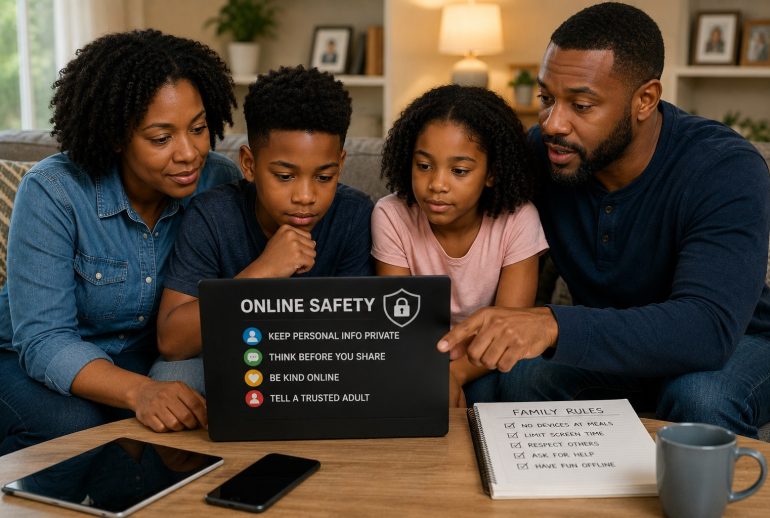
Children are growing up in a world where technology is part of everyday life. Phones, tablets, laptops, gaming systems, school apps, streaming platforms, social media, group chats, and online games are now common parts of childhood and teen life. Technology can help children learn, create, connect, research, and express themselves. But it can also expose them to risks if families do not build strong online safety habits.
Across the Black community, parents and caregivers are often working hard to help children succeed in school, stay connected to family, explore new opportunities, and use technology in positive ways. At the same time, many adults worry about cyberbullying, online strangers, inappropriate content, scams, social media pressure, screen addiction, private messages, and children sharing too much personal information. These concerns are real, and families need practical tools to respond.
Online safety is not about making children afraid of technology. It is about teaching wisdom. Children need to learn that the internet is a public space, even when it feels private. They need to understand that not everyone online is trustworthy, not every app is safe, and not every message deserves a response. They also need to know that parents and caregivers are there to guide them, not only punish them.
Strong online safety habits are built through regular conversations, clear rules, privacy settings, parent involvement, healthy screen routines, and trust. When families talk openly about digital life, children are more likely to ask for help when something feels wrong. A safer digital future begins at home, one habit and one conversation at a time.
1. Children Need To Understand That Online Spaces Are Real Spaces.
Many children think of the internet as something separate from real life. They may believe that what happens online does not matter as much as what happens face-to-face. But online words, images, choices, and relationships can affect emotions, safety, reputation, school life, and future opportunities.
Parents and caregivers can teach children that online spaces are real spaces with real consequences. A message can hurt someone. A photo can spread. A private joke can become public. A stranger can pretend to be someone else. A post can be saved even after it is deleted. These lessons should be explained clearly and calmly.
Children do not need to be scared, but they do need to be aware. The same values families teach offline should apply online: respect others, protect privacy, avoid dangerous situations, tell the truth, and ask for help when needed.
When children understand that digital choices matter, they are more likely to think before clicking, posting, sharing, or responding. This awareness is the foundation of online safety.
2. Personal Information Should Stay Private.
Children and teens need to know what personal information should not be shared online. This includes their full name, home address, school name, phone number, passwords, family details, location, photos of private spaces, and financial information. Even small pieces of information can become risky when combined.
Some children may not understand why sharing a school shirt, street sign, or location tag could be unsafe. Families can explain that privacy protects them and their household. A person online does not need to know where they live, where they go to school, or when the family is away from home.
Teens may need reminders about location sharing, public profiles, and posting in real time. A vacation photo, school event, or hangout location may seem harmless, but it can reveal more than they realize. Families can teach them to wait before posting and avoid sharing exact locations publicly.
Privacy should be a family rule, not only a child rule. Adults should also be careful about what they post about children. Protecting young people’s privacy is part of protecting their future.
3. Online Strangers Require Caution.
Children may meet people online through games, social media, apps, group chats, and video platforms. Some online interactions may seem friendly, but children need to understand that people are not always who they claim to be. A person who says they are another child may actually be an adult. A person who seems kind may still have harmful intentions.
Families should teach children not to accept friend requests, private messages, or gaming invitations from people they do not know in real life without permission. Younger children should have especially strong limits. Teens may need more detailed conversations about grooming, manipulation, scams, and emotional pressure.
A warning sign is when someone online asks a child to keep secrets, move to a private app, send pictures, share personal information, or hide the conversation from parents. Children should be taught that safe people do not ask them to hide things from trusted adults.
The most important message is this: if something online feels strange, scary, uncomfortable, or confusing, tell an adult right away. Children should know they will be supported when they speak up.
4. Parents Should Know What Apps And Games Children Use.
Parents and caregivers should stay aware of the apps, games, websites, and platforms their children use. This does not mean adults need to understand every detail of every technology trend, but they should know the basics. What is the app for? Can users message each other? Is there live chat? Can strangers contact the child? Are there purchases? Is the content age-appropriate?
Many apps and games include social features that parents may not notice at first. A game may allow voice chat. A video app may allow comments. A learning app may have public profiles. A platform that seems harmless may expose children to content or conversations that are not appropriate.
Families can make app review part of the household routine. Before downloading something new, children can ask permission and explain what the app does. Parents can check ratings, privacy settings, reviews, and safety features. This teaches children that technology choices require thought.
Being involved early is easier than trying to fix a problem later. When adults know what children are using, they can guide more wisely.
5. Passwords Should Be Protected.
Passwords are part of online safety. Children need to understand that passwords protect accounts, personal information, schoolwork, photos, messages, and sometimes money. A weak or shared password can create problems if someone else logs in, changes information, sends messages, or steals access.
Families can teach children not to share passwords with friends, classmates, online players, or romantic interests. Even trusted friends may misuse a password during conflict or accidentally expose it. Passwords should be kept private except with parents or caregivers when appropriate.
Strong passwords should not be easy to guess. Children should avoid using their name, birthday, pet name, or simple numbers. Older children and teens can learn how to create stronger passwords and use safe password habits.
Parents should also explain scams. A message asking for a password, verification code, or login information may be fake. Children should know never to send that information through messages or links. If they are unsure, they should ask an adult before responding.
6. Cyberbullying Should Be Taken Seriously.
Cyberbullying can hurt deeply. A child may be mocked in a group chat, embarrassed through a post, excluded online, threatened, insulted, or targeted with rumors. Because online messages can spread quickly and follow children home, cyberbullying can feel overwhelming.
Families should take cyberbullying seriously. Children may not always tell adults because they fear losing their phone, being blamed, or making the situation worse. Parents can help by creating a safe path for honesty. They can say, “If someone is hurting you online, tell me. We will handle it together.”
If cyberbullying happens, families should save evidence, block or report harmful users, contact the school if classmates are involved, and seek support when needed. Children should not be encouraged to respond with cruelty. Retaliation can make things worse.
Cyberbullying prevention also includes teaching children not to participate in harming others. Forwarding embarrassing screenshots, laughing at cruel posts, or staying silent in a bullying group chat can still cause harm. Children need to learn digital kindness and courage.
7. Social Media Can Affect Confidence And Mental Health.
Social media can influence how children and teens see themselves. They may compare their appearance, clothes, home, popularity, achievements, or lifestyle to what others post online. Since social media often shows edited or carefully selected moments, young people may begin to believe everyone else is happier, prettier, richer, or more successful.
This can affect confidence and emotional wellness. A teen may feel pressure to look a certain way, get likes, follow trends, or present a perfect life. Younger children may also absorb these pressures before they fully understand them. Families should talk openly about comparison and image.
Parents can remind children that social media is not the whole truth. People post moments, not their full life. A picture may be filtered. A video may be staged. A popular account may still belong to someone who struggles privately.
Families can support healthy use by encouraging breaks, limiting late-night scrolling, following positive accounts, and talking about how social media makes the child feel. If an app regularly leaves a young person anxious, angry, or insecure, it may be time to adjust how it is used.
8. Screen Time Needs Healthy Boundaries.
Technology can be useful, but too much screen time can affect sleep, focus, physical activity, family communication, and emotional balance. Children need boundaries that help them use screens without letting screens control the whole day.
Healthy screen boundaries may include no phones during meals, no devices in bedrooms overnight, homework before entertainment, time limits on gaming, screen-free family activities, and earlier shutdown times before bed. The rules should fit the child’s age and the family’s needs.
It helps when adults explain the purpose behind limits. A parent can say, “We are turning screens off because your brain needs rest,” or “Family dinner is for conversation,” or “Homework comes before games because responsibility comes first.” Children may still resist, but they hear the reason.
Adults should model boundaries too. If parents are always on phones, children may struggle to accept limits. A family culture of balanced technology use works best when everyone participates.
9. Digital Footprints Can Affect The Future.
Children and teens need to understand that what they post online can last. A digital footprint includes photos, comments, videos, messages, usernames, likes, and shared content. Even deleted posts can be saved through screenshots or archives. This matters because future schools, employers, teams, programs, and relationships may be affected by online behavior.
Families can teach youth to pause before posting. Is it respectful? Is it private? Could it embarrass someone? Could it be misunderstood? Would you be comfortable if a teacher, parent, future boss, or elder saw it? These questions help young people think ahead.
Teens especially need guidance around jokes, arguments, pictures, and emotional posting. A moment of anger can become a lasting problem if posted publicly. Learning to wait before responding is a valuable digital skill.
A positive digital footprint can also be helpful. Youth can use technology to share creativity, achievements, service, art, business ideas, learning projects, and positive interests. Online presence should be handled with wisdom and purpose.
10. Families Should Create A Safe Reporting Culture.
Children need to know that they can come to adults when something goes wrong online. If a child believes they will only be punished, they may hide problems. That can make unsafe situations worse. A safe reporting culture helps children speak up early.
Parents can say clearly, “If someone sends something inappropriate, asks for personal information, threatens you, or makes you uncomfortable, tell me right away. You will not be in trouble for telling the truth.” This gives children permission to seek help.
This does not mean there will never be consequences for unsafe choices. But the first response should be calm enough to understand what happened. If parents react with panic or anger every time, children may stop sharing. Calm support keeps communication open.
Families can also identify other trusted adults, such as an aunt, uncle, teacher, mentor, counselor, or youth leader. Children should know they have safe people to turn to if they feel afraid or unsure.
11. Online Learning Requires Focus And Safety.
Many children use technology for school. They may log into learning platforms, complete assignments, watch educational videos, attend virtual sessions, or communicate with teachers. Online learning can be helpful, but it also requires focus and safety.
Families can create rules for school technology. Devices used for homework should be used for homework first. Children may need help avoiding distractions like games, videos, chats, or unrelated websites. Parents can check assignments, browsing history when appropriate, and school portals to support accountability.
Online school accounts should also be protected. Children should not share login information with friends. They should understand that school messages and digital classrooms are still school spaces. Respectful behavior matters online just as it does in person.
When families guide online learning, technology becomes a tool for growth instead of a source of distraction. Children learn how to use digital access responsibly.
12. Online Safety Is A Family Responsibility.
Online safety should not rest only on children. Families, schools, mentors, and community organizations all have a role. Children need guidance, but adults also need to stay informed. Technology changes quickly, so families should keep learning together.
Parents can talk with other caregivers about apps, safety settings, school platforms, and digital concerns. Schools can provide resources. Youth programs can teach online responsibility. Churches and community organizations can host workshops. The village can help families stay prepared.
Online safety is not a one-time conversation. It should be repeated as children grow. A young child needs simple rules. A middle school student needs guidance around group chats and games. A teen needs deeper conversations about reputation, relationships, privacy, and independence.
When families treat online safety as an ongoing part of life, children are better protected. They learn that technology can be useful and enjoyable, but it must be handled with wisdom.
Conclusion.
Online safety habits protect children across the Black community by helping families guide privacy, screen time, social media, gaming, passwords, cyberbullying, and digital communication. Technology can support learning, creativity, and connection, but children need clear boundaries and trusted adults to help them use it safely.
Families do not need to know every app perfectly to begin. They can start by talking with children, checking privacy settings, setting screen rules, reviewing apps, protecting passwords, and creating a safe way for children to report problems. Small habits can prevent larger risks.
When children learn online safety early, they gain more than protection. They gain digital wisdom, confidence, responsibility, and a stronger foundation for the future. A safer digital life begins with family guidance, open communication, and steady support.
Akukulu Family encourages parents, caregivers, mentors, educators, and community members to take one online safety step this week. Review a child’s apps, update privacy settings, talk about online strangers, set a screen-free time, check school technology use, or ask a teen how social media makes them feel. One honest conversation can help protect a child’s digital world.
