

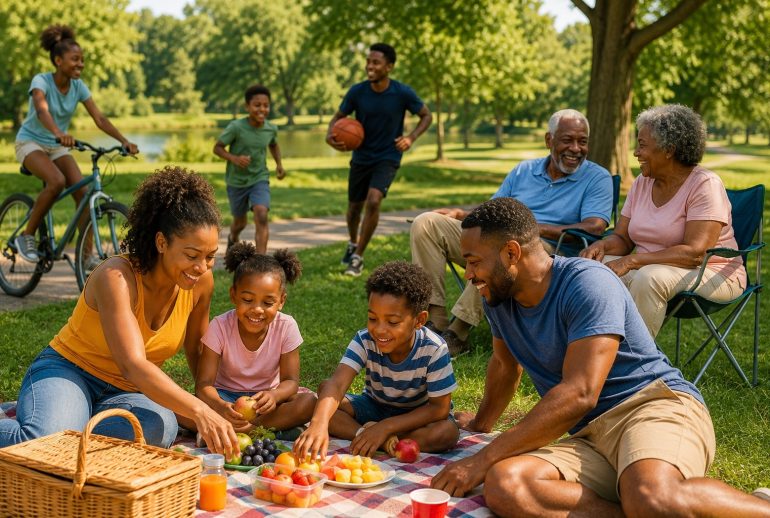
Outdoor activities can do something powerful for a family. They can help people slow down, move their bodies, breathe fresh air, talk more naturally, laugh together, and step away from the pressure of screens, schedules, work, school, and daily responsibilities. A simple walk, park visit, picnic, bike ride, ball game, community garden day, nature trail, or afternoon on a playground can create the kind of family memory that stays with children long after the day is over.
Across the Black community, outdoor time matters because many families are carrying full lives. Parents and caregivers may be working long hours, children may be dealing with school pressure, teens may be spending more time online, and elders may be facing loneliness or health concerns. In the middle of all that, outdoor activities can become a practical way to support wellness without making it feel like another heavy task. A family does not always need a formal program or expensive trip to reconnect. Sometimes the first step is simply going outside together.
Outdoor recreation also gives children a chance to experience joy, movement, curiosity, and freedom. They can run, explore, ask questions, play games, notice nature, and learn how to enjoy the world around them. Teens can use outdoor time to release stress, step away from social media pressure, and connect with trusted adults in a more relaxed way. Adults can use it to reset their minds, support their health, and create calmer family routines. Elders can use it to stay included, share stories, and enjoy fresh air with younger generations.
The goal is not perfection. Every family will have different schedules, neighborhoods, budgets, transportation options, and comfort levels. Some families may have easy access to parks and trails, while others may need to be more intentional about finding safe and welcoming outdoor spaces. What matters most is making outdoor time part of family and community life in simple, realistic ways.
1. Outdoor Time Helps Families Slow Down Together.
Many families spend the week moving from one responsibility to the next. Mornings may be rushed, afternoons may be full of school and work, evenings may include homework, dinner, chores, bills, activities, and preparation for the next day. When life moves this quickly, family members can be in the same house but still feel disconnected from one another.
Outdoor time creates a pause. A walk around the block, a visit to a park, or a few minutes sitting outside can help the family step out of the usual routine. When people are outdoors, conversations often feel less forced. Children may talk more freely while walking. Teens may open up while shooting hoops or sitting at a picnic table. Adults may feel calmer when they are not surrounded by household tasks.
Slowing down does not mean ignoring responsibilities. It means giving the family a small space to breathe before returning to them. Even twenty minutes outside can change the emotional tone of the day. A parent may feel less tense. A child may release extra energy. A teen may feel more willing to talk. An elder may feel less isolated.
Families can begin with small outdoor habits. They might take a short walk after dinner, sit on the porch together, visit a playground on weekends, or plan one outdoor family activity each month. These moments may seem simple, but repeated over time, they help families build connection.
2. Outdoor Activities Support Physical Health In A Natural Way.
Movement is important for health, but not every family enjoys formal exercise. Gym memberships, workout plans, and strict fitness routines may feel intimidating or unrealistic for some households. Outdoor activities can make movement feel more natural and enjoyable. Walking, playing catch, dancing at a park event, riding bikes, jumping rope, gardening, or playing with children all help the body move without making wellness feel like punishment.
For children, outdoor movement supports strength, coordination, energy balance, and healthy development. For teens, it can reduce stress and provide an outlet for emotion. For adults, it can support heart health, energy, weight management, flexibility, and mood. For elders, gentle outdoor activity such as walking or stretching can support mobility and independence when done safely.
The benefit of outdoor movement is that it can fit many ages and ability levels. A young child can run on a playground. A parent can walk. A grandparent can sit nearby and enjoy the fresh air while still being part of the gathering. A teen can play basketball or help younger children with games. Everyone can participate in some way.
Families should choose activities that feel safe and realistic. The goal is not to compete or compare. The goal is to make movement part of family life. When children grow up seeing outdoor activity as normal, they are more likely to carry healthy habits into adulthood.
3. Nature Can Help Reduce Stress And Improve Mood.
Stress affects the whole household. Adults may carry work pressure, financial concerns, health worries, caregiving responsibilities, or emotional exhaustion. Children may carry school stress, friendship issues, test anxiety, or changes they do not fully understand. Teens may carry social media pressure, identity questions, future concerns, or private worries. Outdoor time can help release some of that heaviness.
Fresh air, sunlight, trees, water, open space, and natural sounds can help people feel calmer. A quiet walk, time at a park, or sitting outside can give the mind a break from constant noise. Even in urban areas, a small green space can provide a sense of relief. Nature does not solve every problem, but it can help the body and mind settle enough to face problems with more patience.
Families can use outdoor time as part of emotional wellness. After a stressful day, a parent might invite a child to take a short walk instead of immediately starting a difficult conversation at the kitchen table. A teen who seems overwhelmed may benefit from a drive to a park, a walk near water, or quiet time outside with a trusted adult. An elder who feels lonely may feel encouraged by sitting outside with family.
Outdoor calm can also support better family communication. When people feel less tense, they often listen better and speak more gently. That makes outdoor time valuable not only for health, but for relationships.
4. Parks And Playgrounds Help Children Build Confidence.
Parks and playgrounds give children space to practice confidence. They climb, balance, swing, run, jump, share, take turns, create games, and interact with other children. These activities help them learn about their bodies, social skills, courage, patience, and problem-solving. A child who finally climbs something they were afraid of or learns to join a game with others experiences a small but meaningful victory.
Outdoor play also supports imagination. A playground can become a castle, spaceship, restaurant, jungle, school, or superhero headquarters. Children need this kind of creative freedom. It helps them think, lead, cooperate, and express themselves. Play is not wasted time. It is part of learning.
Parents and caregivers can support children by being present without controlling every moment. Some supervision is needed for safety, but children also need room to explore and make small decisions. They can choose a game, invite another child to play, or try a new activity. These choices help build independence.
Families can also use playground time to teach respect. Children can learn to include others, wait their turn, use kind words, and notice when someone needs help. A simple park visit can become a lesson in confidence and community behavior.
5. Outdoor Activities Can Strengthen Teen Connection.
Teens may not always ask for family time, but they still need connection. They are in a season where they want independence, but they also need guidance, belonging, and emotional support. Outdoor activities can create a relaxed setting where teens may be more open to conversation than they would be during a serious sit-down talk.
A teen may enjoy walking, playing basketball, biking, hiking, photography, outdoor concerts, community festivals, skating, volunteering at a park cleanup, or helping younger siblings play. These activities give adults a way to spend time with teens without making the teen feel pressured. The conversation can happen naturally while doing something else.
Outdoor activities can also help teens step away from screens and social comparison. Social media can make young people feel watched, judged, or pressured to present a certain image. Outdoor recreation gives them a chance to be present in real life. They can move, laugh, think, and connect without everything being measured by likes or comments.
Parents and mentors can use outdoor time to build trust. Instead of starting with lectures, they can ask open questions, listen, and let the teen share at their own pace. A walk or shared activity may become the space where a young person finally talks about something important.
6. Picnics And Outdoor Meals Create Family Memories.
Food and outdoor time often work beautifully together. A family picnic, cookout, park lunch, or simple snack outside can create a relaxed and joyful atmosphere. Meals outdoors do not have to be expensive or complicated. Sandwiches, fruit, water, homemade dishes, leftovers, or a simple packed lunch can become special when shared in a different setting.
Outdoor meals give families a chance to gather without the pressure of a formal event. Children can play nearby, adults can talk, elders can sit comfortably, and everyone can enjoy a break from routine. These moments often become memories because they include laughter, food, fresh air, and togetherness.
Picnics can also connect to culture. Families may bring dishes that reflect Southern, Caribbean, African, African American, or family-specific traditions. They may talk about recipes, remember past gatherings, or share stories about childhood cookouts and reunions. A simple meal can become a cultural experience when stories are included.
Families can make outdoor meals part of their monthly routine. A park picnic, backyard lunch, or community cookout can help children associate family time with joy and connection. These memories can stay with them for years.
7. Outdoor Time Can Bring Generations Together.
Outdoor activities can include children, adults, and elders in the same space. A park gathering, family walk, garden day, picnic, fishing trip, outdoor concert, or community festival can bring multiple generations together. This matters because families grow stronger when younger and older relatives share experiences.
Elders may not always be able to participate in active games, but they can still be included. They can sit in the shade, tell stories, watch children play, help prepare food, share memories, or simply enjoy being present. Children benefit from seeing elders included in family life, and elders benefit from feeling valued.
Intergenerational outdoor time can also create natural storytelling moments. A grandparent may remember games they played as a child. An aunt may talk about family reunions from years ago. An uncle may teach a child how to fish, grill, plant, or play a sport. These moments pass down knowledge without feeling like formal lessons.
Families should consider accessibility when planning outdoor activities. Seating, shade, restrooms, walking distance, transportation, and weather all matter, especially for elders and people with health needs. Thoughtful planning helps everyone feel welcome.
8. Community Gardens Can Teach Food, Patience, And Responsibility.
Community gardens and home gardening can offer powerful lessons for families. Planting seeds, watering, waiting, harvesting, and preparing food teaches children patience and responsibility. It also helps them understand where food comes from and why caring for the earth matters.
Gardening can connect families to cultural food traditions. Many African Diaspora foodways are connected to farming, herbs, vegetables, roots, grains, and community sharing. Growing even a small amount of food can open conversations about family recipes, elders, health, and history. A child who helps grow tomatoes, peppers, greens, herbs, or beans may become more interested in cooking and eating fresh food.
Gardens can also support emotional wellness. Working with soil, plants, and sunlight can be calming. Families may find that gardening gives them time to talk, reflect, and slow down. Elders who have gardening knowledge can share wisdom with children, and children can feel proud when something they planted begins to grow.
Not every family has a yard, but gardening can still happen in containers, windowsills, school gardens, church gardens, or community plots. The lesson is not about having a perfect garden. It is about learning care, patience, and connection.
9. Outdoor Recreation Can Help Families Build Community.
Outdoor spaces are often where community relationships grow. Parks, playgrounds, sports fields, walking trails, festivals, markets, and outdoor events give families opportunities to meet neighbors, other parents, elders, mentors, and local organizations. A conversation at a park bench or youth game can become the beginning of a helpful relationship.
Community connection matters because families need support networks. A parent may learn about a youth program. A caregiver may meet another family with similar concerns. Children may make friends. Teens may find positive activities. Elders may feel less isolated when they see familiar faces outside. These connections help rebuild the village.
Outdoor community events can also promote local pride. A neighborhood cleanup, family fitness day, cultural festival, outdoor movie, or park gathering can help people feel more invested in where they live. When families gather in shared spaces, they begin to see the community as something they are part of, not just a place they pass through.
The more families use outdoor spaces in positive ways, the stronger those spaces can become. Safe, welcoming, active public spaces help children grow, elders connect, and families feel rooted.
10. Families Can Use Outdoor Time To Teach Safety And Awareness.
Outdoor activities also give parents and caregivers a chance to teach safety in practical ways. Children can learn how to stay close in public, cross streets carefully, respect nature, watch for bicycles or cars, stay hydrated, use sunscreen when needed, and understand boundaries around water, playground equipment, or unfamiliar areas.
These lessons are important, but they can be taught calmly. Outdoor time should not become fear-based. Children need freedom to explore, but they also need guidance. A parent can explain safety while still allowing joy. For example, a child can learn to check before running across a path, stay where the adult can see them, and ask before leaving the group.
Teens can learn safety too. They can learn how to plan outdoor outings, check weather, travel with friends responsibly, keep phones charged, tell someone where they are going, and make wise choices in public spaces. These skills support independence.
Families should also choose spaces that feel safe and welcoming. If a park or area does not feel comfortable, families can look for alternatives such as school events, community centers with outdoor areas, organized recreation programs, or group outings. Safety and joy should work together.
11. Outdoor Traditions Can Become Part Of Family Culture.
Families are shaped by repeated traditions. A Saturday morning walk, summer picnic, annual park gathering, family sports day, garden project, fishing trip, outdoor concert, or seasonal festival can become part of a family’s identity. Children may look forward to these traditions and remember them as part of childhood.
Outdoor traditions do not have to be expensive. A family might visit the same park every month, take photos at the same tree each season, bring elders to a picnic every summer, or walk together on certain evenings. What makes the tradition meaningful is consistency and connection.
These traditions can also be passed down. A child who grows up with family outdoor time may one day create similar experiences for their own children. In this way, outdoor recreation becomes part of generational memory. It teaches that family joy is worth making time for.
Parents and caregivers can invite children to help shape the tradition. They might let children choose the park, plan the snacks, pick the games, or invite relatives. When children participate in planning, they feel ownership and excitement.
12. Outdoor Activities Remind Families That Joy Is Necessary.
Joy is not extra. It is necessary for strong family life. Families need moments that are not only about bills, grades, discipline, work, chores, or problems. They need moments of laughter, play, rest, and beauty. Outdoor activities can help create those moments in simple and accessible ways.
Across the community, many families have learned to be strong during difficult times. That strength is valuable, but strength should also include joy. Children need to see adults laugh. Teens need to feel that family time can be enjoyable. Elders need to experience connection. Parents need moments where they are not only managing life, but enjoying it.
Outdoor activities offer space for that joy. A child running through grass, a teen smiling during a game, an elder telling stories under a tree, a parent relaxing at a picnic table, or a family walking together at sunset can all become signs of wellness. These moments matter.
When families make room for outdoor joy, they are not ignoring life’s challenges. They are building the emotional strength needed to face them. Joy helps families heal, connect, and keep going.
Conclusion.
Outdoor activities build stronger families across the Black community because they support health, connection, emotional wellness, cultural memory, and joy. A simple walk, park visit, picnic, playground day, community garden project, sports activity, or outdoor gathering can help families slow down and reconnect in meaningful ways.
Families do not need perfect plans or expensive trips to begin. They can start with what is available, whether that is a porch, sidewalk, park, school field, backyard, community event, or local trail. What matters is being intentional about spending time together, moving the body, talking with care, and creating memories.
When outdoor recreation becomes part of family life, children feel more connected, teens have healthier outlets, adults receive needed rest, and elders remain included. These simple experiences can help build stronger households and a stronger community.
Akukulu Family encourages families and community members to choose one outdoor activity this week. Take a walk, visit a park, plan a picnic, invite an elder outside, play a game with children, or attend a local outdoor event. One simple moment outside can help strengthen family connection, support wellness, and create memories that last
