

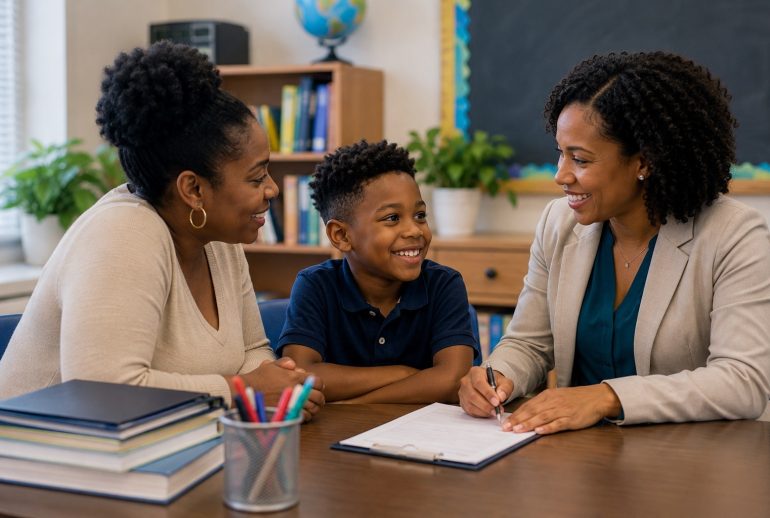
Parent-teacher communication is one of the most important parts of a child’s school experience. Children do better when the adults around them are working together instead of separately. A teacher may see how a child learns, behaves, participates, completes assignments, and interacts with classmates during the school day. A parent or caregiver sees the child at home, where emotions, routines, homework habits, sleep, confidence, and family responsibilities may affect school performance. When both sides communicate, the child receives stronger support.
Across the Black community, education has always been connected to opportunity, progress, dignity, and future preparation. Families want children to be seen, challenged, respected, and supported in school. But strong school support does not happen only at report card time or when something goes wrong. It grows through regular communication, clear expectations, respectful partnership, and early action when concerns appear.
Many parents and caregivers care deeply about education but may feel unsure about how to communicate with teachers. Some may have busy work schedules. Some may feel uncomfortable reaching out. Some may have had difficult school experiences themselves. Others may only hear from school when there is a problem, which can make communication feel stressful. Teachers may also be busy and managing many students, but regular connection with families can help prevent misunderstandings and support children more effectively.
Good parent-teacher communication does not require long meetings every week. It can begin with a short message, a conference, a phone call, a school app update, a note, or a simple question. The goal is to build a respectful connection that helps the child feel surrounded by adults who care about their success.
1. Early Communication Builds Trust Before Problems Grow.
Parents and teachers should not wait until there is a serious issue to communicate. When the first contact only happens because of missing assignments, behavior problems, or low grades, the relationship may already feel tense. Early communication helps build trust before stress appears.
At the beginning of the school year, parents can introduce themselves and let the teacher know they want to stay involved. A simple message can say that the family appreciates updates and wants to support learning at home. This small step can make future conversations easier.
Teachers can also help by sharing positive observations early. Parents should hear when children are trying, improving, helping others, participating, or showing kindness. When communication includes good news, families are less likely to feel that school only reaches out for problems.
Trust grows through small, respectful contact. When a concern appears later, both sides are better prepared to work together because the relationship has already started.
2. Parents Can Share Helpful Information About Their Child.
Parents and caregivers know important things about their children that teachers may not see right away. A child may be shy at first, sensitive to criticism, easily distracted, anxious about reading aloud, strong in art, helpful with younger children, or affected by changes at home. Sharing helpful information can help teachers understand the child more fully.
This does not mean families must share private details that are not needed. But if something affects learning, behavior, or emotional wellness, it may be useful for the teacher to know. For example, if a child is grieving, moving homes, caring for a sibling, struggling with sleep, or adjusting to a family change, the teacher may be able to respond with more patience.
Parents can also share what helps the child learn. Some children need visual examples. Some need directions repeated. Some need encouragement before they try. Some need help organizing assignments. These details can help teachers support the child more effectively.
When families share information, they are not making excuses. They are helping the school understand the child’s needs and strengths.
3. Teachers Can Help Parents Understand Classroom Expectations.
Every classroom has expectations. Children may need to complete homework, bring supplies, participate in discussions, follow behavior rules, read each night, use online portals, or prepare for tests. Parents can support these expectations better when they understand them clearly.
Teachers can help by explaining what students are learning, how assignments are graded, how homework is given, and what parents should check at home. This is especially important when schools use digital platforms, apps, or online gradebooks that may feel confusing to some families.
Parents should feel comfortable asking questions. What should my child be practicing at home? How often is homework assigned? How can I check missing work? What does my child need to improve? How long should homework usually take? These questions help families support learning more effectively.
Clear expectations reduce confusion. When parents understand what the teacher needs and teachers understand what families can realistically do, the child benefits.
4. Communication Helps Catch Problems Early.
Many school problems begin small. A child misses one assignment, then several. A student struggles with one math skill, then falls behind in the next unit. A child has a friendship issue that begins affecting focus. A student stops participating because they feel embarrassed. Early communication helps adults notice these patterns before they become bigger.
Parents should not wait until report cards to ask how things are going. A quick check-in can reveal whether a child is completing work, staying focused, understanding lessons, and participating in class. Teachers can also alert families early when they see a concern.
Early action matters. A child who receives help quickly may regain confidence before discouragement sets in. A parent may adjust homework routines, request tutoring, talk with the child, or help organize assignments. A teacher may provide extra practice, change seating, or offer encouragement.
When communication happens early, the message to the child is clear: we are paying attention, and we are here to help you succeed.
5. Respectful Communication Protects The Child’s Confidence.
How adults talk about a child matters. A child should never feel like the adults are only discussing failures, problems, or weaknesses. Parent-teacher communication should be honest, but it should also protect the child’s dignity.
If a child is struggling, adults can talk about the behavior or skill that needs improvement without labeling the child. Instead of saying the child is lazy, careless, or bad, the conversation can focus on missing work, focus challenges, reading support, emotional needs, or better routines. This keeps the conversation productive.
Parents and teachers should also look for strengths. A child may struggle in math but be a strong helper. A student may be quiet but thoughtful. A child may have behavior concerns but also show creativity or leadership. Noticing strengths helps adults support the whole child.
Respectful communication helps children feel corrected without feeling rejected. It reminds them that growth is possible.
6. Parents Should Advocate With Confidence And Respect.
Parent advocacy is an important part of education. If a child needs support, families have the right to ask questions and seek help. Advocacy may include requesting a meeting, asking for tutoring, discussing special education needs, asking about behavior concerns, or seeking clarification about grades and assignments.
Some parents may hesitate because they do not want to seem difficult. But respectful advocacy is not troublemaking. It is care. A parent who asks clear questions is helping protect the child’s education.
Good advocacy is calm, specific, and focused on solutions. A parent might say, “I noticed my child is struggling with reading. What support is available?” or “Can we meet to discuss missing assignments?” or “What can we do at home to help?” These questions invite partnership.
Advocacy works best when parents keep records, follow up after meetings, and stay focused on the child’s needs. A confident, respectful parent can make a meaningful difference.
7. Teachers And Families Should Work As A Team.
Children benefit when teachers and families see each other as partners. The teacher is not replacing the parent, and the parent is not working against the teacher. Both are helping the child grow from different positions.
A team approach means sharing information, listening, and agreeing on next steps. If a child is struggling with homework, the teacher can explain the academic concern while the parent helps create a home routine. If a child is having behavior issues, the teacher can share classroom patterns while the parent shares what may be affecting the child emotionally.
Teamwork does not mean everyone will always agree immediately. There may be misunderstandings or different perspectives. But when both sides stay focused on the child’s success, the conversation can move toward solutions.
A child who sees adults working together may feel more supported and accountable. They understand that school and home are connected.
8. Regular Check-Ins Can Support Student Progress.
One conversation is helpful, but regular check-ins can be even stronger. Some children need more support over time, especially if they are behind academically, adjusting to a new school, managing behavior challenges, or working toward a goal.
A check-in does not have to be long. A teacher may send a weekly update. A parent may ask for a short progress note. A school app may show completed work. A caregiver may review grades every Friday. These small habits help everyone stay informed.
Regular check-ins also help celebrate growth. A child may improve attendance, finish more assignments, participate more often, or show better behavior. When adults notice progress, children feel encouraged to continue.
Progress should be tracked with patience. Growth may not happen overnight. But regular communication helps families and teachers adjust the plan as needed.
9. Communication Helps Support Behavior In A Healthy Way.
Behavior concerns can be sensitive. Parents may feel embarrassed or defensive when a teacher reports a problem. Teachers may feel frustrated if behavior interrupts the classroom. The child may feel ashamed or misunderstood. Healthy communication can help everyone respond more wisely.
Instead of only asking, “What punishment should happen?” adults can ask, “What is the behavior telling us?” A child may be acting out because of frustration, boredom, peer conflict, attention needs, emotional stress, or difficulty understanding the lesson. This does not excuse disrespectful behavior, but it helps adults respond with better strategies.
Parents and teachers can agree on consistent expectations. They can discuss what consequences make sense, what encouragement helps, and what triggers should be avoided when possible. They can also help the child practice better choices.
Behavior support should include accountability and dignity. The goal is not to shame the child. The goal is to help the child grow in self-control, respect, and responsibility.
10. Parents Can Ask For Positive Updates Too.
Families should not only hear about problems. Positive updates matter because they help parents encourage the child at home. A teacher may notice improvement, kindness, leadership, creativity, effort, or better focus. These moments deserve to be shared.
Parents can ask teachers to share progress when possible. They can also ask, “What is my child doing well?” This question helps balance the conversation. It reminds everyone that the child is more than their challenges.
Positive updates can motivate children. When a parent says, “Your teacher told me you helped a classmate today,” or “I heard you worked hard on your writing,” the child feels seen. Encouragement can strengthen confidence.
A school relationship that includes positive communication feels more human. It helps families trust that the teacher sees the child’s potential, not only the child’s mistakes.
11. Technology Can Help Communication When Used Well.
Many schools use apps, email, text alerts, online gradebooks, and learning platforms. These tools can help families stay informed, but they can also feel overwhelming if there are too many messages or confusing systems.
Parents can ask schools how to use the main communication tools. They should know where to check grades, assignments, attendance, teacher messages, and school announcements. If a parent is unsure, asking for help is better than missing important information.
Teachers can also make communication clearer by using simple language, explaining next steps, and not assuming every family understands the platform. Digital communication should support families, not create more confusion.
Technology works best when it is used consistently and respectfully. It should help parents and teachers stay connected so children receive better support.
12. Strong Communication Builds A Stronger Education Village.
A child’s education is strongest when the village works together. Parents, caregivers, teachers, counselors, school leaders, mentors, tutors, elders, and community programs all have a role. Parent-teacher communication is one bridge that connects these supports.
When communication is strong, children are less likely to fall through the cracks. Families understand what is happening at school. Teachers understand more about the child. Problems are addressed earlier. Strengths are noticed. Support becomes more coordinated.
This kind of communication builds trust across the community. It reminds children that education matters and that adults are invested in their future. It also helps parents feel less alone in supporting school success.
A strong education village does not happen by accident. It is built through repeated conversations, respect, patience, and shared commitment.
Conclusion.
Parent-teacher communication supports children across the Black community because it helps families and schools work together for student success. When parents and teachers communicate early, clearly, and respectfully, children receive better support for learning, behavior, confidence, and growth.
Families do not need to wait for a problem to connect with teachers. A short message, a question, a conference, or a regular check-in can help build trust. Teachers can also support families by sharing expectations, concerns, strengths, and progress in a way that invites partnership.
Children succeed best when they know the adults around them are paying attention and working together. Strong communication helps create that support. It builds confidence, accountability, and a stronger path toward educational success.
Akukulu Family encourages parents, caregivers, teachers, mentors, and school leaders to take one communication step this week. Send a positive update, ask about a child’s progress, check the school portal, schedule a conference, or share one helpful detail about a student’s needs. One clear conversation can help strengthen a child’s school journey.
