

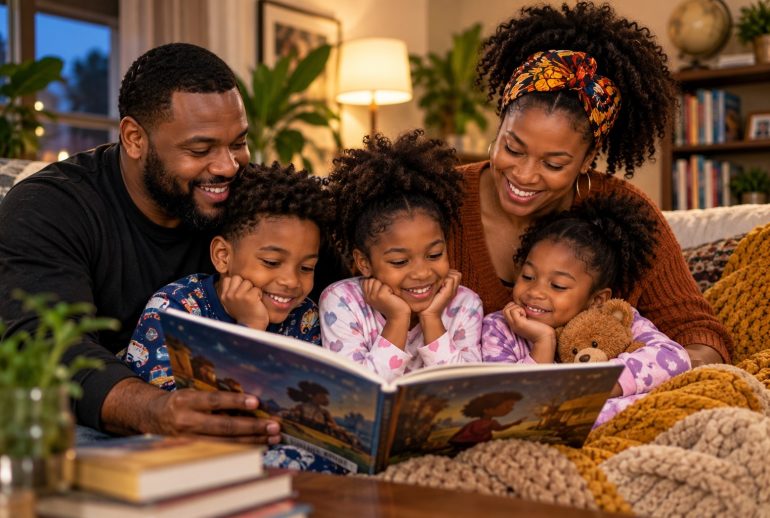
Reading aloud is one of the most powerful learning habits a family can build. When an adult reads to a child, the child hears language, rhythm, emotion, story structure, new words, and ideas that help the mind grow. Reading aloud can happen with picture books, Bible stories, poems, chapter books, folktales, history books, bedtime stories, library books, magazines, or even family letters. It does not require a perfect voice or expensive materials. It only requires time, attention, and a willingness to share words together.
Across the Black community, storytelling has always been a strong part of family and cultural life. Stories have been shared at kitchen tables, on porches, in churches, at family reunions, in classrooms, through music, through elders, and through everyday conversation. Reading aloud continues that tradition by helping children connect spoken language with written words. It reminds children that stories matter, that their voices matter, and that learning can happen through closeness and care.
Many parents and caregivers want children to become strong readers, but reading can feel difficult when families are busy. Work schedules, homework, meals, transportation, chores, and screen time can crowd the day. Some adults may also feel unsure about reading aloud if they struggled with reading when they were younger. But children do not need perfection. They need presence. A caregiver reading with warmth, patience, and interest can make a lasting difference.
Reading aloud can support school readiness, emotional connection, imagination, listening skills, cultural pride, and confidence. It can help younger children learn sounds and words. It can help older children understand deeper stories. It can help teens reconnect with literature, history, poetry, and family conversation. Most importantly, it can help children see reading as something connected to love, not only assignments.
1. Reading Aloud Builds Vocabulary.
Children learn many words by hearing them spoken. When families read aloud, children hear words they may not hear in everyday conversation. A story may include words about animals, feelings, weather, history, food, travel, science, family, courage, or imagination. Hearing these words helps children build vocabulary naturally.
A larger vocabulary can support school success because children need words to understand lessons, write clearly, ask questions, and express feelings. Reading aloud gives children a chance to hear words in context, which makes them easier to understand.
Parents and caregivers can pause when a new word appears. They can explain it simply, use it in a sentence, or ask the child what they think it means. This turns reading into a conversation instead of only a performance.
Vocabulary grows through repetition. The more children hear rich language, the more comfortable they become with words. Reading aloud gives them that repeated exposure in a warm and meaningful way.
2. Reading Aloud Helps Children Listen And Focus.
Listening is a skill children must practice. When an adult reads aloud, children learn to sit, pay attention, follow a story, remember details, and imagine what is happening. These skills support classroom learning because school requires children to listen to teachers, understand instructions, and follow ideas from beginning to end.
Younger children may not sit still for long, and that is normal. Families can begin with short books, simple stories, or even a few pages at a time. Over time, attention can grow. The goal is not to force a child into long reading sessions immediately, but to build the habit gently.
Parents can make listening active by asking questions. What do you think will happen next? How does this character feel? What would you do? These questions help children stay engaged.
When children practice listening through stories, they build patience and focus in a way that feels enjoyable.
3. Reading Aloud Strengthens Family Bonds.
Reading aloud creates closeness. A child sitting beside a parent, grandparent, older sibling, auntie, uncle, or mentor can feel safe, loved, and valued. The story matters, but the relationship around the story matters too.
For busy families, reading aloud can become a small daily or weekly moment of connection. A bedtime story, Sunday afternoon book, library day, or ten-minute reading break can help children feel that someone is giving them full attention.
These moments can be especially meaningful for children who need calm time with adults. A story can create space for comfort after a hard day, conversation after school, or quiet connection before sleep.
Children often remember the feeling of being read to. They remember the voice, the closeness, the laughter, and the routine. Reading aloud can become part of family love.
4. Books By Black Authors Help Children Feel Seen.
Representation matters in reading. Children need books where they can see families, hair textures, skin tones, neighborhoods, traditions, history, joy, and dreams that reflect their lives and community. Books by Black authors and stories about African Diaspora experiences can help children feel seen and valued.
When children see characters who look like them, speak like them, or share familiar experiences, they may feel more connected to the story. They learn that their lives are worthy of books, art, and imagination. This can strengthen both reading interest and cultural pride.
Families can look for picture books, chapter books, poetry, biographies, folktales, and history books by Black writers. Libraries and librarians can help with recommendations. Parents can also ask children which stories feel most interesting to them.
Reading diverse books also helps children understand the wider world. They can learn about African American history, African cultures, Caribbean traditions, Afro-Latin experiences, and many different family stories within the Black community.
5. Reading Aloud Supports Early Literacy.
Before children can read by themselves, they need to understand how books work. Reading aloud teaches them that pages turn, words move in order, pictures connect to meaning, and stories have beginnings, middles, and endings. These early lessons prepare children for reading in school.
Young children also hear letter sounds, rhymes, repeated phrases, and sentence patterns. They may begin to recognize favorite words or repeat lines from familiar books. This is part of early literacy growth.
Parents do not need to turn every reading moment into a formal lesson. Simply reading with expression, pointing to pictures, and letting children ask questions can help. The child is learning even when the moment feels playful.
Early literacy begins long before a child reads independently. Reading aloud gives children a strong foundation before they ever open a school textbook.
6. Reading Aloud Can Help Older Children Too.
Some people think reading aloud is only for small children, but older children can benefit too. A parent reading a chapter book, poem, history passage, article, or family story aloud can help older children understand more complex language and ideas.
Children who can already read may still enjoy being read to. Hearing a story aloud can make it more emotional and memorable. It can also help children understand pronunciation, tone, and meaning.
Reading aloud can be especially helpful for children who struggle with reading. They may understand stories better when listening, even while they are still building reading skills. This can keep them interested in books instead of feeling discouraged.
Families can take turns reading. A parent reads one page, and the child reads the next. This supports practice while keeping the experience shared and encouraging.
7. Reading Aloud Builds Imagination.
Stories help children imagine people, places, problems, and possibilities beyond their everyday life. A book can take a child to another country, another time, a magical place, a historical moment, a science adventure, or a family situation different from their own. This strengthens imagination and curiosity.
Imagination matters because it helps children think creatively. A child who imagines different possibilities may become better at problem-solving, storytelling, art, writing, leadership, and empathy. Books help the mind stretch.
Families can encourage imagination by asking children to describe what they picture. What does the place look like? What would the character sound like? What would you draw from this story? These questions help children connect reading with creativity.
When children imagine through books, they learn that their minds can travel, create, and dream.
8. Reading Aloud Helps Children Understand Emotions.
Books often show characters feeling afraid, brave, lonely, excited, jealous, proud, sad, confused, or hopeful. When adults read these stories with children, they can talk about emotions in a safe way. A child may understand feelings better when they see them in a character.
Parents can ask, “How do you think she felt?” or “Why was he upset?” or “What helped the character feel better?” These questions help children build emotional awareness. They also give families a gentle way to talk about real feelings.
A child who has trouble explaining their own emotions may relate to a story. They may say, “I felt like that too.” This can open the door to important conversations.
Reading aloud can support emotional wellness because stories give children language for what happens inside the heart.
9. Elders Can Pass Down Stories Through Reading.
Elders have a special role in family literacy. A grandparent or older relative reading aloud can help children feel connected across generations. Elders may read books, share family stories, tell folktales, or explain memories connected to a story.
This kind of reading time gives children more than literacy. It gives them history, voice, and belonging. A child may remember how an elder pronounced certain words, laughed at certain parts, or added family wisdom to the story.
Families can invite elders to read during visits, video calls, family gatherings, or bedtime routines. Even if an elder does not read long books, they can share short stories, poems, prayers, songs, or memories.
When elders read and tell stories, children learn that knowledge does not only come from schools. It also comes from the people who came before them.
10. Reading Aloud Can Reduce Screen Time.
Many children spend long hours with screens. Phones, tablets, television, and games can fill the day quickly. Reading aloud gives families a screen-free activity that still entertains, teaches, and connects.
A story can become part of a calming routine before bed, after dinner, during weekends, or after school. It gives the child’s eyes and mind a break from fast-moving digital content.
Families do not need to remove screens completely to build reading habits. They can simply create protected reading moments. Ten minutes of reading aloud before screen time or before bed can make a difference.
When reading becomes a family habit, children learn that quiet activities can also be enjoyable. This helps build balance in the home.
11. Families Can Make Reading Aloud Simple.
Reading aloud does not need to be complicated. Families can start with one book, one chapter, one poem, or one short story. The reading voice does not need to be perfect. The adult does not need special training. The most important thing is consistency and warmth.
Families can keep books in visible places, visit the library, borrow from school, use digital library apps, or create a small reading basket. Children can choose books so they feel ownership. Younger children may want the same book many times, and that repetition is helpful.
Reading can happen at bedtime, during breakfast, after school, while waiting at appointments, or on weekends. A few minutes still counts.
The habit grows when families remove pressure. Reading aloud should feel like connection, not punishment.
12. Reading Aloud Builds A Stronger Future.
Reading aloud helps build a stronger future because literacy affects so many parts of life. Children who hear stories, learn words, ask questions, and enjoy books are building skills that can support school, work, leadership, creativity, and confidence.
Across the Black community, reading aloud can also help preserve culture and strengthen family identity. Through books and stories, children learn about history, courage, joy, faith, creativity, and community. They learn that words have power.
Families, schools, churches, libraries, mentors, and elders can all support this habit. A community that reads to its children is investing in their minds and futures.
One story may seem small, but repeated stories can shape a child’s love for learning. Reading aloud plants seeds that can grow for a lifetime.
Conclusion.
Reading aloud supports children across the Black community by building vocabulary, listening skills, imagination, emotional awareness, cultural pride, and family connection. It helps children see reading as something warm and meaningful, not only something required for school.
Families do not need perfect schedules or expensive books to begin. They can read a bedtime story, visit the library, choose books by Black authors, ask an elder to share a story, or read a few pages together after dinner. Small reading moments can become strong family habits.
When children are read to with love and consistency, they gain language, confidence, and memories that can support them for years. Reading aloud is a simple act with deep power.
Akukulu Family encourages parents, caregivers, elders, mentors, and educators to read aloud with one child this week. Choose a story, poem, Bible passage, chapter book, or family memory and share it with warmth. One reading moment can help a child feel loved, seen, and ready to learn.
