

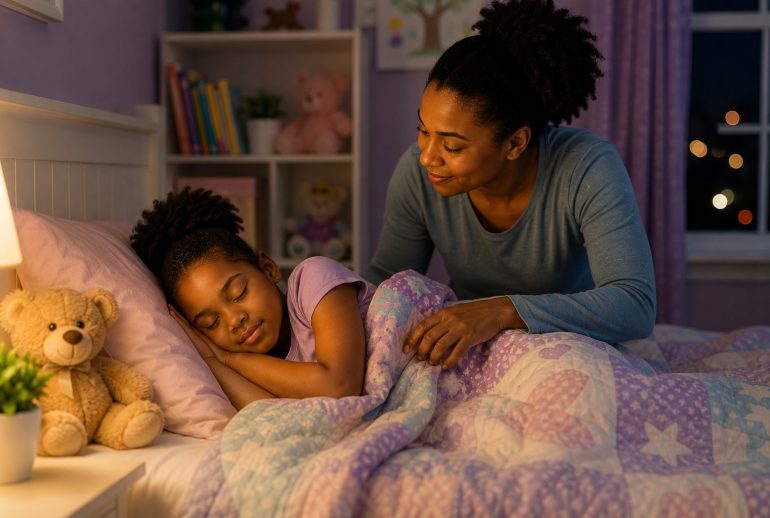
Sleep is one of the most important parts of a child’s health, but it is often one of the easiest routines to overlook. Children and teens need rest to learn, grow, manage emotions, focus in school, build energy, and handle the demands of daily life. When sleep is inconsistent, the effects can show up in many ways. A child may become irritable, forgetful, emotional, restless, unfocused, or harder to wake in the morning. A teen may struggle with mood, motivation, homework, attendance, or screen habits.
Across the Black community, many families are balancing full schedules. Parents and caregivers may work early mornings, late nights, multiple jobs, or changing shifts. Children may have homework, sports, church activities, chores, family responsibilities, and screen distractions. Some homes may be busy or crowded. Some families may have different age groups with different schedules. These realities can make sleep routines difficult, but they also make them even more important.
A healthy sleep routine does not mean every night will be perfect. Families will have late events, homework emergencies, travel, illness, celebrations, and busy seasons. The goal is not perfection. The goal is to create a rhythm that helps children know when the day is slowing down and when the body should prepare for rest.
Sleep should be treated as part of family wellness, not just something that happens after everything else is done. A good bedtime routine can support school success, emotional health, family peace, and morning organization. When children rest well, the whole household often feels calmer and more prepared.
1. Sleep Helps Children Learn And Remember.
Children use a lot of mental energy during the school day. They are reading, writing, solving problems, listening to teachers, remembering instructions, interacting with classmates, and learning new information. Sleep helps the brain process and store what was learned. When children do not get enough rest, school can feel harder.
A tired child may struggle to focus, even if they want to do well. They may miss directions, forget assignments, become frustrated quickly, or lose patience during homework. Sometimes what looks like laziness or attitude may actually be exhaustion. Families should pay attention to whether sleep may be affecting school behavior.
A steady bedtime routine can help children return to school each day with a stronger mind. They may still face challenges, but they are more likely to have the energy to try. Good rest supports better attention, memory, and classroom participation.
Parents and caregivers can explain sleep in simple terms. Sleep helps the brain recharge. It helps the body grow. It helps children wake up ready to learn. When children understand why sleep matters, the routine may feel more meaningful.
2. Bedtime Routines Help Children Feel Secure.
Children often do better when they know what comes next. A bedtime routine gives the evening structure and helps the body understand that rest is coming. This can be especially helpful for younger children who may resist sleep or become overstimulated at night.
A simple bedtime routine might include dinner, bath or washing up, pajamas, brushing teeth, choosing clothes for the next day, reading, prayer or quiet reflection if part of the household, and lights out. The routine does not need to be complicated. It just needs to be repeated often enough to become familiar.
Routines can also reduce arguments. If children know that screens turn off at a certain time, teeth are brushed next, and reading comes before sleep, parents do not have to start from zero every night. The routine becomes the guide.
A predictable bedtime can help children feel cared for. It sends the message that the home is slowing down, the child is safe, and rest matters.
3. Screens Can Make Sleep More Difficult.
Phones, tablets, television, gaming systems, and computers can make bedtime harder. Screens keep the mind active and can pull children into “just one more” video, game, message, or episode. For teens, phones can be especially difficult because group chats, social media, and notifications may continue late into the night.
Families can support sleep by creating screen boundaries before bed. Devices may need to be turned off thirty to sixty minutes before sleep. Some families may choose to keep phones and tablets out of bedrooms overnight. Others may have a charging station in the kitchen or living room. The exact rule can fit the household, but the goal is to protect rest.
Children may resist screen limits, especially at first. Parents can explain that screens are not being removed to punish them. They are being managed because the brain needs time to calm down. Rest is part of health.
Adults should also model this when possible. If children see parents scrolling all night while being told to put devices away, the rule may feel unfair. A family screen routine works best when everyone respects the value of rest.
4. Sleep Supports Emotional Balance.
Tired children often have bigger emotions. A small disappointment may lead to tears. A simple correction may feel overwhelming. A sibling disagreement may turn into a major argument. Teens may become more withdrawn, irritated, anxious, or reactive when they are not sleeping enough.
Sleep does not solve every emotional challenge, but it can make emotions easier to manage. A rested child may still get upset, but they may recover more quickly. A rested teen may have more patience and clearer thinking. Rest gives the body and mind more strength to handle stress.
Parents can look for patterns. Does the child melt down more on nights after staying up late? Does the teen seem more discouraged when sleep has been poor? Does morning conflict increase after screen-heavy nights? These patterns can help families understand the connection between sleep and mood.
Helping children sleep better is one way to support emotional wellness. It gives them a stronger foundation for handling daily life.
5. Morning Routines Begin The Night Before.
A stressful morning often begins with an unplanned night. When clothes are not ready, backpacks are not packed, homework is missing, shoes cannot be found, and everyone wakes up tired, the morning can become chaotic. A good sleep routine includes preparing for the next day before bedtime.
Families can create a simple evening checklist. Choose clothes. Pack the backpack. Place shoes by the door. Prepare lunch or snacks if needed. Charge school devices. Review tomorrow’s schedule. These small habits can make mornings calmer.
Children can help with age-appropriate preparation. Younger children can choose from two outfits. Older children can pack their own bags. Teens can check assignments and set alarms. This teaches responsibility and reduces morning stress.
When the household prepares at night, children can wake up with more peace. A calmer morning supports better school attendance, better mood, and a stronger start to the day.
6. Teens Need Sleep Guidance Too.
Teenagers often need more sleep than they get. Schoolwork, activities, jobs, phones, gaming, social media, stress, and late-night habits can keep them awake. Some teens may also naturally feel more awake later at night, but early school schedules still require them to wake up on time.
Parents should talk with teens respectfully about sleep. Instead of only saying, “Go to bed,” adults can explain how sleep affects mood, skin, focus, sports performance, driving safety, memory, and mental health. Teens may respond better when they understand the real-life impact.
Teens may need help creating routines that still allow independence. They can help decide when to stop homework, when to put away devices, how to prepare for the next day, and what bedtime goal is realistic. Involving them in the plan can build ownership.
Sleep is not only for younger children. Teens are still growing, learning, and developing. They need rest to support their future.
7. Busy Families Can Still Build Small Sleep Habits.
Some families have schedules that make sleep routines hard. A parent may work late. Children may share rooms. Family members may have different bedtimes. Transportation, homework, and evening activities may push the night later. These challenges are real, and families should not feel ashamed if bedtime is difficult.
Small habits can still help. A family might set a regular quiet time, lower noise, dim lights, turn off screens, prepare clothes, or read for ten minutes. Even if bedtime cannot be perfect, the household can create signals that the day is ending.
For families with shared rooms, headphones, soft lighting, white noise, or agreed quiet rules may help. Older siblings can be taught to respect younger children’s sleep. Younger children can learn that bedtime is not playtime.
A sleep routine does not have to look the same in every home. The best routine is one that fits the family’s real life while still protecting rest.
8. Food And Drinks Can Affect Sleep.
What children eat and drink in the evening can affect sleep. Heavy meals right before bed, sugary snacks, caffeine, soda, sweet tea, energy drinks, and chocolate-heavy treats may make it harder for some children and teens to settle down. Families can pay attention to how evening food choices affect rest.
This does not mean children can never enjoy a dessert or special treat. Balance matters. But everyday bedtime routines should avoid too much sugar and caffeine close to sleep. Water, lighter snacks when needed, and earlier meals may help the body calm down.
Teens especially need guidance around energy drinks and caffeinated beverages. Some may use them to stay awake for schoolwork or activities, but they can make sleep worse later. Poor sleep can then make the teen feel tired the next day, creating a difficult cycle.
Families can talk about food and sleep as part of wellness. The body rests better when it is not overstimulated.
9. Sleep Routines Can Include Reading And Calm Activities.
A calming activity before bed can help children transition from the busy day to rest. Reading is one of the best options. A bedtime story, quiet independent reading, or a parent reading aloud can help settle the mind while also supporting literacy.
Other calm activities may include gentle music, prayer, journaling, drawing, stretching, breathing exercises, or quiet conversation. The activity should help the child slow down, not become more excited. Families can choose what fits their household.
For younger children, bedtime reading can become a treasured memory. For older children and teens, a quiet reading or journaling habit may help reduce stress. These routines can also replace late-night screen use.
A peaceful bedtime activity tells the body that it is time to shift from doing to resting. That transition matters.
10. Sleep Supports Physical Health And Growth.
Children’s bodies grow and repair during rest. Sleep supports energy, immune health, growth, and overall wellness. A child who does not rest well may feel tired during physical activity, struggle with appetite patterns, or become more vulnerable to feeling run down.
For active children and teens, sleep is especially important. Sports, dance, physical education, outdoor play, and busy school days all require energy. Rest helps the body recover and prepare for the next day.
Parents can teach that sleep is part of strength. It is not wasted time. It is how the body restores itself. This can be a helpful message for children who think staying up late makes them more grown or independent.
Physical wellness includes food, movement, hygiene, and rest. Sleep belongs in that same conversation.
11. Sleep Problems Should Be Taken Seriously.
Some children struggle with sleep even when routines are in place. They may have nightmares, anxiety, snoring, breathing problems, restlessness, pain, bedwetting, or difficulty falling asleep. Teens may deal with stress, depression, late-night worry, or irregular sleep patterns. These problems should not be ignored.
If a child regularly cannot sleep, wakes often, snores loudly, seems extremely tired during the day, or has major mood changes, caregivers may need to speak with a healthcare provider. Sleep problems can have physical or emotional causes that deserve attention.
Families should also listen when children say they are afraid at night or cannot calm their thoughts. Instead of dismissing them, adults can ask questions and offer comfort. A child may need reassurance, a nightlight, a calmer routine, or help with worries.
Taking sleep seriously shows children that their health matters. Rest is not a small issue when it affects the whole day.
12. Healthy Sleep Habits Build Stronger Family Wellness.
Strong sleep routines can support the whole family. When children sleep better, mornings may be calmer. Homework may feel less stressful. Emotional outbursts may decrease. School attendance may improve. Parents may also feel less exhausted when the evening has more structure.
Sleep routines teach children self-care. They learn that the body needs rest, that preparation matters, and that healthy habits are built over time. These lessons can follow them into adulthood.
Families should celebrate small progress. If bedtime moves fifteen minutes earlier, that is progress. If screens are turned off sooner, that is progress. If mornings feel calmer, that is progress. Change does not have to happen all at once.
A rested household is often a stronger household. Sleep gives families more energy to love, learn, work, serve, and grow.
Conclusion.
Sleep routines support children across the Black community because rest affects learning, mood, health, school readiness, family structure, and emotional balance. Children and teens need sleep to grow, focus, remember, manage stress, and wake up prepared for the day.
Families do not need perfect routines to begin. They can start with small habits such as turning off screens earlier, preparing clothes and backpacks at night, reading before bed, setting a calmer evening rhythm, or keeping devices out of bedrooms. These simple changes can help children settle down and rest better.
When families protect sleep, they are protecting wellness. A strong bedtime routine can help children feel more secure, more focused, and more ready to face the next day with confidence.
Akukulu Family encourages parents, caregivers, mentors, educators, and community members to support one healthy sleep habit this week. Set a screen-off time, read with a child before bed, prepare school items the night before, check in with a teen about rest, or create a calmer evening routine. One better night of sleep can help support a stronger tomorrow.
