We’re hiring passionate Mentors, Tutors, Program Coordinators & Security Officers to empower youth in Maryland, Washington D.C., Virginia Apply now and make a difference!
Life Youth Mentorship & Tutoring (LYMT) – Second Batch Now Open!
After successfully completing our first year LYMT program, we’re excited to welcome our second batch of students! Led by college educated mentors & tutors, LYMT offers academic support, life skills, STEM tutoring, and enriching activities to help youth excel.
Special Offer: Enroll now for just $200/month (was $250) – limited seat only! (Click here)

Tag: Black community DMV

African Diaspora
Muhammed Wasim

How DMV Families Can Celebrate African Diaspora Heritage All Year.

African Diaspora heritage should not be celebrated only during one month, one holiday, one festival, or one special event. It is something families can honor throughout the year in simple and meaningful ways. Heritage lives in food, music, family stories, books, language, faith, art, clothing, history, local businesses, community gatherings, and the everyday choices families make to remember who they are and where they come from. For families across the DMV, there are many opportunities to keep that connection alive. Washington, D.C., Maryland, and Virginia are full of African Diaspora culture. Families can find African American history, African immigrant communities, Caribbean influence, Afro-Latin traditions, Black-owned businesses, cultural restaurants, local artists, historic neighborhoods, museums, churches, mosques, bookstores, markets, festivals, and community organizations all across the region. This gives parents, caregivers, elders, and mentors many ways to help children experience culture as something close, real, and personal. Celebrating heritage all year does not require a large budget or complicated plan. A family can begin with one meal, one book, one conversation with an elder, one visit to a museum, one local business supported, one song discussed, one family photo preserved, or one cultural event attended. Small actions matter because they are repeated. When children experience culture again and again, it becomes part of their identity instead of something they only hear about occasionally. The goal is not to make heritage feel like homework. The goal is to help families build pride, connection, curiosity, and memory. Children should learn that African Diaspora heritage includes struggle, but it also includes joy, brilliance, creativity, leadership, faith, beauty, music, food, business, invention, family strength, and community love. When families celebrate that fullness all year, they help the next generation feel more rooted and confident. 1. Make Culture Part Of Everyday Family Conversation. One of the easiest ways to celebrate heritage all year is to talk about it regularly. Families do not need a formal lesson every time. Culture can be discussed naturally during meals, car rides, bedtime, family gatherings, school projects, music listening, movie nights, or community outings. A simple conversation can help children understand that culture is part of daily life, not something separate from it. Parents and caregivers can ask children what they are learning about history, what music they enjoy, what foods they are curious about, or what they know about their family background. Elders can share memories about where they grew up, what traditions mattered, what holidays looked like, what songs were sung, what foods were cooked, and what values helped the family stay strong. These conversations help children connect family life to the wider African Diaspora story. Culture conversations should leave room for questions. Children may ask why certain traditions matter, why history includes painful moments, why different families celebrate differently, or why some stories were not taught in school. Adults do not need to have perfect answers. They can say, “That is a good question. Let’s learn together.” This teaches children that heritage is something worth exploring with honesty and care. When culture becomes part of normal conversation, children begin to see it as something alive. They learn that their identity is not hidden or occasional. It belongs in the home, at the table, in the car, at school, and in community life. 2. Visit Local Museums And Historic Places Throughout The Year. The DMV offers many opportunities for families to connect with history through museums, monuments, cultural centers, historic neighborhoods, and local landmarks. These places can help children see history beyond textbooks. They can look at photographs, documents, clothing, tools, artwork, music, videos, and personal stories that make the past feel more real. A museum visit does not have to be rushed. Families can choose one section, one exhibit, or one theme at a time. Trying to see everything in one day can overwhelm children. A slower visit allows them to ask better questions and remember more. Parents might ask what stood out, what surprised them, what made them proud, or what they want to learn more about. Historic places can also help children understand that the DMV itself carries deep history. A walk through a neighborhood, a visit to a historic church, a local mural, a school site, a community center, or a landmark connected to Black history can show children that important stories happened close to home. This helps them see their region with more pride. Families can make museum and history visits a regular tradition. One outing every few months can build a strong foundation over time. Children may not remember every detail, but they will remember that their family made history and culture important. 3. Use Food To Teach Heritage With Joy. Food is one of the most natural ways to celebrate African Diaspora heritage. A family meal can carry history, geography, memory, and love. Across the DMV, families can experience African American, Caribbean, African, Afro-Latin, Southern, and other Diaspora food traditions through home cooking, restaurants, markets, festivals, and family gatherings. Parents and caregivers can use meals as learning moments without making them feel heavy. They might explain where a dish comes from, who taught the family to cook it, what ingredients are used, or why it appears during certain holidays or gatherings. Children can help prepare meals, taste new foods, compare flavors, and ask questions about different cultures. Trying new foods can also help children understand the diversity of the African Diaspora. A child may eat jollof rice one month, jerk chicken another month, injera another time, gumbo at a family gathering, or rice and peas at a community event. These experiences show that culture is wide and varied, not limited to one tradition. Food also creates joy. Children may remember the smell of a favorite dish, the laughter during cooking, the elder who seasoned without measuring, or the restaurant where the family tried something new. These memories become part of how culture is passed forward. 4. Support Diaspora-Owned Businesses In The DMV. Supporting local businesses is a practical way to celebrate heritage

Read More »

How Cultural Markets Strengthen Families Across The Black Community In The DMV.

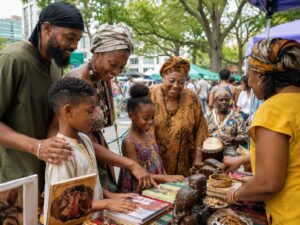
Cultural markets are more than places to shop. They are places where families can experience community, creativity, food, music, fashion, entrepreneurship, storytelling, and cultural pride in one shared space. In the DMV, where Washington, D.C., Maryland, and Virginia are home to many African American, African, Caribbean, Afro-Latin, immigrant, and multigenerational communities, cultural markets can become powerful gathering places for families who want to feel connected to something larger than themselves. A cultural market may include food vendors, handmade jewelry, clothing, books, art, skincare products, music, children’s activities, wellness services, local organizations, community resources, and small businesses built by people with deep ties to culture and family. A child walking through a market may see fabrics, foods, languages, hairstyles, artwork, flags, books, and products that reflect the richness of the African Diaspora. A parent may meet a local business owner. An elder may recognize a food or craft from their past. A teen may discover a creative career path they had never considered before. For families across the Black community, these markets matter because they bring culture into everyday life. They show children that heritage is not only something discussed in school or celebrated once a year. It is alive in people’s work, designs, recipes, businesses, conversations, music, and community events. Markets allow families to see culture being practiced, protected, and passed forward. Cultural markets also help strengthen local economics. When families support vendors, they are often supporting parents, artists, cooks, designers, authors, farmers, beauty professionals, and entrepreneurs who are building something with skill and courage. Every purchase, review, referral, and conversation can help a local dream grow. In this way, a market visit can become both a family outing and an act of community support. 1. Cultural Markets Help Families Experience Culture In A Living Way. Culture is easiest for children to understand when they can experience it with their senses. A child may hear music, smell food cooking, touch handmade fabric, see colorful artwork, taste a dish from another part of the Diaspora, or watch a vendor explain how a product was made. These experiences make culture feel real. They move it beyond a lesson and into memory. In the DMV, cultural markets can reflect many traditions at once. Families may encounter African American soul food, Caribbean spices, West African fabrics, Afro-Latin jewelry, African-inspired art, local authors, natural hair products, handmade soaps, traditional clothing, and modern designs influenced by heritage. This variety helps children understand that the Black community is not one single story. It is wide, layered, creative, and global. Parents and caregivers can make a market visit more meaningful by asking children simple questions as they walk. What do you notice? Which table caught your attention? What food smells interesting? What do you think this item is used for? What would you ask the vendor? These questions encourage curiosity and help children pay attention to the cultural details around them. A cultural market can become a classroom without feeling like school. It teaches through experience, conversation, and discovery. Children may remember the colors, sounds, and people long after the day is over. 2. Markets Give Local Entrepreneurs A Place To Be Seen. Many small business owners begin with limited resources. They may not have a storefront, large advertising budget, or big online following. A cultural market gives them a place to meet customers face to face, share their story, show their products, and build trust with the community. For many vendors, these events are an important step in growing their business. When families visit vendor tables, they are not only looking at products. They are meeting people who have taken the risk to create something. A baker may have spent years perfecting a recipe. A jewelry maker may be carrying forward a family craft. A clothing designer may be expressing cultural pride through fabric and style. A children’s author may be creating stories that help young readers feel seen. Supporting these entrepreneurs helps keep community creativity alive. A purchase from a local vendor can help them buy more supplies, attend another event, improve packaging, support their family, or move closer to opening a larger business. Even when families cannot buy something, speaking with the vendor, taking a card, following their page, or sharing their work can still help. Markets remind children that business ownership is possible. They see real people building real products and services. That exposure can inspire them to think about their own gifts and future ideas. 3. Cultural Markets Teach Children About Entrepreneurship. A market is one of the best places to teach children how business works. Children can see products displayed, prices listed, customers asking questions, vendors explaining value, money being exchanged, and business owners managing their tables. These lessons are practical and easy to understand because children can observe them in real time. Parents can ask children to think like young entrepreneurs. What is this vendor selling? Who might want to buy it? How did they make the table attractive? What makes this product special? How does the owner talk to customers? These questions help children understand that business involves creativity, communication, planning, and service. Teens can learn even deeper lessons. They may notice branding, social media handles, packaging, payment systems, customer service, inventory, and marketing. A teen who enjoys art, cooking, fashion, photography, writing, or technology may begin to see how personal interests can become business opportunities with the right skills and discipline. Entrepreneurship should not be presented as easy. Children also need to understand that business requires hard work, patience, consistency, and responsibility. But seeing local entrepreneurs in action can help young people believe that ownership is possible and that community businesses deserve respect. 4. Food Vendors Help Preserve Diaspora Food Traditions. Food is often one of the most exciting parts of a cultural market. Families may find dishes connected to African American, Caribbean, African, Afro-Latin, Southern, or local DMV traditions. These foods may include stews, rice dishes, grilled meats, seafood, baked goods, spices, sauces, drinks, sweets, and family

Read More »
African Diaspora
Muhammed Wasim

Why Local Events Matter For Black Community Families In The DMV.

Local events are one of the simplest and most powerful ways to bring people together. In the DMV, where Washington, D.C., Maryland, and Virginia are filled with many cultures, neighborhoods, histories, and community traditions, local gatherings can help families feel more connected to the people and places around them. A community event may look like a festival, business market, school program, cultural celebration, health fair, youth workshop, church gathering, neighborhood cleanup, family picnic, storytelling night, or educational seminar, but at its heart, it is a chance for people to show up and remember that they are not alone. For families across the Black community, these events can carry deep meaning. They are not only about entertainment or something to do on the weekend. They can help children see culture in real life, help parents meet other caregivers, help elders feel included, help small businesses gain support, and help young people discover positive places where they belong. When people gather in healthy community spaces, relationships begin to form, trust begins to grow, and families become more aware of the resources around them. The DMV has a special role in African Diaspora life because it includes families with African American, Caribbean, African, Afro-Latin, immigrant, faith-based, professional, student, military, and multigenerational roots. This diversity gives local events the power to introduce children and adults to many different stories, foods, languages, music styles, business owners, leaders, artists, educators, and traditions. A single afternoon at a community gathering can become a learning experience, a networking opportunity, a cultural celebration, and a family memory all at once. Local events matter because community does not grow only online. It grows when people see one another, speak to one another, support one another, and create shared experiences. In a time when many households are busy, stressed, isolated, or disconnected, showing up to local events can help rebuild the village that families need. 1. Local Events Help Families Feel A Stronger Sense Of Belonging. Belonging is one of the most important needs in family and community life. People want to know that they are part of something, that their presence matters, and that there are others around them who understand their experiences. In large metro areas like the DMV, it is possible to be surrounded by people and still feel disconnected. Families may live close to one another but not know each other’s names, needs, stories, or strengths. Local events help reduce that distance. When families attend a neighborhood festival, school gathering, cultural celebration, or community resource day, they begin to see familiar faces. A parent may meet another parent from the same school. A child may recognize someone from a youth program. An elder may reconnect with someone from church or a local organization. These small connections help people feel more rooted in the place where they live. For African Diaspora families, belonging can be especially meaningful when events reflect culture, history, and shared identity. A child who sees music, food, clothing, language, art, and stories connected to their community may feel a stronger sense of pride. Parents may feel encouraged when they see other families raising children with similar hopes and challenges. Elders may feel honored when their memories and traditions are included. Belonging does not happen in one moment, but local events create the conditions for it to grow. Every greeting, conversation, shared meal, performance, workshop, and family outing adds another thread to the fabric of community life. 2. Local Events Give Children A Living Connection To Culture. Children need to see culture as something alive, not only something discussed in school or during special months. Local events can help them experience culture through sound, movement, taste, conversation, art, and community presence. They may hear African drumming, gospel music, go-go, reggae, spoken word, jazz, Afrobeat, or storytelling. They may taste foods from different parts of the Diaspora, see traditional clothing, meet local artists, or watch performances that teach history through creativity. These experiences can stay with children in a deeper way than a simple lesson. A child may forget a paragraph from a textbook, but they may remember dancing at a festival, asking a vendor about handmade jewelry, hearing an elder speak about history, or tasting a dish connected to another part of the African Diaspora. Local events turn culture into memory. Parents and caregivers can make these outings even more meaningful by talking with children before and after the event. They can explain what kind of event they are attending, what traditions may be present, and why the experience matters. Afterward, they can ask what the child noticed, what they enjoyed, what surprised them, and what they want to learn more about. This helps children understand that culture is not distant. It is in their neighborhoods, their families, their community centers, their local businesses, and the people they meet. When children grow up experiencing culture in public and joyful spaces, they are more likely to carry pride into adulthood. 3. Community Events Help Parents And Caregivers Build Support Networks. Parenting can feel lonely when caregivers do not have a strong support system. Many parents are balancing work, school schedules, transportation, bills, health needs, childcare, homework, and emotional responsibilities. Even when they are doing their best, they may feel like they are carrying too much alone. Local events can help parents meet other caregivers who understand the daily realities of raising children. A conversation at a school event, parenting workshop, health fair, youth sports activity, or community gathering can lead to meaningful support. One parent may learn about a tutoring program. Another may find out about a scholarship opportunity, a youth mentorship group, a local doctor, a small business service, or a family-friendly event. These connections often happen naturally when people are in the same space. Support networks do not always begin with deep friendships. Sometimes they begin with a simple exchange of information, a shared concern, or a friendly conversation. Over time, these small connections can become relationships that help families navigate challenges with

Read More »
Skip to content