

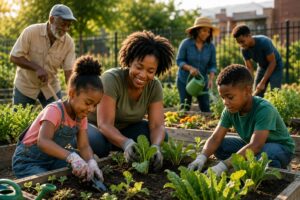

How Community Gardens Support Wellness Across The Black Community.
Community gardens can do more than grow vegetables, herbs, and flowers. They can grow connection, patience, responsibility, health, pride, and shared purpose. A garden gives families a place to work with their hands, learn from the soil, spend time outside, talk with neighbors, and understand where food comes from. In a world where many people are busy, stressed, and disconnected from one another, a community garden can become a peaceful and practical place for rebuilding the village. Across the Black community, gardening has deep meaning. For many families, food has always been connected to survival, culture, creativity, and care. Elders may remember backyard gardens, farm work, herbs grown near the house, fruit trees, shared vegetables, or family recipes made from fresh ingredients. Others may carry memories of migration, land, labor, and resilience. A garden can help children and teens connect with those stories in a living way. Community gardens also support wellness because they bring together several important needs at once. They can help families access fresh food, teach children healthy habits, give elders a meaningful role, provide outdoor recreation, reduce stress, and strengthen neighborhood relationships. A garden can become a classroom, a gathering space, a wellness tool, and a cultural bridge. Families do not need to be experts to begin. A small raised bed, a few pots, a shared church garden, a school garden, or a neighborhood plot can become a starting point. What matters most is the willingness to learn, plant, water, care, and grow together. 1. Community Gardens Help Families Connect With Fresh Food. Many children see food only after it reaches the grocery store, cafeteria, restaurant, or kitchen table. A garden helps them understand that food has a beginning. Tomatoes, peppers, greens, herbs, beans, cucumbers, strawberries, and other foods grow through soil, water, sunlight, time, and care. This can change how children think about what they eat. When children help plant and harvest food, they may become more willing to taste it. A child who refuses vegetables at dinner may feel curious about a cucumber they helped grow or herbs they helped pick. Gardening gives food a story, and that story can make healthy eating feel more personal. Families can use gardens to talk about nutrition in a simple way. They can explain that fresh foods help the body grow, give energy, support digestion, and strengthen wellness. These lessons are easier to understand when children can see and touch the food themselves. Fresh food access matters for families. A community garden may not solve every food challenge, but it can become one helpful source of nourishment, learning, and pride. 2. Gardening Teaches Children Patience And Responsibility. Gardening teaches children that good things take time. A seed does not become food overnight. It must be planted, watered, protected, and watched. Children learn that growth is a process. This lesson is valuable because many parts of modern life move quickly, but real growth often requires patience. A child who waters plants regularly is learning responsibility. A teen who helps weed a garden is learning follow-through. A family that checks on a garden together is learning consistency. These habits can carry into school, chores, relationships, and future work. Gardening also teaches children that neglect has consequences. If plants are not watered, they may dry out. If weeds are ignored, they may take over. If produce is not harvested, it may spoil. These lessons are not harsh when taught with care. They show children how responsibility works in real life. Parents and caregivers can give children age-appropriate garden tasks. Younger children can water, pick herbs, or look for ripe vegetables. Older children and teens can help plant, organize tools, build beds, read seed packets, or manage a small section of the garden. 3. Elders Can Share Wisdom Through Gardening. Elders often carry valuable knowledge about plants, food, seasons, cooking, and family traditions. A community garden can give elders a place to share that wisdom with younger generations. They may know how to grow greens, use herbs, save seeds, prepare traditional dishes, or recognize when a plant is ready to harvest. Including elders in garden projects helps children see them as teachers and keepers of memory. An elder might explain how their family grew food years ago, what crops were common in their childhood, or how certain ingredients were used in family meals. These stories help connect gardening to history and culture. Elders also benefit from being included. Many older adults enjoy being outside, sharing knowledge, and feeling useful. Even if they cannot do heavy garden work, they may be able to advise, tell stories, help sort seeds, sit with children, or participate in light tasks. A strong garden makes room for every generation. The energy of youth and the wisdom of elders can work together beautifully. 4. Gardens Can Strengthen Neighborhood Relationships. Community gardens bring people together around a shared purpose. Neighbors who may not normally speak can meet while planting, watering, harvesting, or cleaning the garden space. A simple conversation over tomatoes or herbs can become the beginning of trust. A garden can help families move from living near each other to knowing each other. Parents may meet other caregivers. Children may make friends. Elders may find people who check on them. Local volunteers may discover shared goals. These relationships can make a neighborhood feel warmer and safer. Gardens also create natural opportunities for cooperation. People may share tools, trade vegetables, water each other’s plants, organize cleanup days, or plan harvest events. This kind of teamwork builds community pride. When people work together to care for a shared space, they often become more invested in the whole neighborhood. A garden can remind everyone that the community is something they help build. 5. Community Gardens Support Outdoor Recreation. Gardening is a form of outdoor activity. It gets people moving, bending, lifting, walking, digging, carrying, and stretching. For families who may not enjoy traditional exercise, gardening can be a gentle and useful way to move the body. Children benefit from