We’re hiring passionate Mentors, Tutors, Program Coordinators & Security Officers to empower youth in Maryland, Washington D.C., Virginia Apply now and make a difference!
Life Youth Mentorship & Tutoring (LYMT) – Second Batch Now Open!
After successfully completing our first year LYMT program, we’re excited to welcome our second batch of students! Led by college educated mentors & tutors, LYMT offers academic support, life skills, STEM tutoring, and enriching activities to help youth excel.
Special Offer: Enroll now for just $200/month (was $250) – limited seat only! (Click here)

Tag: family travel

Fashion
Muhammed Wasim

How Travel Experiences Build Cultural Pride Across The Black Community.

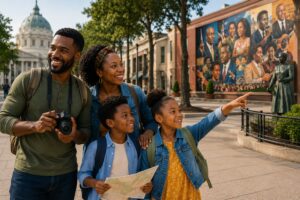
Travel can do more than move a family from one place to another. It can open the heart, stretch the imagination, teach history, create memories, and help children understand culture in a way that feels real. A trip does not have to be far away, expensive, or perfectly planned to matter. Sometimes a meaningful travel experience can happen through a visit to a local museum, a walk through a historic neighborhood, a day at a cultural festival, a trip to a family hometown, a meal at a Diaspora-owned restaurant, or a weekend visit with relatives who carry stories the younger generation needs to hear. Across the Black community, travel can become a powerful way to connect families with heritage, identity, and belonging. Many children learn about culture through books, school lessons, music, food, and family conversations, but travel allows them to experience those lessons with their senses. They can see historic places, hear live music, taste traditional food, walk through neighborhoods that carry memory, meet local business owners, and witness cultural pride in public spaces. These experiences help children understand that history and culture are not distant ideas. They are alive in places, people, stories, and everyday community life. Travel also gives families a chance to step outside the normal routine. Daily life can be full of work, school, bills, appointments, chores, caregiving, and screen time. A trip, even a short one, creates room for families to talk, laugh, explore, take photos, and learn together. These shared moments can become part of family history. Years later, a child may remember the museum they visited with their grandmother, the festival where they first heard a certain rhythm, the restaurant where they tasted a new dish, or the road trip where a parent told stories about where the family came from. Cultural travel is not only about entertainment. It is a way to teach pride, respect, curiosity, and connection. When families travel with purpose, they help children see themselves as part of a wider story that includes local communities, African Diaspora traditions, American history, global culture, family memory, and future possibility. 1. Travel Helps Children Experience History Beyond The Classroom. History can feel distant when it is only presented through textbooks, worksheets, or short school lessons. Children may memorize names and dates without fully understanding the people, places, emotions, and choices behind them. Travel can help history become more personal because it allows children to stand in spaces where stories happened, look at objects connected to real lives, and ask questions while the experience is still fresh in their minds. A museum visit, historic walking tour, monument, cultural center, old church, school site, neighborhood landmark, or local exhibit can help children understand that history happened in real places where people lived, worked, worshiped, struggled, organized, and built community. When a child walks through a historic district or sees photographs, clothing, letters, tools, instruments, artwork, or family records, the past becomes easier to imagine. They begin to understand that history is not only a list of events. It is the story of people. Parents and caregivers can make these visits more meaningful by preparing children before the trip. They can explain where they are going, why the place matters, and what kinds of questions the child might think about. After the visit, they can talk about what stood out, what felt surprising, what made them proud, and what they want to learn more about. These conversations help turn a travel experience into a lasting lesson. For families across the community, visiting places connected to African American history, African Diaspora culture, civil rights, music, art, faith, business, or family migration can help children see that their heritage is deeply woven into the world around them. They learn that their story belongs in public memory. 2. Local Travel Can Be Just As Meaningful As A Big Trip. Many people think of travel as something that requires flights, hotels, passports, or long vacations. While those experiences can be wonderful, local travel can also be deeply meaningful. Families can explore nearby neighborhoods, museums, parks, libraries, markets, cultural centers, restaurants, universities, monuments, festivals, and community events. These local trips can be easier to plan, more affordable, and still full of learning. The DMV, for example, is rich with history, culture, food, music, and African Diaspora connections. Families can find meaningful experiences throughout Washington, D.C., Maryland, and Virginia by visiting museums, historic neighborhoods, community markets, cultural restaurants, bookstores, art spaces, and local festivals. These outings can help children understand that culture is not only found far away. It is present in the region where they live. Local travel also helps families develop a stronger sense of place. Children begin to see their area as more than streets, schools, stores, and traffic. They begin to understand that their region has stories, leaders, businesses, artists, elders, and traditions worth knowing. This can build pride in the community and encourage children to be more curious about the people and places around them. Families can start small by choosing one local place each month to explore. A short outing with a clear purpose can be more valuable than an expensive trip with no conversation. What matters is not the distance traveled. What matters is the intention behind the experience. 3. Heritage Trips Can Connect Families To Their Roots. Heritage trips are powerful because they help families connect with places that shaped their story. This might mean visiting a parent’s hometown, a grandparent’s neighborhood, a family church, a cemetery where ancestors are buried, a school an elder attended, a farm, a city where relatives migrated, or a country connected to family origins. These trips can help children understand that their family did not begin with them. They are part of a longer journey. A trip to a family hometown can open conversations that may not happen at home. An elder may point to a street and say, “This is where I walked to school,” or “That is where your great-grandmother lived,” or “This

Read More »
Fashion
Muhammed Wasim

How Fashion And Travel Help Families Celebrate Culture And Identity.

Fashion and travel may seem like two separate parts of life, but both can help families understand culture in a deeper way. Clothing tells a story about identity, creativity, history, confidence, and belonging. Travel gives families a chance to step outside of their normal routine and experience new places, people, foods, languages, music, neighborhoods, museums, markets, and traditions. When families bring these two things together, they can create meaningful experiences that help children and adults feel more connected to who they are and where they come from. For many African Diaspora families, culture is not only something discussed during heritage months, school projects, or special events. Culture is part of everyday life. It shows up in hairstyles, fabrics, jewelry, colors, church clothes, festival outfits, family photos, vacation memories, food traditions, music, and the way people carry themselves in public spaces. A child may not always understand the full meaning behind these things at first, but over time, clothing and travel can become powerful ways to teach identity without turning every lesson into a lecture. Families do not have to take expensive trips or buy designer clothing to celebrate culture. A meaningful experience can begin with visiting a local museum, attending a cultural festival, shopping from a local designer, learning about traditional fabrics, taking family photos in coordinated outfits, exploring a historic neighborhood, or talking with children about why certain styles matter. The goal is not to impress others. The goal is to help families create memories, build confidence, and keep culture alive through experiences that feel personal and joyful. Fashion and travel can also help children understand that their identity is wide and full of possibility. They can learn that style is more than appearance and travel is more than entertainment. Both can become doors into history, creativity, family pride, economic support, and community connection. 1. Fashion Helps Families Express Identity Without Saying A Word. Clothing can speak before a person says anything. The colors someone chooses, the fabric they wear, the way they style their hair, the jewelry they select, and the care they put into dressing can all communicate confidence, memory, culture, personality, and belonging. In many families, clothing has always carried meaning, whether it is a Sunday church outfit, a graduation dress, a wedding garment, a family reunion shirt, a cultural festival outfit, or a piece of jewelry passed down from an elder. For children, fashion can become an early way to understand identity. A child may notice that a parent dresses differently for church than for work, or that an elder has a special outfit for important gatherings, or that certain colors and patterns appear during cultural events. These observations can lead to meaningful conversations about respect, celebration, tradition, and self-expression. Instead of treating clothing as only something practical, families can use it as a doorway into culture. This does not mean children need to dress perfectly or follow one specific style. Every generation expresses itself differently, and young people often use fashion to explore who they are. Parents and caregivers can guide them with wisdom while still leaving room for creativity. A teenager’s style may not look like an elder’s style, but both can still reflect confidence and identity in different ways. When families talk about style with respect, children learn that how they present themselves can be connected to dignity, creativity, and self-awareness. They also learn that cultural pride can be worn in simple ways, whether through colors, prints, hairstyles, accessories, or clothing connected to family heritage. 2. Travel Helps Families Experience Culture Beyond The Classroom. Children can learn a lot from books, videos, and school lessons, but travel gives them a different kind of understanding. When a child walks through a museum, visits a historic neighborhood, attends a cultural market, hears live music, tastes food from another tradition, or sees art made by people from the African Diaspora, culture becomes real in a way that is hard to replace. The experience involves the whole body, not just the mind. Travel does not always mean flying to another country or taking a long vacation. Families can travel across town, to a nearby city, to a cultural district, to a local festival, to a beach, to a historic site, or to a family member’s hometown. A short trip can still teach children something valuable if adults take time to explain what they are seeing and why it matters. For community families, local travel can be especially powerful because it helps children see that history and culture are close to home. A family may visit a neighborhood shaped by African American history, a museum that honors civil rights leaders, a restaurant connected to Caribbean or African cuisine, or a market where local vendors sell handmade goods. These trips show children that culture is not distant or only found in textbooks. It lives around them. When travel is connected to conversation, children are more likely to remember it. Parents can ask what they noticed, what surprised them, what they enjoyed, and what they want to learn more about. These questions turn an outing into a family learning experience. 3. Cultural Clothing Can Connect Children To Heritage. Cultural clothing can help children feel connected to a larger story. Fabrics, patterns, headwraps, jewelry, colors, embroidery, and traditional designs often carry history and meaning. Some garments may be connected to specific countries, ethnic groups, religious traditions, celebrations, rites of passage, or family customs. When children learn the stories behind these styles, they begin to understand that clothing can carry memory. A parent or elder might explain where a fabric comes from, why certain colors are used, when a garment is worn, or who in the family first introduced a particular style. These conversations help children see that culture is not just something people wear for photographs. It is connected to people, places, and traditions that deserve respect. Children may also feel pride when they wear clothing connected to their heritage. A child attending a cultural event in a traditional

Read More »
Skip to content