

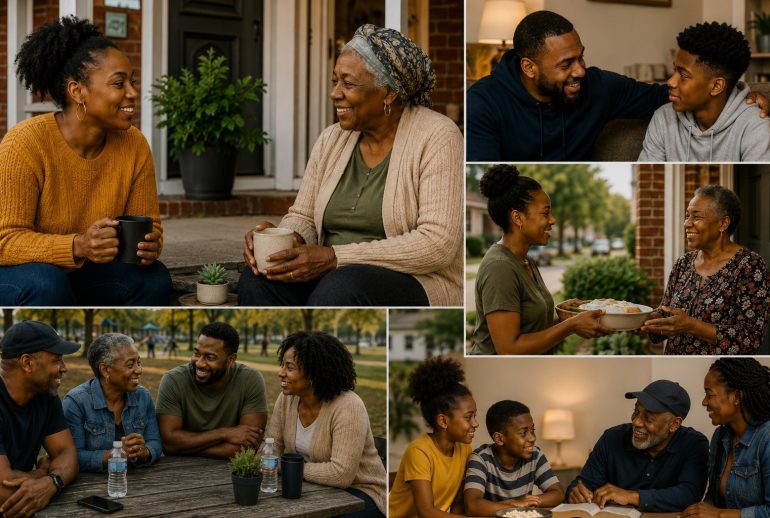
Community check-ins may seem simple, but they can carry deep meaning. A phone call, a text message, a porch conversation, a quick visit, a meal dropped off, or a few honest minutes after church, school, work, or a community event can remind someone that they are not forgotten. In a busy world where many people are carrying stress quietly, checking in can become one of the most practical ways to show care.
Across the Black community, families have always relied on connection to survive and grow. The village has often included parents, grandparents, aunties, uncles, cousins, neighbors, church members, teachers, coaches, barbers, stylists, mentors, and trusted friends. These relationships helped families raise children, care for elders, share resources, celebrate victories, and get through hard seasons. Community check-ins are one way to keep that village alive in everyday life.
Many households are facing pressures that are not always visible from the outside. A parent may be working long hours and feeling exhausted. A teen may be struggling emotionally but hiding it behind silence. An elder may be lonely but unwilling to ask for help. A caregiver may be overwhelmed. A young adult may be trying to figure out school, work, bills, and identity all at once. A family may look fine in public while quietly carrying grief, financial stress, health concerns, or relationship challenges.
This is why check-ins matter. They give people a chance to be seen before they reach a breaking point. They create openings for support before a problem becomes a crisis. They remind families that community care does not always require a formal program or a big event. Sometimes it begins with one person asking, “How are you really doing?” and then taking the time to listen.
1. Check-Ins Help People Feel Seen Before They Feel Forgotten.
One of the hardest feelings a person can carry is the belief that nobody notices what they are going through. Someone may be surrounded by people at work, school, church, or family gatherings and still feel emotionally alone. They may smile, answer “I’m fine,” and continue with responsibilities while quietly feeling unseen. A simple check-in can interrupt that loneliness.
When someone receives a thoughtful call or message, it communicates more than the words themselves. It says, “You crossed my mind.” It says, “Your life matters.” It says, “I noticed you, and I care enough to reach out.” For a person who has been carrying stress quietly, that reminder can bring comfort.
This is especially important for people who are used to being strong for everyone else. Many parents, caregivers, elders, and community leaders spend so much time supporting others that people assume they are always okay. They may not ask for help because they do not want to burden anyone. A check-in gives them permission to be human.
Families and community members should not wait until someone is visibly falling apart before reaching out. Regular connection helps people feel valued in ordinary seasons, not only during emergencies. That steady care builds trust over time.
2. Check-Ins Can Support Parents And Caregivers Who Carry A Lot.
Parents and caregivers often carry responsibilities that others do not fully see. They may be managing work, school schedules, meals, bills, appointments, transportation, emotional support, childcare, elder care, and household needs all at once. Even when they love their families deeply, the weight can become heavy.
A check-in can give caregivers a chance to breathe. Asking “Do you need anything this week?” or “How are you holding up?” can open a door to support. Sometimes the answer may be practical, such as needing help with a ride, a meal, babysitting, errands, or information about a resource. Other times, the caregiver may simply need someone to listen without judgment.
Caregivers may not always ask for help directly because they are used to pushing through. They may feel embarrassed, guilty, or afraid of appearing weak. That is why community members should learn to offer support in specific and respectful ways. Instead of only saying, “Let me know if you need anything,” it may help to say, “I can bring dinner one evening this week,” or “I can sit with the children for an hour while you rest.”
Supporting caregivers strengthens the whole household. When the people who care for others receive care themselves, they are better able to respond with patience, wisdom, and emotional strength. A community that checks on caregivers is helping protect families from burnout.
3. Check-Ins Help Elders Stay Connected And Valued.
Elders are a vital part of family and community life. They carry memory, wisdom, history, faith, humor, recipes, stories, and lessons that younger generations need. Yet many elders experience loneliness, especially when relatives are busy, family members live far away, transportation is limited, or health challenges make it harder to attend gatherings.
Regular check-ins help elders feel included. A phone call, visit, video chat, handwritten note, or invitation to a family meal can remind them that their presence still matters. These moments do not have to be long to be meaningful. Even a short conversation can brighten the day of someone who has been sitting alone for many hours.
Check-ins can also protect elder health and safety. Family members may notice changes in mood, memory, mobility, appetite, medication routines, or home conditions. An elder may not mention a problem unless someone asks. A simple visit can reveal that groceries are needed, a bill is confusing, a doctor appointment was missed, or a repair is necessary.
Caring for elders should include dignity. Check-ins should not make them feel controlled or treated like a burden. The goal is to honor them, listen to them, and support their independence when possible. When elders feel valued, the whole community remains more connected to its roots.
4. Check-Ins Can Help Youth Open Up Before Problems Grow.
Young people may not always say when they are struggling. A child or teen may become quiet, irritated, tired, distracted, or withdrawn without explaining why. They may be dealing with school pressure, bullying, social media stress, friendship problems, identity questions, grief, anxiety, or fear about the future. If no one checks in, they may begin to believe they have to handle everything alone.
Youth check-ins should feel safe, not like interrogation. If every conversation begins with criticism or suspicion, young people may shut down. Adults can ask questions with warmth, such as “What has been the hardest part of your week?” or “Is there anything you wish adults understood better right now?” These questions invite honesty without forcing a young person to defend themselves.
A check-in can also help adults notice when deeper support is needed. If a young person repeatedly expresses hopelessness, talks about feeling unsafe, withdraws from everything they once enjoyed, or shows signs of serious emotional distress, adults should take it seriously and seek appropriate help from trusted professionals or emergency support when needed.
Young people need to know that the community cares about more than their grades, behavior, or achievements. They need to know their feelings matter. A consistent adult who checks in with patience can become an important source of stability in a young person’s life.
5. Check-Ins Strengthen Friendships And Family Relationships.
Relationships do not stay strong by accident. They need attention, time, care, and communication. Many friendships and family bonds become weak not because people stop loving each other, but because life becomes busy and no one makes time to reconnect. Check-ins help keep relationships alive.
A message to a cousin, a call to a sibling, a visit with an aunt, or a conversation with an old friend can rebuild connection. Sometimes people are waiting for someone else to reach out first. Taking that first step can reopen a relationship that has been quiet for too long.
Check-ins can also reduce misunderstandings. When people do not communicate, they may begin to assume the worst. They may think someone does not care, when the truth may be that the person is overwhelmed, grieving, working long hours, or facing private stress. A simple conversation can bring clarity and soften distance.
Families across the community can make check-ins part of their culture by creating routines. A weekly call with elders, a monthly cousin chat, a family group message, or a Sunday evening check-in can help people stay connected even when schedules are full. Consistency makes care easier to maintain.
6. Check-Ins Can Reveal Needs That People May Be Afraid To Share.
Many people do not ask for help until things become very serious. Pride, fear, shame, or past disappointment may keep them silent. Someone may need food, transportation, job leads, childcare support, school help, emotional support, or help understanding a bill, but they may not know how to bring it up.
A thoughtful check-in creates a natural opening. When someone asks with genuine care, the person may feel safe enough to share a little more. They may say, “Actually, this week has been hard,” or “I have been trying to find help with something,” or “I did not want to bother anyone, but I could use support.”
The response matters. If someone opens up and is met with judgment, they may not ask again. If they are met with respect, privacy, and practical care, trust grows. Not every person can solve every problem, but they can listen, connect someone to a resource, pray with them, share information, or help them think through the next step.
Check-ins remind people that needing help does not make them less valuable. Everyone needs support at some point. A strong community makes it easier to ask before the burden becomes too heavy.
7. Check-Ins Help Reduce Isolation In Busy Communities.
Modern life can make people feel disconnected even when they live close to one another. Many people leave home early, come back tired, manage family duties, spend time online, and have little energy left for neighbors or extended family. Over time, this can create isolation. People may live side by side but not truly know one another.
Community check-ins can help rebuild connection. Greeting neighbors, asking after someone’s family, checking on a parent at school pickup, calling an elder, or reaching out to someone who missed a gathering can slowly rebuild the village. These small actions help people feel less alone.
Isolation can affect emotional and physical health. People who feel disconnected may carry stress differently. They may be less likely to ask for help, less likely to attend events, and more likely to feel forgotten. Regular check-ins create small bridges that help people remain connected to community life.
The goal is not to invade privacy or force closeness. The goal is to create a culture of care where people know they are noticed. A simple “I have not seen you in a while, and I wanted to make sure you are okay” can mean a lot.
8. Check-Ins Can Support Grieving Families.
Grief often receives attention immediately after a loss, but support can fade quickly after the funeral, memorial, or first few weeks. Families may still be hurting months later, especially during birthdays, holidays, anniversaries, and ordinary moments when the absence becomes heavy. Check-ins are important because grief does not follow a short timeline.
A grieving person may not need many words. They may need someone to remember. A message that says, “I know this season may be hard, and I am thinking of you,” can bring comfort. A visit, meal, prayer, or invitation to talk can remind the family that their loved one has not been forgotten.
People sometimes avoid checking in because they are afraid of saying the wrong thing. While sensitivity is important, silence can feel painful too. It is often better to speak simply and kindly than to say nothing at all. Families can say, “I do not have perfect words, but I care about you.”
Supporting grieving families is part of community care. It teaches children that love continues after loss and that people should not have to mourn alone. A community that remembers together heals together.
9. Check-Ins Can Help Connect People To Resources.
Sometimes a check-in becomes the bridge to a needed resource. A parent may need tutoring information. An elder may need transportation support. A teen may need mentorship. A family may need a food program, health screening, financial workshop, job lead, childcare resource, or community event. Many resources exist, but people may not know about them until someone shares the information.
Community members can help by becoming resource connectors. This does not mean everyone has to be an expert. It simply means paying attention to useful information and sharing it when appropriate. A flyer, website, phone number, referral, or introduction can make a real difference.
Organizations can also use check-ins to understand what families actually need. Instead of assuming, they can ask. What challenges are you facing? What programs would help? What information is missing? What barriers make it hard to participate? Listening helps community support become more useful and respectful.
Resource sharing works best when it is done with dignity. People should not be made to feel embarrassed for needing help. A helpful check-in says, “There may be support available,” not “You should have handled this better.” Respect keeps the door open.
10. Check-Ins Teach Children How To Care For Others.
Children learn community care by watching adults. If they see parents, grandparents, mentors, and neighbors checking on people, they learn that caring for others is normal. They begin to understand that family and community are not only about receiving support, but also about giving attention, kindness, and help when possible.
A parent can include children in simple check-in habits. They might say, “Let’s call Grandma and see how she is doing,” or “Let’s take a meal to our neighbor,” or “Let’s send your cousin a message before their exam.” These small actions teach children empathy and responsibility.
Children can also learn to notice when someone may need care. They may learn that if a classmate is sitting alone, a kind greeting matters. If an elder is carrying something heavy, offering help matters. If a friend seems sad, asking how they are doing matters. These lessons shape character.
Teaching children to check on others helps build the next generation of community-minded people. It shows them that love is not only spoken. It is practiced through attention, time, and action.
11. Check-Ins Should Be Honest, Not Just Polite.
Many people are used to polite check-ins that do not leave room for truth. Someone asks, “How are you?” and the automatic answer is “I’m good,” even when the person is struggling. While polite greetings are fine, deeper check-ins require more patience and sincerity.
An honest check-in may sound like, “How are you really doing?” or “What has been heavy lately?” or “Do you need support with anything this week?” These questions show that the person asking is willing to hear more than a quick answer. However, the listener must also be ready to slow down. Asking deeper questions without time to listen can feel empty.
Honest check-ins also require trust. Not everyone will open up immediately, especially if they have been judged before. Consistency helps. If someone knows that a friend or family member checks in regularly and handles information with care, they may become more willing to share.
The goal is not to force people to reveal private details. The goal is to create a safe opening. When people know they can tell the truth without being shamed, community relationships become stronger.
12. Community Check-Ins Help Rebuild The Village.
The village is built through repeated acts of care. It is built when people check on elders, support caregivers, listen to youth, remember grieving families, share resources, and stay connected beyond special occasions. A strong community does not only gather during crisis or celebration. It also shows up in the quiet middle of everyday life.
Check-ins help rebuild the village because they remind people that they belong to one another in healthy ways. They help families notice needs earlier, reduce isolation, pass down care habits, and strengthen trust. These small actions may not look dramatic, but over time they shape the emotional health of a community.
A village does not require everyone to know everything about everyone. It requires people to be attentive, respectful, and willing to care. One person cannot carry the whole community, but everyone can carry a small piece of the work.
When check-ins become normal, people are less likely to disappear silently into stress. They are more likely to feel seen, supported, and connected. That kind of care can help families grow stronger across generations.
Conclusion.
Community check-ins matter across the Black community because they help families feel seen, reduce isolation, support caregivers, protect youth, honor elders, connect people to resources, and strengthen relationships. A check-in may seem small, but it can become a powerful act of love when it is offered with sincerity and patience.
Families and community members do not need a formal program to begin. They can start with one call, one text, one visit, one meal, one conversation, or one thoughtful question. These simple actions can open doors to support before problems become crises.
A stronger village is built through consistent care. When people check on one another, they remind the community that no one should have to carry life alone. Every honest conversation, every kind message, and every act of attention helps create a culture where families feel more connected, supported, and valued.
Akukulu Family encourages families and community members to check on one person this week. Call an elder, message a parent, ask a teen how they are really doing, visit a neighbor, or reconnect with a relative you have not spoken to in a while. One sincere check-in can remind someone that they are seen, loved, and not alone.
