

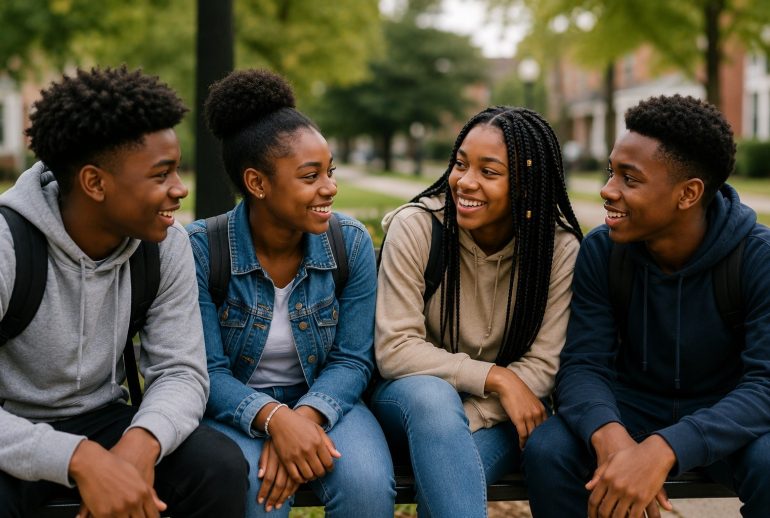
Friendships are a major part of childhood and teen life. Young people often learn about trust, loyalty, communication, confidence, conflict, kindness, boundaries, and belonging through the friends they spend time with. A good friendship can help a child feel encouraged, understood, accepted, and supported. An unhealthy friendship can create stress, insecurity, pressure, sadness, fear, or confusion. Because friendships can shape how young people see themselves, families and communities should take them seriously.
Across the Black community, safe friendships matter because youth are growing up with many pressures around them. They may be dealing with school expectations, social media comparison, neighborhood concerns, family responsibilities, identity questions, bullying, peer pressure, and the desire to fit in. In the middle of all this, friends can either become a source of strength or a source of stress. The people young people choose to be close to can influence their choices, confidence, emotional health, and future direction.
Safe friendships do not mean perfect friendships. Children and teens will still disagree, make mistakes, feel left out at times, and learn how to repair relationships. That is part of growing up. But a safe friendship should not constantly make a young person feel small, afraid, controlled, embarrassed, or pressured to do things they know are wrong. A healthy friendship should leave room for honesty, respect, growth, laughter, accountability, and care.
Parents, caregivers, mentors, teachers, coaches, youth leaders, and community members can help young people understand what friendship should feel like. Adults do not need to control every relationship, but they should guide youth in recognizing the difference between connection and pressure, loyalty and manipulation, conflict and harm, privacy and secrecy, popularity and true belonging. When youth learn these lessons early, they are better prepared to build relationships that support their emotional wellness.
1. Safe Friendships Help Youth Feel Accepted Without Pretending.
One of the strongest signs of a safe friendship is that a young person can be themselves without constantly performing. They should not have to change their personality, hide their interests, act tougher than they feel, dress a certain way, talk a certain way, or pretend to like things they do not like just to keep a friend. Real friendship gives young people room to be honest about who they are.
Many children and teens feel pressure to fit in, especially when they are trying to find their place socially. They may laugh at jokes that make them uncomfortable, follow trends they do not truly like, or stay quiet when something feels wrong because they are afraid of being rejected. This kind of pressure can slowly affect confidence. A young person may begin to believe that acceptance depends on pretending.
Families can help by asking children how they feel around their friends. Do they feel relaxed or nervous? Do they feel respected or judged? Do they feel free to share their thoughts or afraid of being laughed at? These questions can help youth think more deeply about the emotional quality of their friendships.
A safe friendship allows young people to grow into themselves. Friends may have different personalities, interests, and opinions, but they should still treat each other with respect. When youth experience this kind of acceptance, it strengthens their sense of identity and helps them understand that they do not have to earn belonging by becoming someone else.
2. Healthy Friendships Teach Respect And Boundaries.
Boundaries are an important part of every healthy relationship, including childhood and teen friendships. A boundary is a way of saying what is okay and what is not okay. Young people need to learn that a friend should respect their space, time, belongings, feelings, privacy, and choices. If a friend constantly ignores boundaries, that relationship may not be emotionally safe.
For example, a friend should not pressure someone to share private information, send photos, give away passwords, spend money, skip responsibilities, or keep secrets from trusted adults. A friend should not make someone feel guilty for saying no. A friend should not demand constant attention or become angry every time the young person spends time with family or other friends.
Teaching boundaries helps youth build confidence. They learn that saying no can be healthy. They learn that friendship does not require giving up personal values. They learn that someone who truly cares about them will not punish them for having limits. This lesson is especially important as children grow into teens and begin navigating more complex social situations.
Adults can model boundary language. They can teach young people to say, “I do not want to do that,” “Please do not talk to me that way,” “I need space,” or “I am not comfortable with this.” These simple phrases can help youth practice self-respect in real situations.
3. Peer Pressure Can Be Quiet Or Loud.
Peer pressure is often imagined as someone directly saying, “Do this or you are not our friend.” Sometimes it does happen that way, but peer pressure can also be quiet. A young person may feel pressure because everyone else is doing something, because they do not want to be left out, because they want to look cool, or because they fear being called boring, weak, scared, or different.
This pressure can affect many choices. It may involve clothing, language, social media posts, dating, vaping, fighting, skipping class, bullying others, disrespecting adults, sharing private photos, spending money, or going places without permission. Youth may know something is wrong but still feel pulled because they want acceptance.
Families can help young people prepare before these situations happen. Instead of only warning them after a problem, adults can talk through real examples. What would you do if friends wanted you to leave school without permission? What would you say if someone asked you to send a picture you did not want to send? How would you handle a friend pressuring you to be mean to someone else?
Practicing responses can help youth feel more ready. They may say, “I’m good,” “That is not for me,” “I have to go,” or “My family will check on me.” Sometimes giving youth a simple way out can protect them. Peer pressure becomes easier to resist when young people already know their values and have practiced how to respond.
4. Social Media Can Make Friendship Stress More Complicated.
Friendship problems used to happen mostly in person, but now they often continue online. Group chats, comments, likes, posts, screenshots, private messages, and shared photos can create emotional pressure for young people. A child or teen may feel left out after seeing friends together without them. They may feel hurt by a comment, embarrassed by a picture, or pressured to respond quickly to messages.
Social media can also make friendship conflict public. A disagreement that could have been handled privately may become visible to others. Screenshots can spread quickly. Jokes can be misunderstood. Rumors can grow. A young person may feel like everyone is watching, judging, or choosing sides. This can be emotionally exhausting.
Parents and caregivers should talk with youth about online friendship behavior. A real friend should not use social media to embarrass, threaten, expose, or manipulate someone. A real friend should not pressure someone to post things they are uncomfortable with. A real friend should not turn private conversations into public drama.
Families can encourage youth to slow down before responding online. If they are angry, hurt, or embarrassed, it may be better to step away, talk to a trusted adult, or handle the issue in person when safe. Digital friendship choices can have lasting consequences, so young people need guidance before online conflict gets out of control.
5. Safe Friendships Support Emotional Wellness.
Friendships can strongly affect emotional health. A supportive friend can help a young person laugh after a hard day, feel less alone, stay motivated in school, try new activities, and talk through problems. A harmful friendship can create anxiety, sadness, insecurity, anger, or constant stress. Youth may not always recognize this connection, but adults can help them notice patterns.
A helpful question is: how do you usually feel after spending time with this friend? If the answer is calm, happy, encouraged, or understood, that may be a sign of a healthy connection. If the answer is drained, nervous, embarrassed, pressured, or confused most of the time, the friendship may need attention.
Young people should understand that friendships are supposed to include care. Friends do not have to agree on everything, but they should not constantly make each other feel unsafe. A friend can challenge someone to do better without insulting them. A friend can be honest without being cruel. A friend can disagree without trying to destroy the relationship.
Emotional wellness grows when youth learn to choose relationships that help them become better, not relationships that constantly pull them into pain. This does not mean abandoning friends who are struggling, but it does mean understanding that care should not require accepting harm.
6. Conflict Is Normal, But Harm Should Not Be Ignored.
All friendships experience conflict. Children and teens may argue, misunderstand each other, feel jealous, say the wrong thing, or make mistakes. Learning how to apologize, forgive, listen, and repair is part of growing up. A disagreement does not always mean a friendship is bad.
However, there is a difference between normal conflict and repeated harm. If a friend regularly insults, threatens, excludes, manipulates, pressures, controls, spreads rumors, or makes someone feel afraid, adults should not dismiss it as “just drama.” Harmful patterns can affect a young person’s confidence and mental health.
Youth need help understanding this difference. A healthy conflict can be talked through. Both people can take responsibility. There is room for apology and change. But in an unsafe friendship, one person may always blame the other, refuse to listen, or continue the same hurtful behavior. That is not healthy repair.
Families can guide young people by asking what happened, how often it happens, whether the friend takes responsibility, and whether the relationship feels safe. Adults should avoid making every decision for the child too quickly, but they should step in when there is bullying, threats, exploitation, or emotional harm.
7. Friendships Can Influence School And Future Choices.
The people young people spend time with can influence how they think about school, goals, responsibility, and the future. Friends who encourage each other to study, attend class, participate in activities, respect teachers, apply for programs, and make wise choices can help create a positive environment. Friends who constantly pull each other away from responsibility can make school and future planning harder.
This does not mean youth should only be friends with people who are perfect students. Nobody is perfect. But young people should pay attention to whether their friendships support growth or constantly encourage poor choices. A friend who laughs at someone for trying hard in school may be dealing with their own insecurity, but that behavior can still be harmful.
Parents, caregivers, and mentors can help youth think about influence without insulting their friends. Instead of saying, “Your friends are bad,” adults can ask, “What kind of choices do you make when you are with them?” or “Do your friends support your goals?” These questions encourage reflection instead of immediate defensiveness.
Positive peer influence can be powerful. A group of friends can study together, join a club, play sports, volunteer, create art, start a business idea, or support each other through challenges. Safe friendships can help young people move toward the future with more confidence.
8. Youth Need Help Handling Friendship Breakups.
Friendship breakups can hurt deeply. Adults sometimes minimize them by saying, “You will make new friends,” or “It is not that serious,” but for a child or teen, losing a close friend can feel painful and confusing. It may affect their mood, confidence, school focus, and sense of belonging.
A friendship may end because people grow apart, trust is broken, interests change, conflict becomes too heavy, or one person begins making different choices. Sometimes ending a friendship is healthy, but that does not mean it feels easy. Young people need support as they process the loss.
Families can help by listening without immediately judging. A parent might say, “I know this hurts,” or “Tell me what happened,” or “What do you think you need right now?” This gives the young person room to feel sadness without shame. They may need time, encouragement, and reminders that one friendship ending does not mean they are unlovable.
Adults can also help youth reflect on what the friendship taught them. What did they value? What warning signs did they notice? What would they do differently next time? These conversations can turn pain into wisdom. Friendship endings can be hard, but they can also help young people grow.
9. Mentors And Community Spaces Can Help Youth Build Positive Friendships.
Community spaces can play an important role in helping youth form healthier friendships. Sports teams, arts programs, church youth groups, mentoring circles, libraries, cultural organizations, volunteer projects, academic clubs, and recreation programs give young people opportunities to meet peers in structured and positive environments. These spaces can reduce isolation and help youth connect around shared interests.
When young people only have friendship options in stressful or unhealthy environments, they may settle for relationships that do not support them. Positive community spaces expand their options. A teen who joins a music program may meet other creative youth. A child in a sports league may build teamwork. A student in a mentoring program may find peers who care about goals and growth.
Adults in these spaces can also model healthy relationship skills. Coaches, mentors, teachers, youth leaders, and volunteers can teach respect, accountability, communication, teamwork, and conflict resolution. These lessons often become part of how young people build friendships.
Communities should invest in safe youth spaces because friendship is part of development. Young people need places where healthy connection is possible. When the village creates those spaces, youth are more likely to find relationships that help them grow.
10. Families Can Teach Children How To Be Good Friends Too.
Helping young people choose safe friendships is important, but families should also teach them how to be safe friends to others. A child should learn not only how they deserve to be treated, but also how to treat other people with kindness, respect, honesty, and care. Friendship is a two-way responsibility.
Children can learn to listen, share, apologize, keep appropriate trust, include others, avoid gossip, respect boundaries, and speak up when someone is being mistreated. Teens can learn to support friends without becoming responsible for fixing everything. They can learn the difference between loyalty and covering up harmful behavior.
Parents and caregivers can model friendship values at home. Children notice how adults talk about friends, handle conflict, apologize, and show up for people. If adults gossip harshly, ignore boundaries, or treat relationships carelessly, children may copy those patterns. If adults model respect and accountability, children learn better.
Teaching friendship skills helps young people build stronger relationships now and healthier adult relationships later. A child who learns empathy, honesty, and boundaries early is better prepared for future friendships, work relationships, romantic relationships, and community life.
11. Safe Friendships Help Youth Build Confidence And Belonging.
Belonging is one of the deepest needs young people have. They want to know that someone likes them, chooses them, understands them, and wants them around. Safe friendships can help meet that need in a healthy way. When young people feel connected to friends who respect them, they often become more confident.
Confidence grows when youth are surrounded by people who encourage their strengths instead of constantly pointing out weaknesses. A safe friend may celebrate a good grade, support a talent, attend an event, defend someone from bullying, or remind them of their worth during a hard time. These small acts can help young people believe in themselves.
Belonging should not require losing personal values. If a young person has to betray themselves to belong, the connection is not truly safe. Families can help children understand that being alone for a season is painful, but it is better than staying in relationships that cause harm. The right friendships should make room for both connection and self-respect.
When youth experience safe belonging, they are less likely to chase acceptance in harmful places. They learn that they deserve relationships where they are valued, not used or controlled.
12. Safe Friendships Are Part Of A Stronger Community Future.
The friendships young people build today can shape the community of tomorrow. Children and teens who learn respect, trust, communication, boundaries, and care are more likely to become adults who build healthier families, workplaces, neighborhoods, and community spaces. Friendship skills are not small lessons. They are part of social and emotional development.
Across the Black community, supporting youth friendships is part of building the village. Parents can guide. Mentors can encourage. Schools can teach conflict resolution. Community programs can create safe spaces. Elders can share wisdom. Youth can learn to support one another in ways that build strength instead of harm.
Safe friendships also reduce isolation. A young person who has healthy peers may feel more supported during stress. They may be more likely to speak up, ask for help, or make better decisions. Friendship cannot solve every problem, but it can be part of a strong support system.
When families and communities help youth build safe friendships, they are investing in emotional wellness, leadership, and future community health. Young people who learn to care for one another well can carry those values into adulthood.
Conclusion.
Safe friendships matter for youth across the Black community because friendships shape confidence, emotional wellness, identity, school choices, social behavior, and future relationships. A healthy friendship can help a young person feel accepted, respected, encouraged, and supported. An unsafe friendship can create pressure, insecurity, fear, and emotional stress.
Families and community members can help youth recognize the difference. They can teach boundaries, talk about peer pressure, guide online behavior, support young people through friendship conflict, and create positive spaces where healthier relationships can grow. Adults should listen carefully when youth talk about friendship struggles because those struggles can carry real emotional weight.
Young people deserve friendships that help them grow without forcing them to lose themselves. They deserve connection that includes respect, honesty, accountability, and care. When the village helps youth build safe friendships, it strengthens not only individual children and teens, but the future of the whole community.
Akukulu Family encourages parents, caregivers, mentors, educators, and community members to talk with one young person this week about friendship. Ask who makes them feel supported, whether they feel pressured by anyone, and what kind of friend they want to be. One honest conversation can help a child or teen build stronger boundaries, better confidence, and healthier relationships.
