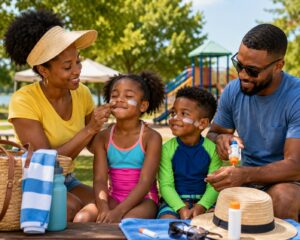

Why Sun Protection Matters For Children Across The Black Community.
Outdoor play is important for children. It gives them space to move their bodies, build friendships, use imagination, enjoy fresh air, release energy, and experience the world beyond screens and indoor routines. Parks, playgrounds, sports fields, summer camps, family cookouts, beach trips, community festivals, neighborhood gatherings, and outdoor recreation can all become joyful parts of childhood. But when children spend time outside, families also need to think carefully about sun protection. Across the Black community, sun safety is sometimes misunderstood. Some people believe that children with deeper skin tones do not need sunscreen or cannot be affected by the sun in serious ways. While melanin does offer some natural protection, it does not make anyone completely immune to sunburn, skin irritation, heat exhaustion, dehydration, or long-term skin damage. Children still need protection, especially during hot weather, long outdoor events, sports practices, travel, and summer activities. Sun protection should not be treated as fear. Children need outdoor joy. They need play, movement, nature, sports, and community events. The goal is not to keep children indoors all the time. The goal is to help them enjoy outdoor life with wisdom. A child can have fun at the park and still wear sunscreen. A family can attend a festival and still take shade breaks. A teen can play sports and still drink enough water. Healthy outdoor habits allow children to enjoy the sun without being careless about their bodies. Parents, caregivers, schools, coaches, youth leaders, and community organizations all have a role to play. When adults plan ahead, children can stay safer, more comfortable, and more prepared during outdoor activities. Sun protection is not only about skin. It is also about hydration, clothing, timing, rest, and paying attention to how children feel in the heat. These small habits can help protect health while keeping outdoor experiences positive. 1. Deeper Skin Still Needs Sun Protection. One common myth is that children with darker skin do not need sun protection. This misunderstanding can cause families to overlook sunscreen, shade, hats, and other simple safety habits. Melanin can help protect the skin to a certain degree, but it does not block all damage from the sun. Children with deeper skin tones can still burn, develop uneven skin tone, experience irritation, or face long-term skin concerns from repeated exposure. This matters because sun damage may not always look the same on every skin tone. On lighter skin, sunburn may appear bright red. On deeper skin, sunburn may look darker, feel hot, tight, painful, itchy, or tender. Sometimes adults may miss the signs because they are expecting redness. Families should pay attention to how the child’s skin feels, not only how it looks. Teaching children that their skin deserves protection can also build healthy self-care habits. Sun protection should not be connected to fear or vanity. It should be explained as part of caring for the body. Just as children brush their teeth, wash their hands, drink water, and wear seatbelts, they can also learn to protect their skin when they spend time outside. When families normalize sunscreen and shade early, children are more likely to continue those habits as teens and adults. This is important because skin care is a lifelong health practice. 2. Sunscreen Should Become A Normal Outdoor Habit. Sunscreen is one of the simplest tools families can use to protect children during outdoor activities. It should be applied before children go outside for long periods, especially during sunny days, summer events, sports, swimming, beach trips, playground time, and outdoor camps. Many families remember sunscreen only during vacations, but children can receive a lot of sun exposure during ordinary days too. Parents and caregivers can make sunscreen part of the outdoor routine. Before leaving for a park, game, festival, or family cookout, sunscreen can be applied along with packing water, snacks, wipes, and extra clothes. When children see adults applying it consistently, it becomes normal instead of unusual. It is also important to reapply sunscreen when children are outside for a long time, especially if they are sweating or swimming. Many people apply sunscreen once and assume they are protected all day, but outdoor activity can reduce its effectiveness. Families should read product instructions and use sunscreen as directed. Some children may not like the feeling of sunscreen. In that case, families can try different types, such as lotions, sticks, or sprays used carefully. The goal is to find a safe and comfortable option that works for the child’s skin and routine. Making sunscreen easier to use can help the habit last. 3. Shade Breaks Help Children Stay Comfortable. Shade is a powerful part of sun protection. Children often become so focused on playing that they do not notice how hot, tired, or thirsty they are becoming. A scheduled shade break can help them cool down before they become overheated. This is especially important during summer afternoons, sports events, outdoor festivals, and long family gatherings. Families can look for shade under trees, tents, umbrellas, pavilions, porches, or indoor rest areas when available. If shade is limited, bringing a small umbrella, canopy, or portable shade option may help during longer events. Even short breaks can give children time to rest, drink water, and reset. Shade breaks should not feel like punishment. Adults can make them part of the activity. A child can come to the shade for fruit, water, a snack, a quick story, or a short conversation before returning to play. Teens may appreciate having a cooler place to sit between games or activities. Community events should also think about shade. If an event is designed for families, there should be areas where children, elders, and caregivers can rest away from direct sun. Shade makes outdoor gatherings safer and more welcoming for everyone. 4. Hydration Is Just As Important As Sunscreen. Sun safety is not only about the skin. It is also about keeping the body hydrated. Children can lose water quickly when they are running, sweating, playing sports, or spending time outside in