

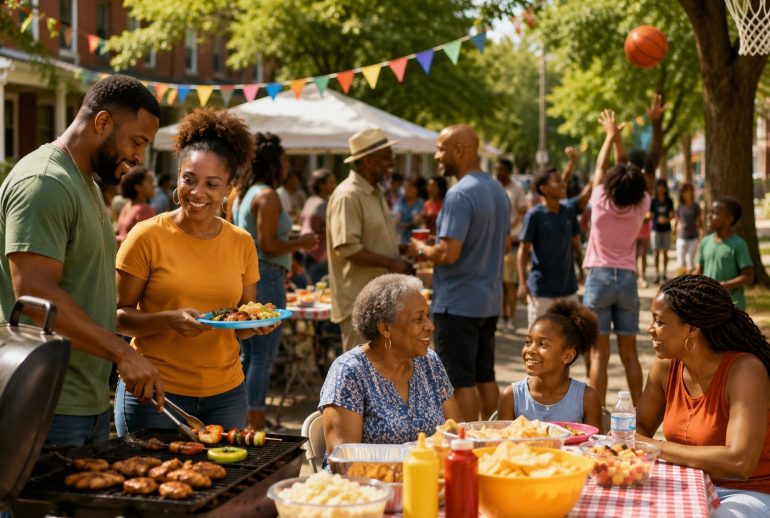
Neighborhood gatherings have always been one of the simplest ways people build trust, friendship, and community pride. A block party, cookout, park day, shared meal, youth activity, outdoor game, community cleanup, or small meet-and-greet can help families move from simply living near each other to actually knowing each other. In a time when many people are busy, tired, working long hours, and spending more time online, these face-to-face moments matter more than ever.
Across the Black community, neighborhood connection has deep meaning. The village was often built through everyday relationships. It was the neighbor who watched children walk home from school, the elder who knew every family on the street, the parent who organized food for a grieving household, the local business owner who remembered names, and the community member who noticed when something did not feel right. These connections helped families feel safer, stronger, and less alone.
Today, many neighborhoods still need that kind of care. Families may live close together but not know each other well. Parents may be raising children without nearby support. Elders may feel isolated. Young people may need positive adults around them. New families may want to feel welcome but not know where to begin. A neighborhood gathering can become the first step toward rebuilding those relationships.
A gathering does not have to be large, expensive, or perfectly organized to matter. Sometimes the strongest community moments begin with a few families, a few chairs, some food, music, games, and a willingness to talk. What matters most is creating a space where people feel seen, welcomed, and respected. When neighbors gather with purpose, they can begin to rebuild the kind of community care that families need.
1. Neighborhood Gatherings Help People Learn Each Other’s Names.
One of the first steps toward building community is simply learning who lives nearby. Many people pass each other every day without knowing names, family situations, needs, or stories. A neighborhood gathering gives people a natural reason to introduce themselves, speak with kindness, and begin building familiarity.
Knowing a neighbor’s name may seem small, but it can change the feeling of a street, apartment building, block, or local community. A person who was once a stranger becomes someone familiar. A parent may discover another family with children the same age. An elder may meet someone willing to check in. A young person may meet a mentor. A new resident may feel less alone.
These introductions also help create trust. Trust usually does not appear overnight. It grows through repeated contact, friendly conversations, and small moments of respect. A gathering gives neighbors the first opportunity to begin that process. Once people have shared a meal, laughed together, or talked about local concerns, it becomes easier to greet each other later.
Families can help children participate by teaching them to greet elders, introduce themselves politely, and speak respectfully with neighbors. These simple manners help children understand that community is built through connection, not only through shared space.
2. Gatherings Create A Safer Feeling In The Neighborhood.
A connected neighborhood often feels safer because people are more aware of one another. When neighbors know each other, they are more likely to notice when something seems unusual, check on children, look out for elders, and communicate about concerns. Safety is not only about rules or security. It is also about relationships.
A neighborhood gathering can help families identify trusted people nearby. Parents may learn who lives near the bus stop. Elders may learn who they can call if they need help. Neighbors may exchange phone numbers for emergencies. Families may discuss traffic concerns, unsafe areas, lighting issues, or ways to support children moving through the neighborhood.
This kind of safety should be rooted in care, not fear. The goal is not to make people suspicious of each other. The goal is to build awareness and responsibility. A strong neighborhood watches out for children without controlling them unfairly. It checks on elders without taking away their dignity. It responds to concerns without turning every issue into conflict.
When people gather regularly, they become more invested in the well-being of the area. A person is more likely to care for a place when they feel connected to the people in it.
3. Children Benefit From Seeing Positive Community Relationships.
Children learn what community means by watching adults. If they see adults ignoring one another, arguing constantly, or staying disconnected, they may grow up thinking that neighborhood relationships do not matter. But when children see adults greeting neighbors, sharing food, helping elders, organizing games, cleaning shared spaces, and speaking with respect, they learn that community care is part of life.
Neighborhood gatherings give children positive memories. They may remember playing outside with other children, eating food with family, hearing music, meeting elders, joining games, helping set up tables, or watching adults laugh together. These memories can help children feel rooted and connected to their community.
Gatherings can also give children safe opportunities to interact with people of different ages. They may talk with elders, play with younger children, meet teens, and see adults working together. This helps them build social confidence and respect across generations.
Families can include children in planning. Children can help make signs, prepare food, choose games, set up chairs, pass out water, or clean up afterward. When children help, they learn that community events are not only something to attend. They are something people build together.
4. Elders Should Be Included And Honored.
Elders carry neighborhood memory. They often know how the community has changed, who lived there before, what traditions mattered, and what lessons younger generations should not forget. A neighborhood gathering becomes stronger when elders are included, welcomed, and treated with respect.
Including elders may require thoughtful planning. They may need seating, shade, transportation, accessible restrooms, quieter areas, or someone to walk with them. These details matter because they communicate that elders are not an afterthought. They are part of the heart of the community.
Elders can contribute in meaningful ways. They may share stories, offer advice, bless the food, teach children old games, explain local history, or simply enjoy being present. Their presence helps children understand that community includes all ages, not only young families.
A gathering can also help identify elders who may need support. Someone may need help with groceries, yard work, transportation, doctor appointments, or regular check-ins. These needs may not be obvious until people spend time together. When elders are included, the neighborhood becomes more caring and complete.
5. Food Helps Bring People Together.
Food is one of the easiest ways to bring people into conversation. A cookout, potluck, picnic, snack table, dessert station, or shared meal creates a welcoming atmosphere. People may feel nervous walking into a formal meeting, but food often makes a gathering feel warmer and more relaxed.
Across the Black community, food has always carried meaning. Meals are connected to family, culture, celebration, comfort, and hospitality. A neighborhood gathering can include foods that reflect different family traditions, whether Southern, Caribbean, African, African American, Afro-Latin, or local favorites. This gives families a chance to share culture through taste and conversation.
Food can also teach children about generosity. They see people bringing dishes, serving one another, making plates for elders, sharing recipes, and cleaning up together. These actions show that food is not only about eating. It is also about care.
A gathering does not need expensive food to be successful. Simple dishes, fruit, water, sandwiches, grilled items, snacks, or shared contributions can be enough. The goal is not to impress people. The goal is to create connection.
6. Music And Games Help People Relax.
Music and games can help make neighborhood gatherings feel joyful and comfortable. Good music can create energy, bring back memories, and help people feel at ease. Games can help children, teens, and adults interact in a natural way. These simple additions can turn a gathering into a memory.
Families might include activities such as jump rope, basketball, card games, dominoes, board games, relay races, sidewalk chalk, hula hoops, dance contests, storytelling circles, or simple group challenges. The activities should fit the age group, space, and comfort level of the community.
Music should be chosen with respect for the setting. If elders, children, and families are present, the music should create a welcoming environment for everyone. A good playlist can include clean songs, cultural music, old-school favorites, gospel, jazz, go-go, soul, Afrobeat, reggae, R&B, or family-friendly local sounds.
Games and music help reduce awkwardness. People who may not know what to say can begin by cheering for a child, dancing, laughing, or joining a simple activity. Joy is an important part of community building.
7. Gatherings Can Connect Families To Resources.
A neighborhood gathering can also become a place where helpful information is shared. Families may learn about tutoring programs, youth mentorship, health screenings, local businesses, school events, food resources, job opportunities, community meetings, voter information, library programs, or elder support services.
This works best when resource sharing feels natural and respectful. A small table with flyers, a short announcement, or a community board can provide information without making the event feel too formal. Families can take what they need and follow up later.
Local organizations can also be invited to participate. A health group might offer blood pressure checks. A library might share children’s programs. A youth mentor might speak with parents. A small business owner might provide information about services. These connections help families understand what support exists nearby.
Many people miss resources because they never hear about them. A neighborhood gathering helps information travel through trusted relationships. When a neighbor shares a resource, people may be more likely to pay attention because the information feels connected to real community life.
8. Local Businesses Can Help Strengthen Gatherings.
Local businesses can play an important role in neighborhood gatherings. A nearby restaurant may provide food. A barber or stylist may help sponsor children’s activities. A local vendor may set up a table. A photographer may capture family moments. A small business owner may donate water, supplies, or raffle items. These partnerships help connect business and community.
Supporting local businesses during gatherings also teaches children about ownership. They see entrepreneurs serving the neighborhood, building relationships, and contributing to community life. This can inspire young people to think about their own future ideas.
Businesses benefit too. They get to meet families, introduce services, and build trust. When a business becomes known as a community supporter, people may be more likely to support it in return. This creates a healthy cycle of local economics and neighborhood pride.
A gathering does not need to turn into a marketplace, but it can make room for local talent. Artists, bakers, designers, tutors, wellness providers, youth entrepreneurs, and service providers may all have something valuable to offer. Highlighting them helps the community see its own strength.
9. Youth Should Have A Meaningful Role.
Young people should not only attend neighborhood gatherings. They should be invited to help shape them. Youth can help plan activities, set up tables, make playlists, lead games, assist elders, take photos, welcome guests, manage cleanup, or share ideas about what would make the event better. Giving youth responsibility helps them feel trusted and included.
When young people are given meaningful roles, they begin to see themselves as contributors. They learn leadership, teamwork, communication, and service. They also feel more connected to the neighborhood because they have helped create something positive.
Youth involvement can also reduce boredom and disconnection. If teens feel that community events are only for adults or small children, they may not want to participate. Giving them a voice helps make the gathering more relevant. Adults can ask what activities teens would enjoy, what music is appropriate, what topics matter to them, or what support they need.
A neighborhood that listens to youth is investing in its future. Young people who feel respected are more likely to become adults who respect and serve the community.
10. Gatherings Can Help New Families Feel Welcome.
Moving into a new neighborhood can feel lonely. A family may not know who to trust, where to find resources, what schools are like, which parks are safe, or how to connect with others. A neighborhood gathering can help new families feel seen and welcomed.
A simple introduction can make a difference. Someone saying, “We are glad you are here,” or “Let us know if you need anything,” can help a new family feel less like outsiders. Children in new families may also meet peers and begin building friendships.
Welcoming new families is important because neighborhoods change over time. People move in and out, and connection must be rebuilt with each new season. A strong community does not only honor long-time residents. It also makes space for new people to belong.
Families who feel welcomed are more likely to participate, support local efforts, and care about the neighborhood. A warm welcome can become the beginning of long-term connection.
11. Good Planning Helps The Gathering Run Smoothly.
A successful neighborhood gathering does not need to be complicated, but some planning helps. Organizers should think about location, time, food, seating, music, activities, cleanup, safety, permits if needed, weather, accessibility, and communication. Clear planning helps people feel comfortable and reduces confusion.
It is helpful to share responsibilities. One person should not have to do everything. Different families can handle food, games, music, invitations, setup, cleanup, children’s activities, or resource tables. Shared responsibility builds teamwork and prevents burnout.
Communication also matters. Families should know when and where the gathering will happen, what to bring, whether children are welcome, and what activities are planned. Flyers, text messages, social media posts, church announcements, school groups, or word of mouth can help spread the news.
Good planning shows respect for people’s time and comfort. It also helps the event feel welcoming instead of chaotic. When gatherings run smoothly, people are more likely to attend again.
12. Consistent Gatherings Help Rebuild The Village.
One gathering can open the door, but consistency builds the village. A neighborhood that gathers once and never again may enjoy a good day, but repeated gatherings help relationships grow. People need more than one opportunity to talk, trust, and connect.
Consistency does not mean hosting a large event every month. It might mean a seasonal block party, a monthly park meetup, a quarterly cleanup, a back-to-school gathering, a summer cookout, or a holiday community meal. The rhythm can be simple, but it should be steady enough for people to look forward to it.
Over time, repeated gatherings create community memory. Children grow up remembering neighborhood traditions. Elders feel included. Parents build relationships. Local businesses become familiar. New families are welcomed. Resources are shared more easily. Trust becomes stronger.
Rebuilding the village happens through repeated acts of connection. Neighborhood gatherings give families a practical way to begin.
Conclusion.
Neighborhood gatherings build stronger connections across the Black community because they help families meet, share resources, support children, honor elders, strengthen safety, and create a deeper sense of belonging. A block party, cookout, park day, community meal, youth activity, or simple outdoor gathering can become more than an event. It can become a starting point for trust.
Families do not need a large budget or perfect plan to begin. They can start with a small group, a shared meal, a few games, a conversation with neighbors, or a simple invitation to gather. What matters most is the intention to create a welcoming space where people feel seen and respected.
When neighbors know one another, the whole community becomes stronger. Children feel more rooted, elders feel less forgotten, parents feel more supported, and families begin to experience the neighborhood as a village again. One gathering can begin a connection that lasts for years.
Akukulu Family encourages families and community members to help create one neighborhood connection this month. Host a small gathering, attend a local event, invite a neighbor to talk, include children in planning, check on an elder, or support a community cookout. One simple gathering can help rebuild trust, joy, and connection across the neighborhood.
