

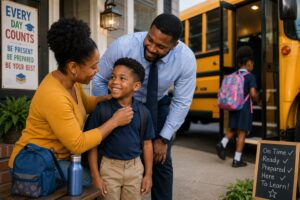

How School Attendance Supports Student Success Across The Black Community.
School attendance is one of the simplest but most powerful parts of student success. When children attend school regularly, they have more opportunities to learn, ask questions, build relationships with teachers, participate in class, complete assignments, and stay connected to the rhythm of learning. Missing one day may not seem serious, but repeated absences can make it harder for children to keep up, especially when lessons build on one another. Across the Black community, education has always been connected to opportunity, dignity, family progress, and future preparation. Parents, caregivers, elders, teachers, mentors, and community leaders want children to succeed, but success requires consistency. A child cannot benefit fully from school if they are often absent, late, or disconnected from classroom learning. Attendance is not the only part of education, but it is a foundation that supports everything else. Families face real challenges that can affect attendance. Children may miss school because of illness, transportation problems, unstable routines, family responsibilities, lack of sleep, anxiety, bullying, housing issues, appointments, or feeling discouraged in class. Some teens may skip because they feel behind, disconnected, or unmotivated. These challenges should be met with support, not shame. The goal is to understand what is getting in the way and help families build stronger routines. Strong attendance habits help children learn responsibility. They teach students that showing up matters, even on days when they feel tired, bored, nervous, or challenged. This lesson reaches beyond school. In adulthood, showing up matters for jobs, business, family, community service, and personal goals. When children learn the value of attendance early, they are building a life skill that can support their future. 1. Regular Attendance Helps Children Keep Up With Lessons. School lessons often build step by step. A math lesson today may prepare a child for tomorrow’s assignment. A reading discussion may connect to next week’s writing project. A science activity may lead to a test or group project. When children miss school, they may miss important pieces that make future lessons harder to understand. Even when students receive makeup work, it may not fully replace the classroom experience. They may miss teacher explanations, peer discussion, hands-on activities, examples on the board, or chances to ask questions in the moment. This can make the child feel behind, even after completing missed assignments. When students feel behind, they may become discouraged. A child may avoid work because they do not understand it. A teen may stop participating because they feel embarrassed. Regular attendance helps prevent this cycle by keeping students connected to daily learning. Families can help by treating attendance as part of academic support. Showing up consistently gives children a stronger chance to understand lessons as they happen instead of trying to catch up later. 2. Attendance Builds Stronger School Routines. Children do better when school becomes part of a steady routine. Waking up, getting dressed, eating breakfast, packing a backpack, arriving on time, attending classes, and returning home creates structure. This structure helps children understand that school is a normal and important part of life. When attendance is inconsistent, routines can become harder. Children may struggle to wake up on time, forget assignments, feel disconnected from class expectations, or resist going back after missing several days. The longer a child is away, the harder returning can feel. A strong routine begins at home. Families can prepare clothes and backpacks the night before, protect bedtime, plan transportation, and create a morning rhythm that reduces rushing. These small steps help children arrive at school calmer and more prepared. Routines do not need to be perfect. Some mornings will still be difficult. But a consistent pattern helps children learn responsibility and makes school attendance easier to maintain. 3. Being Present Helps Children Build Confidence. Children gain confidence when they understand what is happening in class. Regular attendance helps them stay familiar with lessons, classroom routines, teacher expectations, and peer relationships. This familiarity can reduce anxiety and help children feel more capable. When a child misses school often, they may return feeling unsure. They may not know what page the class is on, what assignment is due, or what group activity is happening. This can create embarrassment and make the child less likely to participate. Confidence grows when children feel prepared. A student who attends regularly is more likely to raise a hand, ask questions, complete assignments, and join discussions. They may still face challenges, but they are not constantly trying to recover from missed time. Families can encourage children by connecting attendance to confidence. Showing up gives the child more chances to learn, practice, and grow. Each day present is another opportunity to build strength. 4. Attendance Supports Relationships With Teachers. Teachers get to know students through daily interaction. They notice strengths, learning styles, behavior patterns, effort, friendships, and areas where support is needed. When students attend regularly, teachers have more opportunities to understand and guide them. A child who is often absent may have fewer chances to build trust with teachers. The teacher may struggle to know whether the child needs academic help, emotional support, or more encouragement. Regular attendance helps teachers notice patterns early and respond more effectively. Relationships with teachers matter because children often work harder when they feel seen and supported. A teacher who knows a student well can encourage them, challenge them, and help them recover from mistakes. That relationship becomes harder to build when the student is rarely present. Parents can support this by communicating with teachers when absences happen. A short message can help the teacher understand what is going on and how to help the child catch up. 5. Attendance Helps Children Maintain Friendships And Social Connection. School is not only academic. Children also build friendships, social skills, teamwork, communication, and confidence through daily interaction with classmates. When students miss school often, they may feel left out socially. They may miss group activities, lunch conversations, playground moments, club meetings, or shared classroom experiences. Social disconnection can affect motivation. A child who feels