

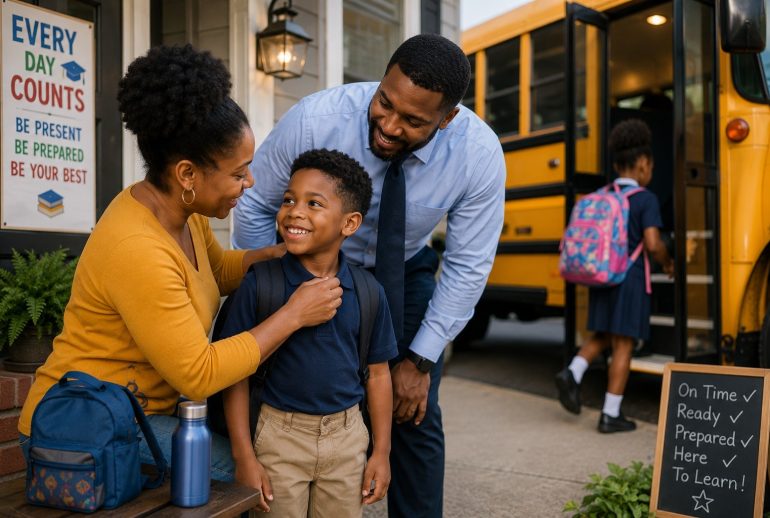
School attendance is one of the simplest but most powerful parts of student success. When children attend school regularly, they have more opportunities to learn, ask questions, build relationships with teachers, participate in class, complete assignments, and stay connected to the rhythm of learning. Missing one day may not seem serious, but repeated absences can make it harder for children to keep up, especially when lessons build on one another.
Across the Black community, education has always been connected to opportunity, dignity, family progress, and future preparation. Parents, caregivers, elders, teachers, mentors, and community leaders want children to succeed, but success requires consistency. A child cannot benefit fully from school if they are often absent, late, or disconnected from classroom learning. Attendance is not the only part of education, but it is a foundation that supports everything else.
Families face real challenges that can affect attendance. Children may miss school because of illness, transportation problems, unstable routines, family responsibilities, lack of sleep, anxiety, bullying, housing issues, appointments, or feeling discouraged in class. Some teens may skip because they feel behind, disconnected, or unmotivated. These challenges should be met with support, not shame. The goal is to understand what is getting in the way and help families build stronger routines.
Strong attendance habits help children learn responsibility. They teach students that showing up matters, even on days when they feel tired, bored, nervous, or challenged. This lesson reaches beyond school. In adulthood, showing up matters for jobs, business, family, community service, and personal goals. When children learn the value of attendance early, they are building a life skill that can support their future.
1. Regular Attendance Helps Children Keep Up With Lessons.
School lessons often build step by step. A math lesson today may prepare a child for tomorrow’s assignment. A reading discussion may connect to next week’s writing project. A science activity may lead to a test or group project. When children miss school, they may miss important pieces that make future lessons harder to understand.
Even when students receive makeup work, it may not fully replace the classroom experience. They may miss teacher explanations, peer discussion, hands-on activities, examples on the board, or chances to ask questions in the moment. This can make the child feel behind, even after completing missed assignments.
When students feel behind, they may become discouraged. A child may avoid work because they do not understand it. A teen may stop participating because they feel embarrassed. Regular attendance helps prevent this cycle by keeping students connected to daily learning.
Families can help by treating attendance as part of academic support. Showing up consistently gives children a stronger chance to understand lessons as they happen instead of trying to catch up later.
2. Attendance Builds Stronger School Routines.
Children do better when school becomes part of a steady routine. Waking up, getting dressed, eating breakfast, packing a backpack, arriving on time, attending classes, and returning home creates structure. This structure helps children understand that school is a normal and important part of life.
When attendance is inconsistent, routines can become harder. Children may struggle to wake up on time, forget assignments, feel disconnected from class expectations, or resist going back after missing several days. The longer a child is away, the harder returning can feel.
A strong routine begins at home. Families can prepare clothes and backpacks the night before, protect bedtime, plan transportation, and create a morning rhythm that reduces rushing. These small steps help children arrive at school calmer and more prepared.
Routines do not need to be perfect. Some mornings will still be difficult. But a consistent pattern helps children learn responsibility and makes school attendance easier to maintain.
3. Being Present Helps Children Build Confidence.
Children gain confidence when they understand what is happening in class. Regular attendance helps them stay familiar with lessons, classroom routines, teacher expectations, and peer relationships. This familiarity can reduce anxiety and help children feel more capable.
When a child misses school often, they may return feeling unsure. They may not know what page the class is on, what assignment is due, or what group activity is happening. This can create embarrassment and make the child less likely to participate.
Confidence grows when children feel prepared. A student who attends regularly is more likely to raise a hand, ask questions, complete assignments, and join discussions. They may still face challenges, but they are not constantly trying to recover from missed time.
Families can encourage children by connecting attendance to confidence. Showing up gives the child more chances to learn, practice, and grow. Each day present is another opportunity to build strength.
4. Attendance Supports Relationships With Teachers.
Teachers get to know students through daily interaction. They notice strengths, learning styles, behavior patterns, effort, friendships, and areas where support is needed. When students attend regularly, teachers have more opportunities to understand and guide them.
A child who is often absent may have fewer chances to build trust with teachers. The teacher may struggle to know whether the child needs academic help, emotional support, or more encouragement. Regular attendance helps teachers notice patterns early and respond more effectively.
Relationships with teachers matter because children often work harder when they feel seen and supported. A teacher who knows a student well can encourage them, challenge them, and help them recover from mistakes. That relationship becomes harder to build when the student is rarely present.
Parents can support this by communicating with teachers when absences happen. A short message can help the teacher understand what is going on and how to help the child catch up.
5. Attendance Helps Children Maintain Friendships And Social Connection.
School is not only academic. Children also build friendships, social skills, teamwork, communication, and confidence through daily interaction with classmates. When students miss school often, they may feel left out socially. They may miss group activities, lunch conversations, playground moments, club meetings, or shared classroom experiences.
Social disconnection can affect motivation. A child who feels like they do not belong may be less excited to attend school. A teen who feels distant from classmates may become more likely to skip or withdraw. Regular attendance helps students remain part of the classroom community.
Families can ask children about the social side of school. Who do you sit with? Do you feel included? Is anyone bothering you? Do you feel safe? These questions can reveal whether attendance problems are connected to friendships, bullying, or emotional stress.
When children feel connected socially, school can feel less lonely. Attendance helps them stay part of the community around them.
6. Chronic Absences Can Affect Long-Term Progress.
Missing school repeatedly can affect long-term learning. A few absences may be unavoidable, especially during illness or emergencies. But when absences become frequent, children may lose important learning time. Over months and years, those missed days can add up.
Repeated absences can affect reading growth, math skills, classroom confidence, grade promotion, test preparation, and future readiness. Students may begin to feel that school is something they are always trying to catch up with instead of something they are actively participating in.
Families may not always realize how quickly absences add up. Missing two days a month can become many days over the school year. This is why tracking attendance matters. Parents and caregivers can check attendance records and talk with the school if they notice a pattern.
The goal is not to blame families. The goal is to respond early. If attendance is becoming a challenge, support should begin before the child falls too far behind.
7. Families Should Identify What Is Getting In The Way.
Attendance problems usually have a reason. A child may be sick often, tired, anxious, bullied, struggling academically, missing transportation, lacking clean clothes, dealing with family stress, or feeling unsafe. A teen may feel overwhelmed, embarrassed, depressed, or disconnected from school. The first step is understanding the barrier.
Parents and caregivers can ask calm questions. What makes it hard to go to school? Are you worried about something? Is there a class you are avoiding? Are you tired in the morning? Is someone bothering you? Do you feel behind? These questions can help reveal what the child may not say on their own.
Schools can also help identify patterns. Are absences happening on certain days? Before tests? After weekends? During specific classes? Patterns can point to the real issue. Once the cause is clearer, families and schools can work toward a solution.
Attendance support should be practical and compassionate. A child who is avoiding school because of fear or struggle needs guidance, not only punishment. Understanding the barrier helps adults respond wisely.
8. Health And Sleep Affect Attendance.
Children who do not sleep enough may struggle to wake up for school. Poor sleep can lead to lateness, missed buses, morning arguments, and tiredness in class. Health issues can also affect attendance, especially if children have asthma, allergies, chronic conditions, dental pain, anxiety, or frequent illness.
Families can support attendance by building healthier routines. A consistent bedtime, reduced screen use at night, prepared clothes and backpacks, and calmer evenings can make mornings easier. Children who sleep better are more likely to wake up ready for school.
Health needs should also be addressed early. If a child misses school often because of illness, pain, or emotional distress, parents may need to speak with a healthcare provider or school nurse. Preventive care and treatment can support better attendance.
Schools can help families by connecting them to resources when health-related absences become a pattern. Attendance is stronger when children’s physical and emotional needs are supported.
9. Transportation Planning Matters.
Transportation problems can make regular attendance difficult. A missed bus, unreliable ride, car trouble, weather issues, or confusing pickup schedule can cause students to be late or absent. Families may feel frustrated when transportation challenges keep children from school even when they want to attend.
Planning ahead can help. Families can prepare a backup transportation plan when possible. This may include a trusted relative, neighbor, carpool, school transportation office, walking group, or emergency contact. Not every family has easy options, but identifying support early can prevent repeated absences.
Children should also know the morning plan. They should know when to wake up, when to leave, where to wait, and who to contact if something goes wrong. This is especially important for older children and teens who may have more responsibility.
Community support can matter too. A connected neighborhood can help families share information and support safe school transportation. When transportation barriers are reduced, attendance becomes easier.
10. Parents And Schools Should Work Together Early.
Attendance improves when families and schools work together before the problem becomes serious. If a child begins missing school often, parents should not feel ashamed to ask for help. Schools may be able to offer attendance support, counseling, tutoring, transportation guidance, health referrals, or meetings to create a plan.
Teachers can help by sharing missed work and identifying what the child needs to catch up. Counselors can help if attendance is connected to anxiety, bullying, grief, or family stress. Administrators can help identify resources. Parents bring important knowledge about what is happening at home.
A team approach protects the child. Instead of the school only sending warning letters or the family feeling blamed, everyone can focus on solutions. The conversation should ask, “What is preventing attendance, and what support will help?”
Early communication can keep a child connected to learning and reduce the stress of falling behind.
11. Teens Need Attendance Accountability And Purpose.
Teenagers may need a different kind of attendance support than younger children. They may skip school because they feel bored, behind, anxious, socially disconnected, or convinced that school does not matter. They may also have jobs, family responsibilities, or peer pressure that affects attendance.
Teens need accountability, but they also need purpose. Adults can help them connect attendance to future goals. Whether a teen wants college, trade school, military service, business ownership, athletics, art, technology, or work opportunities, showing up matters. Attendance builds discipline and keeps options open.
Parents and mentors can talk with teens about the real consequences of missed school, including grades, credits, graduation, scholarships, jobs, and trust. These conversations should be honest without becoming hopeless or shaming.
Teens also need to be part of the solution. Ask what would help them attend more consistently. Do they need academic help? A better morning routine? Support with anxiety? A mentor? A conversation with a teacher? Involving them builds responsibility.
12. Strong Attendance Habits Prepare Children For Life.
Attendance is not only about school. It teaches a larger life lesson: showing up matters. Children who learn to attend school regularly are practicing responsibility, discipline, time management, and commitment. These habits will matter in jobs, business, relationships, community service, and personal goals.
A child who learns to show up even when something is difficult builds resilience. A teen who learns to be on time and prepared builds trust. These are qualities that can help them in adulthood.
Families can teach attendance as a value. We show up for school. We show up for responsibilities. We show up for our future. This message helps children understand that attendance is not only a rule. It is part of becoming dependable.
When the community supports strong attendance, it is investing in future leaders, workers, parents, entrepreneurs, creators, and servants. Every school day is an opportunity to grow.
Conclusion.
School attendance supports student success across the Black community because it helps children keep up with lessons, build confidence, maintain relationships, develop routines, and prepare for the future. Regular attendance gives students more chances to learn, participate, ask for help, and stay connected to school life.
Families may face real challenges that affect attendance, including health, transportation, sleep, stress, bullying, or academic struggle. These barriers should be addressed with support and communication. Parents, caregivers, teachers, counselors, mentors, and community members can work together to help children show up consistently.
Strong attendance habits begin with small steps: preparing the night before, protecting bedtime, planning transportation, communicating with teachers, and asking children what may be getting in the way. When children show up regularly, they build the foundation for stronger learning and stronger futures.
Akukulu Family encourages parents, caregivers, educators, mentors, and community members to support one attendance habit this week. Prepare school items the night before, check attendance records, talk with a child about school concerns, create a backup transportation plan, or contact a teacher early if absences become a pattern. One consistent habit can help a child stay connected, confident, and ready to learn.
