

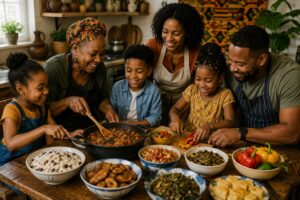

How Food Stories Connect Families Across The Black Community.
Food is never just food. A meal can carry memory, culture, family history, love, survival, creativity, and connection. One dish can remind someone of a grandmother’s kitchen, a holiday table, a church gathering, a family reunion, a neighborhood cookout, a school lunch, a homeland, a migration story, or a season when the family had to stretch what little they had and still make it feel like enough. Across the Black community, food has always been one of the ways families remember who they are. Food stories matter because they help families pass down more than recipes. They pass down values. A child who learns how a dish was made also learns who made it, why it mattered, where it came from, and what the family was going through at the time. A pot of stew, a plate of greens, a bowl of rice, a family spice blend, a holiday dessert, or a simple breakfast can become a doorway into family identity. Across the African Diaspora, food traditions are wide and rich. African American, Caribbean, African, Afro-Latin, Southern, and immigrant family foodways all carry different flavors and histories. Some families use rice, beans, plantains, greens, okra, fish, cornmeal, sweet potatoes, peppers, spices, stews, soups, breads, teas, and fruits in ways that reflect both heritage and adaptation. These foods can tell stories about geography, agriculture, migration, hardship, celebration, and creativity. In today’s busy world, many families eat quickly or separately. Children may not always know the stories behind what they are eating. Elders may carry recipes in memory that have never been written down. Parents may want to cook family dishes but feel rushed by work, school, and daily responsibilities. That is why food stories should be protected intentionally. When families take time to talk about food, cook together, and preserve recipes, they strengthen connection across generations. 1. Food Helps Children Understand Family History. Children often learn family history through stories, photos, and names, but food can make history feel real. A child may not fully understand where an ancestor lived or what a grandparent experienced, but they can taste a dish connected to that story. Food gives history texture, smell, flavor, and emotion. A parent might say, “Your grandmother made this every Sunday,” or “This dish comes from the island where our family started,” or “We ate this when money was tight because it could feed everybody.” These simple comments help children understand that meals are connected to real people and real seasons. Food stories can also help children ask better questions. Who taught you to cook this? Did you eat this when you were young? Was this for holidays or everyday meals? Did our family change the recipe over time? These questions open the door to deeper conversations. When children understand the story behind food, they may develop more respect for the meal and the people who prepared it. They begin to see the table as a place where family memory lives. 2. Elders Carry Recipes That Should Be Preserved. Many elders do not cook from written recipes. They cook by memory, touch, smell, sight, and experience. They may say “a little bit of this,” “cook it until it looks right,” or “you will know when it is ready.” That kind of wisdom is valuable, but it can disappear if younger generations do not take time to learn. Families can preserve elder recipes by cooking together, recording conversations, taking notes, making videos, or writing down steps while the elder prepares the dish. Even if the measurements are not perfect, capturing the method, story, and meaning matters. A recipe is more than ingredients. It is a piece of family history. Children and teens can be included in this process. They can ask questions, take pictures, write down ingredients, or help prepare the food. This gives them a role in protecting the family legacy. It also helps elders feel valued because their knowledge is being honored. Preserving recipes does not mean freezing them in the past. Families can still adapt dishes for health, budget, or modern schedules. But the original story should not be lost. Knowing where a recipe came from helps families carry it forward with respect. 3. Cooking Together Builds Stronger Family Bonds. Cooking together can create powerful family connection. A parent teaching a child to chop vegetables safely, an elder showing a teen how to season a dish, siblings washing fruit, or a family preparing a holiday meal can all become bonding moments. The kitchen becomes a place where conversation and learning happen naturally. Children often open up while doing something with their hands. A child who might not want to sit for a serious conversation may talk while stirring, peeling, washing, or setting the table. Cooking creates a relaxed space for stories, laughter, questions, and encouragement. Cooking together also teaches responsibility. Children learn that meals require planning, preparation, patience, and cleanup. They learn that feeding a family is work and care. This can help them appreciate the people who cook for them. Family cooking does not need to be complicated. A child can help make a salad, mix batter, season vegetables, pack snacks, or help with a simple breakfast. The goal is not perfection. The goal is connection, learning, and shared memory. 4. Food Traditions Can Strengthen Cultural Pride. Food can help children feel proud of their heritage. When families explain where dishes come from and why they matter, children learn that their culture is rich, creative, and meaningful. They begin to see food as part of identity, not only something to eat. A family may prepare jollof rice, gumbo, jerk chicken, collard greens, injera, rice and peas, plantains, black-eyed peas, okra stew, cornbread, lentils, pepper soup, or many other dishes depending on their background. Each dish can carry a story about place, people, and tradition. Cultural pride grows when children see their food treated with respect. If a child brings cultural food to school and others do not understand it, family confidence can help them respond