

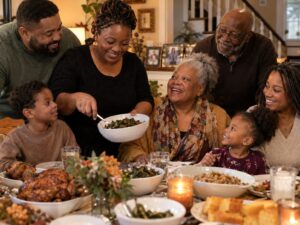

How Family Traditions Build Stronger Bonds Across The Black Community
Family traditions give people something to return to. They create familiar moments, shared memories, and a sense of belonging that can stay with children long after they grow up. A tradition can be as simple as Sunday dinner, Friday movie night, birthday breakfast, holiday cooking, family prayer, summer reunions, game nights, storytelling with elders, or calling grandparents every weekend. What makes it a tradition is not how expensive or elaborate it is. What matters is that the family repeats it with meaning. Across the Black community, traditions have often helped families stay connected through change, hardship, migration, work, distance, and generational shifts. Families have passed down food, faith, music, stories, sayings, celebrations, clothing, values, and ways of gathering. These traditions help younger generations understand that they are part of something larger than themselves. In a busy world, family traditions can easily disappear. Work schedules change. Children grow older. Relatives move away. Technology takes more attention. Holidays become rushed. Sometimes families do not realize a tradition is fading until years have passed. That is why it helps to be intentional. Traditions do not have to stay exactly the same forever. Families can adapt them as life changes. A grandmother’s Sunday dinner may become a monthly family meal. A yearly reunion may become a group video call when travel is difficult. A holiday recipe can be taught to the next generation. The tradition can evolve while the meaning stays strong. 1. Traditions Give Children A Sense Of Belonging. Children need to know where they belong. Family traditions help answer that question. When a child knows that Friday night means pizza and games, Sunday means family dinner, or every birthday begins with a special breakfast, those routines create emotional security. The child knows, “This is something our family does.” That sense of belonging can be especially important when children face pressure outside the home. School, social media, friendships, and cultural expectations can all make young people question where they fit. Family traditions give them a place where they are known and included. A child may forget many individual days, but repeated family experiences often become powerful memories. Traditions send a simple message: you are part of us. 2. Food Traditions Keep Family Stories Alive. Food is one of the strongest forms of family tradition. Certain dishes may always appear at holidays, reunions, church gatherings, birthdays, or Sunday dinners. Over time, those meals become connected to people and memories. A child may remember who made the macaroni and cheese, who seasoned the greens, who baked the sweet potato pie, or who always stood at the grill. These details become part of family history. Parents and elders can make food traditions more meaningful by telling the stories behind them. Who taught this recipe? Why do we make it this way? Did this dish come from a particular region or relative? When children help prepare the food, they become part of carrying the tradition forward. A recipe is not only a meal. It can be a memory passed from one generation to the next. 3. Holiday Traditions Create Shared Memories. Holidays often become important anchors in family life. Families may decorate together, cook special meals, attend worship services, visit relatives, exchange gifts, take family photos, or watch the same movie every year. These repeated activities give children something to anticipate. The tradition does not have to be expensive. A homemade breakfast, family walk, special dessert, storytelling circle, or simple game can become meaningful when it happens every year. Families should also think about why the tradition matters. Is it about gratitude? Faith? Family reunion? Cultural pride? Remembering loved ones? Sharing that meaning helps children understand the deeper purpose. Holidays become stronger when children know they are celebrating more than a date on the calendar. 4. Storytelling Connects Generations. Family stories are one of the easiest traditions to lose if no one takes time to share them. Elders may remember relatives younger family members never met. They may know stories about migration, military service, church life, work, school, neighborhood changes, family businesses, or difficult seasons the family survived. Children need those stories. A regular storytelling tradition can happen at family dinners, reunions, birthdays, or holidays. Families can ask elders questions and record their answers. Children can write down names, dates, and memories. Stories help young people understand that their family did not begin with them. Knowing family history can build pride, empathy, and perspective. It also helps elders feel that their memories still matter. 5. Faith Traditions Can Strengthen Family Values. For many families, faith traditions are part of the foundation of family life. Prayer before meals, church attendance, Bible reading, holiday worship, family devotions, gospel music, or praying together during difficult moments may all become part of the household rhythm. These traditions help children understand what the family believes and values. Faith traditions should not be treated as empty routines. Parents can explain why the family prays, why certain holidays matter, or why Scripture is part of family life. Children often remember these moments deeply. They may remember a grandparent praying over the family, a favorite hymn, a church celebration, or a verse repeated during difficult seasons. Faith traditions can give families shared language for gratitude, hope, responsibility, and purpose. 6. Family Traditions Can Support Cultural Pride. Traditions can help children connect to Black culture and the wider African Diaspora. Families may celebrate Juneteenth, Black History Month, Kwanzaa, cultural festivals, Caribbean holidays, African traditions, regional customs, or family-specific heritage days. Music, clothing, dance, food, books, art, and history can all become part of these traditions. Children benefit when culture is celebrated within the home, not only taught during school assignments. They learn that their heritage is something to enjoy and carry proudly. Families can also create new traditions around cultural learning. They might visit a museum every February, cook a new African Diaspora dish each month, or choose one Black author to read together. Culture stays alive when it is practiced. 7. Traditions Can Help