

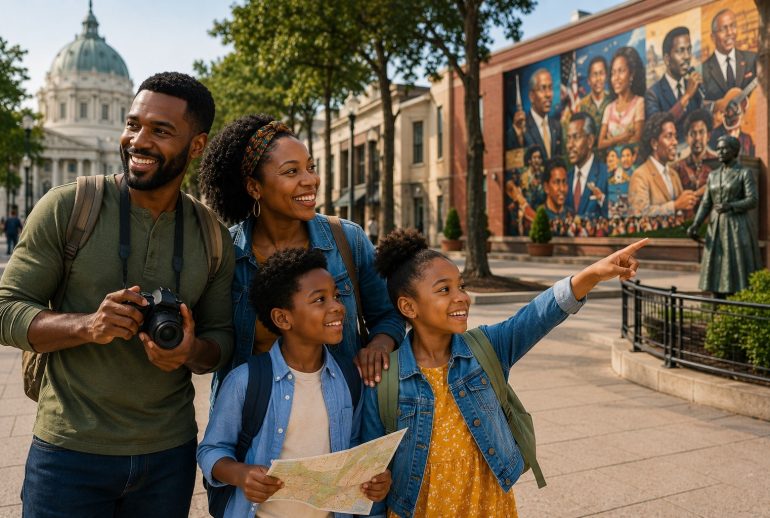
Travel can do more than move a family from one place to another. It can open the heart, stretch the imagination, teach history, create memories, and help children understand culture in a way that feels real. A trip does not have to be far away, expensive, or perfectly planned to matter. Sometimes a meaningful travel experience can happen through a visit to a local museum, a walk through a historic neighborhood, a day at a cultural festival, a trip to a family hometown, a meal at a Diaspora-owned restaurant, or a weekend visit with relatives who carry stories the younger generation needs to hear.
Across the Black community, travel can become a powerful way to connect families with heritage, identity, and belonging. Many children learn about culture through books, school lessons, music, food, and family conversations, but travel allows them to experience those lessons with their senses. They can see historic places, hear live music, taste traditional food, walk through neighborhoods that carry memory, meet local business owners, and witness cultural pride in public spaces. These experiences help children understand that history and culture are not distant ideas. They are alive in places, people, stories, and everyday community life.
Travel also gives families a chance to step outside the normal routine. Daily life can be full of work, school, bills, appointments, chores, caregiving, and screen time. A trip, even a short one, creates room for families to talk, laugh, explore, take photos, and learn together. These shared moments can become part of family history. Years later, a child may remember the museum they visited with their grandmother, the festival where they first heard a certain rhythm, the restaurant where they tasted a new dish, or the road trip where a parent told stories about where the family came from.
Cultural travel is not only about entertainment. It is a way to teach pride, respect, curiosity, and connection. When families travel with purpose, they help children see themselves as part of a wider story that includes local communities, African Diaspora traditions, American history, global culture, family memory, and future possibility.
1. Travel Helps Children Experience History Beyond The Classroom.
History can feel distant when it is only presented through textbooks, worksheets, or short school lessons. Children may memorize names and dates without fully understanding the people, places, emotions, and choices behind them. Travel can help history become more personal because it allows children to stand in spaces where stories happened, look at objects connected to real lives, and ask questions while the experience is still fresh in their minds.
A museum visit, historic walking tour, monument, cultural center, old church, school site, neighborhood landmark, or local exhibit can help children understand that history happened in real places where people lived, worked, worshiped, struggled, organized, and built community. When a child walks through a historic district or sees photographs, clothing, letters, tools, instruments, artwork, or family records, the past becomes easier to imagine. They begin to understand that history is not only a list of events. It is the story of people.
Parents and caregivers can make these visits more meaningful by preparing children before the trip. They can explain where they are going, why the place matters, and what kinds of questions the child might think about. After the visit, they can talk about what stood out, what felt surprising, what made them proud, and what they want to learn more about. These conversations help turn a travel experience into a lasting lesson.
For families across the community, visiting places connected to African American history, African Diaspora culture, civil rights, music, art, faith, business, or family migration can help children see that their heritage is deeply woven into the world around them. They learn that their story belongs in public memory.
2. Local Travel Can Be Just As Meaningful As A Big Trip.
Many people think of travel as something that requires flights, hotels, passports, or long vacations. While those experiences can be wonderful, local travel can also be deeply meaningful. Families can explore nearby neighborhoods, museums, parks, libraries, markets, cultural centers, restaurants, universities, monuments, festivals, and community events. These local trips can be easier to plan, more affordable, and still full of learning.
The DMV, for example, is rich with history, culture, food, music, and African Diaspora connections. Families can find meaningful experiences throughout Washington, D.C., Maryland, and Virginia by visiting museums, historic neighborhoods, community markets, cultural restaurants, bookstores, art spaces, and local festivals. These outings can help children understand that culture is not only found far away. It is present in the region where they live.
Local travel also helps families develop a stronger sense of place. Children begin to see their area as more than streets, schools, stores, and traffic. They begin to understand that their region has stories, leaders, businesses, artists, elders, and traditions worth knowing. This can build pride in the community and encourage children to be more curious about the people and places around them.
Families can start small by choosing one local place each month to explore. A short outing with a clear purpose can be more valuable than an expensive trip with no conversation. What matters is not the distance traveled. What matters is the intention behind the experience.
3. Heritage Trips Can Connect Families To Their Roots.
Heritage trips are powerful because they help families connect with places that shaped their story. This might mean visiting a parent’s hometown, a grandparent’s neighborhood, a family church, a cemetery where ancestors are buried, a school an elder attended, a farm, a city where relatives migrated, or a country connected to family origins. These trips can help children understand that their family did not begin with them. They are part of a longer journey.
A trip to a family hometown can open conversations that may not happen at home. An elder may point to a street and say, “This is where I walked to school,” or “That is where your great-grandmother lived,” or “This is where our family used to gather.” These moments help children connect names and stories to real places. The family tree becomes more than information. It becomes something they can see and feel.
Heritage trips do not have to be perfect or complete. Some families may not know every detail of their ancestry. Some records may be missing. Some places may have changed or no longer exist as they once did. Even so, visiting a meaningful location can still create connection. The act of seeking family history teaches children that the past matters.
Parents and caregivers can preserve these trips through photos, notes, recordings, and conversations. Children can interview elders, collect family stories, or write down what they learned. A heritage trip can become a memory that continues to teach long after the family returns home.
4. Cultural Festivals Help Families Celebrate Identity With Joy.
Cultural festivals are powerful because they bring heritage to life through music, food, dance, art, fashion, vendors, storytelling, language, and community pride. For children and teens, festivals can be especially meaningful because they show culture in a joyful public setting. They can see people celebrating who they are, expressing creativity, honoring traditions, and gathering across generations.
These events help young people understand that culture is not only about struggle or history lessons. It is also about beauty, rhythm, flavor, laughter, style, performance, and shared joy. A child may hear African drumming, gospel, go-go, jazz, reggae, Afrobeat, Caribbean rhythms, spoken word, or local music. They may see clothing, flags, artwork, jewelry, books, and businesses connected to different parts of the African Diaspora. They may taste foods they have never tried before and ask questions about where they come from.
Families can make festival visits more intentional by giving children simple goals. They might ask the child to try one new food, speak with one vendor, watch one performance, identify one country or culture represented, or ask one question about something they notice. These small goals help children stay engaged and turn the event into a learning experience.
Festivals also create opportunities for family photos and shared memories. Years later, those photos can remind children of moments when they saw culture celebrated with pride. That kind of joyful memory can help strengthen identity.
5. Food Experiences Can Turn Travel Into Cultural Learning.
Food is one of the easiest and most enjoyable ways to explore culture while traveling. A family meal at a Black-owned, African-owned, Caribbean-owned, Afro-Latin, or Diaspora-owned restaurant can become more than eating out. It can become a conversation about history, ingredients, migration, family traditions, and the ways food connects people across the world.
Children may try jollof rice, injera, jerk chicken, gumbo, rice and peas, plantains, suya, curry, collard greens, seafood, stews, patties, cornbread, sweet potato dishes, or other foods connected to different communities. These experiences help them understand that the African Diaspora is wide and diverse. Food becomes a doorway into geography, language, farming, family memory, celebration, and creativity.
Parents and caregivers can ask simple questions during the meal. Where does this dish come from? What ingredients do you taste? Does it remind you of anything our family already eats? What do you think this food tells us about the culture it comes from? These questions make the experience more thoughtful without making it feel like a school assignment.
Supporting local restaurants during travel also strengthens community economics. Families are not only learning culture; they are supporting business owners, workers, cooks, and families who keep food traditions alive. A meal can become both a cultural experience and an act of community support.
6. Travel Helps Families Support Local Businesses And Creatives.
When families travel intentionally, they can support local businesses, artists, vendors, authors, designers, tour guides, photographers, restaurants, bookstores, museums, and community organizations. This matters because cultural travel is not only about what families receive from a place. It is also about how they contribute to the people who keep that culture alive.
A family may buy a book from a Black-owned bookstore, purchase handmade jewelry from a local vendor, eat at a community restaurant, attend a performance, pay for a guided history tour, or visit a small museum. These choices help money and attention move toward people who are doing meaningful cultural work. They also teach children that businesses and creative projects are part of community strength.
Young people benefit from seeing entrepreneurs and creatives in real life. A child who meets a local artist may become interested in art. A teen who sees a clothing designer selling their work may begin to imagine a business of their own. A student who hears a tour guide tell history with passion may understand that storytelling can be a career. Travel exposes children to possibilities.
Families do not have to spend large amounts to support local work. A small purchase, a respectful conversation, a social media follow, a positive review, or a recommendation to others can make a difference. Intentional support teaches children that culture should be valued, not simply consumed.
7. Travel Can Strengthen Family Bonds.
Trips create shared experiences that can bring families closer. When people travel together, they often have time to talk in ways they may not during a normal week. A car ride, train trip, hotel stay, museum visit, festival day, or walk through a new neighborhood can create conversations, laughter, and memories. These moments help families see one another outside the usual roles of homework, chores, discipline, work, and daily pressure.
Children often remember the feeling of a trip more than the details. They remember being included, being listened to, taking photos, trying something new, laughing at unexpected moments, or hearing family stories. A simple outing can become meaningful when the family is emotionally present.
Travel can also help families practice teamwork. They plan routes, pack food, manage time, solve problems, choose activities, and adjust when things do not go perfectly. Children can learn patience, flexibility, responsibility, and cooperation. These practical lessons are part of family growth.
Parents and caregivers should not feel pressured to create perfect travel memories. Real trips may include delays, tired children, weather changes, wrong turns, or budget limits. Sometimes those imperfect moments become part of the story. What matters most is the family’s willingness to experience something together.
8. Travel Can Help Teens See Bigger Possibilities.
Teenagers need exposure to the wider world. They are making decisions about identity, education, careers, friendships, and future goals. Travel can help them imagine more possibilities by introducing them to colleges, businesses, historic places, creative spaces, cultural events, professional environments, and communities different from their own.
A teen who visits a university may begin to see college as more real. A teen who attends a tech event, museum, business market, music festival, or art exhibit may discover an interest they had not considered. A teen who travels to a city with strong cultural history may feel more connected to identity and purpose. Exposure can turn vague dreams into clearer goals.
Travel also helps teens build independence and confidence. They can help plan the itinerary, research places to visit, manage a small travel budget, take photos, navigate maps, or lead part of the outing. These responsibilities help them develop real-life skills while still being supported by adults.
Families can use travel as a way to have deeper conversations with teens. A walk through a historic site may lead to a discussion about justice. A visit to a business district may lead to a conversation about careers. A cultural event may lead to questions about identity. Teens often open up when conversation happens naturally through experience.
9. Travel Can Honor Elders And Preserve Their Stories.
Elders often carry family and community history that younger generations need. Travel can create opportunities to honor elders by visiting places connected to their lives or inviting them to share memories during outings. A trip to an elder’s hometown, former church, school, workplace, neighborhood, or favorite community space can become a powerful storytelling experience.
When elders guide the family through places they remember, children gain a different kind of history lesson. They hear firsthand stories about childhood, work, migration, family traditions, local leaders, community changes, and lessons learned over time. These stories help children understand that elders are living libraries.
Families can also plan trips that make elders feel included and valued. This may mean choosing accessible locations, planning rest breaks, bringing comfortable seating, considering transportation needs, and asking elders what they would enjoy. Inclusion matters because elders should not only be remembered in stories. They should be included in current family experiences whenever possible.
Recording elders during travel can help preserve their voices and memories. A simple phone recording, photo album, or written reflection can become a treasure for future generations. Travel gives families a chance to capture history while it is still being spoken.
10. Travel Teaches Respect For Different Cultures.
Cultural travel should be approached with respect. Families may visit communities with traditions, languages, foods, clothing, music, and customs different from their own. These experiences can help children become more open-minded and thoughtful. They learn that difference is not something to mock or fear. It is something to approach with curiosity and humility.
Parents and caregivers can model respectful behavior by learning before visiting, speaking kindly to people, following local guidelines, asking permission before taking photos, supporting local businesses fairly, and avoiding jokes or comments that reduce someone’s culture to a stereotype. Children learn respect by watching how adults behave.
This is especially important within the African Diaspora, where communities may share some connections but also have distinct histories and traditions. African American, Caribbean, African, Afro-Latin, and immigrant communities are not all the same. Travel can help families appreciate both connection and difference.
Respectful travel teaches children that culture is not a costume, trend, or performance for outsiders. It belongs to real people. When children learn this early, they become more thoughtful community members and better guests wherever they go.
11. Families Can Travel With Purpose Even On A Budget.
Meaningful travel does not have to be expensive. Many families are managing tight budgets, and travel may feel out of reach if it is imagined only as flights, hotels, and long vacations. Purposeful travel can begin locally and affordably. Free museums, public parks, cultural festivals, library events, walking tours, community markets, historic neighborhoods, and day trips can all offer rich experiences.
Planning ahead can make travel more manageable. Families can pack snacks, use public transportation when available, look for free admission days, visit local events, share costs with relatives, or choose one meaningful outing each month instead of trying to do too much. Children can also be included in budgeting conversations in age-appropriate ways. They can learn that meaningful experiences require planning, not always large spending.
Budget travel can still be beautiful. A picnic after a museum visit, a walk through a historic neighborhood, a photo in front of a mural, or a meal from a local vendor can become a lasting memory. The value comes from connection and intention.
Families should not compare their travel experiences to what others post online. Social media can make travel look like it must be expensive or perfect. In reality, some of the most meaningful trips are simple, local, and filled with conversation.
12. Travel Memories Can Become Part Of Family Legacy.
Travel memories become part of family legacy when they are preserved and shared. Photos, videos, ticket stubs, journals, postcards, recipes, souvenirs, and stories can help families remember where they went and what they learned. These memories can be revisited during family gatherings and passed down to children as part of the family’s story.
A child who visits a historic site may one day tell their own children about it. A teen who travels with a grandparent may remember the stories told during the trip. A family that visits a cultural festival every year may create a tradition that becomes part of their identity. Travel becomes more than a moment. It becomes memory.
Families can create a travel journal or digital album where children write or draw what they experienced. They can include photos, favorite foods, new words learned, people met, and questions they still have. This helps children reflect and remember the meaning of the trip.
When travel is connected to culture, family, and learning, it becomes part of how children understand themselves. It gives them stories to carry, places to remember, and pride to pass forward.
Conclusion.
Travel experiences build cultural pride across the Black community because they help families connect with history, identity, food, music, elders, businesses, local culture, and the wider African Diaspora. A trip does not have to be far or expensive to be meaningful. A local museum, neighborhood walk, cultural festival, restaurant visit, family hometown trip, or community market can become a powerful opportunity for learning and connection.
Families can use travel to help children experience culture beyond the classroom. They can ask questions, preserve stories, support local businesses, include elders, and create memories that strengthen family identity. These experiences remind children that their heritage is alive in places, people, flavors, sounds, and stories.
When families travel with purpose, they do more than visit a location. They build pride, deepen relationships, and pass culture forward. One outing can become one memory. One memory can become one story. One story can become part of the family legacy.
Akukulu Family encourages families and community members to plan one meaningful cultural travel experience this month. Visit a local museum, attend a festival, support a Diaspora-owned restaurant, explore a historic neighborhood, take an elder to a meaningful place, or create a family travel memory close to home. One intentional outing can help strengthen pride, connection, and cultural understanding.
