

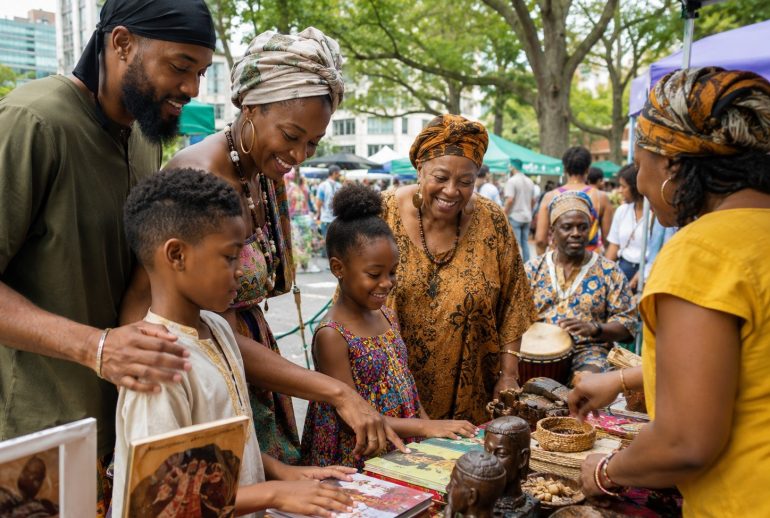
African Diaspora heritage should not be celebrated only during one month, one holiday, one festival, or one special event. It is something families can honor throughout the year in simple and meaningful ways. Heritage lives in food, music, family stories, books, language, faith, art, clothing, history, local businesses, community gatherings, and the everyday choices families make to remember who they are and where they come from. For families across the DMV, there are many opportunities to keep that connection alive.
Washington, D.C., Maryland, and Virginia are full of African Diaspora culture. Families can find African American history, African immigrant communities, Caribbean influence, Afro-Latin traditions, Black-owned businesses, cultural restaurants, local artists, historic neighborhoods, museums, churches, mosques, bookstores, markets, festivals, and community organizations all across the region. This gives parents, caregivers, elders, and mentors many ways to help children experience culture as something close, real, and personal.
Celebrating heritage all year does not require a large budget or complicated plan. A family can begin with one meal, one book, one conversation with an elder, one visit to a museum, one local business supported, one song discussed, one family photo preserved, or one cultural event attended. Small actions matter because they are repeated. When children experience culture again and again, it becomes part of their identity instead of something they only hear about occasionally.
The goal is not to make heritage feel like homework. The goal is to help families build pride, connection, curiosity, and memory. Children should learn that African Diaspora heritage includes struggle, but it also includes joy, brilliance, creativity, leadership, faith, beauty, music, food, business, invention, family strength, and community love. When families celebrate that fullness all year, they help the next generation feel more rooted and confident.
1. Make Culture Part Of Everyday Family Conversation.
One of the easiest ways to celebrate heritage all year is to talk about it regularly. Families do not need a formal lesson every time. Culture can be discussed naturally during meals, car rides, bedtime, family gatherings, school projects, music listening, movie nights, or community outings. A simple conversation can help children understand that culture is part of daily life, not something separate from it.
Parents and caregivers can ask children what they are learning about history, what music they enjoy, what foods they are curious about, or what they know about their family background. Elders can share memories about where they grew up, what traditions mattered, what holidays looked like, what songs were sung, what foods were cooked, and what values helped the family stay strong. These conversations help children connect family life to the wider African Diaspora story.
Culture conversations should leave room for questions. Children may ask why certain traditions matter, why history includes painful moments, why different families celebrate differently, or why some stories were not taught in school. Adults do not need to have perfect answers. They can say, “That is a good question. Let’s learn together.” This teaches children that heritage is something worth exploring with honesty and care.
When culture becomes part of normal conversation, children begin to see it as something alive. They learn that their identity is not hidden or occasional. It belongs in the home, at the table, in the car, at school, and in community life.
2. Visit Local Museums And Historic Places Throughout The Year.
The DMV offers many opportunities for families to connect with history through museums, monuments, cultural centers, historic neighborhoods, and local landmarks. These places can help children see history beyond textbooks. They can look at photographs, documents, clothing, tools, artwork, music, videos, and personal stories that make the past feel more real.
A museum visit does not have to be rushed. Families can choose one section, one exhibit, or one theme at a time. Trying to see everything in one day can overwhelm children. A slower visit allows them to ask better questions and remember more. Parents might ask what stood out, what surprised them, what made them proud, or what they want to learn more about.
Historic places can also help children understand that the DMV itself carries deep history. A walk through a neighborhood, a visit to a historic church, a local mural, a school site, a community center, or a landmark connected to Black history can show children that important stories happened close to home. This helps them see their region with more pride.
Families can make museum and history visits a regular tradition. One outing every few months can build a strong foundation over time. Children may not remember every detail, but they will remember that their family made history and culture important.
3. Use Food To Teach Heritage With Joy.
Food is one of the most natural ways to celebrate African Diaspora heritage. A family meal can carry history, geography, memory, and love. Across the DMV, families can experience African American, Caribbean, African, Afro-Latin, Southern, and other Diaspora food traditions through home cooking, restaurants, markets, festivals, and family gatherings.
Parents and caregivers can use meals as learning moments without making them feel heavy. They might explain where a dish comes from, who taught the family to cook it, what ingredients are used, or why it appears during certain holidays or gatherings. Children can help prepare meals, taste new foods, compare flavors, and ask questions about different cultures.
Trying new foods can also help children understand the diversity of the African Diaspora. A child may eat jollof rice one month, jerk chicken another month, injera another time, gumbo at a family gathering, or rice and peas at a community event. These experiences show that culture is wide and varied, not limited to one tradition.
Food also creates joy. Children may remember the smell of a favorite dish, the laughter during cooking, the elder who seasoned without measuring, or the restaurant where the family tried something new. These memories become part of how culture is passed forward.
4. Support Diaspora-Owned Businesses In The DMV.
Supporting local businesses is a practical way to celebrate heritage all year. Across the DMV, many Black-owned, African-owned, Caribbean-owned, and Diaspora-owned businesses help preserve culture through food, clothing, books, beauty, wellness, art, events, music, professional services, and community gathering spaces. When families support these businesses, they are supporting more than products. They are supporting ownership, creativity, family dreams, and local economic strength.
A family may choose to eat at a local restaurant, buy books from a community bookstore, shop at a cultural market, hire a local service provider, purchase art from a local creative, or share a business online. Even when families cannot spend money, they can still support businesses by leaving reviews, recommending them to others, following their pages, or attending community events.
Children should understand why this matters. Parents can explain that when the family supports local businesses, they help people in the community grow. They help entrepreneurs provide jobs, share culture, build stability, and continue serving families. This teaches children that spending choices can reflect values.
Business support also exposes young people to entrepreneurship. When children meet owners, vendors, artists, chefs, designers, and service providers, they see examples of people building something with skill and courage. That can inspire their own creativity and future goals.
5. Read Books By Black And Diaspora Authors.
Books are one of the strongest tools families can use to celebrate heritage all year. Stories help children understand history, imagination, courage, family life, culture, identity, humor, creativity, and possibility. Books by Black and Diaspora authors allow children to see themselves, their communities, and their heritage reflected in meaningful ways.
Families can build a reading habit around culture. They might choose one book each month by a Black author, read biographies of important leaders, explore African folktales, read Caribbean stories, learn about African history, or choose picture books that celebrate hair, family, confidence, and community. Older children and teens may enjoy novels, poetry, memoirs, essays, graphic novels, or books connected to social issues and identity.
The DMV has libraries, bookstores, schools, and community spaces that can support family reading. Families do not need to buy every book. Library visits can become a regular cultural outing. Parents can ask librarians for recommendations and allow children to choose books that interest them.
Reading together also creates conversation. After a book, families can ask what the child learned, which character they liked, what felt familiar, and what questions they still have. Books help culture continue through language, imagination, and reflection.
6. Let Music Become A Bridge Between Generations.
Music is one of the most powerful ways to connect generations. Across the African Diaspora, music carries history, emotion, worship, celebration, protest, creativity, and identity. Families in the DMV may connect with gospel, jazz, blues, soul, R&B, hip-hop, go-go, reggae, Afrobeat, soca, dancehall, spirituals, funk, house, and many other sounds that have shaped community life.
Families can celebrate heritage by creating shared playlists. Each family member can choose songs that matter to them. Elders might choose songs from their youth. Parents might choose music that shaped their teenage years. Teens might share what they listen to now. Then the family can talk about what the songs mean, what memories they bring up, and how music changes over time.
Music can also open doors to history. A song may lead to a conversation about church traditions, civil rights, migration, local DMV go-go culture, Caribbean celebrations, African rhythms, or family memories. Children can learn that music is not only entertainment. It is a form of storytelling.
When families use music as a bridge, they create joy and connection. A song can bring laughter, dancing, reflection, and memory into the home. These moments help heritage feel alive.
7. Attend Cultural Events And Festivals With Purpose.
Cultural events and festivals give families a chance to experience heritage in public and joyful ways. These gatherings may include food, music, dance, fashion, storytelling, vendors, books, art, performances, children’s activities, and community organizations. In the DMV, families can often find events that reflect many parts of the African Diaspora.
Attending an event with purpose makes it more meaningful. Before going, families can talk about what they hope to learn or experience. They may choose to try one new food, watch one performance, speak with one vendor, learn about one country or tradition, or take one family photo. These simple goals help children stay engaged.
Cultural events also help young people see pride in action. They see people wearing traditional clothing, performing music, selling handmade products, telling stories, and celebrating identity. This helps children understand that heritage can be joyful, creative, and public.
After the event, families can talk about what they noticed. What did they enjoy most? What was new? What reminded them of home? What would they like to learn more about? These conversations help the experience last longer than the day itself.
8. Preserve Family Photos, Recipes, And Stories.
Family memory is a major part of heritage. Photos, recipes, letters, old programs, family videos, church bulletins, school certificates, military records, and spoken stories all help families understand where they come from. Preserving these items is one way to celebrate heritage all year.
Families can begin by choosing one small project. They might organize old photos, write names on the backs of pictures, record an elder telling a story, save a recipe, create a family history folder, or ask relatives about important places and people. These simple actions can protect memories that might otherwise fade.
Children can be included in this process. They can help scan photos, ask elders questions, label albums, draw family trees, or write short reflections about what they learned. This helps children understand that family history is valuable and that they have a role in carrying it forward.
Preserving family memory also teaches respect for elders. When children hear stories from grandparents, aunties, uncles, and older community members, they learn that wisdom does not only come from books. It also comes from lived experience.
9. Celebrate Hair, Fashion, And Cultural Style.
Hair and fashion can be important parts of cultural expression. Across the African Diaspora, hairstyles, fabrics, colors, jewelry, headwraps, braids, locs, natural hair, tailored clothing, cultural prints, and creative personal style can carry meaning, confidence, and identity. Families can celebrate these expressions with respect and joy.
Children and teens often develop confidence when they see their hair and style represented positively. Parents and caregivers can teach children that their natural features, hairstyles, and cultural expressions are worthy of care and pride. This is especially important in a world where beauty standards may not always affirm them.
Fashion can also become a learning opportunity. A child might learn about African fabrics, Caribbean carnival styles, church fashion traditions, Black designers, historical clothing, or the meaning behind certain colors and garments. A family might support local designers or attend a cultural fashion event.
The goal is not to make every child dress the same way or force one idea of identity. The goal is to show that cultural style has value and that self-expression can be connected to heritage. When children feel proud of how they show up in the world, confidence grows.
10. Create Family Traditions Around Heritage.
Traditions help families make culture consistent. A family tradition does not have to be old to matter. Families can create new traditions that celebrate heritage throughout the year. These might include a monthly cultural meal, a family reading night, a yearly museum visit, a cultural playlist day, a family history interview, a local business support day, or a cultural movie night.
Traditions become powerful because children can look forward to them. They know that certain activities are part of the family rhythm. Over time, these repeated moments become memories. A child may grow up remembering that every month the family tried a new Diaspora dish or every summer they visited a cultural festival.
Parents and caregivers can invite children to help plan traditions. A child might choose a book, help select a recipe, pick a museum exhibit, or interview an elder. When children participate, they feel ownership over the tradition.
Creating traditions also helps families stay intentional. Life can become busy, and culture may be pushed aside if it is not built into the routine. A simple tradition helps keep heritage present in family life.
11. Teach Children That Heritage Includes Both Truth And Joy.
African Diaspora heritage includes painful history, but it also includes joy, brilliance, beauty, and creativity. Children need the full story. They should learn about slavery, segregation, discrimination, and injustice in age-appropriate ways, but they should also learn about family love, invention, music, food, art, faith, business, leadership, science, literature, sports, and community strength.
If children only hear stories of pain, they may feel heavy or defeated. If they only hear celebration without truth, they may not understand the depth of what people overcame. Families can offer balance by teaching that hardship existed, but so did resistance, imagination, organizing, faith, and joy.
A parent might explain that people created songs in difficult times, built schools when education was denied, started businesses when opportunities were limited, and protected family traditions across generations. This helps children see the community as active, creative, and resilient.
Truth and joy belong together. A strong heritage foundation helps children understand history honestly while still feeling proud of who they are and where they come from.
12. Make Heritage A Living Part Of The Future.
Celebrating African Diaspora heritage is not only about remembering the past. It is also about shaping the future. Children who understand their heritage may grow up with stronger confidence, deeper respect for elders, greater curiosity, and a clearer sense of responsibility to their community. They may become more interested in reading, business, service, art, history, leadership, travel, and family storytelling.
Heritage becomes living when families use it to guide choices today. Supporting local businesses, mentoring youth, preserving stories, attending events, caring for elders, celebrating culture, and teaching children pride are all ways to carry heritage forward. The next generation should not only inherit stories. They should also learn how to continue them.
Families in the DMV have a special opportunity because the region holds so much history and cultural diversity. Children can grow up seeing that African Diaspora heritage is local, national, and global. It belongs in museums and markets, books and kitchens, music and family gatherings, businesses and schools.
When heritage becomes part of the future, children learn that they are not only remembering what came before. They are helping build what comes next.
Conclusion.
DMV families can celebrate African Diaspora heritage all year by making culture part of everyday life. Through food, books, music, museums, local businesses, festivals, family stories, photos, fashion, elders, and community traditions, families can help children feel rooted, proud, curious, and connected. Heritage does not need to be saved for one season. It can be practiced in small ways throughout the year.
Families do not need to do everything at once. They can begin with one book, one meal, one elder conversation, one local outing, one business supported, or one cultural event. Over time, these small experiences build a stronger sense of identity and belonging.
When families celebrate heritage consistently, children learn that their culture is alive, beautiful, meaningful, and worth carrying forward. They learn that they are part of a wider African Diaspora story, and that their own lives can add something valuable to that story.
Akukulu Family encourages DMV families and community members to choose one African Diaspora heritage activity this month. Visit a museum, cook a cultural meal, support a local business, attend a festival, read a book by a Black author, or ask an elder to share a family story. One meaningful experience can help strengthen pride, connection, and cultural memory all year long.
