

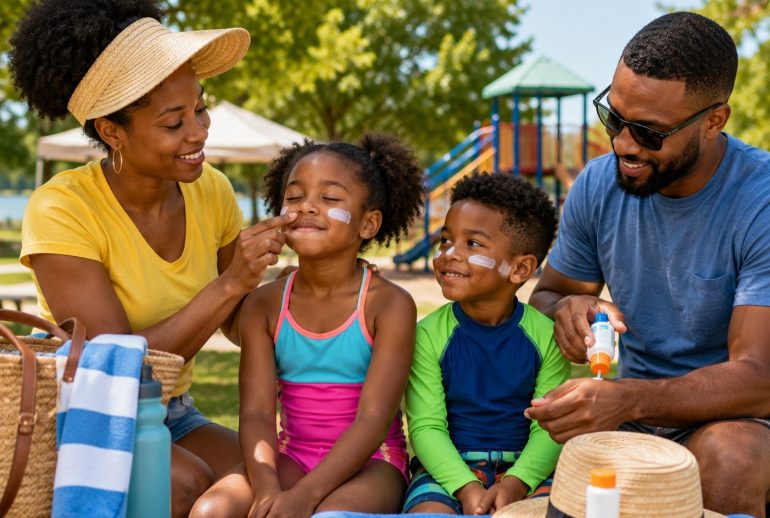
Outdoor play is important for children. It gives them space to move their bodies, build friendships, use imagination, enjoy fresh air, release energy, and experience the world beyond screens and indoor routines. Parks, playgrounds, sports fields, summer camps, family cookouts, beach trips, community festivals, neighborhood gatherings, and outdoor recreation can all become joyful parts of childhood. But when children spend time outside, families also need to think carefully about sun protection.
Across the Black community, sun safety is sometimes misunderstood. Some people believe that children with deeper skin tones do not need sunscreen or cannot be affected by the sun in serious ways. While melanin does offer some natural protection, it does not make anyone completely immune to sunburn, skin irritation, heat exhaustion, dehydration, or long-term skin damage. Children still need protection, especially during hot weather, long outdoor events, sports practices, travel, and summer activities.
Sun protection should not be treated as fear. Children need outdoor joy. They need play, movement, nature, sports, and community events. The goal is not to keep children indoors all the time. The goal is to help them enjoy outdoor life with wisdom. A child can have fun at the park and still wear sunscreen. A family can attend a festival and still take shade breaks. A teen can play sports and still drink enough water. Healthy outdoor habits allow children to enjoy the sun without being careless about their bodies.
Parents, caregivers, schools, coaches, youth leaders, and community organizations all have a role to play. When adults plan ahead, children can stay safer, more comfortable, and more prepared during outdoor activities. Sun protection is not only about skin. It is also about hydration, clothing, timing, rest, and paying attention to how children feel in the heat. These small habits can help protect health while keeping outdoor experiences positive.
1. Deeper Skin Still Needs Sun Protection.
One common myth is that children with darker skin do not need sun protection. This misunderstanding can cause families to overlook sunscreen, shade, hats, and other simple safety habits. Melanin can help protect the skin to a certain degree, but it does not block all damage from the sun. Children with deeper skin tones can still burn, develop uneven skin tone, experience irritation, or face long-term skin concerns from repeated exposure.
This matters because sun damage may not always look the same on every skin tone. On lighter skin, sunburn may appear bright red. On deeper skin, sunburn may look darker, feel hot, tight, painful, itchy, or tender. Sometimes adults may miss the signs because they are expecting redness. Families should pay attention to how the child’s skin feels, not only how it looks.
Teaching children that their skin deserves protection can also build healthy self-care habits. Sun protection should not be connected to fear or vanity. It should be explained as part of caring for the body. Just as children brush their teeth, wash their hands, drink water, and wear seatbelts, they can also learn to protect their skin when they spend time outside.
When families normalize sunscreen and shade early, children are more likely to continue those habits as teens and adults. This is important because skin care is a lifelong health practice.
2. Sunscreen Should Become A Normal Outdoor Habit.
Sunscreen is one of the simplest tools families can use to protect children during outdoor activities. It should be applied before children go outside for long periods, especially during sunny days, summer events, sports, swimming, beach trips, playground time, and outdoor camps. Many families remember sunscreen only during vacations, but children can receive a lot of sun exposure during ordinary days too.
Parents and caregivers can make sunscreen part of the outdoor routine. Before leaving for a park, game, festival, or family cookout, sunscreen can be applied along with packing water, snacks, wipes, and extra clothes. When children see adults applying it consistently, it becomes normal instead of unusual.
It is also important to reapply sunscreen when children are outside for a long time, especially if they are sweating or swimming. Many people apply sunscreen once and assume they are protected all day, but outdoor activity can reduce its effectiveness. Families should read product instructions and use sunscreen as directed.
Some children may not like the feeling of sunscreen. In that case, families can try different types, such as lotions, sticks, or sprays used carefully. The goal is to find a safe and comfortable option that works for the child’s skin and routine. Making sunscreen easier to use can help the habit last.
3. Shade Breaks Help Children Stay Comfortable.
Shade is a powerful part of sun protection. Children often become so focused on playing that they do not notice how hot, tired, or thirsty they are becoming. A scheduled shade break can help them cool down before they become overheated. This is especially important during summer afternoons, sports events, outdoor festivals, and long family gatherings.
Families can look for shade under trees, tents, umbrellas, pavilions, porches, or indoor rest areas when available. If shade is limited, bringing a small umbrella, canopy, or portable shade option may help during longer events. Even short breaks can give children time to rest, drink water, and reset.
Shade breaks should not feel like punishment. Adults can make them part of the activity. A child can come to the shade for fruit, water, a snack, a quick story, or a short conversation before returning to play. Teens may appreciate having a cooler place to sit between games or activities.
Community events should also think about shade. If an event is designed for families, there should be areas where children, elders, and caregivers can rest away from direct sun. Shade makes outdoor gatherings safer and more welcoming for everyone.
4. Hydration Is Just As Important As Sunscreen.
Sun safety is not only about the skin. It is also about keeping the body hydrated. Children can lose water quickly when they are running, sweating, playing sports, or spending time outside in hot weather. If they do not drink enough fluids, they may become tired, dizzy, cranky, weak, or overheated.
Families should encourage children to drink water before they feel extremely thirsty. Waiting until a child is very thirsty may mean they are already becoming dehydrated. For outdoor events, parents can pack water bottles and remind children to drink regularly. Younger children may need frequent reminders because they may not stop playing on their own.
Sugary drinks may be common at cookouts, parties, and summer events, but water should still be the main hydration choice. Families do not have to remove every treat, but children need to understand that water is what helps the body stay cool and strong during outdoor play.
Hydration habits can also be taught through example. When adults drink water and talk positively about it, children are more likely to follow. A simple family rule like “water before more play” can help children stay safer during hot days.
5. Clothing Can Help Protect Children From The Sun.
Clothing can provide another layer of protection. Lightweight long sleeves, breathable fabrics, hats, sunglasses, and comfortable shoes can all help children handle sunny days better. The right clothing can protect skin while still allowing children to move, play, and enjoy outdoor activities.
Parents should choose clothing that fits the activity and weather. Heavy clothing on a very hot day can create overheating, but light and breathable coverage can help protect arms, shoulders, and necks. Hats with brims can help shade the face, scalp, ears, and eyes. Sunglasses can help protect the eyes when children are old enough to wear them safely.
Children with certain hairstyles may also need scalp protection. Parts in the hair, short haircuts, braids, and exposed scalp areas can receive sun exposure. Hats, scarves, or careful sunscreen use on exposed areas may help protect them.
Fashion and protection can work together. Children may be more willing to wear hats or sunglasses if they are allowed to choose styles they like. When children feel comfortable and confident, protective clothing becomes easier to maintain.
6. Timing Outdoor Activities Can Reduce Sun Risk.
The sun is usually strongest during the middle part of the day. When possible, families can plan outdoor activities for morning or later afternoon, especially during hot summer weather. This can make playtime more comfortable and reduce the risk of overheating or intense sun exposure.
Of course, families cannot always control timing. Sports games, camps, festivals, and school activities may happen during hotter hours. In those cases, preparation becomes even more important. Sunscreen, water, shade, hats, and rest breaks should be part of the plan.
For family outings, timing can be a simple way to make the day easier. A morning park visit may be more enjoyable than going during peak heat. A later afternoon walk may feel better than walking under strong midday sun. A beach or pool trip may require extra planning if the family expects to stay for several hours.
Children also learn from these choices. They begin to understand that outdoor fun requires planning. They learn that the sun is not bad, but it must be respected. This helps build lifelong safety habits.
7. Sports And Outdoor Camps Need Extra Attention.
Children involved in sports or outdoor camps may spend long hours in the sun. Practices, games, field days, summer programs, marching band, dance camps, and recreation leagues can all increase sun and heat exposure. Families should take these activities seriously and prepare children before they arrive.
A sports bag can include sunscreen, water, a towel, a hat when appropriate, extra clothing, and healthy snacks. Parents can remind children to drink water before, during, and after activity. Coaches and program leaders should also encourage hydration breaks and watch for signs that a child is becoming overheated.
Children may not want to stop because they want to keep playing or avoid looking weak in front of peers. Adults need to create a culture where rest and hydration are normal. A good coach or youth leader understands that protecting health helps children perform better and stay safe.
Parents can also talk with program leaders about heat safety. Are there water breaks? Is shade available? What happens if a child feels dizzy or sick? These questions are not overprotective. They are part of responsible care.
8. Families Should Watch For Signs Of Heat Stress.
Heat stress can happen when the body becomes too hot and cannot cool down properly. Children may show signs such as heavy sweating, tiredness, dizziness, headache, nausea, weakness, fast heartbeat, confusion, muscle cramps, or unusual irritability. Younger children may not explain what they are feeling clearly, so adults need to watch closely.
If a child seems overheated, they should be moved to a cooler or shaded area, given water if they are able to drink safely, and allowed to rest. If symptoms are serious, do not improve, or include confusion, fainting, or extreme illness, adults should seek medical help quickly. It is better to respond early than to wait too long.
Families should also understand that children, elders, pregnant people, and people with certain health conditions may be more vulnerable during extreme heat. Outdoor plans should consider everyone present, not only the most active children.
Paying attention does not ruin outdoor fun. It helps protect it. When adults notice early warning signs, children can recover and continue enjoying activities safely when appropriate.
9. Sun Protection Matters During Travel And Family Outings.
Travel can increase sun exposure because families may spend more time outdoors than usual. Beach trips, amusement parks, outdoor museums, hiking trails, festivals, sports tournaments, family reunions, and sightseeing can involve long days in the sun. Families should plan ahead so the day remains enjoyable.
A travel sun safety kit can include sunscreen, water bottles, hats, sunglasses, wipes, light snacks, cooling towels, and a small first-aid kit. Families can also plan rest stops, identify shaded areas, and avoid overloading the day with too many activities during extreme heat.
Children may become tired during travel without realizing it. Excitement can hide fatigue for a while, but eventually the body needs rest. Parents can build breaks into the schedule before children become overwhelmed. This helps prevent meltdowns, dehydration, and heat-related discomfort.
Travel memories should be joyful, not marked by preventable discomfort. A little planning can help families enjoy outings with more peace and safety.
10. Sun Safety Should Be Taught Without Fear.
Children need to understand sun safety, but they should not be made afraid of going outside. Outdoor life is healthy and important. Children need movement, fresh air, play, sports, exploration, and social connection. Sun safety should be taught as a normal part of outdoor care, not as a scary warning.
Families can explain sun protection in simple ways. Sunscreen helps protect skin. Water helps the body stay cool. Shade gives the body a break. Hats help protect the face and scalp. Rest helps children keep playing longer. These explanations help children understand the purpose behind the habit.
Positive language matters. Instead of saying, “The sun is dangerous, stay inside,” adults can say, “Let’s get ready so we can enjoy being outside.” This approach helps children develop responsibility without anxiety.
When sun safety is connected to freedom and enjoyment, children may be more willing to cooperate. They learn that preparation helps them have more fun, not less.
11. Adults Should Model Healthy Outdoor Habits.
Children watch what adults do. If adults tell children to wear sunscreen but never apply it themselves, children may not take it seriously. If adults tell children to drink water but only drink sugary beverages, the message may not stick. Modeling matters.
Parents, caregivers, coaches, mentors, and elders can all demonstrate healthy outdoor habits. They can apply sunscreen, wear hats, take shade breaks, drink water, and speak positively about caring for the body. These actions teach children more effectively than reminders alone.
Adults should also be honest if they are learning new habits. A parent might say, “I did not always use sunscreen, but I am learning that our skin needs protection too.” This shows children that adults can grow and change.
Healthy modeling helps create a family culture of wellness. Children are more likely to protect themselves when protection is normal for everyone.
12. Community Events Should Include Sun Safety Planning.
Community gatherings, festivals, youth programs, church picnics, sports days, and outdoor family events should include sun safety planning. Organizers should think about shade, water access, seating, rest areas, first aid, and timing. These details help make events safer and more welcoming.
If children and elders will be present, planning becomes even more important. A family-friendly event should not require people to stand in direct sun for hours without water or seating. Even simple additions like water stations, shaded tents, and scheduled breaks can make a big difference.
Community leaders can also use events to teach healthy habits. A short reminder about drinking water, applying sunscreen, and checking on elders can help families stay aware. Health information does not have to be complicated to be useful.
When community events protect families from heat and sun exposure, they show care. Safety planning is part of hospitality. It allows people to gather with more comfort and dignity.
Conclusion.
Sun protection matters for children across the Black community because outdoor joy should be paired with healthy care. Children need time outside to play, learn, explore, connect, and move their bodies, but they also need protection from sun exposure, heat, dehydration, and discomfort. Deeper skin tones still deserve sunscreen, shade, hydration, and thoughtful outdoor habits.
Families do not need complicated routines to begin. They can apply sunscreen before outdoor activities, pack water, plan shade breaks, choose protective clothing, watch for heat stress, and schedule outings at safer times when possible. These small steps can help children enjoy parks, sports, camps, festivals, travel, and family gatherings with more comfort and safety.
Sun safety is not about fear. It is about preparation. When children learn to care for their bodies outdoors, they build habits that can protect them for life. A healthy community helps children enjoy the sunshine while also respecting the power of the sun.
Akukulu Family encourages parents, caregivers, coaches, youth leaders, and community members to take one sun safety step this week. Pack water for outdoor play, apply sunscreen before a park visit, create shade at a family gathering, remind children to rest during sports, or check on elders during hot weather. One simple habit can help protect children and support healthier outdoor fun.
