

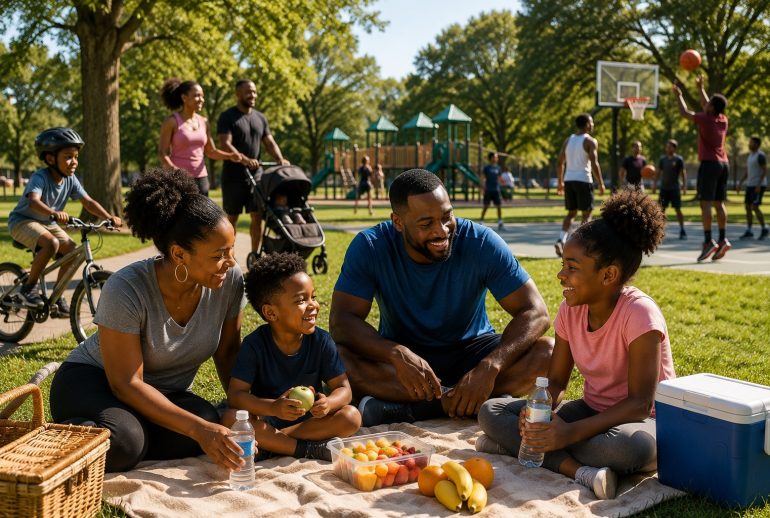
Outdoor recreation is one of the simplest ways families and communities can support wellness. A walk in the park, a family picnic, a basketball game, a playground visit, a bike ride, a community field day, a nature trail, a weekend sports activity, or even a quiet moment outside can help people move their bodies, clear their minds, and feel more connected. Recreation does not have to be expensive or complicated to be meaningful. Sometimes the most powerful wellness habits begin with families choosing to step outside together.
Across the Black community, outdoor recreation can support physical health, emotional wellness, family bonding, youth development, and neighborhood connection. Many households are busy with work, school, caregiving, bills, technology, and daily responsibilities. Children may spend more time on screens. Adults may feel tired or stressed. Elders may feel isolated. Families may want healthier routines but not know where to begin. Outdoor recreation gives everyone a practical starting point because it combines movement, fresh air, conversation, and shared experience.
Recreation should not be seen as something extra that only happens when everything else is finished. It is part of wellness. Children need play to grow. Teens need positive outlets for stress and energy. Adults need movement and mental relief. Elders need connection and safe opportunities to stay active when possible. Families need time together that is not only focused on chores, school pressure, bills, or problems. Outdoor recreation helps create those moments.
The goal is not perfection. A family does not need to join an expensive program, buy a lot of gear, or travel far away. They can begin with what is nearby: a local park, a sidewalk, a school field, a community center, a backyard, a walking path, a recreation league, or a neighborhood event. When outdoor activity becomes part of family and community life, it can strengthen health, confidence, joy, and belonging.
1. Outdoor Recreation Helps Families Move More Naturally.
Many people know physical activity is important, but exercise can feel intimidating when it sounds like a strict workout plan. Outdoor recreation makes movement feel more natural. A child running at the playground, a parent walking around the park, a teen playing basketball, an elder stretching outside, or a family dancing at a community event are all forms of movement. These activities support the body without always feeling like formal exercise.
This matters because families are more likely to continue habits that feel enjoyable. If movement is always connected to pressure, punishment, or body shame, people may avoid it. But when movement is connected to play, family time, music, sports, laughter, and fresh air, it becomes easier to repeat. A walk after dinner may become a routine. A Saturday park visit may become a family tradition. A friendly game may become a regular way to stay active.
Children especially benefit from active play. Running, climbing, jumping, throwing, catching, biking, and dancing help develop coordination, confidence, and strength. Teens benefit from sports and outdoor challenges that help them release energy and build discipline. Adults benefit from regular movement that supports long-term health. Elders benefit from safe activity that helps maintain mobility and connection.
Families can begin small. Ten minutes outside is better than no movement at all. A short walk, a playground stop, or a quick family stretch can become the beginning of a healthier routine.
2. Outdoor Time Can Support Mental And Emotional Wellness.
Outdoor recreation is not only good for the body. It can also help the mind. Fresh air, sunlight, open space, nature sounds, movement, and a change of environment can help reduce stress and improve mood. When people spend too much time indoors, overwhelmed by work, school, screens, and responsibilities, stepping outside can create a sense of relief.
Across many households, stress can build quietly. Parents may feel pressure from work and bills. Teens may feel pressure from school and social media. Children may feel restless. Elders may feel lonely. Outdoor recreation can give families a healthier way to reset. A walk, a park visit, or a quiet sit outside can create space for conversation and calm.
Nature does not solve every emotional concern, but it can support wellness. A child who is upset may calm down after playing outside. A teen who is stressed may open up during a walk more easily than during a serious sit-down conversation. An adult who feels overwhelmed may think more clearly after moving their body. These moments matter.
Families can use outdoor time as a gentle check-in. Instead of only asking serious questions at the table or during conflict, caregivers can ask while walking, driving to a park, sitting outside, or watching children play. Sometimes fresh air makes hard conversations feel easier.
3. Parks And Playgrounds Can Strengthen Family Connection.
Parks and playgrounds give families a place to spend time together without needing a major plan. A child can play, a caregiver can watch and engage, siblings can share space, and relatives can enjoy a relaxed outing. These spaces can become important for families who need affordable ways to connect and unwind.
A park visit can include many small bonding moments. A parent pushing a swing, an older sibling helping a younger child climb, a family sharing fruit at a picnic table, a grandparent watching children run, or a caregiver teaching a child how to throw a ball can all create memories. These moments may seem simple, but children often remember them.
Parks also give families a break from the pressure of being indoors. At home, there may be laundry, dishes, homework, television, phones, and chores competing for attention. Outside, families may find it easier to be present with one another. The space itself invites movement and interaction.
Families can make park time more meaningful by creating simple routines. They might bring water, healthy snacks, a ball, a blanket, books, bubbles, or sidewalk chalk. They might choose one day each week or month for outdoor family time. Consistency helps children look forward to recreation as part of family life.
4. Recreation Gives Youth Positive Outlets.
Young people need healthy outlets for energy, stress, creativity, and social connection. Without positive outlets, youth may become bored, isolated, restless, or drawn into unhealthy activities. Recreation gives children and teens constructive ways to spend time, build confidence, and connect with others.
Sports, dance, outdoor games, hiking, biking, martial arts, track, swimming, skating, gardening, community cleanups, and arts-in-the-park activities can all provide positive structure. Not every young person enjoys the same activity, so families and communities should offer variety. A child who does not like team sports may enjoy walking, photography, nature, gardening, or dance. A teen who dislikes traditional exercise may enjoy skateboarding, biking, or outdoor creative projects.
Youth recreation also teaches life skills. Sports can teach teamwork, discipline, patience, and handling disappointment. Outdoor activities can teach responsibility, planning, and awareness. Community recreation can teach leadership and service. These lessons go beyond the activity itself.
When young people have healthy recreation options, they are more likely to feel connected and supported. They gain places to belong, adults who guide them, and peers who share positive interests. This strengthens both youth wellness and community life.
5. Outdoor Activities Can Reduce Screen-Time Pressure.
Technology is a normal part of life, but children and teens also need time away from screens. Phones, tablets, gaming systems, streaming, and social media can easily fill many hours of the day. Outdoor recreation gives families a healthier alternative that does not rely on constant digital entertainment.
Reducing screen time works best when families offer something meaningful in its place. Simply telling children to put devices away may create frustration if there is no other activity available. But a park visit, bike ride, ball game, walk, picnic, or outdoor challenge can give children something active and enjoyable to do.
Adults should participate too. If children are told to get off screens while adults stay glued to phones, the message becomes weaker. Family outdoor time can be a shared commitment. Even a short device-free walk can help everyone reset.
Outdoor recreation also helps children remember how to create fun without constant digital stimulation. They may invent games, explore nature, talk with siblings, or simply move their bodies. These experiences support imagination, patience, and social development.
6. Community Recreation Helps Rebuild The Village.
Outdoor recreation can bring neighbors together. A community field day, park meetup, youth sports game, walking group, block party, family fitness day, outdoor movie night, or neighborhood cleanup can help people reconnect. These activities give families a reason to gather in positive ways.
Across the Black community, village connection has always mattered. Families are stronger when people know each other, support each other, and share safe spaces. Recreation can help rebuild that connection because it brings people together around joy instead of only problems. People may meet through children’s games, shared meals, sports, music, or community activities.
Community recreation also helps reduce isolation. A parent may meet another caregiver. A teen may connect with a mentor. An elder may enjoy watching children play. A local business may sponsor water or snacks. A church or community group may organize activities. These connections make the neighborhood feel more alive.
A strong community does not need every event to be large. Even small outdoor gatherings can create trust over time. The more families see one another in positive settings, the easier it becomes to build relationships.
7. Elders Should Be Included In Outdoor Recreation.
Outdoor recreation should include elders when possible. Many older adults benefit from fresh air, gentle movement, social connection, and being part of family activities. However, they may need thoughtful support to participate comfortably. Seating, shade, accessible paths, transportation, restrooms, and shorter activity times can make a big difference.
Elders may not want to run or play sports, but they can still enjoy recreation. They may walk slowly, sit under a tree, watch children play, join a picnic, share stories, listen to music, stretch, garden, or attend an outdoor community event. Inclusion helps elders feel valued and connected.
Families can ask elders what they would enjoy. Some may love fishing, walking, gardening, sitting at a park, attending concerts, watching youth sports, or visiting a familiar outdoor place. These activities can create intergenerational memories and give children time with older relatives.
When elders are included, children learn respect. They see that recreation is not only for the young. They learn that family life includes making room for every generation. This strengthens the whole village.
8. Outdoor Recreation Can Teach Children About Nature.
Children benefit from learning about the natural world. Trees, plants, birds, insects, water, weather, soil, flowers, gardens, and seasons can all become part of a child’s education. Outdoor recreation gives families a chance to teach curiosity and respect for the environment.
A simple walk can become a learning moment. A parent might ask children to notice different leaves, listen for birds, identify clouds, look for flowers, or talk about how the weather feels. A garden can teach patience, responsibility, food growth, and care. A nature trail can teach observation and appreciation.
These lessons are especially important when children spend much of their time indoors or on screens. Nature helps them slow down and notice details. It also gives them a connection to the world beyond technology and buildings.
Families do not need expert knowledge to begin. They can learn together. Looking up a plant, visiting a local nature center, reading a children’s book about animals, or growing herbs at home can all build curiosity. Outdoor recreation becomes both fun and educational.
9. Safe Planning Makes Outdoor Recreation Better.
Outdoor activities are more enjoyable when families plan for safety. This includes bringing water, using sunscreen, checking weather, choosing safe locations, wearing proper shoes, watching children closely, knowing restroom access, and being aware of surroundings. Good planning helps prevent small problems from ruining the outing.
Families should also consider age and ability. Younger children may need shorter activities and closer supervision. Teens may need clear boundaries about where they can go and when to return. Elders may need seating and shade. Children with autism, sensory needs, medical conditions, or mobility challenges may need extra planning so they can participate comfortably.
Safety should not create fear. It should create confidence. When families prepare well, they can relax more and enjoy the experience. A packed bag with water, snacks, wipes, sunscreen, and basic first aid can make outdoor time easier.
Community organizers should also plan with safety in mind. Events should include water access, shade when possible, clear activity areas, adult supervision for youth activities, and communication about expectations. Safety is part of hospitality.
10. Outdoor Recreation Can Support Family Traditions.
Families can turn outdoor recreation into meaningful traditions. A monthly park day, summer picnic, annual family field day, cousin basketball game, walking challenge, fishing trip, nature outing, community festival visit, or back-to-school outdoor gathering can become something children look forward to and remember.
Traditions do not need to be expensive. What makes them powerful is repetition and meaning. Children may remember that every summer the family went to a certain park, played a certain game, brought a special dish, or invited relatives. These memories become part of family identity.
Outdoor traditions can also include culture. Families may bring music, food, storytelling, games, or clothing that reflect their heritage. A picnic can include family recipes. A park day can include elders sharing stories. A community event can include local vendors, music, and youth activities.
Traditions strengthen belonging. They tell children, “This is what our family does together.” Over time, these simple outdoor moments can become part of the family’s emotional foundation.
11. Recreation Can Help Adults Manage Stress.
Adults often focus on children’s recreation while forgetting their own need for movement and joy. Parents, caregivers, workers, and community leaders need healthy outlets too. Outdoor recreation can help adults release stress, improve energy, and reconnect with themselves and others.
A walk after work, a weekend bike ride, a community exercise group, a quiet morning outside, a garden project, or a family sports game can help adults reset. These activities do not remove every responsibility, but they can create space for the body and mind to recover.
Adults should not feel guilty for needing recreation. Rest and movement are part of health. When adults care for themselves, they often have more patience and energy for family life. Children also learn by watching. If they see adults making time for healthy activity, they are more likely to value it too.
Community spaces can support adult recreation by offering walking clubs, fitness classes, outdoor gatherings, wellness events, and safe public spaces. Adults need the village too.
12. Outdoor Recreation Builds A Healthier Community Future.
When families and communities make outdoor recreation a regular part of life, the benefits can reach across generations. Children develop healthier habits. Teens gain positive outlets. Adults manage stress better. Elders stay connected. Neighbors build trust. Families create memories. Communities become more active and engaged.
Outdoor recreation also supports prevention. It can help reduce sedentary habits, isolation, stress, and disconnection. While it does not solve every health or community challenge, it can become one practical tool for building a stronger culture of wellness.
The future of community health is not built only in clinics, schools, or formal programs. It is also built in parks, sidewalks, playgrounds, gardens, fields, and neighborhood spaces where people move, talk, laugh, and care for one another. Recreation reminds families that wellness can be joyful.
A community that plays together, walks together, gathers together, and makes room for all ages becomes stronger. Outdoor recreation helps people remember that health is not only about avoiding sickness. It is also about building connection, energy, confidence, and joy.
Conclusion.
Outdoor recreation builds stronger wellness across the Black community because it supports physical activity, emotional health, family bonding, youth development, elder connection, and neighborhood trust. A park visit, family walk, sports game, picnic, nature outing, or community event can become more than a simple activity. It can become a tool for building healthier homes and stronger relationships.
Families do not need a perfect plan to begin. They can start with a short walk, a playground visit, a weekend picnic, a family game, or a community event. Small outdoor habits can grow into meaningful routines when they are repeated with care.
Recreation gives families a chance to move, breathe, talk, laugh, and reconnect. When communities make outdoor spaces welcoming and safe, more people can participate. That participation helps strengthen the village and supports wellness for children, adults, elders, and future generations.
Akukulu Family encourages families, caregivers, youth leaders, elders, and community members to choose one outdoor activity this week. Take a walk, visit a park, organize a small family picnic, play a game outside, invite an elder to sit outdoors, or attend a local recreation event. One simple outdoor moment can support health, connection, and community joy.
