

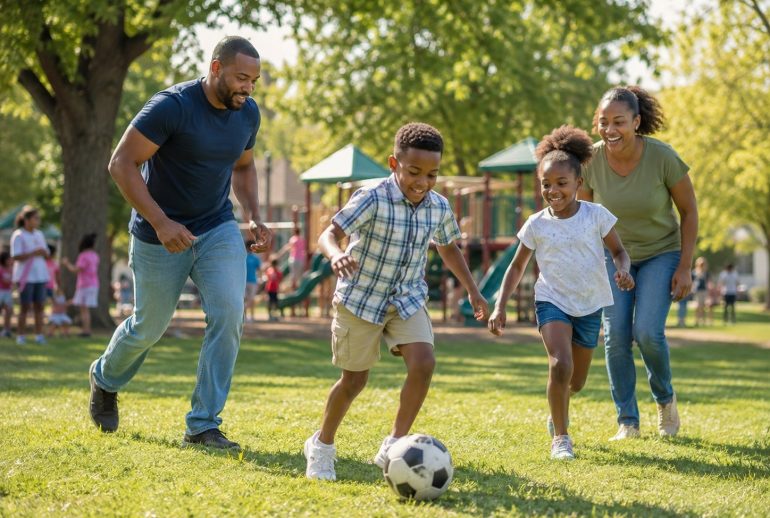
Outdoor play is one of the simplest ways children can grow stronger, healthier, and more confident. Running, jumping, climbing, biking, walking, playing ball, exploring parks, gardening, dancing outside, or simply spending time in fresh air can help children move their bodies and use their imagination. Outdoor play gives young people a break from screens, school pressure, and indoor routines. It helps them feel free, active, and connected to the world around them.
Across the Black community, many families are balancing school, work, homework, chores, technology, safety concerns, and busy schedules. Children may spend long hours sitting in classrooms and then come home to phones, television, tablets, or gaming systems. While technology can be useful, children also need time to move, breathe, explore, and play in real spaces. Outdoor play helps support physical health, emotional balance, and family connection.
Outdoor play does not have to be expensive. A family can visit a park, walk around the neighborhood, play in the yard, use a school playground after hours when allowed, join a recreation center, attend a community field day, or create simple games outside. The goal is not perfection. The goal is helping children build healthy movement and joyful memories.
Parents, caregivers, schools, churches, youth programs, and community leaders can all help make outdoor play safer and more available. When children have positive outdoor spaces, they gain more than exercise. They gain confidence, friendships, creativity, and a stronger sense of belonging.
1. Outdoor Play Helps Children Move Their Bodies.
Children need movement. Their bodies are growing, and physical activity helps support strength, balance, coordination, energy, and overall wellness. Outdoor play gives children natural ways to move without making it feel like a formal workout. They can run, chase, climb, stretch, throw, kick, jump, and explore while having fun.
Movement is especially important when children spend much of the day sitting. School, homework, car rides, and screen time can keep children still for long periods. Outdoor play helps break that pattern and gives the body a healthy outlet.
Parents can encourage simple movement activities. A short walk, a game of tag, jumping rope, bike riding, basketball, soccer, dancing, or playing catch can all help. Families do not need fancy equipment to begin.
When children learn that movement can be joyful, they are more likely to carry active habits into adulthood.
2. Outdoor Play Can Reduce Stress.
Children and teens can feel stress even when they do not always explain it clearly. School pressure, friendships, family changes, social media, bullying, homework, and daily routines can all affect emotional wellness. Outdoor play gives young people a way to release tension and reset their mood.
Fresh air and movement can help children feel calmer. A child who is restless indoors may settle after running outside. A teen who feels overwhelmed may benefit from walking, shooting hoops, or sitting quietly in a park. Outdoor time can give the mind space to breathe.
Families can use outdoor play as a healthy reset. Instead of turning immediately to screens or snacks when children are frustrated, caregivers can suggest a short walk, backyard play, or a few minutes outside.
Outdoor time does not remove every problem, but it can help children return to the day with more balance.
3. Parks Can Become Family Wellness Spaces.
Parks are valuable community spaces. They give families room to walk, play, picnic, exercise, talk, and relax. A park can become a low-cost place for recreation, learning, and connection. Children can play while adults walk, sit, or join in.
Families can make park visits part of their routine. A Saturday morning park trip, an after-dinner walk, or a Sunday afternoon picnic can become a simple family tradition. These moments help children connect outdoor play with family love and joy.
Parks can also help families meet neighbors and other parents. Children may make friends, and caregivers may share resources or conversation. This strengthens community connection.
When families use parks with care, they help keep public spaces active, welcoming, and meaningful.
4. Outdoor Play Supports Creativity.
Outdoor play gives children room to imagine. A stick can become a magic wand. A sidewalk can become a race track. A tree can become a castle. A patch of grass can become a stage. Outdoor spaces invite children to create games, stories, challenges, and adventures.
Creativity grows when children are not always told exactly what to do. Free play helps them make decisions, solve problems, and use imagination. This kind of play is important for emotional and mental development.
Parents do not need to direct every moment. Sometimes children need safe space to invent their own fun. Adults can supervise while allowing children to explore and create.
Creative outdoor play teaches children that joy does not always come from buying something. Sometimes joy comes from imagination, movement, and time with others.
5. Outdoor Play Helps Build Social Skills.
Children learn many social skills through play. They learn how to take turns, share space, follow rules, solve disagreements, include others, and communicate. Outdoor games often require teamwork, patience, and cooperation.
A child playing basketball may learn how to pass. A group playing tag may learn how to agree on rules. Children building something together may learn how to listen to ideas. These lessons happen naturally through play.
Adults can guide when needed. If children argue, caregivers can help them use words, apologize, take turns, or restart the game fairly. These moments teach conflict resolution.
Social skills learned during play can help children in school, friendships, family life, and future leadership.
6. Outdoor Activities Can Include The Whole Family.
Outdoor play is not only for young children. Teens, parents, caregivers, and elders can all participate in different ways. A family might walk together, play a gentle game, garden, fly a kite, have a picnic, visit a trail, or attend a community recreation event.
Including different ages helps strengthen family bonds. A grandparent may enjoy sitting outside and watching children play. A parent may walk with a teen. Siblings may play ball together. These shared moments create memories.
Families should choose activities that fit everyone’s ability. Some people may need shade, rest breaks, slower movement, or shorter outings. Inclusion matters more than intensity.
When outdoor recreation becomes a family habit, everyone benefits from connection and fresh air.
7. Outdoor Play Can Reduce Screen Time.
Many families want children to spend less time on screens, but it helps to offer better alternatives. Outdoor play gives children something active and enjoyable to do instead of only watching videos, scrolling, or gaming.
Caregivers can create simple screen-free outdoor routines. Play outside before gaming. Walk after dinner. Visit the park once a week. Keep balls, chalk, bubbles, or jump ropes available when possible. These small changes can help children build healthier balance.
Teens may need different encouragement. They may enjoy walking with music, sports, biking, photography, outdoor workouts, or meeting friends at a safe park. The goal is to help them see outdoor time as refreshing, not childish.
Reducing screen time works better when families replace it with activities that feel meaningful and fun.
8. Safety Planning Makes Outdoor Play Better.
Safety matters. Families should choose outdoor spaces that feel appropriate, well-lit, and supervised. Children need rules about streets, strangers, water, playground equipment, heat, and staying with the group. Safety planning helps everyone relax and enjoy the time.
Parents can teach children to check in, stay visible, use sidewalks, watch for cars, wear helmets when needed, and drink water during hot weather. These habits protect children while still allowing them to enjoy play.
Community leaders can also support safety by advocating for clean parks, working lights, safe sidewalks, recreation programs, and well-maintained playgrounds. Safe spaces help families feel more comfortable being outside.
Outdoor play should feel free, but freedom works best with wisdom and care.
9. Nature Time Helps Children Notice The World.
Outdoor play can help children notice nature. Trees, birds, flowers, clouds, insects, gardens, rivers, grass, and changing seasons can all become part of learning. Children who spend time outside may become more curious about the world around them.
Families can ask simple questions during outdoor time. What do you see? What sounds do you hear? What changed since last week? What kind of plant is that? These questions turn outdoor play into gentle learning.
Nature time can also create calm. Some children feel peaceful when they are near trees, water, gardens, or open spaces. This can support emotional wellness.
Helping children notice nature teaches them appreciation, curiosity, and care for shared environments.
10. Outdoor Play Can Support Cultural And Community Events.
Many community traditions happen outdoors. Cookouts, family reunions, church picnics, block parties, cultural festivals, field days, sports tournaments, and neighborhood cleanups all create space for outdoor connection. Children can play, learn, and bond during these gatherings.
These events help children see community life in action. They watch adults serve food, elders share stories, teens help with activities, and families gather across generations. Outdoor events can strengthen cultural pride and belonging.
Families can encourage children to participate in games, dances, sports, or service projects during community events. These activities help children feel included.
Outdoor community gatherings remind children that recreation is not only individual. It can also be a way to celebrate culture and strengthen the village.
11. Outdoor Play Builds Confidence.
Children build confidence when they try new things. Climbing higher, riding a bike, learning to catch a ball, running faster, jumping rope longer, or joining a group game can help children feel proud of their progress.
Confidence grows through practice. A child may not succeed the first time, but outdoor play gives them chances to try again. Encouragement from family and friends can help them keep going.
Adults should celebrate effort, not only winning. A child who tries bravely, shares well, or improves a skill deserves recognition. These moments teach that growth matters.
Outdoor play helps children discover what their bodies and minds can do. That discovery can support self-esteem.
12. Outdoor Play Builds Stronger Family Habits.
Strong family wellness is built through repeated simple habits. Outdoor play can become one of those habits. A weekly park visit, evening walk, family sports game, garden day, or outdoor picnic can help families stay connected and active.
These habits do not need to be perfect. Some weeks will be busy. Weather may change. Schedules may shift. Families can simply begin again. Consistency matters more than perfection.
When children grow up with outdoor family memories, they may carry those habits into adulthood. They may one day walk, play, garden, or explore outside with their own families.
Outdoor play reminds families that wellness can be joyful. It can happen through laughter, movement, fresh air, and time together.
Conclusion.
Outdoor play supports children across the Black community by helping them move their bodies, reduce stress, build confidence, develop social skills, use creativity, and spend meaningful time with family. It gives children a healthy break from screens and indoor routines while helping them connect with nature and community spaces.
Families do not need expensive activities to begin. A park visit, family walk, sidewalk game, backyard activity, community field day, or simple outdoor playtime can all make a difference. What matters most is safety, consistency, and joy.
When children play outside, they gain more than recreation. They gain strength, confidence, imagination, connection, and healthier habits that can support them for life.
Akukulu Family encourages parents, caregivers, mentors, educators, and community members to support one outdoor play habit this week. Take a child to the park, walk after dinner, start a simple family game, visit a playground, or organize a safe outdoor activity. One joyful moment outside can help build stronger children and stronger family bonds.
