

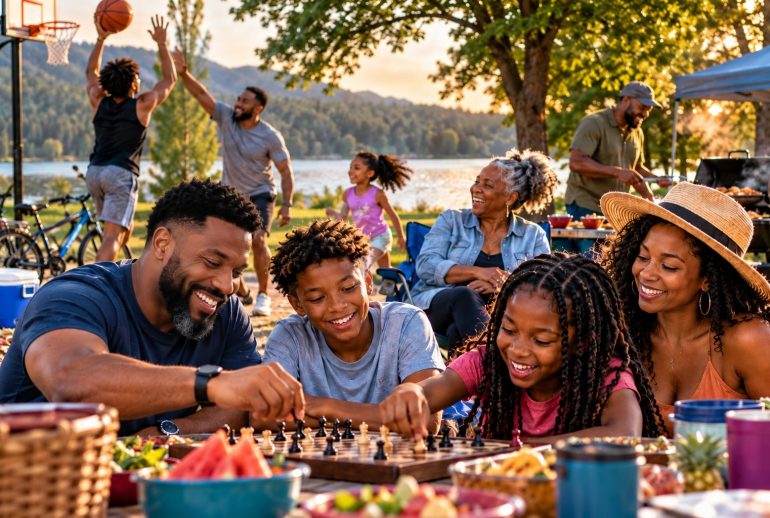
Fun Does Not Have to Be Earned
Many families live according to an unwritten rule:
First we finish everything that needs to be done.
Then we can have fun.
The problem is that everything is rarely finished.
There is always another load of laundry, another bill, another school assignment, another work deadline, another room that needs cleaning, or another responsibility waiting for attention.
Weeks become months, and recreation slowly turns into something reserved for vacations, birthdays, holidays, or the occasional weekend when everyone’s schedules somehow align.
But recreation has value of its own.
Families need opportunities to laugh together, move their bodies, explore new places, compete in friendly games, develop hobbies, and create memories that have nothing to do with responsibilities.
For Black and African Diaspora families balancing work, school, caregiving, community responsibilities, and everyday financial pressures, recreation does not need to become another expensive obligation.
Some of the best family experiences cost very little.
1. Stop Defining Recreation as Spending Money
Modern entertainment is often marketed as something we purchase.
Movie tickets.
Theme parks.
Restaurants.
Concerts.
Sporting events.
Vacations.
All of those can be enjoyable, but spending money and having fun are not the same thing.
A family basketball game at a neighborhood court costs almost nothing.
So does a walk through a park.
A picnic can cost little more than the food the family would have eaten at home.
Card games, dominoes, board games, dancing in the living room, fishing, bike rides, community festivals, and backyard cookouts can create hours of entertainment without creating another large expense.
Ask a different question.
Instead of, “What can we afford to do this weekend?”
Try:
“What could we enjoy doing together?”
That small change can create many more possibilities.
2. Explore the Parks Around You
Families sometimes travel long distances to experience nature while overlooking parks close to home.
Look at what is available locally.
City parks may offer playgrounds, walking paths, basketball courts, picnic areas, sports fields, splash pads, or open spaces.
Regional and state parks may provide hiking, fishing, beaches, lakes, wildlife viewing, camping, or scenic areas.
Turn exploration into a family challenge.
Choose a different park every few weeks.
Let children rate the playground.
Pack lunch.
Bring a football, soccer ball, Frisbee, or cards.
Take photographs.
The destination does not need to be spectacular.
Sometimes simply being somewhere different changes the rhythm of the day.
3. Bring Back Family Game Night
A deck of cards can create more conversation than an expensive piece of technology.
So can dominoes, board games, trivia, puzzles, charades, or other group games.
Family game nights create a rare environment where generations can interact as equals.
Grandparents can compete with grandchildren.
Teenagers can teach adults a new game.
Younger children can learn how to follow rules, wait their turn, win gracefully, and lose without falling apart.
There will probably be arguments about the rules.
Someone may become overly competitive.
Someone will insist another person cheated.
That may be part of what makes everyone remember it.
The goal is not creating a perfect family evening.
It is creating a shared one.
4. Let Children See Adults Play Too
Adults sometimes become the organizers of childhood recreation rather than participants.
We drive children to practice.
Watch them play.
Pay for activities.
Take photographs.
Then return to our responsibilities.
Children benefit from seeing adults enjoy recreation too.
Shoot basketball with them.
Get in the swimming pool.
Ride the bicycle.
Dance.
Play the game.
Try something you are terrible at.
Children may especially enjoy discovering that their parents are not automatically good at everything.
Shared recreation changes the relationship for a moment.
The parent is still the parent, but now everyone is participating in the same experience.
5. Use Recreation to Keep Family Traditions Alive
Many recreational activities carry family and cultural traditions with them.
Card games learned from grandparents.
Music played at family gatherings.
Fishing trips.
Cookouts.
Family reunions.
Dance.
Neighborhood basketball.
Church picnics.
Holiday games.
Recipes prepared outdoors.
These activities are more than entertainment.
They can become ways of passing culture between generations.
Ask older relatives what they did for fun when they were young.
What games did they play?
Where did they gather?
What music did they dance to?
What activities disappeared over time?
Try bringing one back.
Children may discover that fun existed long before smartphones.
6. Make Movement Enjoyable Instead of Punishment
Physical activity does not have to mean going to a gym.
Some people love structured workouts.
Others do not.
Recreation provides many ways to move without making exercise feel like another obligation.
Walk through a neighborhood.
Dance.
Swim.
Hike.
Play basketball.
Ride bicycles.
Roller skate.
Garden.
Throw a football.
Play tag with younger children.
The activity matters less than finding something people enjoy enough to repeat.
Families can focus on how movement feels rather than turning every activity into a discussion about weight or appearance.
Movement can be about energy, ability, stress relief, enjoyment, and spending time together.
7. Give Teenagers Some Control
Family activities become difficult when teenagers feel as though they are being dragged somewhere designed for younger children.
Let them participate in planning.
Ask each person to suggest something.
Maybe the teenager wants to visit a basketball court, try an escape room, attend a local event, go hiking, explore a new neighborhood, visit a record store, take photographs downtown, or choose the family’s movie.
Parents do not need to approve every suggestion.
But young people are more likely to participate when they have some ownership of the experience.
Giving teenagers choices also tells them their interests matter.
8. Create Recreation Around Interests
Not everyone wants to play sports.
Recreation can be creative, intellectual, social, or relaxing.
A child interested in photography could spend an afternoon taking pictures around town.
Someone who loves food could help create a family cooking challenge.
A music lover could attend a free local performance.
Someone interested in nature might enjoy birdwatching or gardening.
A family could visit a library and each person choose a book for someone else.
Recreation becomes more meaningful when it reflects people’s actual interests rather than somebody else’s definition of fun.
9. Look for Free Community Events
Many communities offer more free activities than families realize.
Libraries may host workshops, children’s programs, book clubs, technology classes, or cultural events.
Parks departments may organize sports, movies, festivals, or seasonal activities.
Museums sometimes offer free admission days.
Schools, community centers, faith organizations, colleges, and nonprofit groups may host performances, fairs, lectures, and family events.
Check local calendars regularly.
Following community organizations online can also make it easier to discover events before they happen.
A family can sometimes fill an entire weekend without purchasing tickets to anything.
10. Turn Ordinary Errands Into Small Adventures
Not every recreational experience needs to occupy an entire day.
Suppose the family already needs to drive somewhere.
Stop at a park you have never visited.
Try a different neighborhood restaurant.
Visit a farmers market.
Walk through a bookstore.
Find a scenic location.
Take the longer route home.
Small detours can break routine.
Children often remember spontaneous experiences precisely because nobody planned them.
11. Spend Time Outdoors Without Making It Complicated
Outdoor recreation can sometimes appear intimidating when social media presents it through expensive equipment, elaborate camping setups, and distant destinations.
Start simply.
Take a walk.
Have lunch outside.
Find an easy trail.
Visit a lake.
Go fishing if appropriate equipment and access are available.
Watch a sunset.
Sit somewhere without rushing home.
Families do not need to become wilderness experts to enjoy being outdoors.
Choose activities appropriate for everyone’s abilities, check weather and local conditions, bring necessary supplies, and build confidence gradually.
12. Create Friendly Family Competitions
Competition can make ordinary activities more entertaining.
Who can make the best sandwich?
Who can take the funniest photograph?
Who can complete a puzzle fastest?
Who wins the basketball free-throw contest?
Who makes the best homemade pizza?
Who knows the most family trivia?
Keep prizes simple.
The winner might choose the next movie, dessert, music playlist, or weekend activity.
The real prize is often the conversation and laughter created along the way.
13. Invite Other Families
Recreation can strengthen relationships beyond one household.
Invite another family to join a picnic.
Organize a neighborhood kickball game.
Create a rotating game night.
Meet at a park.
Have a cookout where everyone brings something.
Group recreation gives children opportunities to build friendships while adults connect too.
It can also reduce the pressure on one household to provide everything.
One family brings food.
Another brings games.
Someone brings music.
Someone else organizes an activity.
Community can grow naturally around shared enjoyment.
14. Protect Some Time From Screens
Screens provide legitimate recreation.
Families watch movies together, play games, communicate with relatives, and discover creative content online.
The goal does not need to be eliminating screens.
It can simply be preventing them from consuming every available moment.
Consider creating occasional periods where everyone puts devices away.
During a picnic.
At the dinner table.
While playing a game.
During part of a family outing.
Adults should participate too.
It is difficult to tell children to put phones away while checking our own every three minutes.
Even an hour of undistracted interaction can feel surprisingly different.
15. Do Not Overschedule the Fun
There is a strange way recreation can become another source of stress.
Leave at 8:00.
Museum at 9:00.
Lunch at 11:30.
Next attraction at 12:15.
Photographs at 2:00.
Dinner at 5:00.
Everyone returns home exhausted.
Families do not need to maximize every minute.
Leave room to stay longer somewhere everyone enjoys.
Let children play.
Sit on the bench.
Talk.
Change the plan.
Sometimes doing less allows people to experience more.
16. Create Traditions Children Can Anticipate
Traditions do not need to be elaborate.
Friday movie night.
Saturday morning basketball.
A monthly family breakfast.
An annual camping weekend.
Summer cookouts.
A birthday activity chosen by the person celebrating.
A yearly family reunion.
Children often value repetition because it creates anticipation.
“This is what our family does.”
Years later, these traditions can become part of how adult children remember home.
They may even carry them into families of their own.
17. Take Pictures, But Be Present Too
Photographs preserve memories.
Take them.
But every moment does not need to become content.
Sometimes put the phone away after taking the picture.
Watch what is happening.
Listen to the conversation.
Join the game.
Laugh without recording it.
The photograph should help you remember the experience.
It should not replace experiencing it.
Conclusion: The Memories Are the Point
Children probably will not remember every toy they owned.
They may not remember what their parents spent on a particular weekend.
But they may remember Saturday basketball with Dad.
Cards with Grandma.
Mom dancing badly in the kitchen.
The family picnic where it unexpectedly rained.
The fishing trip where nobody caught anything.
The neighborhood cookout that lasted until dark.
Recreation gives families something that busy schedules can quietly take away: unstructured opportunities to enjoy one another.
Those moments matter.
Not because every family activity is magical.
Some will be boring.
Someone will complain.
Plans will fail.
Teenagers may roll their eyes.
But keep making the opportunities anyway.
Family connection is built through time, and recreation gives families another reason to spend that time together.
Fun is not the reward families receive after finishing life.
Fun is part of life.
At Akukulu Family, we believe strong families and communities need opportunities not only to work and grow, but also to laugh, play, explore, and create memories together. Share your favorite affordable family activity, community event, game, outdoor destination, or recreation tradition with the Akukulu Family community. Your family’s favorite way to have fun could become another family’s next tradition.
