

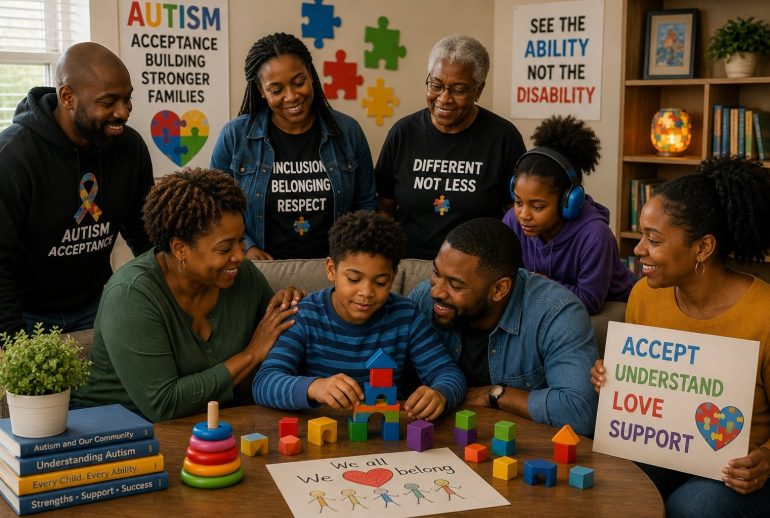
Autism acceptance is about more than knowing the word autism. It is about understanding that autistic children and adults experience the world in unique ways and deserve respect, support, patience, and inclusion. Autism can affect communication, social interaction, sensory processing, routines, learning, behavior, and emotional regulation. But autism does not erase a child’s value, personality, gifts, intelligence, feelings, or future. Every autistic child is still a whole person who deserves to be seen with dignity.
Across the Black community, autism acceptance matters because many families are still learning how to recognize signs, ask questions, find support, and advocate for their children. Some parents may notice differences in speech, play, eye contact, behavior, sensitivity to sound, food preferences, movement, or social interaction, but they may not know what those signs mean. Others may worry about stigma, judgment, or being misunderstood by relatives, schools, churches, or community members. This can make the journey feel lonely.
Acceptance does not mean ignoring challenges. Many autistic children need support with communication, transitions, sensory needs, school routines, social skills, therapy, emotional regulation, or daily living skills. Families may face stress, appointments, paperwork, school meetings, and difficult public moments. Acceptance means meeting those challenges with understanding instead of shame. It means asking, “What support does this child need?” instead of only asking, “Why are they acting like that?”
When families and communities learn more about autism, children benefit. Parents feel less isolated. Teachers become better prepared. Churches and community spaces become more welcoming. Relatives become more patient. Children are less likely to be judged for behaviors others do not understand. Autism acceptance helps build a village where neurodiverse children can grow with more safety, confidence, and support.
1. Autism Looks Different From Child To Child.
One of the most important things families should understand is that autism does not look the same in every child. Some autistic children speak clearly, while others may be delayed in speech or communicate in different ways. Some may enjoy social interaction but struggle with certain cues. Others may prefer more time alone. Some may have strong academic skills but difficulty with transitions or sensory overload. Every child is different.
Because autism varies so much, families should avoid comparing one child to another. A child may not match a stereotype and still need support. Some children are missed because adults expect autism to look only one way. Others may be misunderstood because their behavior is labeled as stubborn, rude, spoiled, or disrespectful before anyone considers whether sensory or communication needs are involved.
Parents and caregivers should pay attention to patterns. Does the child struggle with changes in routine? Do loud sounds cause distress? Is speech delayed or unusual? Does the child repeat movements or phrases? Do they have intense interests? Do they struggle with certain textures, foods, lights, or crowds? These observations can help families decide whether to seek an evaluation.
Understanding that autism is a spectrum helps families respond with more patience. The goal is not to force every child into the same mold. The goal is to understand the child in front of you and support their growth.
2. Early Support Can Make A Meaningful Difference.
When families notice developmental differences, early support can be helpful. This may include talking with a pediatrician, requesting a developmental screening, seeking an autism evaluation, contacting early intervention services, or asking the school system about support. Early help can give children tools for communication, learning, behavior, and daily routines.
Some parents may feel afraid to ask questions because they do not want their child to be labeled. That fear is understandable, especially when families worry about stigma or unfair treatment. But support is not meant to limit a child. The right support can open doors. It can help families understand what the child needs and help the child build skills with more guidance.
Early support also helps parents. When caregivers understand why certain behaviors happen, they may feel less confused and less alone. Instead of blaming themselves or the child, they can begin learning strategies that work better. This can reduce stress in the home.
It is never too late to seek help, but earlier support can reduce frustration for both the child and family. Asking questions is an act of care. It shows that the family wants to understand and support the child more fully.
3. Families Should Not Be Shamed For Seeking An Evaluation.
In some families or communities, parents may hear comments like, “Nothing is wrong with that child,” “They will grow out of it,” “You are just making excuses,” or “They just need discipline.” These comments can make caregivers feel ashamed or discouraged. But seeking an evaluation does not mean a parent has failed. It means the parent is paying attention.
An evaluation can help identify a child’s strengths and needs. It may confirm autism, identify another developmental concern, or provide helpful recommendations. Either way, the family gains information. Information can help parents advocate at school, choose therapies, build routines, and explain needs to relatives or caregivers.
Families should be careful about dismissing concerns too quickly. Some children do catch up in certain areas, but others need support. Waiting too long because of fear or denial can make things harder. It is better to ask and learn than to ignore signs that may matter.
A community that supports parents seeking answers is stronger. Instead of judging, relatives and friends can say, “How can we support you?” or “What are you learning about your child?” That kind of response helps families feel less alone.
4. Sensory Needs Are Real And Should Be Respected.
Many autistic children experience sensory information differently. Sounds, lights, smells, textures, clothing tags, food textures, crowds, hair care, water temperature, or certain environments may feel overwhelming. A child may cover their ears, cry, run away, refuse certain clothes, avoid foods, or become upset in busy places. These reactions are not always bad behavior. Sometimes the child’s body is overwhelmed.
Families and communities should learn to recognize sensory needs. If a child struggles in loud spaces, they may need headphones, a quieter room, or breaks. If certain clothing textures bother them, families may need softer clothing or tag-free options. If hair care is difficult, caregivers may need extra patience, preparation, and sensory-friendly strategies.
Respecting sensory needs does not mean children never have to learn flexibility. It means adults should understand what is hard for the child and help them cope in a supportive way. A child who is overwhelmed needs regulation, not humiliation.
Community spaces can also become more sensory-aware. Churches, schools, events, and family gatherings can offer quieter areas, clear schedules, and patient support. Small changes can make a big difference for autistic children and their families.
5. Communication May Look Different.
Autistic children may communicate in different ways. Some speak with many words. Some speak only a little. Some use gestures, pictures, devices, signs, repeated phrases, or body language. Some understand more than they can express. Others may speak well but struggle to explain feelings or social situations. Communication differences should be met with patience.
Families should avoid assuming that a child has nothing to say because they do not communicate in expected ways. A child may still have thoughts, preferences, feelings, and needs. Adults can look for the child’s communication style and support it. This may include speech therapy, visual supports, communication boards, sign language, or assistive technology.
Children should not be mocked for how they speak or communicate. Repeating words, using scripts from shows, speaking in a flat tone, or needing extra time to respond may be part of how they process language. Respect helps build confidence.
When families honor communication differences, children feel safer. They learn that their voice matters, even if their voice does not sound or work like everyone else’s.
6. School Advocacy Is Important.
School can be a major part of an autistic child’s support system. Some children may need an Individualized Education Program, a 504 plan, speech therapy, occupational therapy, social skills support, sensory breaks, classroom accommodations, or behavior support. Parents and caregivers need to know that they can ask questions and advocate for what their child needs.
Advocacy may feel intimidating, especially if meetings include teachers, specialists, administrators, and paperwork. Families should remember that they are important members of the team. Parents know their child in ways the school does not. Their observations matter.
Caregivers can prepare for school meetings by writing down concerns, strengths, questions, and examples. They can ask what supports are available, how progress will be measured, and how communication between school and home will happen. If something is unclear, they can ask for an explanation in plain language.
A strong school partnership can help the child feel more supported. When families and educators work together, autistic children are more likely to receive understanding instead of constant correction.
7. Discipline Should Consider The Child’s Needs.
Autistic children still need guidance, boundaries, and safety rules, but discipline should consider their developmental and sensory needs. Some behaviors may come from overwhelm, communication frustration, anxiety, confusion, or difficulty with transitions. If adults only punish without understanding the cause, the behavior may continue or become worse.
For example, a child may scream because the room is too loud, run because they are overwhelmed, refuse a task because directions are unclear, or melt down because a routine changed suddenly. These moments require support and teaching, not shame. Adults should ask what happened before the behavior and what the child may have been trying to communicate.
Helpful strategies may include visual schedules, clear instructions, transition warnings, calm spaces, choices, routines, and teaching replacement behaviors. Consequences may still be needed, but they should be connected, fair, and developmentally appropriate.
Discipline should help the child learn, not make them feel broken. Respectful guidance protects dignity while still teaching responsibility.
8. Relatives And Community Members Need Education Too.
Parents should not have to carry autism education alone. Relatives, friends, church members, coaches, babysitters, and community leaders may also need to learn. Sometimes extended family members misunderstand autistic behavior and judge the child or parent unfairly. Education can reduce that harm.
A caregiver might explain, “Loud sounds overwhelm him,” or “She needs time before answering,” or “He communicates better with pictures,” or “Please do not force hugs.” These explanations help others respond more respectfully. Some people may need reminders more than once.
Family members can support by listening, asking respectful questions, following the parent’s guidance, and avoiding shame-based comments. They can also help by giving parents breaks, including the child in family events, and learning what makes the child comfortable.
Community education creates safer spaces. When more people understand autism, fewer families feel isolated or judged. The village becomes more welcoming.
9. Autistic Children Have Strengths And Gifts.
Autistic children should not be seen only through challenges. Many have strong memories, creativity, honesty, deep focus, problem-solving abilities, artistic talents, musical interests, technical skills, visual thinking, humor, compassion, or strong knowledge in areas they love. Families should look for and nurture these strengths.
A child’s intense interest can become a doorway into learning. If a child loves trains, animals, maps, music, numbers, planets, or art, adults can use that interest to support reading, writing, math, conversation, and confidence. Interests are not always distractions. Sometimes they are bridges.
Celebrating strengths helps protect self-esteem. Autistic children may receive a lot of correction throughout the day. They also need encouragement and recognition. They need to hear what they do well.
When families focus on strengths along with support needs, children receive a fuller message: you are growing, you are capable, and you have gifts worth developing.
10. Parents And Caregivers Need Support Too.
Raising an autistic child can bring joy, love, learning, and deep connection, but it can also bring stress. Parents may manage appointments, school meetings, therapy schedules, behavior challenges, sleep issues, financial pressure, family misunderstanding, and emotional exhaustion. Caregivers need support too.
Support may come from family, parent groups, therapists, school teams, faith communities, respite care, trusted friends, or other parents walking a similar path. Talking with people who understand can reduce isolation. Parents should not feel guilty for needing help.
Caregivers also need rest when possible. Constant stress can affect health and patience. Even small breaks, honest conversations, or shared responsibilities can help. A strong village supports both the child and the caregiver.
Community members can help by offering practical support instead of judgment. Bringing a meal, helping with siblings, learning about autism, or simply listening can make a family feel less alone.
11. Inclusion Should Be Intentional.
Autistic children should be included in family and community life, but inclusion may require planning. A child may need a quieter area, clear expectations, sensory tools, shorter activities, flexible participation, or preparation before an event. Inclusion means making room for the child as they are, while helping them participate in ways that work.
Churches, community programs, schools, and family gatherings can think ahead. Is the space too loud? Is there a quiet room? Are adults patient? Are instructions clear? Is the child expected to sit still longer than they can manage? These questions help make environments more welcoming.
Inclusion does not always mean the child participates exactly like everyone else. A child may sit for part of an event, use headphones, take breaks, or engage differently. That is okay. The goal is belonging, not forced sameness.
When autistic children are included with respect, they learn that they are part of the community. Other children also learn patience, kindness, and acceptance.
12. Autism Acceptance Builds A Stronger Village.
Autism acceptance strengthens the whole community. It teaches families to slow down, listen, include, and support children with different needs. It helps reduce stigma and replaces judgment with understanding. It reminds the community that every child deserves dignity.
A stronger village does not shame parents for seeking help. It does not mock children for communicating differently. It does not exclude families because a child needs accommodations. Instead, it learns, adjusts, and supports.
Autism acceptance also helps children grow into their future with more confidence. When they are understood, they are better able to develop skills, build relationships, participate in learning, and share their gifts. Acceptance gives them room to grow without being constantly told they are too different to belong.
Across the Black community, building a more accepting village is an act of care. It says every child matters, every family deserves support, and difference does not remove belonging.
Conclusion.
Autism acceptance supports families across the Black community by creating more understanding, patience, inclusion, and advocacy for autistic children and their caregivers. Autism may affect communication, sensory needs, routines, learning, and behavior, but every autistic child still deserves respect, support, and opportunities to grow.
Families can begin by learning the signs, seeking evaluation when needed, supporting sensory and communication needs, advocating at school, educating relatives, and celebrating the child’s strengths. Community spaces can help by becoming more welcoming and less judgmental.
When families and communities choose acceptance, autistic children are less likely to be misunderstood and more likely to be supported. A stronger village makes room for every child to belong, learn, and thrive.
Akukulu Family encourages parents, caregivers, educators, relatives, faith leaders, and community members to take one autism acceptance step this month. Learn about sensory needs, support a parent without judgment, ask how to include an autistic child, attend a school meeting, or celebrate a child’s unique strengths. One act of understanding can help a family feel seen and supported.
