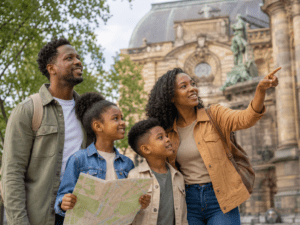

How Family Travel Builds Cultural Confidence Across The Black Community.
Family travel does not always have to mean expensive vacations, flights, hotels, or faraway destinations. Travel can be a weekend road trip, a visit to a nearby museum, a cultural festival, a historical site, a family reunion, a local food market, a college tour, a community event in another city, or a simple day trip to a place children have never seen before. What matters is not only the distance. What matters is the experience, the conversation, and the memories created along the way. Across the Black community, family travel can be a powerful way to build cultural confidence. Children and teens learn about themselves not only through books and school lessons, but also through places, people, food, music, art, history, and shared family experiences. When young people visit spaces that reflect Black history, African Diaspora culture, creativity, business, education, and leadership, they begin to understand that their story is wide, rich, and meaningful. Travel also gives families a chance to step outside normal routines. At home, families may be busy with work, school, chores, bills, screens, homework, caregiving, and daily stress. A trip, even a small one, can create room for conversation, laughter, discovery, and bonding. Children may ask questions they would not ask at home. Parents may share stories. Elders may explain family history. These moments can strengthen identity and connection. Family travel should not be treated as something only certain families can afford. Many meaningful experiences can be planned with a modest budget. A library event, free museum day, community festival, park visit, historic neighborhood walk, family picnic, or local cultural celebration can still teach children something valuable. The goal is to help families see travel as a tool for learning, pride, wellness, and togetherness. 1. Travel Helps Children See The World Beyond Their Daily Routine. Children can sometimes believe that their everyday surroundings are the whole world. They know their home, school, neighborhood, church, stores, parks, and familiar streets. Those places matter, but children also need opportunities to see that the world is larger than what they experience every day. Travel helps open that window. A simple trip to a new city, museum, cultural market, nature area, college campus, historical site, or family gathering can expand a child’s imagination. They may see new buildings, hear different accents, taste new foods, observe different traditions, or learn about people who live in ways they had not considered before. These experiences can make children more curious and confident. For teens, travel can also help them imagine future possibilities. Visiting a college campus, business district, art show, technology event, or cultural center may help a young person think differently about careers, education, creativity, and leadership. Exposure matters because young people often dream based on what they have seen. Families can support this by talking during and after trips. What did you notice? What surprised you? What did you learn? Would you want to come back? These questions help children turn travel into reflection and growth. 2. Cultural Trips Can Build Pride And Identity. Cultural travel can help children understand that their heritage is alive and worth celebrating. A visit to a Black history museum, African Diaspora festival, cultural food event, historical church, civil rights site, local art exhibit, music celebration, or heritage neighborhood can help children see their community represented with dignity and depth. This matters because young people may not always see full and positive images of their culture in school, media, or online spaces. Cultural trips give families a chance to show children stories of courage, creativity, faith, entrepreneurship, education, resistance, and joy. They help children understand that Black history is not only about pain. It is also about brilliance, family, innovation, leadership, and survival. Parents and caregivers can make these trips meaningful by preparing children ahead of time. They might explain where they are going, why the place matters, and what the family hopes to learn. After the trip, they can talk about what stood out. These conversations help children connect the experience to identity. Cultural pride grows when children see their people’s stories honored in real places. A child who walks through a museum, attends a festival, or hears an elder explain a historical site may carry that memory for years. 3. Family Travel Creates Stronger Memories. Some of the strongest family memories happen away from the normal routine. Children may remember the road trip music, the snacks packed in the car, the funny moment at a rest stop, the first time they saw the ocean, the family photo in front of a landmark, or the meal everyone shared after a long day. These memories become part of family identity. Travel gives families stories to tell later. “Remember when we went to that festival?” “Remember when Grandma told us that story on the trip?” “Remember when we got lost and found that little restaurant?” These stories may seem small, but they become emotional glue. They help families feel connected across time. Memories do not require luxury. A low-cost day trip can become just as meaningful as a big vacation if the family is present and engaged. Children often remember the feeling more than the price. They remember being together, laughing, exploring, and feeling loved. Families can preserve travel memories through photos, journals, small souvenirs, postcards, videos, or simple conversations. A child can draw what they saw, write a few sentences, or create a scrapbook page. These activities help the memory last. 4. Travel Can Teach Children About Family History. Many families have stories connected to certain places. A grandparent may have grown up in a small town. A parent may remember a childhood neighborhood. A family may have roots in another state, island, country, or region. Visiting these places can help children understand their family history in a deeper way. A family history trip might include visiting an old home area, cemetery, church, school, family farm, neighborhood, or community landmark. Elders can explain who lived there, what life was like, and how the family changed