

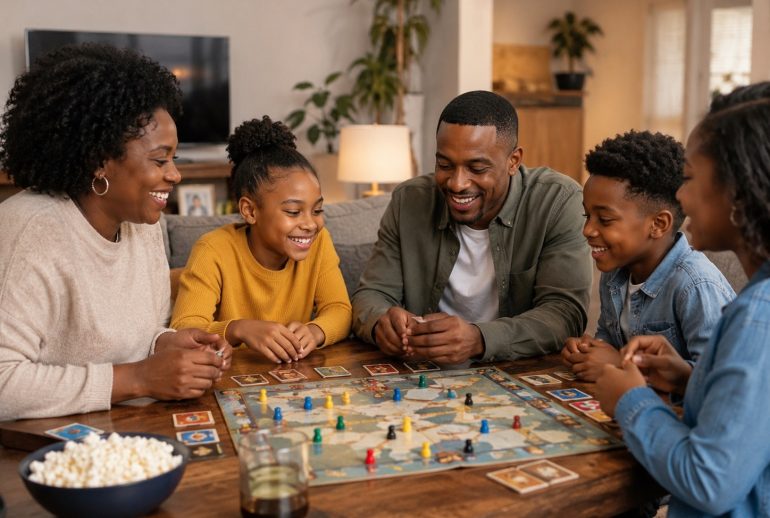
Family game nights can bring joy, laughter, and connection into the home in a simple and meaningful way. In many households, families are busy with work, school, homework, bills, chores, sports, phones, television, and daily responsibilities. Everyone may live under the same roof, but still feel pulled in different directions. A family game night gives the household a chance to pause, sit together, laugh together, and enjoy one another without needing a large budget or complicated plan.
Across the Black community, family gathering has always been important. Whether around the kitchen table, in the living room, on the porch, at a reunion, after church, during holidays, or at a cookout, families have long used shared activities to build connection. Games can be part of that tradition. Card games, dominoes, board games, trivia, puzzles, charades, music games, outdoor games, and family challenges can create memories that children carry for years.
Game nights are not only about entertainment. They can teach communication, patience, teamwork, problem-solving, sportsmanship, emotional control, and respect. Children learn how to take turns. Teens learn how to participate without always being on a screen. Adults get a chance to relax and reconnect. Elders can share classic games and family stories. A simple game can become a bridge between generations.
Families do not need perfect schedules to begin. One evening a month, one Sunday afternoon, one rainy day, or one Friday night can become a starting point. What matters most is being present, choosing games that fit the family, and creating an atmosphere where everyone feels included.
1. Game Nights Create Screen-Free Family Time.
Technology is part of modern life, but screens can quietly take over family time. Phones, tablets, gaming systems, television, and social media can keep people in the same room without real connection. A family game night gives everyone a reason to put devices down and focus on each other.
Screen-free time can feel strange at first, especially for children and teens who are used to constant digital entertainment. But when the game is fun and the atmosphere is relaxed, family members may begin to enjoy the break. They can laugh, talk, compete, and work together without notifications interrupting every moment.
Families can set a simple rule that phones stay away during game time unless they are being used for music, a timer, or a specific game. This helps protect the purpose of the evening. The goal is not to punish anyone, but to create space for real interaction.
Even one hour of screen-free family time can make a difference. It reminds children and adults that connection does not always need technology. Sometimes the best moments happen around a table with people who love you.
2. Games Help Children Practice Patience.
Many games require waiting for a turn, following rules, listening to instructions, and staying engaged even when someone else is playing. These moments help children practice patience in a fun setting. They learn that they do not always get to go first and that everyone deserves a turn.
Patience is an important life skill. Children need it in school, friendships, family conversations, sports, and future work. A game night gives them a safe place to practice. If they become frustrated, adults can guide them gently and remind them that waiting is part of the game.
Younger children may need shorter games because their attention spans are still developing. Families can choose simple games that move quickly and gradually introduce longer games as children grow. The goal is to make patience possible, not overwhelming.
When children learn to wait, listen, and participate with calmness, they are building skills that will help them far beyond game night.
3. Family Games Teach Healthy Competition.
Competition can be fun, but children and teens need to learn how to handle winning and losing with respect. Game nights can teach this lesson in a family setting. A child may win one round and lose the next. A teen may have to congratulate a younger sibling. An adult may model how to laugh after losing instead of becoming upset.
Healthy competition teaches emotional balance. Children learn that losing is not the end of the world and winning should not lead to arrogance. They learn that effort, strategy, and attitude matter. They also learn that family fun is more important than proving they are better than everyone else.
Adults should model good sportsmanship. If parents become too intense, children may copy that behavior. If adults can play with joy, fairness, and humor, children are more likely to do the same.
A family can even create a rule that every game ends with appreciation. Players can thank each other, laugh about the funniest moment, or celebrate someone’s effort. This keeps competition healthy and connected to love.
4. Game Nights Encourage Conversation.
Games naturally create conversation. Family members explain rules, joke with each other, tell stories, ask questions, tease kindly, celebrate funny moments, and react to surprises. These conversations may feel easier than formal family discussions because everyone is relaxed and focused on the activity.
Children may open up during game night in ways they do not during serious talks. A parent might learn what made a child laugh at school, what a teen is thinking about, or what an elder remembers from younger years. Games create small openings for connection.
Conversation is especially important in busy homes. Many families only talk about chores, homework, discipline, bills, or schedules. Game night gives families something joyful to talk about. It helps balance necessary conversations with fun ones.
A household that laughs and talks together builds stronger emotional connection. Game night can become one simple way to keep those conversations alive.
5. Elders Can Share Classic Games And Stories.
Elders often know games that younger generations may not play as often. Dominoes, spades, checkers, bid whist, chess, word games, trivia, storytelling games, and other classics may carry family and community memories. Inviting elders into game night can help preserve those traditions.
An elder may teach a child how to shuffle cards, play dominoes, think ahead in checkers, or understand the rules of a game played at family gatherings years ago. While teaching, they may also share stories about relatives, neighborhoods, church events, or old family traditions.
These moments strengthen intergenerational connection. Children learn that elders are not only people to be cared for. They are also teachers, storytellers, and keepers of memory. Elders may feel valued when their knowledge is welcomed.
Families should choose games that elders can comfortably enjoy. Good lighting, comfortable seating, larger cards or pieces, and patient pacing can help everyone participate. Game night should make room for every generation.
6. Team Games Build Cooperation.
Some games are best played in teams. Team games help family members work together, communicate, share ideas, and support one another. A parent and child might become partners. Siblings might team up. Teens might work with grandparents. These combinations can create fun and unexpected bonding.
Teamwork teaches children that success is not only individual. Sometimes people win by listening, planning, and helping each other. A child may learn to accept advice. A teen may learn to encourage a younger player. An adult may learn to step back and let a child contribute.
Cooperative games can also be helpful for families where competition becomes too intense. Instead of everyone playing against each other, the family can work toward a shared goal. This creates a different kind of fun and reduces pressure.
Team games remind families that they are on the same side in life, even when they disagree or compete during play.
7. Games Can Support Learning Without Feeling Like School.
Many games build useful skills. Word games support vocabulary and spelling. Trivia builds knowledge. Card games teach numbers and strategy. Puzzles support problem-solving. Memory games strengthen attention. Charades builds communication. Chess and checkers teach planning. Even simple dice games can support math skills.
Children may resist extra schoolwork, but they may happily practice similar skills through play. A game can help a child think, count, read, listen, remember, and reason without feeling like a formal lesson. This makes learning feel joyful.
Parents can choose games that match the child’s age and needs. A child working on reading may enjoy word games. A child who needs focus practice may enjoy memory games. A teen may enjoy strategy games or trivia. Families can rotate games so everyone gets a chance to enjoy different skills.
Learning through play helps children understand that thinking can be fun. It also gives families a positive way to support education at home.
8. Game Nights Can Reduce Stress.
Families carry stress from many directions. Parents may be tired from work. Children may feel pressure from school. Teens may be overwhelmed by social media, friendships, or future decisions. Elders may feel isolated. A game night can offer relief by creating a space for laughter and lightness.
Laughter does not solve every problem, but it can help the family breathe. A funny answer, silly move, unexpected win, or playful mistake can shift the mood in the home. These moments remind families that joy still belongs in daily life.
Game nights can also become part of emotional wellness. A child who feels stressed may relax during play. A parent who has been overwhelmed may enjoy a break from serious responsibilities. A teen may participate more easily in a fun activity than in a forced conversation.
Families need joy as part of wellness. Game night is a simple way to make room for that joy.
9. Simple Games Make Participation Easier.
A family game night does not need expensive games or complicated rules. Simple games are often the best place to start. Charades, trivia, card games, dominoes, puzzles, drawing games, guessing games, word games, and homemade challenges can all create fun without much cost.
Families can also create their own games. They might make family trivia questions, have a music guessing challenge, create a scavenger hunt, play “who knows Grandma best,” or build a storytelling game where each person adds one sentence. Homemade games can be personal and memorable.
Simple games are helpful because they allow people of different ages to participate. Younger children, teens, adults, and elders may all be able to join if the rules are easy enough. The goal is inclusion, not perfection.
When families make game night simple, it becomes easier to repeat. The less pressure involved, the more likely the habit will continue.
10. Game Nights Can Become Family Traditions.
Repeated family activities become traditions. A monthly game night, holiday tournament, Sunday afternoon puzzle, birthday trivia game, or family reunion card table can become part of family culture. Children may look forward to it and remember it later in life.
Traditions give families identity. They say, “This is something we do together.” That sense of belonging matters. Children feel rooted when they know the family has shared rhythms and memories.
Families can make traditions fun by adding small details. They might rotate who chooses the game, prepare simple snacks, keep a family scoreboard, take a group photo, or create a small prize for the winner. These details make the night feel special without needing much money.
Over time, game night stories can become part of family history. The funniest answer, the biggest comeback, the elder who always wins, or the child who surprised everyone may be remembered for years.
11. Game Nights Help Families Include Different Personalities.
Every family has different personalities. Some members are loud and competitive. Others are quiet and thoughtful. Some love strategy. Some love jokes. Some like movement. Some prefer puzzles. A good game night makes room for different kinds of people.
Families can rotate game types so everyone gets included. One week might be a board game. Another might be music trivia. Another might be a puzzle. Another might be an outdoor game. This helps children learn that family fun should consider everyone, not only the loudest person.
Quiet children may shine in drawing games, puzzles, or memory games. Active children may enjoy charades or outdoor challenges. Teens may enjoy trivia or strategy games. Elders may enjoy classic games they already know.
Making room for different personalities teaches respect. It tells every family member, “Your kind of fun matters too.”
12. Family Game Nights Build A Stronger Home.
A strong home is built through repeated moments of care, laughter, patience, and connection. Family game nights may seem small, but they can help create those moments. They bring people together, reduce screen distractions, teach life skills, and create memories.
Children who grow up with joyful family traditions may carry those habits into adulthood. They may one day host game nights with their own children, cousins, friends, or community groups. The tradition can continue across generations.
Game nights also remind families that bonding does not always require travel, spending money, or major events. Sometimes the strongest memories happen around the table at home, with simple games and people who care about one another.
When families make time to play together, they are also making time to know each other better. That connection strengthens the whole household.
Conclusion.
Family game nights build stronger bonds across the Black community by creating time for laughter, conversation, teamwork, learning, and screen-free connection. Games help children practice patience, teach healthy competition, include elders, support emotional wellness, and create family traditions that can last for years.
Families do not need expensive supplies or perfect plans to begin. They can start with cards, dominoes, puzzles, trivia, charades, outdoor games, or homemade family challenges. What matters most is showing up, putting distractions aside, and enjoying one another.
A simple game night can help the home feel warmer and more connected. When families play together, they build memories, strengthen relationships, and remind every generation that joy is part of a healthy family life.
Akukulu Family encourages parents, caregivers, elders, mentors, and community members to plan one family game night this month. Choose a simple game, invite an elder, put phones away, prepare a few snacks, and make room for laughter. One evening of play can help build stronger family connection.
