

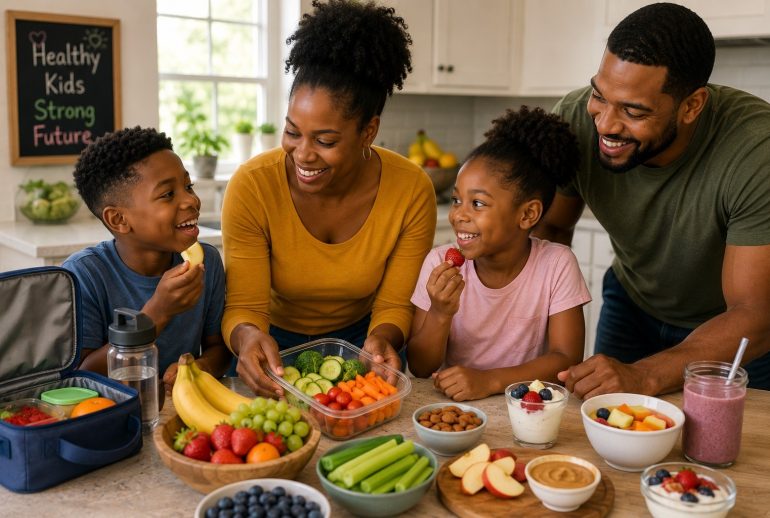
Snacks are a normal part of childhood. Children get hungry between meals, especially when they are growing, learning, playing, attending school, joining sports, doing homework, and moving through busy family routines. A snack can help a child feel steady, focused, and satisfied until the next meal. But when snacks are mostly sugary, salty, or heavily processed, they may not support the child’s body in the best way.
Across the Black community, many families are balancing nutrition, budget, time, picky eating, school schedules, after-school activities, and household responsibilities. Parents and caregivers may want children to eat healthier, but the easiest snacks are often the ones that come in bright packages, cost less in the moment, or require no preparation. Chips, cookies, candy, sugary drinks, and sweet pastries can become daily habits before families realize how often they are being used.
Healthy snack habits do not mean children can never enjoy a treat. Balance matters. A birthday party, family gathering, holiday, or special movie night may include fun foods, and that is part of life. The goal is not to make children afraid of snacks or ashamed of enjoying something sweet. The goal is to make everyday snacks more nourishing, so children have better energy, stronger focus, and healthier routines.
A good snack does not have to be expensive or complicated. Fruit, yogurt, cheese, boiled eggs, whole-grain crackers, vegetables with dip, peanut butter when safe for the household, smoothies, popcorn, nuts when appropriate, leftovers, or simple homemade options can all support children in practical ways. Small changes in snack habits can help families build stronger wellness one day at a time.
1. Snacks Should Support Energy, Not Only Cravings.
Children often ask for snacks because they want something sweet, salty, crunchy, or familiar. Cravings are normal, but snacks should also help the body. A snack that gives quick sugar may taste good for a moment, but it may leave the child hungry or tired again soon after. A more balanced snack can help provide steadier energy.
Parents and caregivers can teach children that snacks have a purpose. They help the body stay fueled between meals. A child going from school to homework, sports, tutoring, or chores may need something that lasts longer than candy or a sugary drink. A snack with protein, fiber, or healthy fat may help the child feel full longer.
For example, fruit with yogurt, crackers with cheese, apples with peanut butter if safe, boiled eggs with fruit, or vegetables with hummus can be more satisfying than a snack made only of sugar. Families can use simple foods that fit their budget and culture.
This lesson helps children connect food to how they feel. Over time, they can begin to notice which snacks give them energy and which ones leave them feeling tired or hungry again.
2. After-School Snacks Can Set The Tone For The Evening.
The after-school period can be difficult. Children may come home hungry, tired, emotional, or overstimulated from the school day. If they do not eat something helpful, they may become irritable during homework, argue with siblings, or ask for more snacks again before dinner. A planned after-school snack can make the evening smoother.
Families can prepare simple snacks ahead of time so children have something ready when they arrive home. Washed fruit, yogurt cups, boiled eggs, cheese sticks, cut vegetables, sandwiches, smoothies, or leftovers can help children refuel without waiting too long. This can reduce the rush toward chips, candy, or sugary drinks.
The after-school snack should not be so large that it ruins dinner, but it should be enough to help the child settle. Younger children may need a small snack and rest before homework. Teens may need something more filling, especially if they have sports or long activities.
When families plan this part of the day, children may feel more supported. A good snack can become part of a calmer transition from school to home.
3. Healthy Snacks Can Help Children Focus.
Food affects focus. A child who is hungry may struggle to complete homework, listen to instructions, read, practice math, or stay patient. A child who eats mostly sugar may feel energetic for a short time and then crash. Healthy snack habits can support better attention during the parts of the day when children still need to think and learn.
This is especially important after school. Many children still have homework, reading, chores, or activities after the school day ends. A balanced snack can help them continue without feeling drained. It gives their body something useful to work with.
Families can connect snack choices to school success. A parent might say, “Let’s choose something that helps your brain before homework,” or “This snack will help you stay full during practice.” Simple explanations help children understand that food is part of preparation.
Snack habits do not replace sleep, teaching, or emotional support, but they can help create a stronger foundation. A child who feels physically steady may be better able to focus mentally.
4. Fruit Can Be A Simple Everyday Snack.
Fruit is one of the easiest healthy snacks for many families. Apples, bananas, oranges, grapes, berries, peaches, watermelon, mango, pineapple, and other fruits can give children natural sweetness along with vitamins, water, and fiber. Fruit can satisfy a sweet craving in a more nourishing way than candy or pastries.
Families can make fruit easier by keeping it visible and ready. A bowl of bananas or oranges on the counter, washed grapes in the refrigerator, sliced apples packed for school, or watermelon cut ahead of time can help children choose fruit more often. Convenience matters. Children are more likely to eat what is easy to reach.
Fruit can also be paired with other foods for a more filling snack. Apples with peanut butter if safe, berries with yogurt, bananas with oatmeal, or oranges with cheese can give children a better balance of energy. This helps the snack last longer.
Families should also teach children that whole fruit is usually better than large amounts of juice. Juice may taste good, but it does not always fill the body the same way. Whole fruit gives children more to chew and more fiber.
5. Protein Helps Snacks Last Longer.
Protein can help children feel full and satisfied. Snacks that include protein may support steadier energy than snacks made only of sugar or refined carbohydrates. This can be helpful for children who get hungry quickly or teens who have long school days and activities.
Protein snack options may include eggs, yogurt, cheese, beans, hummus, turkey slices, tuna, nuts when appropriate, seeds, peanut butter or nut butter if safe, or leftovers from meals. Families can choose what fits their budget, culture, and household needs. A snack does not need to look fancy to be helpful.
A simple boiled egg with fruit, yogurt with berries, cheese with crackers, or hummus with vegetables can be practical and filling. Teens may enjoy wraps, smoothies with protein-rich ingredients, or leftovers from dinner.
Parents can explain that protein helps the body stay strong. This gives children a simple reason to include it. Over time, they may begin to choose snacks that help them feel full longer.
6. Sugary Snacks Should Be Occasional, Not The Main Habit.
Children naturally enjoy sweet foods, and treats can have a place in family life. The problem comes when sugary snacks become the main daily habit. Candy, cookies, cakes, pastries, sweet cereals, sugary drinks, and dessert snacks can add up quickly when eaten often.
Too much sugar may affect energy, teeth, mood, and long-term health. It can also make healthier foods less appealing if children become used to very sweet flavors all the time. Families can help by reducing sugary snacks slowly and offering better options more often.
This should be done without shame. A child should not feel bad for liking sweets. Adults can simply teach balance. A parent might say, “That is a treat food, so we do not eat it all day,” or “Let’s have fruit first, then we can enjoy a small treat later.” This helps children understand moderation.
Families can also avoid using sweets as the only reward. If children always receive candy for good behavior, they may connect comfort and success only with sugary foods. Praise, time together, games, stickers, outdoor play, or choosing an activity can also be rewards.
7. Drinks Are Part Of Snack Habits Too.
A snack is not only about food. Drinks matter as well. Many children snack with soda, fruit punch, sweet tea, sports drinks, flavored drinks, or large amounts of juice. These drinks can add extra sugar quickly and may affect teeth and energy. Water should be the main everyday drink.
Families can serve water with snacks, especially after school or during outdoor activities. Children who are thirsty may ask for food when their body really needs hydration. Offering water first can help them understand the difference between hunger and thirst.
If children are used to sugary drinks, families can make changes gradually. They might water down juice, offer fruit-infused water, save sweet drinks for special occasions, or keep water bottles available. Small steps can build better habits.
Teaching children to drink water with snacks supports both dental care and overall wellness. It is one of the simplest healthy routines a family can build.
8. Snack Planning Can Help The Family Budget.
Snack costs can quietly add up. Buying individual packages, convenience snacks, vending machine items, and last-minute treats can become expensive over time. Planning snacks ahead can help families save money while still feeding children well.
Families can buy larger containers and portion snacks at home. A big bag of popcorn, a container of yogurt, a bunch of bananas, a block of cheese, a bag of apples, or a carton of eggs may stretch further than buying single-serving items every day. Planning helps the family make better use of the grocery budget.
A weekly snack list can also reduce waste. Parents can choose a few snack options for the week and prepare them in simple containers. Children can help pack snacks for school, after-school programs, or weekend activities. This teaches both nutrition and responsibility.
Budget-friendly does not mean boring. Families can rotate options so children do not feel like they are eating the same thing every day. The key is planning before hunger and rush make decisions harder.
9. Children Can Help Prepare Their Own Snacks.
Children are more likely to eat healthier snacks when they help prepare them. Younger children can wash fruit, place crackers on a plate, stir yogurt, or help pack snack bags. Older children can make smoothies, slice soft fruit with supervision, boil eggs with adult help, prepare simple wraps, or organize snack containers for the week.
Snack preparation teaches life skills. Children learn how to choose food, handle ingredients, clean up, and care for their bodies. These small kitchen tasks build independence and confidence. A child who learns to prepare simple snacks is better prepared for teen years and adulthood.
Parents can give children choices within healthy boundaries. For example, “Do you want apples or grapes?” or “Would you like yogurt or cheese with your snack?” This gives children some control without making the choice too open-ended.
When children participate, snacks become less of a demand and more of a shared routine. They learn that healthy eating is something they can help create.
10. Healthy Snacks Can Support Sports And Activities.
Children and teens involved in sports, dance, marching band, recreation, or other activities may need snacks that support movement. A child going straight from school to practice may need fuel before activity and hydration throughout the day. Without planning, they may rely on vending machines, candy, or sugary drinks.
Families can pack activity-friendly snacks such as fruit, trail mix if safe, yogurt, cheese, sandwiches, boiled eggs, whole-grain crackers, or smoothies depending on the schedule and storage options. Water should also be included. The goal is to help children feel strong and avoid running on empty.
Coaches and youth leaders can support healthy habits by encouraging water breaks and reminding families about good snack options. Team culture can make a difference. If healthy snacks are normal, children may be more willing to choose them.
Activity snacks should match the child’s needs. A light snack may be enough for a short practice, while longer or more intense activities may require more planning. Families can pay attention to how children feel and adjust.
11. Snacks Can Be Connected To Culture And Family Traditions.
Healthy snacks do not have to ignore culture. Many African Diaspora food traditions include fruits, nuts, roasted foods, vegetables, beans, plantains, corn, sweet potatoes, yogurt-based items, homemade breads, and other simple foods that can be part of balanced snacking. Families can honor familiar flavors while making thoughtful choices.
A family might prepare roasted plantains, fruit bowls, lightly seasoned popcorn, homemade smoothies, vegetables with a flavorful dip, boiled eggs with spices, or leftovers from a cultural meal in smaller portions. The key is balance and frequency.
Children should learn that healthy eating does not mean leaving family identity behind. Food can be nourishing and connected to culture at the same time. Parents and elders can share stories about foods they grew up eating and how those foods supported family life.
When snacks are connected to memory and culture, children may develop a deeper appreciation for food. They learn that healthy habits can be rooted in family traditions, not separate from them.
12. Strong Snack Habits Build Lifelong Wellness.
Snack habits may seem small, but they can shape long-term wellness. A child who learns to choose water, fruit, protein, and balanced snacks is building a foundation for adulthood. They are learning how to listen to hunger, avoid constant sugar, prepare simple foods, and care for their energy.
These habits can also influence the whole household. When healthier snacks are available, parents, caregivers, teens, and elders may benefit too. A family snack routine can support everyone, not only children.
Change does not have to happen all at once. Families can start by replacing one sugary snack, adding fruit, packing water, preparing after-school snacks, or teaching children to help in the kitchen. Small changes repeated often can become strong habits.
Healthy snack habits are part of family wellness. They help children feel better, learn better, and grow with more awareness of how food supports the body.
Conclusion.
Healthy snack habits support children across the Black community by helping them maintain energy, focus, emotional balance, and stronger nutrition throughout the day. Snacks can be simple, affordable, and family-friendly while still supporting wellness. The goal is not to remove every treat, but to make everyday choices more nourishing.
Families can begin with small steps such as keeping fruit ready, serving water with snacks, adding protein, planning after-school options, reducing sugary drinks, and inviting children to help prepare food. These habits can make school days, homework time, sports, and family routines feel smoother.
When children learn better snack habits early, they gain more than healthier food choices. They gain self-care skills, confidence, and a stronger foundation for lifelong wellness.
Akukulu Family encourages parents, caregivers, mentors, educators, and community members to support one healthy snack habit this week. Prepare fruit ahead of time, pack water, add protein to an after-school snack, reduce one sugary option, or invite a child to help make a simple snack. One small choice can help children feel stronger, focused, and cared for.
